
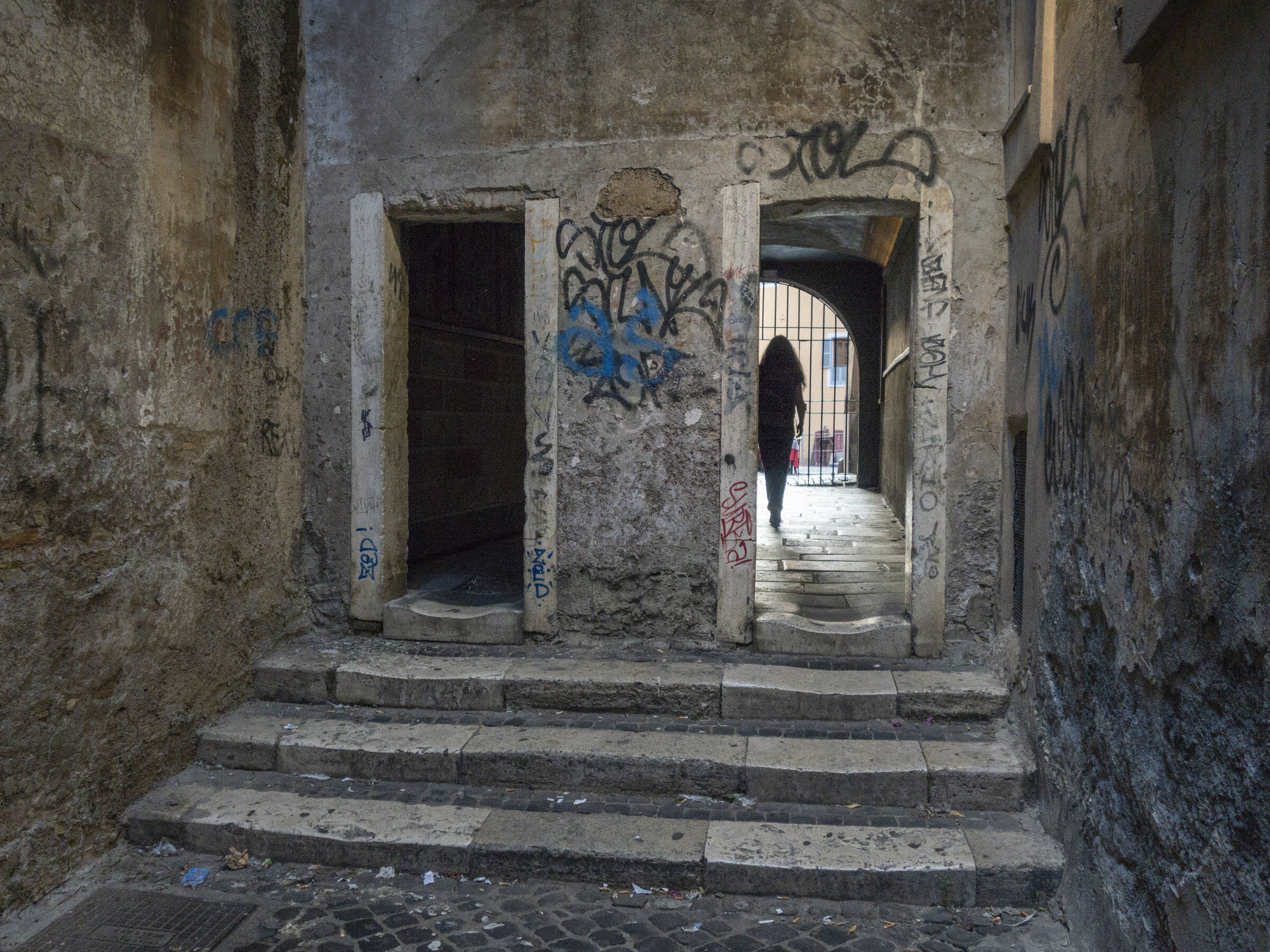
The Passetto del Biscione is a narrow covered passage in Rome’s Parione district, hidden between Piazza del Biscione and Via di Grotta Pinta a few steps from Campo de’ Fiori. Built over the curved foundations of the Theatre of Pompey (61–55 BCE), it has hosted a venerated Marian aedicula since the late 16th century, at the centre of a celebrated 1796 episode in which the image was reported to have moved its eyes. After decades of decay the passage was restored between 2014 and 2016 by the Centro Studi Cappella Orsini and is once again open to the public free of charge.
- Address
- Via di Grotta Pinta / Piazza del Biscione, 00186 Roma RM (Rione Parione, Campo de' Fiori area)
- Period
- Built on the cavea of the Theatre of Pompey (61–55 BCE); votive aedicula installed in 1594 with a painting by Scipione Pulzone; decorative frescoes added in subsequent centuries
- Function
- Covered pedestrian passage and Marian votive shrine, originally an access way to the auditorium of the Theatre of Pompey
- Current use
- Open to the public free of charge after the 2014–2016 restoration, daily from 6:00 to 20:00; care and conservation by the Centro Studi Cappella Orsini
- Coordinates
- 41.8954° N, 12.4734° E
- Notes
- On 9 July 1796 the Marian image was reported to have moved its eyes, triggering widespread popular devotion in Rome; the original Pulzone painting was transferred in 1663 to the church of San Carlo ai Catinari and a contemporary copy now stands in the passage
Gallery
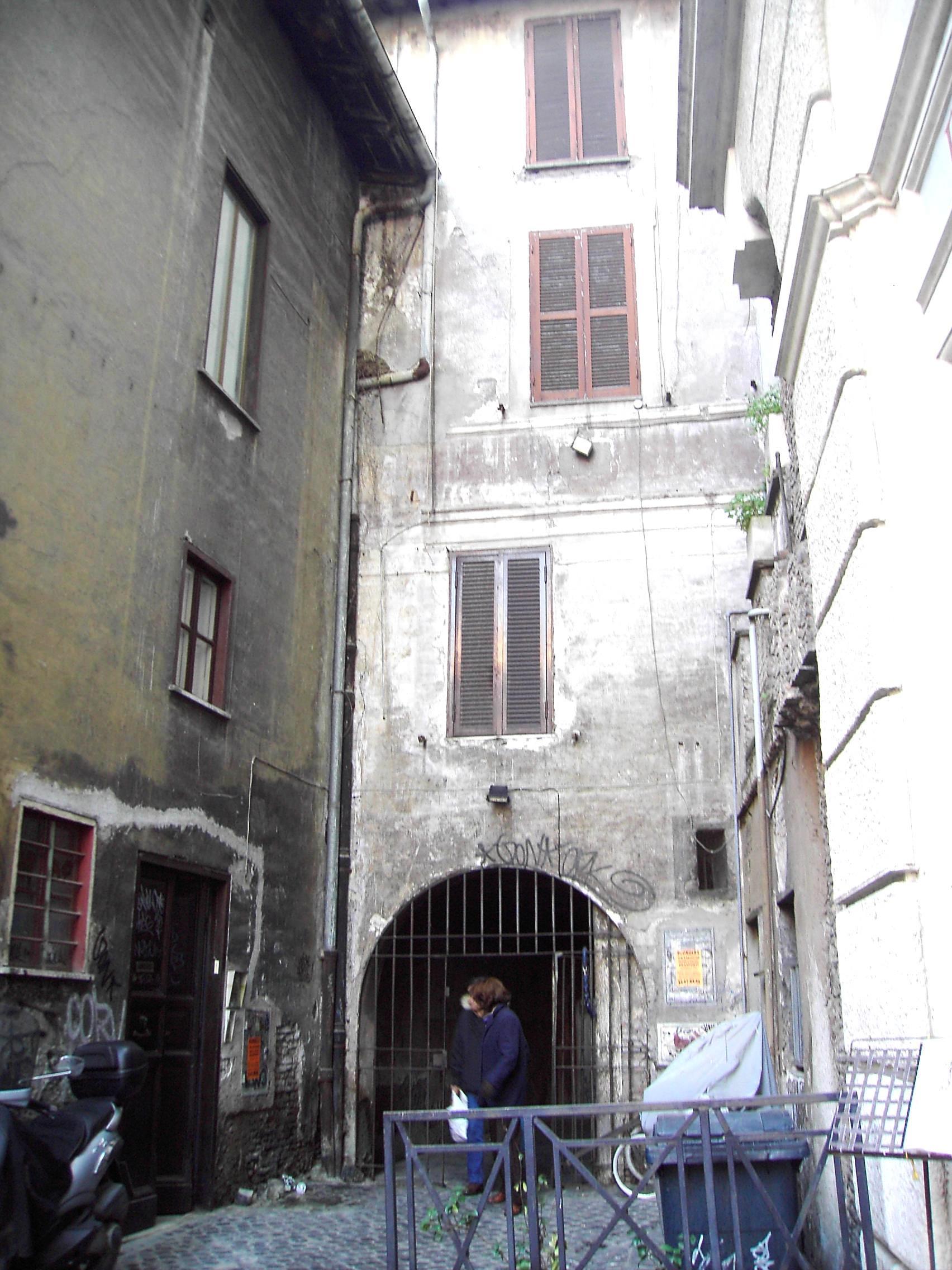
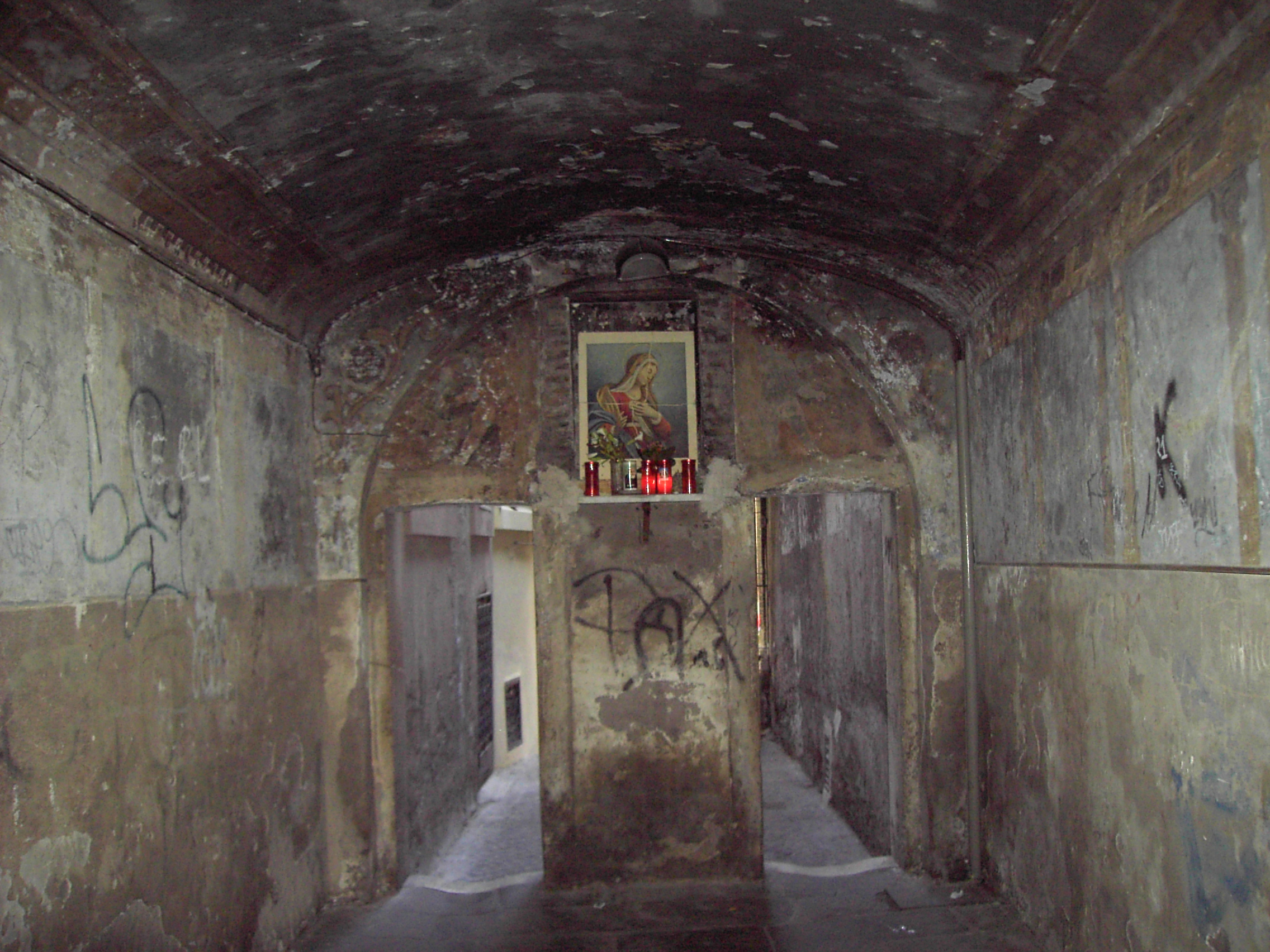
Two further views: the entrance arch from Piazza del Biscione, and the narrow alley as it reads from the Campo de’ Fiori side.
Visit on the map
Via di Grotta Pinta / Piazza del Biscione · 41.8954° N, 12.4734° E
Download for your navigator
A single waypoint, ready for GPS apps, navigators, and contacts.
The Passetto del Biscione is a short covered passage in the Rione Parione, linking Piazza del Biscione with Via di Grotta Pinta a few steps from Campo de’ Fiori. Its peculiar shape follows directly the foundations of the Theatre of Pompey, the first permanent stone theatre of Rome, inaugurated by Pompeo Magno between 61 and 55 BCE. The semicircular line of the cavea — the tiered seating area whose remains still support the surrounding buildings of the block — dictated the curve of the passage, which in antiquity served as one of the access corridors connecting the auditorium to the exterior. Above and around these Roman substructures, medieval and later buildings gradually closed in, turning the ancient passageway into a covered urban shortcut and one of the most evocative traces of imperial Rome embedded in the everyday fabric of the historic centre.
From the late 16th century the passage acquired a strong devotional character. In 1594 a Marian aedicula was installed along one of its walls, with an image of the Madonna painted by Scipione Pulzone da Gaeta; the original panel was later transferred in 1663 to the nearby church of San Carlo ai Catinari, while the interior continued to be enriched over time with frescoes of putti and festoons. The site entered popular memory above all on 9 July 1796, when the image was reported by witnesses to have moved its eyes, opening and closing the eyelids in front of the assembled crowd. The episode, recorded by the Diario di Roma in October 1796, took place in a moment of acute political tension between the Papal State and the advancing French armies, and was read by contemporaries as a Marian sign. Rome saw a wave of similar reported prodigies in the same weeks; the Passetto became one of the most visited shrines, and the Roman saying “andare a cercare Maria per Roma” is traditionally linked to the difficulty of locating this hidden image among the alleys around Campo de’ Fiori.
After the original painting was moved to San Carlo ai Catinari the aedicula remained an object of local devotion, but the passage itself fell into long decay, with the frescoes obscured by dirt and damp and the corridor used for years as a service space. A conservation project promoted from 2013 by the Centro Studi Cappella Orsini, authorised by the Soprintendenza Speciale di Roma and supported by private and public funding, led to a full restoration of the vault and walls between 2014 and 2016; a contemporary copy of the Madonna della Divina Provvidenza by Raffaella Curti was installed in the niche. Since then the Passetto del Biscione has been open to the public free of charge, daily from 6:00 to 20:00, offering one of the most direct encounters in Rome with a layered space where Roman archaeology, Counter-Reformation devotion and 18th-century popular religion coexist within a few metres.
Resources & References
Editorial picks across Wikipedia, photo archives, and the official portal.
All photographs Wikimedia Commons (CC-BY / CC-BY-SA / Public Domain) unless otherwise stated. Editorial text Cultural Heritage Online, OASIS Tech LLC USA.
Find it on the map
See this place and what’s around it →📷 Become a Cultural Heritage Online photographer
Share your photos of places: they stay published under your name as the author. The more they're seen, the more you get noticed — and soon a contest will reward the most appreciated photos.
Log in or sign up free to add a photo