

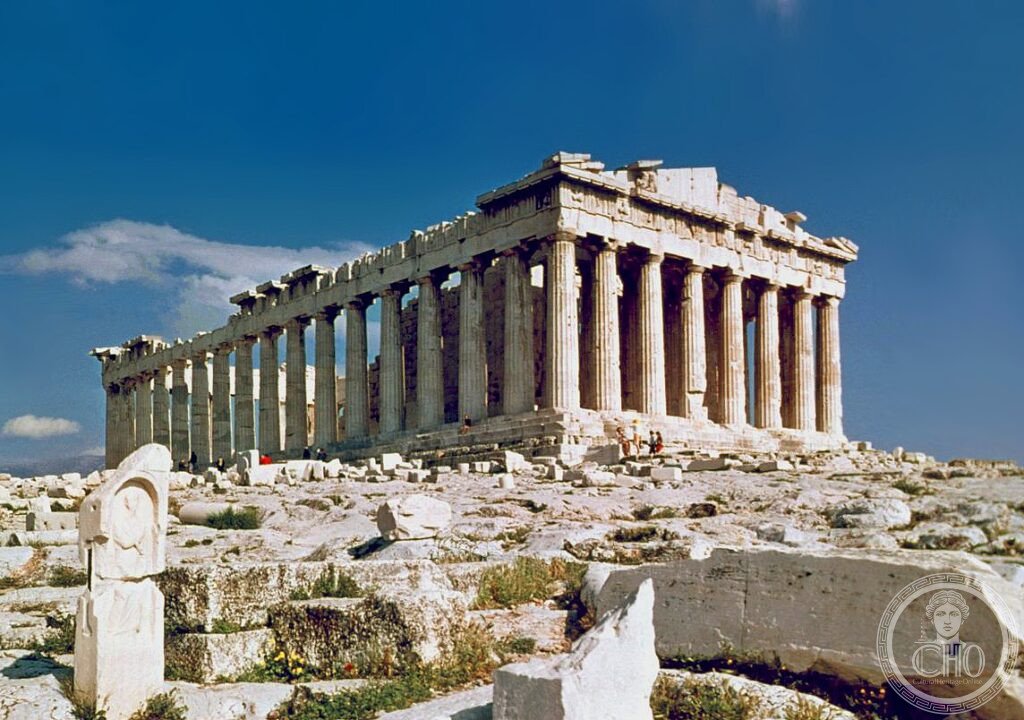
The Parthenon — Athens

Parthenon Acropolis Athens Greece Phidias Doric temple UNESCO World Heritage
The Parthenon (the most precisely optical-correction single ancient Greek temple: the Parthenon (447–432 BCE — the most precisely 15-year single ancient Greek temple construction: completed in approximately 15 years — the most precisely rapidly-built single Doric temple of the Classical period; architect Ictinus with Callicrates — the most precisely named single Parthenon architect pair in ancient Greek heritage; designed under the overall direction of the sculptor Phidias — the most precisely sculptor single ancient Greek temple design supervisor in any UNESCO heritage site) has no perfectly straight horizontal lines — the most precisely deliberately-curved single ancient Greek architectural surface: the stylobate (the most precisely curved single ancient Greek floor surface: the platform curves upward approximately 60 mm toward the centre — the most precisely millimetre-measured single ancient Greek optical correction in any UNESCO heritage temple; the columns (the most precisely entasis single curved column in any Classical Greek heritage building: each column has a subtle convex bulge — the most precisely calculated single ancient Greek visual correction (without these corrections, the building would appear to sag and bow inward — the most precisely optical-illusion single ancient Greek architectural problem that the Parthenon solves)); the columns lean slightly inward — the most precisely inward-tilt single ancient Greek column pair in any Doric temple UNESCO heritage site)), Acropolis of Athens, Athens, Greece — UNESCO World Heritage Site (Acropolis, Athens) 1987. Photo via Wikimedia Commons.
Acropolis of Athens, Athens, Greece (156m above sea level) · 447–432 BCE (most precisely rapidly-built single Doric temple of Classical period: 15 years); Phidias (sculptor+design supervisor); Ictinus+Callicrates (architects); no straight lines (optical corrections: stylobate curved 60mm; entasis columns; inward tilt); 8×17 Doric columns; chryselephantine statue of Athena 12m tall (gold+ivory; lost); Elgin Marbles debate (British Museum vs Greece); 2M+ visitors/year = most visited ancient monument in Europe; Acropolis Museum 2009 · UNESCO WHS 1987

The Parthenon — Athens

The most precisely engineered ancient Greek temple and the most influential single building in the history of Western architecture — the Parthenon, built on the Athenian Acropolis between 447 and 432 BCE under the sculptor Phidias and architects Ictinus and Callicrates, contains no straight lines (every surface is subtly curved to correct optical illusions), once housed a 12-metre gold-and-ivory statue of Athena, and is at the centre of the most significant ongoing cultural property dispute in the world.

At a glance

The Parthenon (the most precisely influence-generating single ancient building in Western architectural history: the Parthenon has been copied more than any other building in the history of Western architecture — the most precisely imitation-count single ancient Greek structure (American examples: the Lincoln Memorial — the most precisely Parthenon single American national monument; the Supreme Court Building; the Tennessee State Capitol; the British Museum; the Panthéon in Paris — the most precisely Parthenon-derived single French UNESCO heritage building; the most precisely neo-Classical single global architectural influence in any ancient UNESCO heritage site)); the Periclean programme (the most precisely single-politician single ancient Greek urban building project: the Parthenon was part of Pericles’ rebuilding of Athens after the Persian Wars — the most precisely politician single directed ancient Greek construction programme (the use of the Delian League treasury — the most precisely war-chest single diversion of funds in ancient Athenian heritage: Pericles controversially used the funds collected for defence against Persia to build the Parthenon — the most precisely politically-contested single ancient Greek construction budget in any heritage record)); the statue of Athena (the most precisely lost single ancient Greek cultural object: the chryselephantine statue of Athena Parthenos, 12 m tall, by Phidias — the most precisely gold-and-ivory single ancient Greek statue lost from any UNESCO heritage site; known only from ancient descriptions and small Roman copies — the most precisely textual single ancient Greek statue in any UNESCO heritage record).

Key facts

  • The optical corrections: the most precisely perfection-seeking single ancient Greek engineering achievement — described in hero caption; the stylobate (the most precisely platform-curvature single ancient Greek engineering decision: the platform rises 60 mm toward the centre — the most precisely millimetre-calibrated single ancient Greek floor; the column entasis (described in hero caption; the most precisely calculated single ancient Greek visual correction — without the bulge, the columns would appear pinched; the inward lean (the most precisely convergence single ancient Greek column tilt: all outer columns lean slightly inward — the most precisely angled single ancient Greek exterior column in any UNESCO Doric temple; if projected upward, all the outer columns would meet at a point 1.5 km in the sky — the most precisely extrapolated-meeting-point single ancient Greek column geometry in any heritage source))
  • The Elgin Marbles: the most precisely contested single cultural repatriation case in the world — the sculptures (the most precisely pediment single ancient Greek sculpture programme: the Parthenon pediments depicted the birth of Athena (east) and the contest between Athena and Poseidon (west — the most precisely divine-contest single ancient Greek sculptural programme in any UNESCO heritage temple)); the metopes (the most precisely battle single sculptural programme: 92 metopes depicting battles (Lapiths vs Centaurs, Gods vs Giants, Greeks vs Amazons, Greeks vs Trojans — the most precisely four-battle single metope programme in any ancient Greek heritage temple)); Lord Elgin (the most precisely British single Parthenon sculpture removal: Thomas Bruce, 7th Earl of Elgin, removed approximately 50% of the surviving Parthenon sculptures between 1801 and 1812 — the most precisely half-removal single ancient Greek sculptural programme by any European; the most precisely purchased single ancient Greek sculpture acquisition: Elgin sold the sculptures to the British Museum in 1816 for £35,000 — the most precisely 19th-century single ancient Greek sculpture purchase price); the repatriation debate (the most precisely single ongoing cultural heritage dispute in the world: Greece has requested the return of the Elgin Marbles since 1983 — the most precisely continuously-requested single cultural repatriation in the history of heritage diplomacy)
  • The Acropolis Museum: the most precisely sculpture-designed single modern Greek museum — the museum (the most precisely Parthenon-adjacent single museum in any European UNESCO heritage site: the Acropolis Museum (2009; architect Bernard Tschumi — the most precisely Swiss single architect of any major Greek heritage museum) is built at the foot of the Acropolis — the most precisely foot-of-hill single UNESCO heritage museum; the most precisely deliberately-oriented single museum floor: the Parthenon Gallery on the top floor is oriented at the same angle as the Parthenon on the hill above — the most precisely building-aligned single museum floor in any European heritage architecture; the glass floor (the most precisely excavation-visible single museum entrance: the ground floor is a glass floor over an active archaeological excavation — the most precisely see-through single museum floor in any UNESCO heritage museum))
  • Heritage: UNESCO World Heritage Site, Acropolis, Athens, inscribed 1987
  • GPS: 37.9715° N, 23.7262° E

History

The pre-Parthenon history (the most precisely Persian single Acropolis destruction: the Persians burned the pre-Parthenon temple during the sack of Athens in 480 BCE — the most precisely military-destruction single ancient Greek heritage event preceding the Parthenon; the Periclean building programme (described in Overview: 447–432 BCE); the later conversions (the most precisely multi-religion single building in Western heritage history: the Parthenon has been used as a Greek temple (dedicated to Athena), a Christian church (dedicated to the Virgin Mary — the most precisely church single Parthenon conversion: in the 6th century CE the cella was converted into a Byzantine church — the most precisely nave-creating single ancient Greek temple alteration), a Catholic cathedral (under Frankish rule 13th–15th century — the most precisely Frankish single Parthenon conversion), and a mosque (under Ottoman rule from 1458 — the most precisely minaret single Parthenon Ottoman addition: a minaret was added — the most precisely minaret single addition to any ancient Greek UNESCO temple)); the 1687 explosion (the most precisely Venetian single Parthenon explosion: a Venetian mortar shell hit the Parthenon on 26 September 1687 — the most precisely precisely-dated single most-damaging event in the history of any ancient Greek UNESCO heritage building; the Parthenon was being used as a powder magazine by the Ottomans — the most precisely ammunition-storage single ancient Greek temple use in any UNESCO heritage record; the explosion destroyed the roof, the interior, and scattered 300+ structural blocks — the most precisely explosion-scattered single ancient Greek architectural element count in any UNESCO heritage record); UNESCO WHS 1987.

What you see

The visit (the most precisely high-traffic single ancient Greek heritage site: 2M+ visitors per year — the most visited single ancient monument in Europe; the Propylaea (the most precisely gateway single ancient Greek monument: the monumental entrance to the Acropolis — the most precisely entrance single Classical building in any ancient Greek UNESCO site; designed by Mnesicles — the most precisely gateway single ancient Greek architect name preserved in any heritage record); the Erechtheion (the most precisely Caryatid single ancient Greek monument: the Porch of the Caryatids on the Erechtheion — the most precisely female-column single ancient Greek structural element; the 6 Caryatid figures support the roof in place of columns — the most precisely statue single load-bearing heritage element in any ancient Greek UNESCO site; 5 originals are in the Acropolis Museum — the most precisely museum-protected single ancient Greek structural element; the 6th is in the British Museum — the most precisely Elgin single Caryatid acquisition); the view from the Acropolis (the most precisely pan-Athens single UNESCO heritage panorama: the Acropolis view takes in the Agora, the Kerameikos, the Panathenaic Stadium, and the Saronic Gulf — the most precisely city-encompassing single ancient Greek hilltop vista in any European UNESCO heritage site)).

Practical information

  • Getting there: Athens Metro Line 2 (Red) to Akropoli station (the most precisely Parthenon-named single Metro station in any European city) — exit directly at the foot of the Acropolis; or Line 1 to Monastiraki + 15 min walk; the multi-site Athens ticket (the most precisely value single Athens heritage pass: the combined ticket covers the Acropolis, Ancient Agora, Roman Agora, Kerameikos, Olympieion, Hadrian’s Library, and Lykourgos Theatre — the most precisely multi-site single combined heritage ticket in any European UNESCO city); arrive at opening time (8am) or after 4pm in summer (the most precisely heat-management single European ancient heritage recommendation: the exposed Acropolis hill is brutally hot midday in July–August — the most precisely sun-exposed single European UNESCO heritage site)
  • The Acropolis Museum: see Key Facts section; the most precisely UNESCO single museum that is itself a heritage work of architecture; glass floor + Parthenon Gallery at Parthenon angle + original Caryatids; the most precisely museum-complementary single Athens heritage day: Acropolis in the morning + Acropolis Museum in the afternoon = the most precisely complete single ancient Greek heritage experience in Athens
  • Athens and the ancient Agora: the most precisely democratic single ancient Greek public space — the Ancient Agora (the most precisely birthplace-of-democracy single ancient Greek heritage site: the Athenian Agora was where Athenian democracy was debated and practised — the most precisely oldest single European democratic public space in any UNESCO heritage city; the Stoa of Attalos (the most precisely reconstructed single ancient Greek stoa: reconstructed by the American School of Classical Studies 1953–1956 — the most precisely 20th-century single ancient Greek building reconstruction; now the Agora Museum — the most precisely democratic single ancient Greek museum location)); the Temple of Hephaestus (the most precisely intact single ancient Greek Doric temple: the best-preserved ancient Greek temple — the most precisely complete single ancient Doric temple in any European UNESCO heritage city (more complete than the Parthenon))

Getting there

Metro Line 2 (Red) to Akropoli station. Multi-site Athens ticket recommended. Arrive at 8am opening or after 4pm in summer. GPS: 37.9715, 23.7262.

Nearby

  • Acropolis Museum (2009) — 250m south-east (5 min walk); Bernard Tschumi; Parthenon Gallery aligned with temple above; glass floor over active excavation; 5 original Caryatids — described in Key Facts and Practical sections
  • Ancient Agora of Athens — 400m north-west (10 min walk from Propylaea); birthplace of democracy; Temple of Hephaestus (most intact single ancient Doric temple) + Stoa of Attalos museum — described in Practical section; best viewed from Acropolis before descending
  • Delphi (UNESCO WHS 1987) — 170 km north-west (3h bus from Athens Liossion Terminal B); Oracle of Apollo + Tholos of Athena + Charioteer bronze — see CHO’s Delphi place card; ideal Athens+Delphi 3-day circuit: Athens (2 days) + Delphi (1 overnight)

Sources

  • Wikipedia, Parthenon; Elgin Marbles; Phidias; Acropolis Museum, accessed June 2026
  • UNESCO, Acropolis, Athens, WHS reference 404, inscribed 1987
  • Mary Beard, The Parthenon, Harvard University Press, 2004

Hero image: Parthenon, Athens, Wikimedia Commons. Editorial text © Cultural Heritage Online, 2026.

📷 Diventa un fotografo di Cultural Heritage Online

Condividi le tue foto dei luoghi: restano pubblicate con la tua firma come autore. Più vengono viste, più ti fai conoscere — e presto un concorso premierà le foto più apprezzate.

Accedi o registrati gratis per aggiungere una foto
📋 Copy & share on social
Scroll to Top