
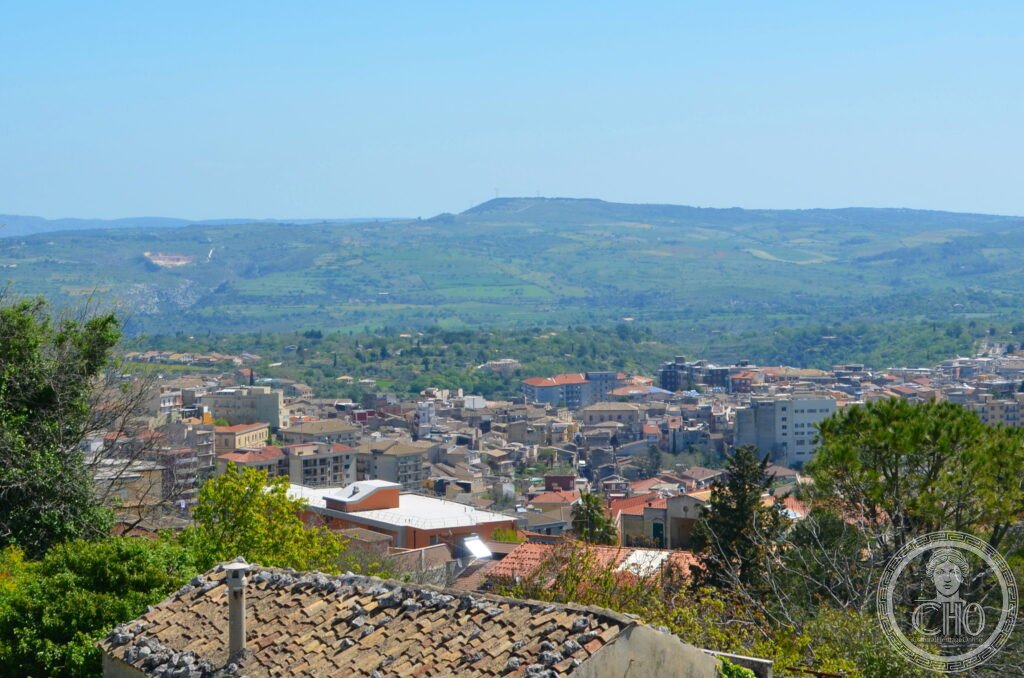
Palazzolo Acreide compresses an unusually long span of history into one hill town: a Greek theatre built for the colony of Akrai, a cliff carved with the only rock sanctuary of Cybele known in Sicily, and a baroque centre rebuilt after the 1693 earthquake. Few places in the Val di Noto let a visitor walk from Hellenistic stone to Gagliardi’s baroque in a single afternoon.
At a glance
Palazzolo Acreide sits on the Iblean plateau above Siracusa, on the site of Akrai, the second colony founded by Syracuse in Sicily. Its Hellenistic theatre, built in the 3rd century BCE, is counted among the best preserved on the plateau, and a nearby limestone cliff bears twelve reliefs of the goddess Cybele known locally as the Santoni. The modern town below was rebuilt in baroque style after the 1693 earthquake and its historic centre is part of the Late Baroque Towns of the Val di Noto inscribed by UNESCO in 2002 under reference 1024. The archaeological area with the theatre and the Santoni lies outside the town centre and is not covered by that inscription.
Key facts
- Founded: Akrai, 664 BCE, as a Syracusan colony.
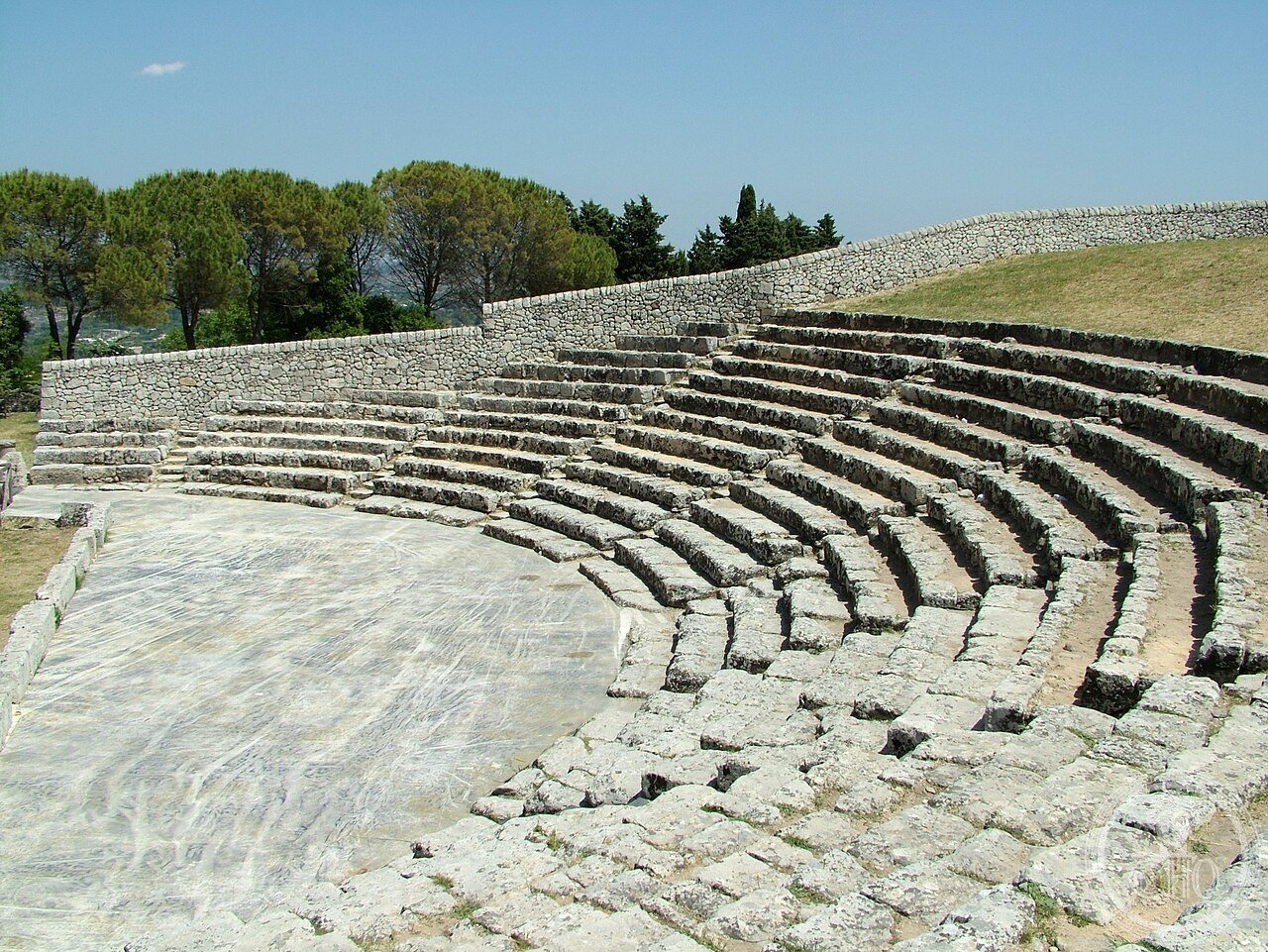
- Theatre: built in the 3rd century BCE, with twelve surviving rows of seating, eight original and four rebuilt in 1955 using matching stone; original capacity around 600.
- Santoni: twelve rock-cut reliefs of Cybele dating from the 3rd–2nd century BCE, the only rock sanctuary of the goddess recorded in Sicily.
- Baroque centre: rebuilt after the 1693 earthquake; the Chiesa Madre di San Nicolò, with its portal by Rosario Gagliardi, dates from 1736.
- UNESCO status: the historic town centre is part of the Late Baroque Towns of the Val di Noto, inscribed in 2002 (reference 1024); the archaeological zone is a separate site and is not part of the inscription.
History
Akrai was founded by Syracuse in 664 BCE, the second Syracusan colony in Sicily after Helorus, on a strategic high point of the Iblean plateau overlooking routes into the Syracusan hinterland. The city reached its architectural peak under Hiero II of Syracuse, in the third century BCE, when the theatre, the agora and two council buildings were built; part of the eastern bouleuterion survives in dressed limestone. Rome took the city in 212 BCE, a year after the fall of Syracuse, and kept it as a tribute-paying town under the name Acrae. Byzantine rule later renamed the settlement Noto Antica; the present name, Palazzolo Acreide, combines a Sicilian word for a small palace with a scholarly revival of the ancient name Akrai, adopted in 1862 after Italian unification to distinguish it from other places called Palazzolo. The earthquake that struck the Val di Noto in 1693 destroyed the town, which was rebuilt in the baroque style seen today; the historic centre that resulted was inscribed by UNESCO in 2002 as part of the Late Baroque Towns of the Val di Noto.
What you see
The theatre stands in the archaeological zone north of the modern town. Its curved seating rises above an orchestra whose original paved stone remains in place, and the base of the stage wall can still be traced, though the mudbrick structure that once stood on it has not survived. From the upper rows the view opens across the Iblean valley towards Siracusa, whose cathedral dome is visible on clear days. A short walk further north leads to the Santoni, a limestone cliff face carved with twelve reliefs of Cybele enthroned between two lions, surrounded by attendant deities identified by their attributes, including Hecate, Hermes and Tyche. An overhanging ledge of rock has sheltered the reliefs for over two thousand years, though the faces of the figures have suffered the most erosion from water seeping down the cliff. Back in the town centre, the Chiesa Madre di San Nicolò carries a portal by Rosario Gagliardi, its Corinthian columns unusually carved with a grapevine motif, a Sicilian variation on the classical form. The Palazzo Judica houses the town’s archaeological museum, with finds from the Akrai excavations including coins, painted pottery, Roman busts and Byzantine mosaics.
Practical information
- Tickets: the theatre and the Santoni are on separate admission arrangements; check the current times and charges through the site’s official channels before visiting.
- Access on foot: the theatre, the Santoni and the baroque centre can all be covered on foot from the town, with an unpaved path linking the theatre to the Santoni through olive groves.
- Museum: the Museo Civico Archeologico in the Palazzo Judica displays material from the Akrai excavations.
Getting there
Palazzolo Acreide lies inland from Siracusa on the Iblean plateau, reachable by road via the SS287 or by bus service run by Azienda Siciliana Trasporti from Siracusa. Travellers combining a visit with Noto or the other Val di Noto towns typically use Siracusa as a base.
Nearby
- Siracusa — visible from the theatre’s upper rows on clear days, and the nearest city hub for transport.
- Noto — fellow member of the Late Baroque Towns of the Val di Noto inscription.
- Ragusa and Modica — both have main churches designed by the same architect, Rosario Gagliardi, who worked on San Nicolò in Palazzolo Acreide.
Sources
- Archivio Storico della Soprintendenza di Siracusa
- Paolo Orsi, excavation report, 1902
- Eusebius of Caesarea, chronicle, c. 313 CE
- UNESCO, Late Baroque Towns of the Val di Noto (ref. 1024)
Gallery
Find it on the map
See this place and what’s around it →Historical events at this place (1)
📷 Become a Cultural Heritage Online photographer
Share your photos of places: they stay published under your name as the author. The more they're seen, the more you get noticed — and soon a contest will reward the most appreciated photos.
Log in or sign up free to add a photoIs this page about you?
This page is read by travellers and heritage enthusiasts who find it on Google. Tell us how you are connected to this place and we will take it from there.