
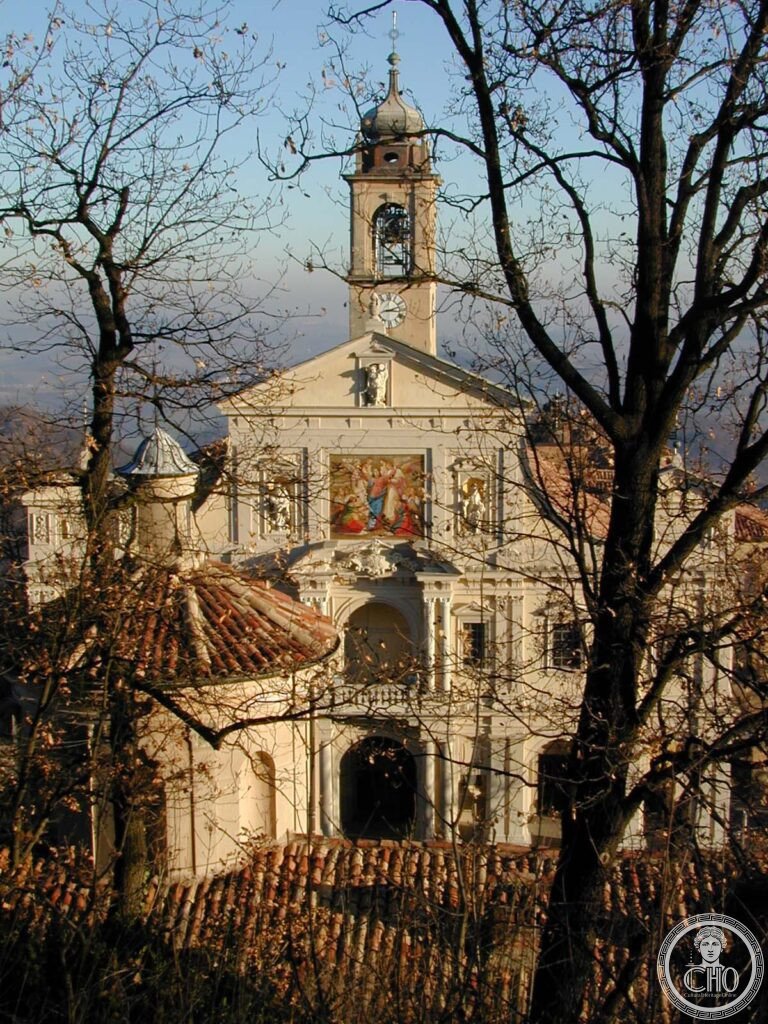
A devotional path of twenty-three chapels climbing a wooded hill above the Monferrato vineyards, built from 1589 in imitation of Varallo. Its last chapel, the Paradise, holds more than three hundred terracotta figures banked up on steps, the largest such assembly on any of the nine Sacri Monti.
At a glance
The hill of Crea rises to 455 metres, one of the highest points of the Monferrato, and carries a Marian sanctuary that was a place of pilgrimage long before the chapels were built. From the sanctuary a path winds up through oak and chestnut wood to the summit, passing twenty-three chapels and five hermitages. The vineyards that cover the surrounding slopes are visible from almost every stage of the climb: Crea is the one Sacro Monte set in a wine landscape rather than in the mountains.
Key facts
- Founder: Costantino Massino, a Lateran canon from Vercelli and prior of the sanctuary, who in 1589 presented his plan for the chapels to Duke Vincenzo I Gonzaga.
- Model: the Sacro Monte di Varallo, founded in 1486 and the oldest of the nine. Crea was built in imitation of it, not before it.
- Scale: twenty-three chapels and five hermitages today, against an original plan for a smaller cycle on the life of the Virgin and the Mysteries of the Rosary.
- Chapel of Paradise: over three hundred statues, the sculptural complex made between about 1604 and 1612 by the Flemish brothers Giovanni and Nicola de Wespin, known as the Tabacchetti.
- Artists: Guglielmo Caccia, called il Moncalvo, who frescoed the ceiling of chapel XVII; Giovanni Battista della Rovere, il Fiammenghino; Giorgio Alberini; the Prestinari.
- Protection: a nature park since 1980, covering 34 hectares of wood and farmland around the sanctuary.
- Recognition: UNESCO World Heritage since 2003, within the serial property «Sacri Monti of Piedmont and Lombardy», reference 1068.
- GPS: 45.0952, 8.2728 — open in Google Maps.
History
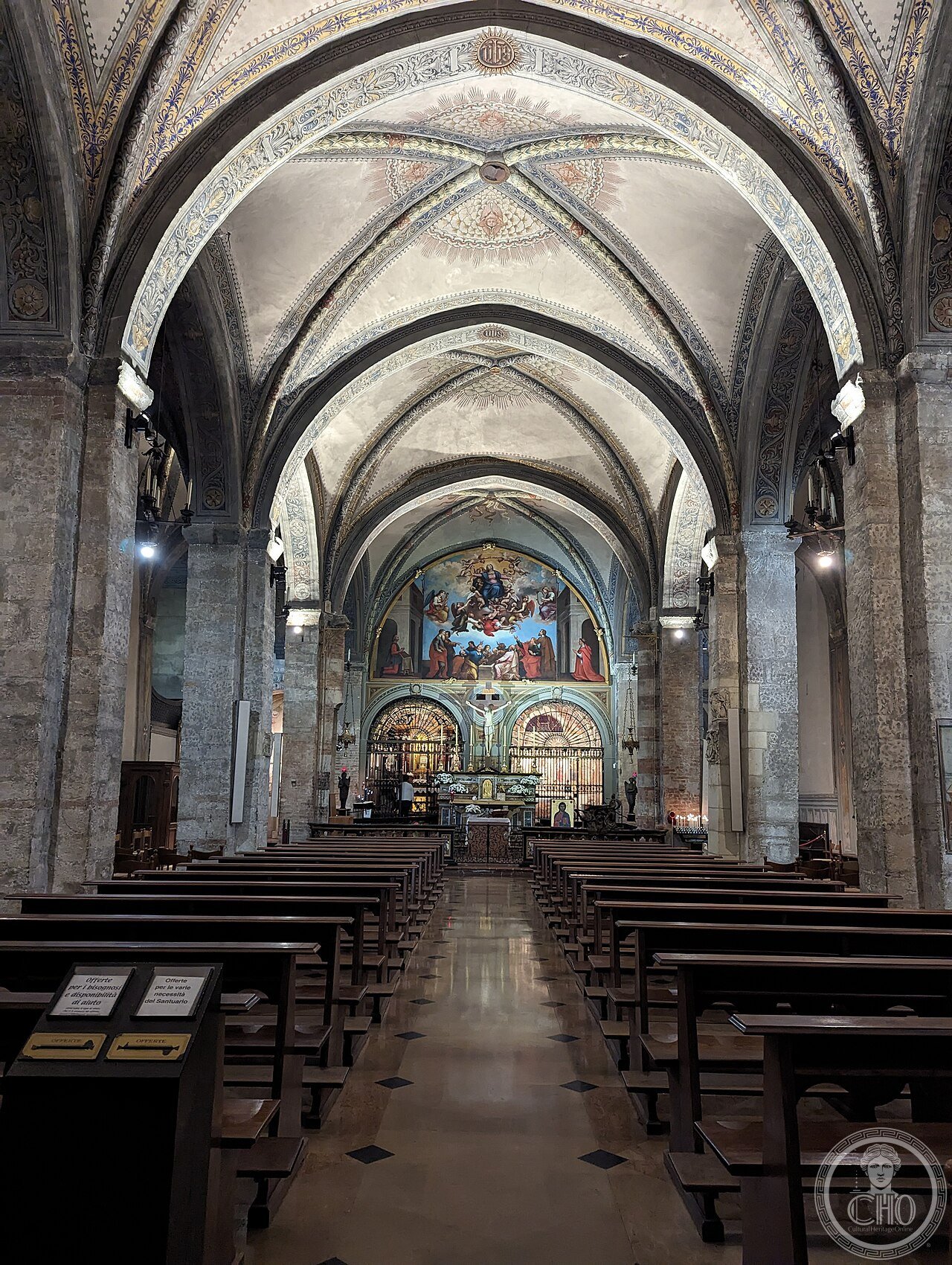
Crea was a sanctuary before it was a Sacro Monte. Tradition attributes the first shrine to Saint Eusebius of Vercelli, around the year 350, and credits him with bringing the image of the Madonna still venerated here; the attribution is devotional rather than documented. What is documented is older than the chapels by five centuries: in 1060 the emperor Henry IV confirmed the privileges of the Benedictine abbey of San Benigno di Fruttuaria over the site, which later passed to the Lateran canons. The church, dedicated to the Assumption of the Virgin, was enlarged in 1483 and again between 1608 and 1612.
The Sacro Monte itself dates from 1589, when Costantino Massino, prior of the Lateran canons at Crea, presented Duke Vincenzo I Gonzaga with a plan for a series of chapels on the life of the Virgin and the Mysteries of the Rosary. Massino had the Sacro Monte di Varallo in mind, founded a century earlier. The first chapels built were the Nativity and the Presentation of Mary in the Temple; by 1598 ten of them formed a crown around the sanctuary. Work went on through the seventeenth century and resumed in the nineteenth, which is why the cycle reads in two hands.
Between 1796 and 1801 the French revolutionary armies occupying the Monferrato destroyed statues and defaced frescoes across the site. Franciscan friars began repairs in 1820, and systematic restoration started in 1885 under Archbishop Luigi Nazari di Calabiana, continuing into the 1920s. The wood and farmland around the chapels have been protected as a nature park since 1980, and in 2003 the complex was inscribed by UNESCO together with the other eight Sacri Monti of Piedmont and Lombardy.
What you see
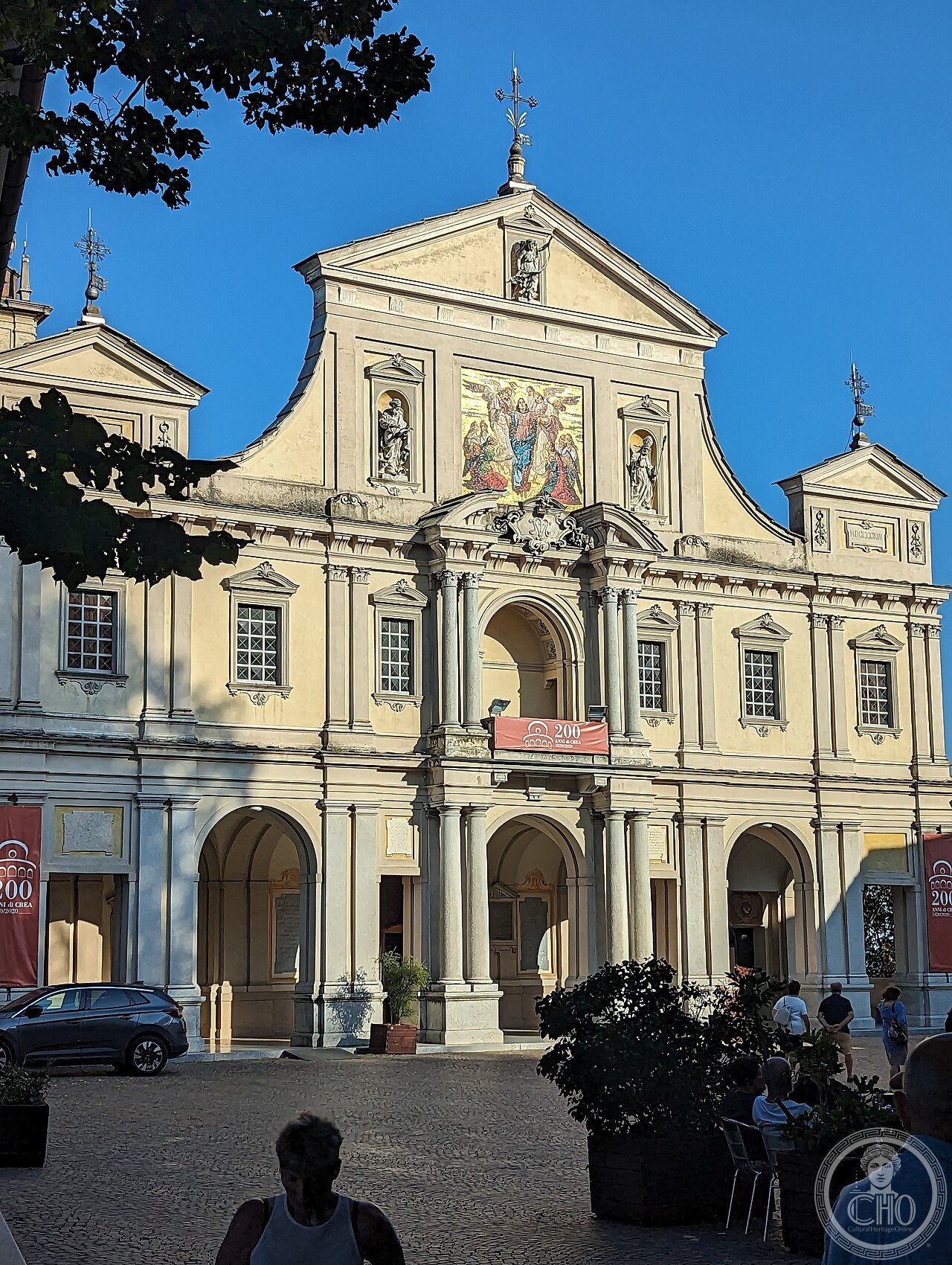
The climb begins at the sanctuary, whose front carries a mosaic of the Assumption between two statues in niches, and rises into the wood. Each chapel is a small building housing a group of life-size figures in polychrome terracotta, seen through a grille: the scene is staged, lit from a single side, and meant to be read like a tableau rather than an altarpiece. Where the frescoed walls survive, painted crowds continue the modelled ones, so that the twenty or thirty statues on the floor open into a painted multitude behind them.
The Chapel of Paradise, at the top, is the reason to make the climb. More than three hundred figures are banked on stepped platforms in a single room, the sculpture made between about 1604 and 1612 by Giovanni and Nicola de Wespin, Flemish brothers who had trained at Varallo and were known in Piedmont as the Tabacchetti. Nothing else on the nine Sacri Monti gathers so many figures in one space. Five hermitages, small retreats scattered along the path, complete the route: the Sepolcreto dei Frati, formerly Sant’Alessio, the Addolorata, San Rocco, San Francesco and San Luca.
Practical information
- Access: the sanctuary is open to visitors and the path to the chapels is free; for current opening times it is best to check the official channels of the sanctuary or of the nature park.
- The walk: the route climbs through woodland on a made path; the park authority describes it as passable by visitors with reduced mobility, but the gradient is real and worth allowing time for.
- Light: the chapels are seen through grilles and depend on daylight, so the interiors read best in the middle of the day; the view over the Monferrato is better in the late afternoon.
- Time needed: a half day for the full circuit of the chapels and the sanctuary.
Getting there
Crea stands in the municipality of Serralunga di Crea, in the province of Alessandria, reached by road from Casale Monferrato to the north or from Asti to the south-west; there is a car park at the foot of the hill, below the sanctuary. The nearest railway station of any size is Casale Monferrato, with regional services from Turin and Alessandria; from there the last stretch has to be covered by road. For times and fares it is best to consult the Trenitalia site.
Nearby
- Casale Monferrato — the old capital of the Monferrato, with its synagogue of 1595 and the Jewish museum attached to it.
- Sacro Monte di Varallo — the oldest of the nine, founded in 1486, and the model Massino had in mind when he planned Crea.
- Sacro Monte di Orta — another site of the same UNESCO property, its twenty chapels dedicated to the life of Saint Francis above Lake Orta.
Gallery
Sources
- UNESCO World Heritage List, Sacri Monti of Piedmont and Lombardy, reference 1068, inscribed 2003
- Sacri Monti — Ente di gestione dei Sacri Monti, Sacro Monte di Crea (sacrimonti.org)
- Riserva Speciale del Sacro Monte di Crea, points of interest (parks.it)
- Città e Cattedrali, Sacro Monte di Crea
- Wikipedia, Sacro Monte di Crea, consulted September 2026
Gallery
Find it on the map
See this place and what’s around it →📷 Become a Cultural Heritage Online photographer
Share your photos of places: they stay published under your name as the author. The more they're seen, the more you get noticed — and soon a contest will reward the most appreciated photos.
Log in or sign up free to add a photo