
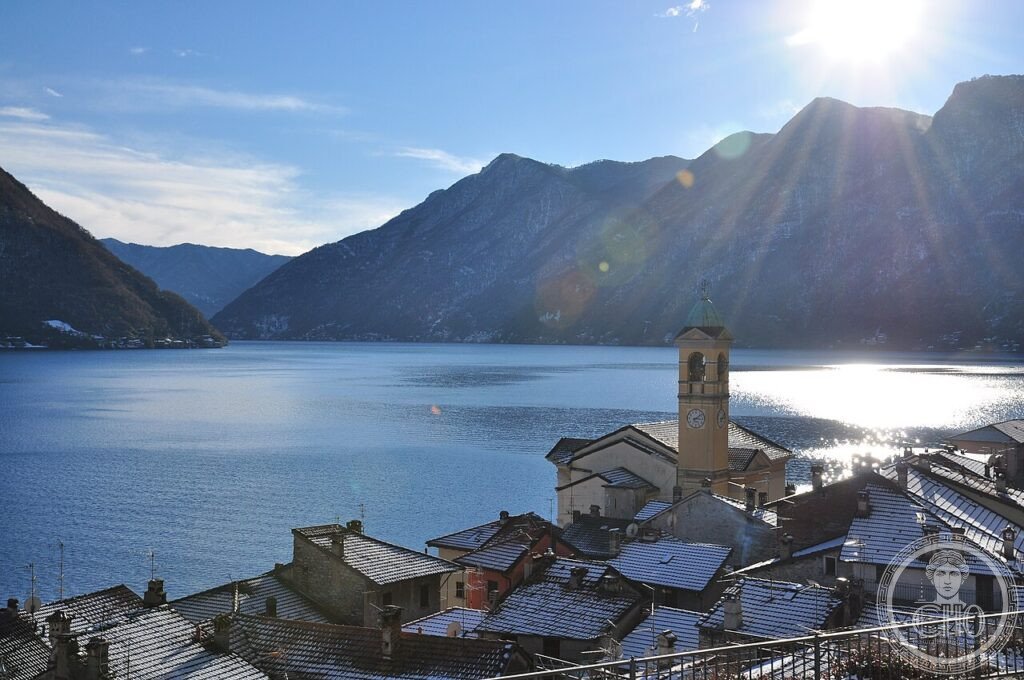
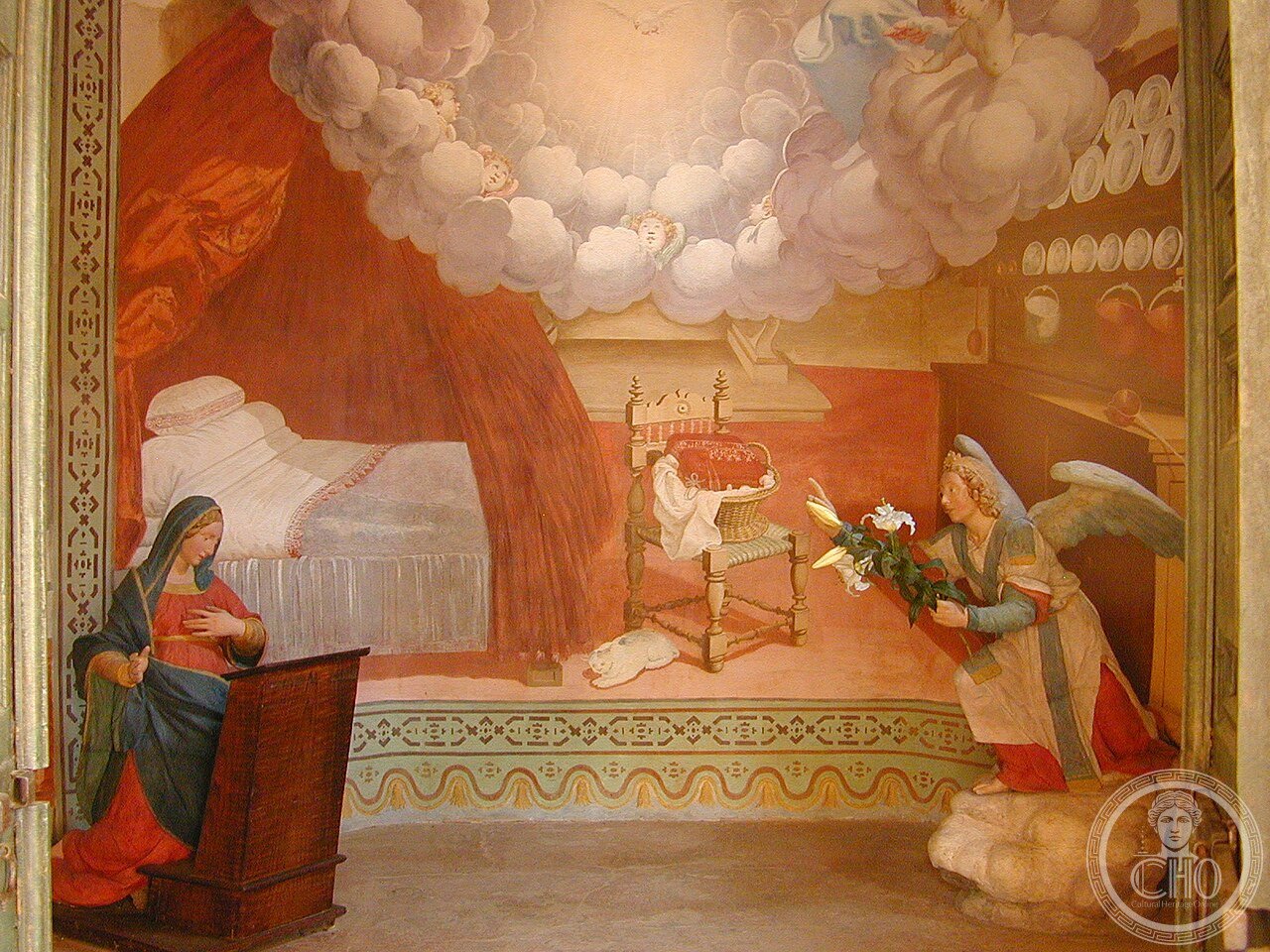
Fourteen chapels climb a wooded hillside above Lake Como, each filled with polychrome stucco figures that have kept their original colour for three centuries, ending at a sanctuary with a Marian fresco painted around 1440 and a view across the water to the Isola Comacina.
At a glance
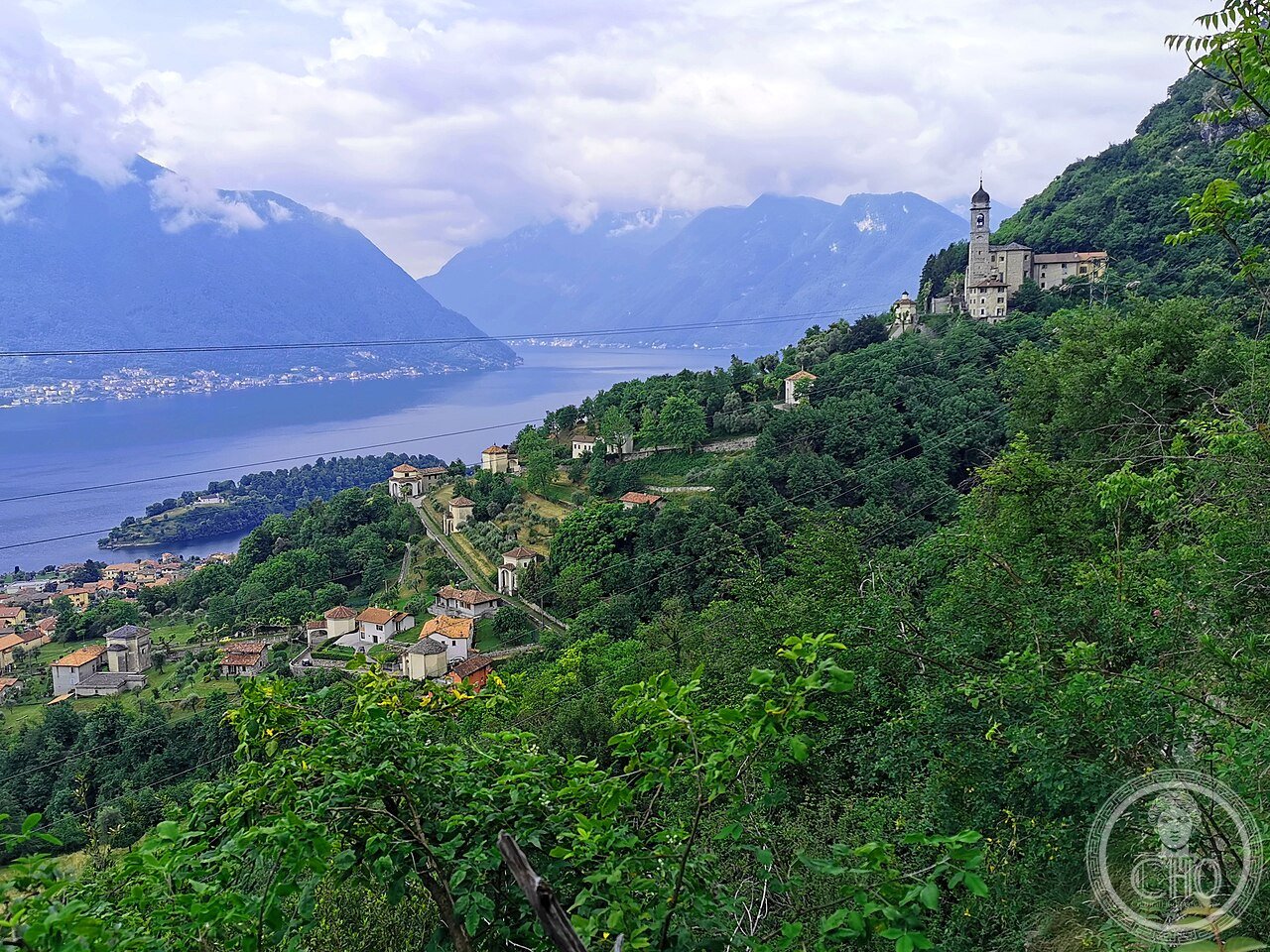
The Sacro Monte di Ossuccio is a devotional path of fourteen chapels rising above the village of Ossuccio on the western shore of Lake Como. The route follows the fifteen Mysteries of the Rosary, from the Annunciation to the Coronation of the Virgin, and climbs through woodland to the Santuario della Beata Vergine at the top.
The chapels were built between 1635 and 1714, and the later ones contain elaborate polychrome stucco figures attributed to a sculptor known as Battista da Morcote. From several points along the path, and especially near the top, the Isola Comacina, the only island on Lake Como, is visible across the water.
Key facts
- Chapels: 14, built in stages between 1635 and 1714
- Statues: around 200 polychrome stucco figures, largely the work of Battista da Morcote
- Route: roughly 2 km, rising about 174 metres from the village to the sanctuary
- Sanctuary: Santuario della Beata Vergine di Ossuccio, rebuilt in 1692, holding a Marian fresco dated to around 1440
- Recognition: part of the UNESCO serial inscription of the Sacri Monti of Piedmont and Lombardy, listed in 2003
History
The complex was founded in 1635 by the Franciscan friar Fra Gerolamo Nava, who had visited the Sacro Monte of Varese and proposed a similar Marian pilgrimage route to the Bishop of Como. Construction was carried out under the patronage of the Confraternita del Rosario di Ossuccio, a lay brotherhood, and proceeded in phases: the first eight chapels, built between 1635 and 1660, are simpler structures in local stone, while chapels nine to fourteen, completed between 1685 and 1714, mark the arrival of Battista da Morcote and his more refined stucco work.
The Sacro Monte di Ossuccio was included in 2003 in the UNESCO serial inscription covering nine Sacri Monti of Piedmont and Lombardy.
What you see
The path begins at a waymarked trailhead on the main road through Ossuccio, cobbled for its first stretch before becoming an unpaved woodland track. The early chapels, built in the seventeenth century before Battista da Morcote’s involvement, have a rougher stucco surface and smaller figure groups; Cappella 3, showing the Adoration of the Magi, includes shepherd figures with notably naturalistic faces set against more idealised principal figures.
From around the seventh chapel onward the stucco work becomes noticeably finer, with smoother surfaces and deeper colour penetration. The sequence culminates in the fourteenth chapel, the Assunzione della Vergine al Cielo, the largest on the route, where twenty-four figures include the Virgin rising within a golden mandorla suspended from the vault, surrounded by apostles and angels. Beside it stands the Santuario della Beata Vergine, rebuilt in 1692, whose apse holds a Marian fresco moved there from the original chapel in 1856 and dated to around 1440, the only object on the site to predate the Sacro Monte itself. From the terrace near the last chapels, the Isola Comacina is visible across the lake.
Practical information
- Access: the path starts from the main road through Ossuccio; walking the full route and visiting the chapels takes a couple of hours at an unhurried pace
- Terrain: a woodland footpath with a steady climb, part cobbled and part unpaved; suitable footwear is advisable
- Isola Comacina: reachable by boat from Ossuccio; a restaurant on the island offers a set menu and maintains a long-standing tradition of ceremonially burning the tablecloth at the end of the meal
- Bookings and timetables: check current bus, ferry and restaurant details through the relevant local operators before travelling
Getting there
Ossuccio sits on the western shore of Lake Como and can be reached by bus from Como or by ferry from towns such as Bellagio. From the village, the Sacro Monte trailhead is a short walk from the main road, and lake ferries also link Ossuccio onward to Bellagio and Varenna, from where trains run to Milan.
Nearby
- Isola Comacina — just offshore, reachable by boat; the only island on Lake Como, inhabited since the Neolithic period and site of the ruins of seven churches destroyed by Barbarossa in 1169
- Bellagio — a short ferry ride away, a lakeside town with its own onward connections
- Varenna — reachable by ferry via Bellagio, with a rail link on to Milan
Sources
- Archivio Parrocchiale di Ossuccio
Gallery
Find it on the map
See this place and what’s around it →📷 Become a Cultural Heritage Online photographer
Share your photos of places: they stay published under your name as the author. The more they're seen, the more you get noticed — and soon a contest will reward the most appreciated photos.
Log in or sign up free to add a photo