
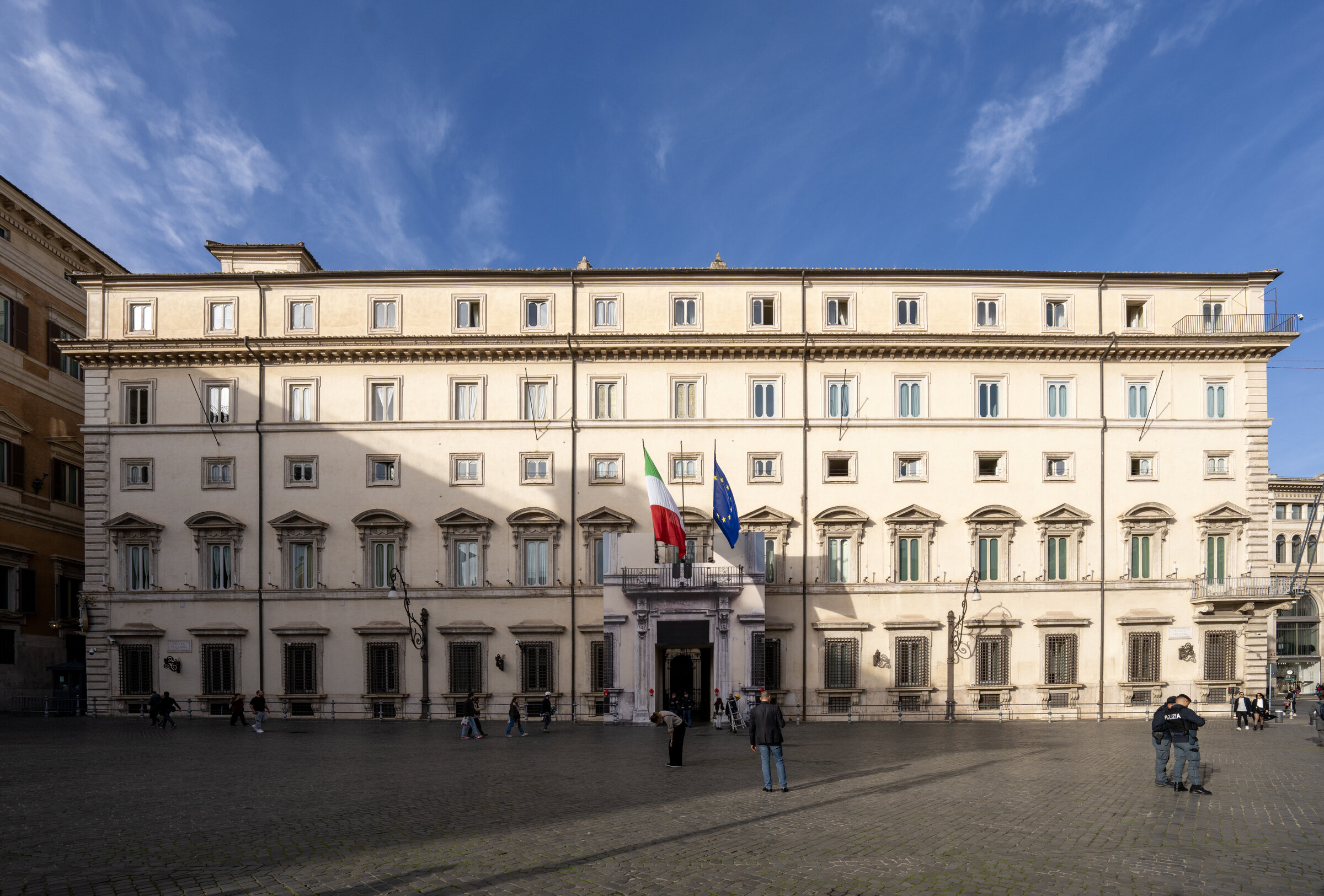
Begun in 1562 for the Aldobrandini family on the north side of Piazza Colonna, Palazzo Chigi was carried forward by Giacomo Della Porta, Carlo Maderno and, in its later phases, Felice Della Greca. The Sienese banking family Chigi acquired the palace in 1659 and gave it the name it still bears today. After serving as a foreign embassy and ministerial seat in the late nineteenth century, it was purchased by the Italian State in 1916 and has been the official seat of the President of the Council of Ministers of Italy since 1961.
- Address
- Piazza Colonna 370, 00187 Roma RM
- Period
- Begun 1562 for the Aldobrandini family; completed 1640s under the Chigi
- Architect
- Giacomo Della Porta, Carlo Maderno, Felice Della Greca
- Patron
- Aldobrandini, then Chigi family (acquired 1659)
- Function
- Family palace of the Chigi from 1659; Austria-Hungary embassy 1878; acquired by the Italian State 1916; Ministry of Foreign Affairs in the 1920s
- Current use
- Official seat of the President of the Council of Ministers of Italy since 1961
- Coordinates
- 41.9008° N, 12.4798° E
- Notes
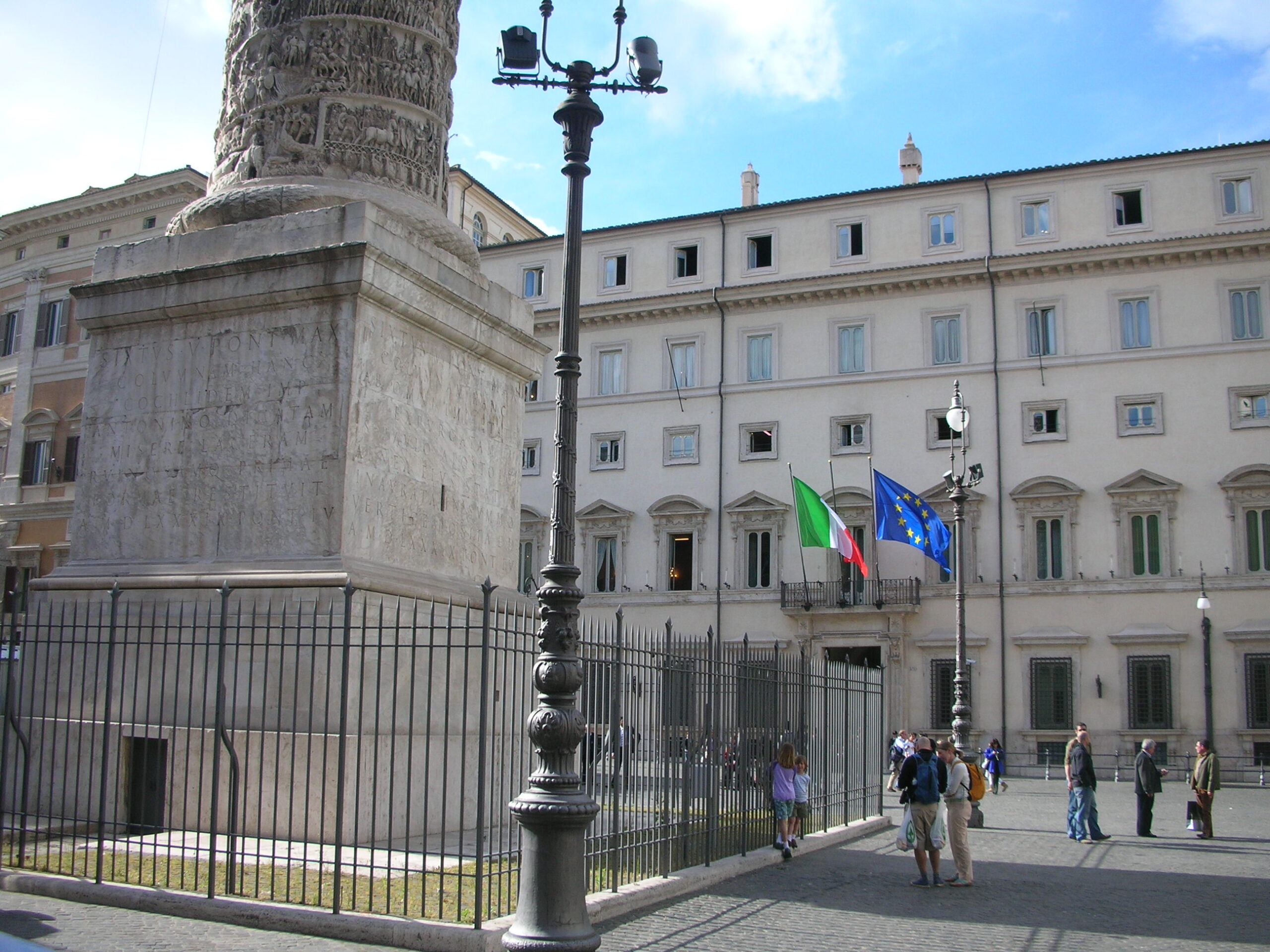
- Faces Piazza Colonna and the Column of Marcus Aurelius; not normally open to the public; guided visits occasionally organised on national open-days
Gallery
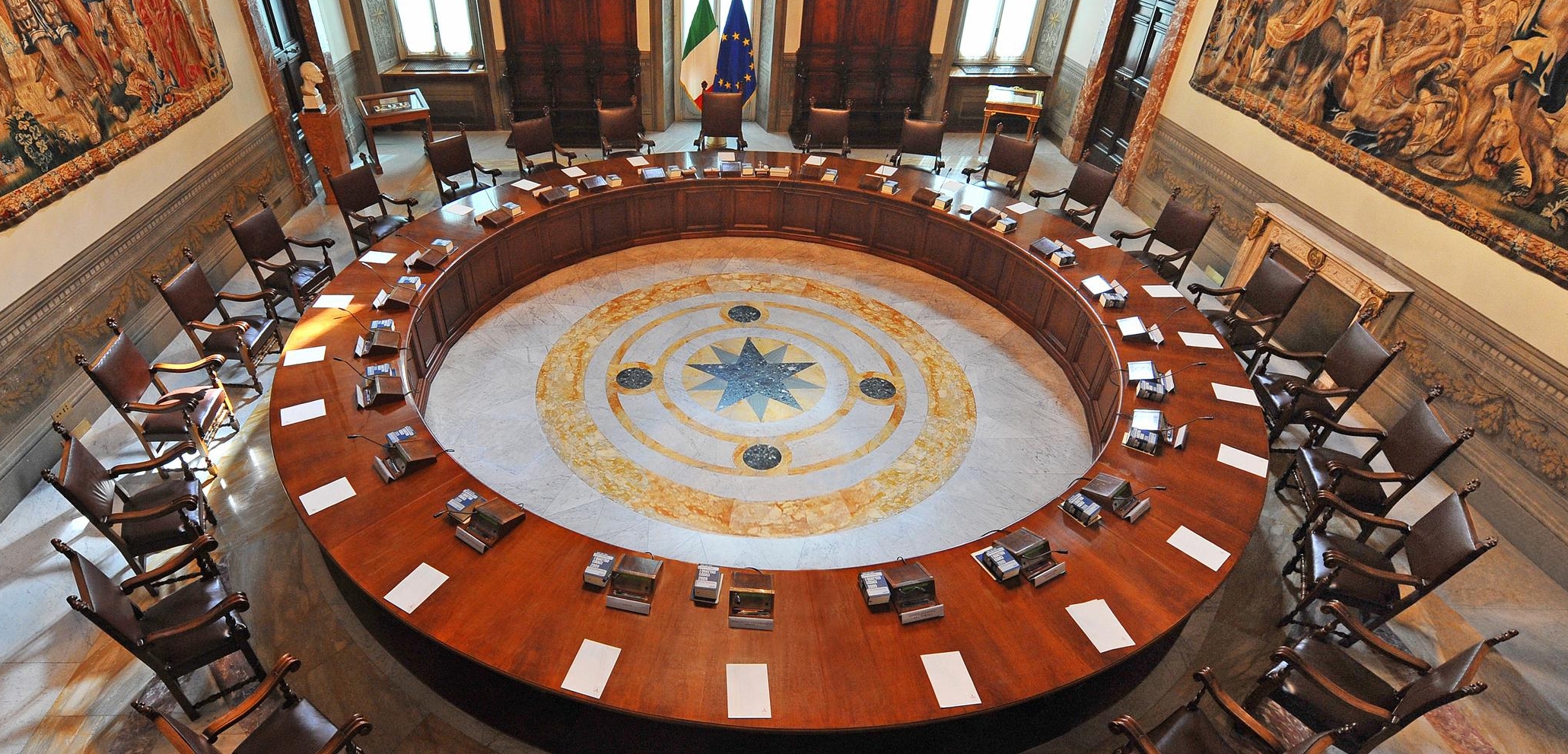
Two views of the palace: the council hall used by the Italian government, and the building in its urban setting opposite the Column of Marcus Aurelius.
Visit on the map
Piazza Colonna 370 · 41.9008° N, 12.4798° E
Download for your navigator
A single waypoint, ready for GPS apps, navigators, and contacts.
Construction began in 1562 for the Aldobrandini, a Florentine family that had risen to prominence in Rome and would soon supply the Church with Pope Clement VIII. The project was entrusted to Giacomo Della Porta, one of the leading architects of late-sixteenth-century Rome and a continuator of Michelangelo’s work at St Peter’s. Della Porta laid out the main block facing what is now Piazza Colonna, opposite the second-century Column of Marcus Aurelius, and designed the courtyard fountain that would become a model widely copied in later Roman palaces. Work was carried on after his death by Carlo Maderno, the architect of the facade of St Peter’s, who brought the building close to completion around 1580 within a restrained late-Renaissance idiom.
In 1659 the palace was purchased by the Chigi, a Sienese banking family whose fortunes had been transformed by the election of Fabio Chigi as Pope Alexander VII two years earlier. The family commissioned Felice Della Greca, an architect close to the Chigi circle, to extend and finish the building during the 1660s and into the following decades, adapting it to the scale and representational needs of one of Rome’s most powerful papal families. The palace took on its present name and, through successive Chigi generations, accumulated the libraries, antiquities and furnishings of a senior Roman princely household, much of which was later dispersed when ownership changed in the modern period.
After Italian unification the building entered public service. From 1878 it housed the embassy of Austria-Hungary, and in 1916 it was acquired outright by the Italian State, initially used for the Ministry for Colonial Affairs and subsequently for the Ministry of Foreign Affairs, which kept its headquarters there for several decades. In 1961 Palazzo Chigi was designated as the official seat of the President of the Council of Ministers and of the Council of Ministers itself, a function it retains today. The Sala del Consiglio dei Ministri, where the cabinet meets, and the adjoining state rooms are now among the principal ceremonial spaces of the Italian Republic, while the facade on Piazza Colonna has become one of the most recognisable institutional images of the country.
Resources & References
Editorial picks across Wikipedia, photo archives, and the official portal.
All photographs Wikimedia Commons (CC-BY / CC-BY-SA / Public Domain) unless otherwise stated. Editorial text Cultural Heritage Online, OASIS Tech LLC USA.
Find it on the map
See this place and what’s around it →Historical events at this place (1)
📷 Become a Cultural Heritage Online photographer
Share your photos of places: they stay published under your name as the author. The more they're seen, the more you get noticed — and soon a contest will reward the most appreciated photos.
Log in or sign up free to add a photoIs this page about you?
This page is read by travellers and heritage enthusiasts who find it on Google. Tell us how you are connected to this place and we will take it from there.