
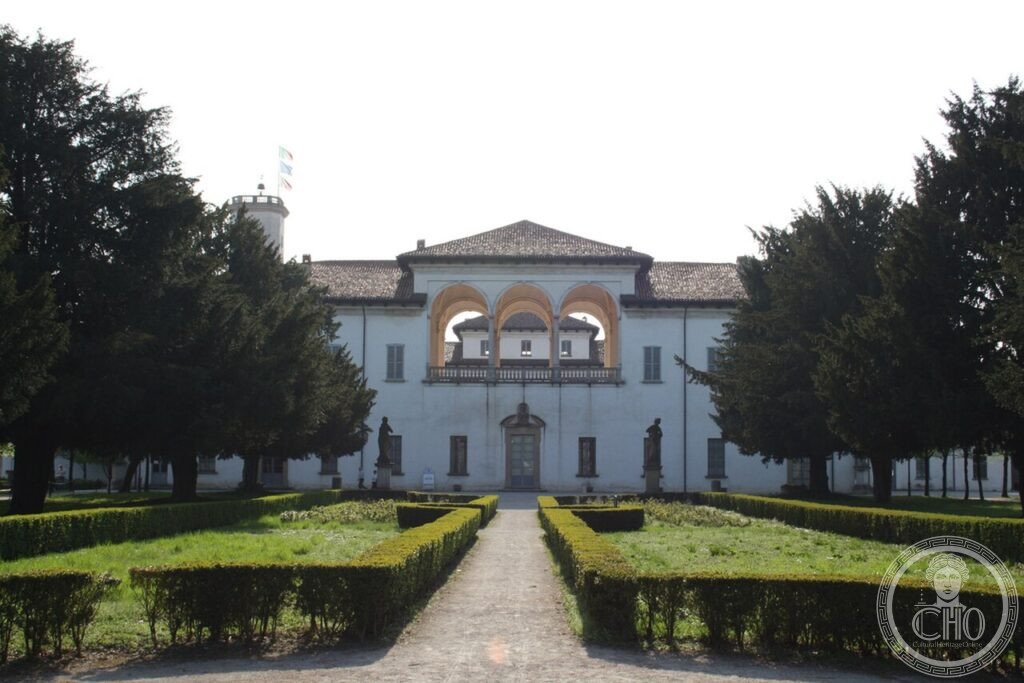
A seventeenth-century palatial villa north of Milan, built for the Arese family and acquired by the Borromeo in 1777, whose frescoed halls constitute one of the most complete examples of early Baroque decorative cycles in Lombardia — transferred to FAI in 2017 after the last Borromeo heirs departed.
At a glance
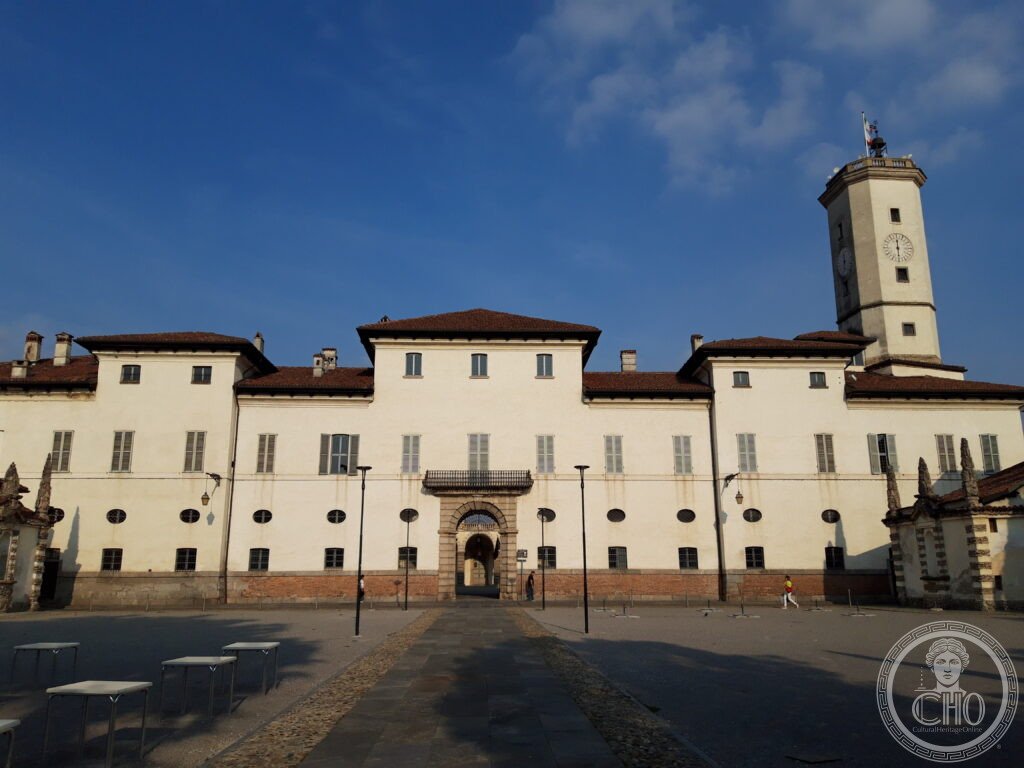
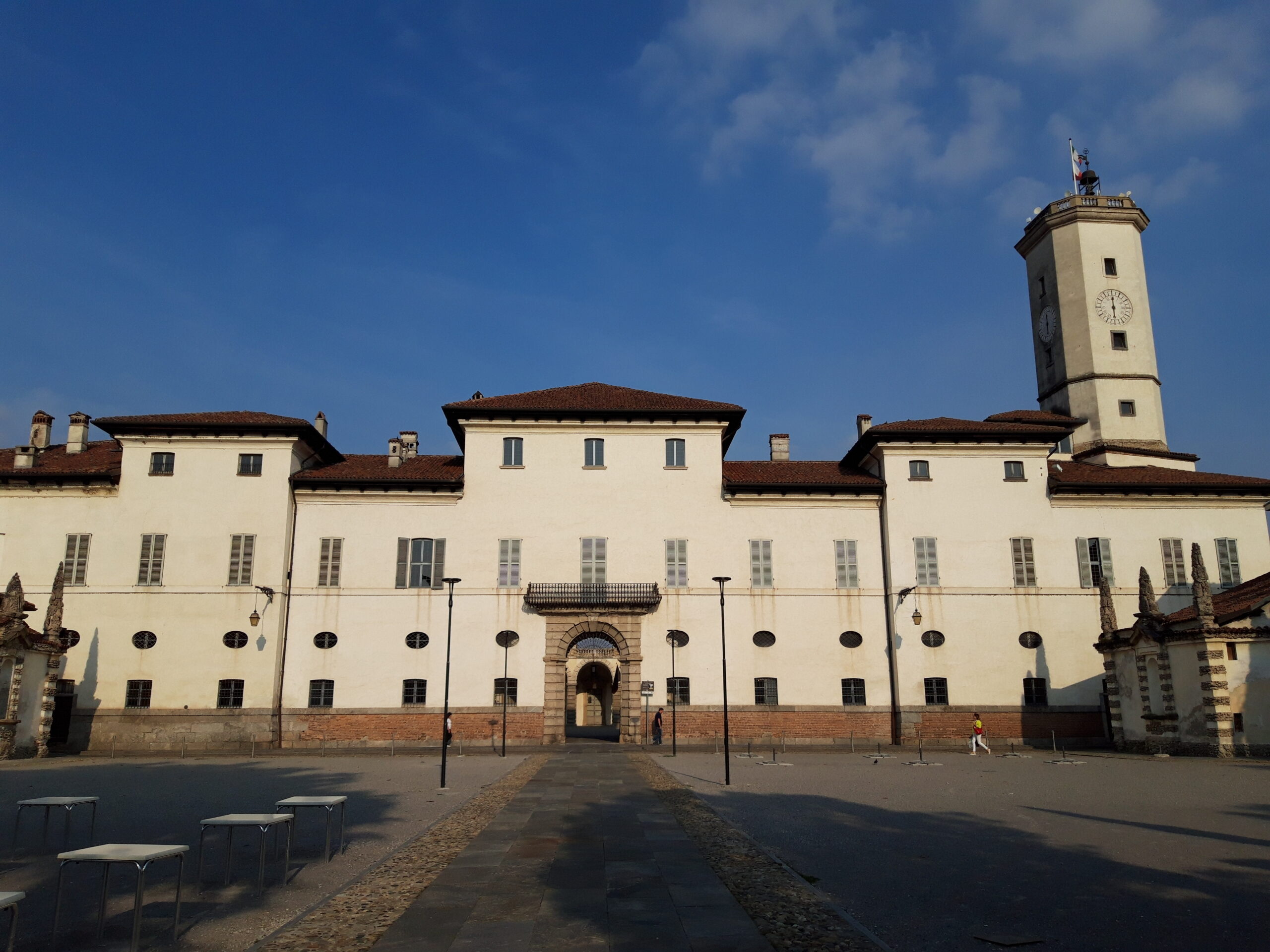
Palazzo Arese Borromeo stands at the centre of Cesano Maderno, 18 km north of Milan, surrounded by the suburban sprawl of the Brianza plain but preserving behind its main facade a sequence of frescoed reception rooms that belong entirely to the world of seventeenth-century Milanese court culture. The palace was built between 1648 and 1658 by Bartolomeo Arese, president of the Senate of Milan under Spanish rule, as a declaration of political and cultural ambition; the Borromeo family, one of the great Lombard dynasties, acquired it in 1777 and added their name.
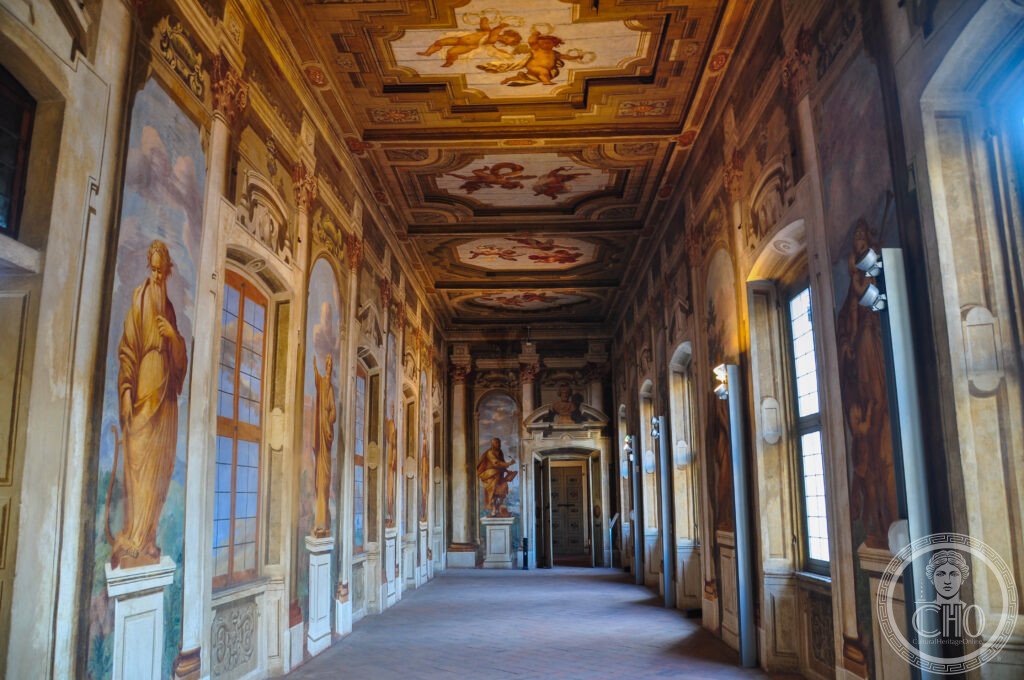
The FAI acquired the palace in 2017 after the Borromeo heirs donated it, and opened it to the public in 2021 after a conservation campaign. The fresco cycle — including the celebrated Sala di Giove (Hall of Jupiter) with Giovanni Battista Pozzi’s ceiling painting — makes it one of the most significant early Baroque interiors in Lombardia accessible to visitors.
Key facts
- Construction: 1648–1658, for Bartolomeo Arese
- Key frescoist: Giovanni Battista Pozzi + workshop (late 1650s)
- Borromeo acquisition: 1777
- FAI acquisition: 2017; open to public 2021
- Location: Via Borromeo 1, Cesano Maderno (MB), Lombardia
- GPS: 45.6176, 9.1508 — Google Maps
History
Bartolomeo Arese (1610–1674) was one of the most powerful figures in Spanish Milan — president of the Senate of Milan from 1660, effectively the head of the civic judiciary under Spanish vice-regal rule. He commissioned Palazzo Arese in the 1640s as the principal seat of his family outside the city, choosing Cesano Maderno (then a village in open countryside) for the estate’s scale and agricultural productivity.
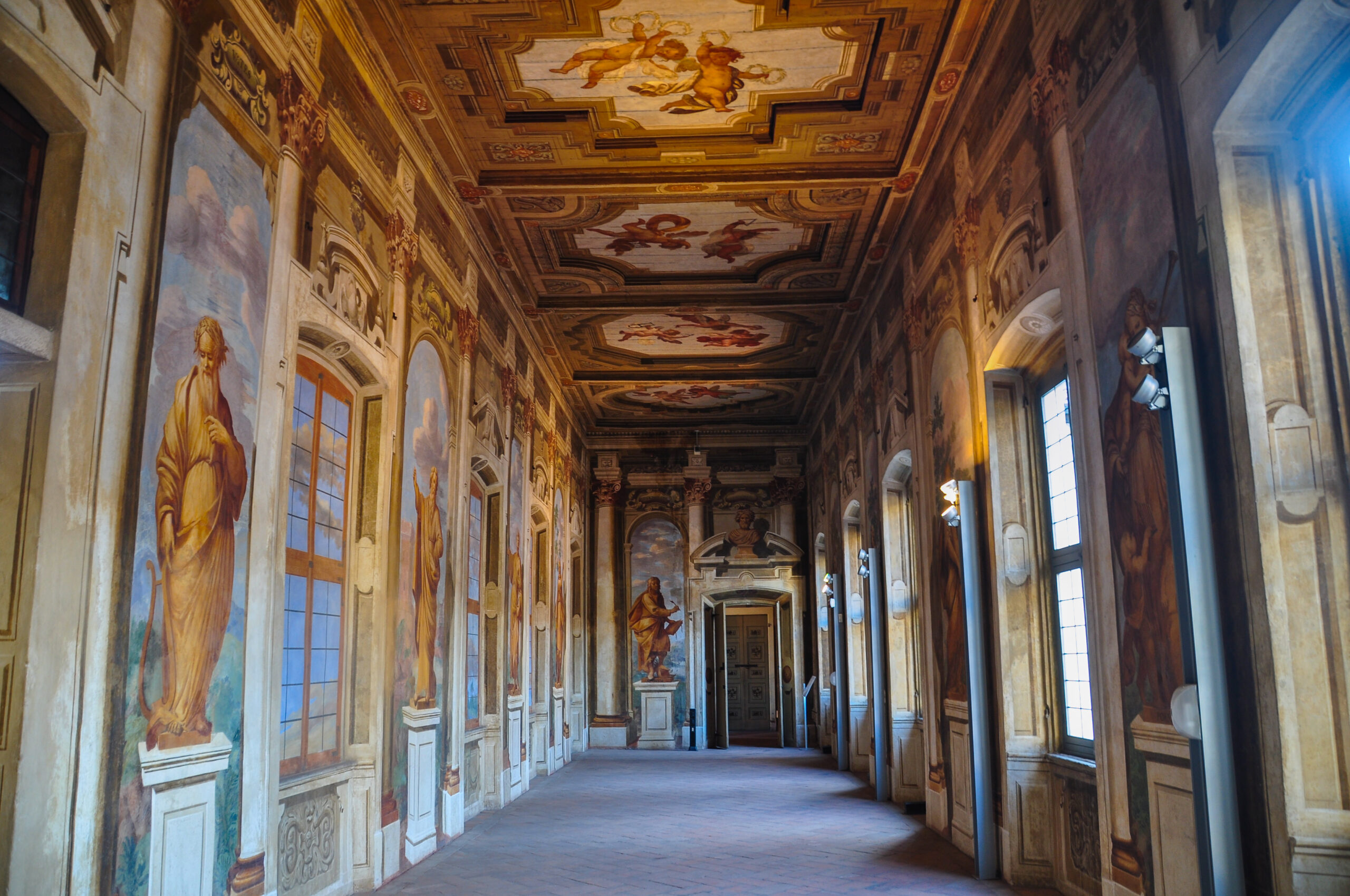
The decorative programme was executed principally by the Ticinese painter Giovanni Battista Pozzi and his workshop, working in a style that blends late Mannerist illusionism with the emerging Baroque rhetoric of spatial illusion and dynamic figuration. The Sala di Giove presents a mythological ceiling in feigned architecture, with Jupiter dispensing justice — a transparent allegory for Arese’s own role. The programme continues through ten successive rooms, covering mythological subjects, personifications of virtues, and the Arese family genealogy in a manner consistent with contemporary Genoese and Roman palatial decoration, though executed at a provincial level of refinement.
The Borromeo family maintained the palace continuously until the twentieth century, preserving the seventeenth-century decoration without major intervention. After the last Borromeo to occupy the palace departed in the 1990s, the building passed through a period of institutional use before the donation to FAI in 2017.
What you see
The piano nobile consists of a sequence of ten interconnected rooms, each with a ceiling fresco and partial wall decoration. The Sala di Giove (Room of Jupiter) is the largest and most fully preserved, its ceiling fresco still vivid in its central panel despite peripheral losses. The quality of the painting varies across rooms — some are full professional cycles, others show workshop execution — but the totality is exceptional: a complete seventeenth-century palatial programme, not a single room extracted from a lost context.
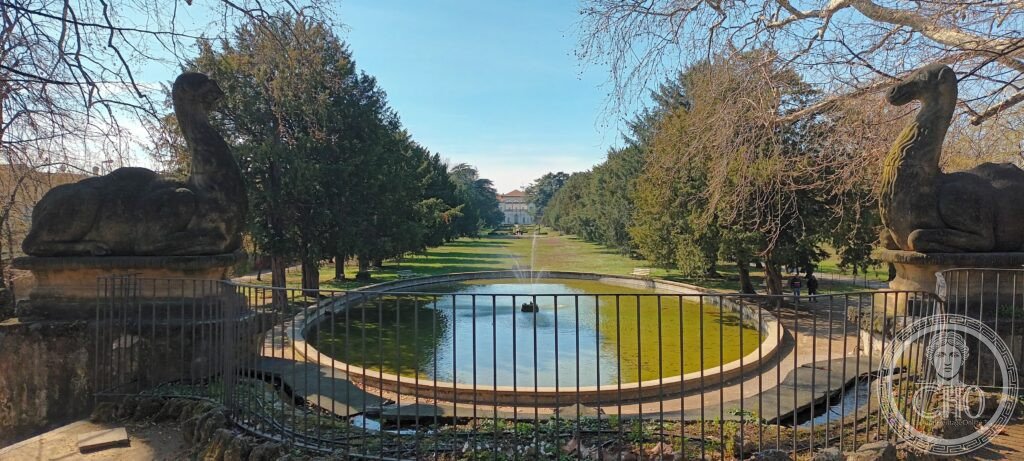
The courtyard is the architecturally most distinguished element of the building, with its arcaded ground floor and the piano nobile loggia above giving a sequence of axial views that extend to the rear garden. The garden itself was formally laid out in the Italian style in the seventeenth century and is partially restored; it provides the best view of the palace’s north facade.
Gallery
Practical information
- Opening: Tuesday–Sunday, hours vary seasonally; check fondoambiente.it before visiting. Closed Monday.
- Admission: Standard FAI rates; free for FAI members.
- Guided visits: Required for interior frescoed rooms (available at ticketing). Duration: approximately 1h.
- Exterior/courtyard: Accessible without ticket during opening hours.
Getting there
Cesano Maderno is 18 km north of Milan on the SS35 (Milan–Como road). By train: Milan Porta Garibaldi to Cesano Maderno (Saronno line, Trenord), 25 minutes, every 20 minutes. The palace is 500 m from Cesano Maderno station. By car: A9 Milan–Como motorway exit Cesano Maderno, then follow town centre signs; the palace is adjacent to the historic centre.
Nearby
- Monza — Villa Reale di Monza (neoclassical royal villa) + Autodromo Nazionale, 10 km south-east
- Desio — Museo Civico with local archaeological collections, 5 km south
- Villa Panza, Varese — FAI contemporary art collection, 22 km north-west
Sources
- FAI – Fondo Ambiente Italiano: fondoambiente.it/luoghi/palazzo-arese-borromeo
- Wikipedia IT: Palazzo Arese Borromeo
- Spiriti, Andrea: Il Palazzo Arese Borromeo di Cesano Maderno, Cinisello Balsamo, 2004
Gallery
Find it on the map
See this place and what’s around it →📷 Become a Cultural Heritage Online photographer
Share your photos of places: they stay published under your name as the author. The more they're seen, the more you get noticed — and soon a contest will reward the most appreciated photos.
Log in or sign up free to add a photoIs this page about you?
This page is read by travellers and heritage enthusiasts who find it on Google. Tell us how you are connected to this place and we will take it from there.