
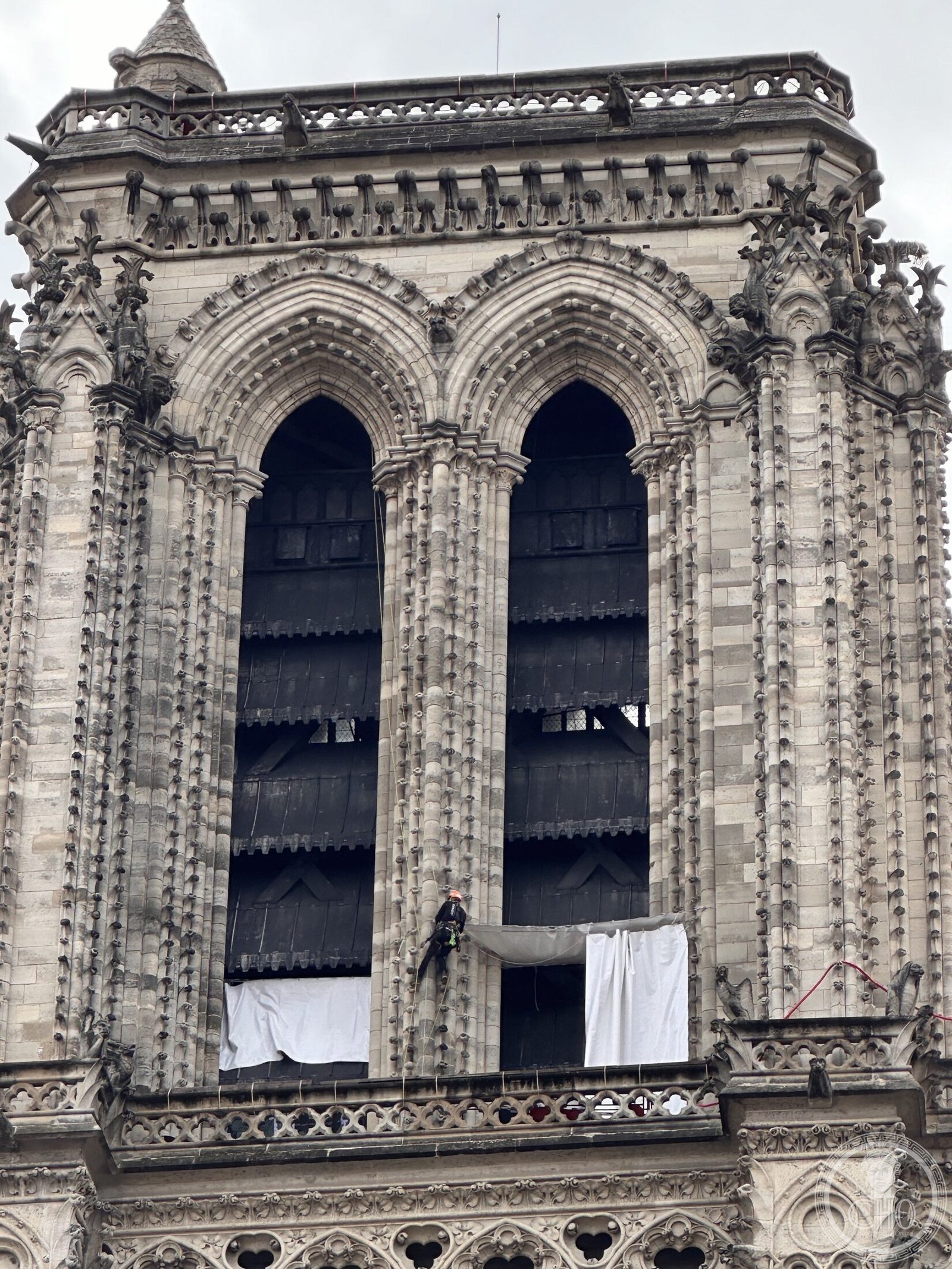
Notre-Dame de Paris is the cathedral that helped define Gothic architecture, pioneering the flying buttress as a structural solution and inspiring Victor Hugo’s 1831 novel, which helped save it from demolition. Gutted by fire in 2019, it reopened in December 2024 after a five-year restoration that returned its stonework, timber roof and stained glass to public view.
At a glance
Notre-Dame de Paris stands on the Île de la Cité and was begun in 1163 under Bishop Maurice de Sully, with construction continuing for some 180 years. It is closely associated with the development of the flying buttress, a structural innovation that allowed cathedral walls to be thinned and windows enlarged, letting stained glass become part of the building’s architecture rather than mere decoration.
A fire on 15 April 2019 destroyed the spire and much of the roof. The cathedral reopened on 7 December 2024 after a restoration that involved a large number of craftspeople and took around five years to complete.
Key facts
- Founded: construction began 1163, largely complete by 1345
- Founder: begun under King Louis VII and Bishop Maurice de Sully
- Style: High Gothic, notable for early large-scale use of flying buttresses
- Fire and restoration: spire and roof destroyed by fire on 15 April 2019; reopened 7 December 2024
- Literary link: subject of Victor Hugo’s 1831 novel Notre-Dame de Paris
- Heritage status: part of the UNESCO World Heritage Site “Paris, Banks of the Seine”, inscribed in 1991
History
Notre-Dame was begun in 1163 on the Île de la Cité, the island long recognised as the founding site of Roman-era Lutetia. Construction continued for close to two centuries under successive bishops. The cathedral became a stage for national history: Henry VI of England was crowned King of France here in 1431, and Napoleon crowned himself Emperor in the building in 1804, taking the crown from the Pope’s hands rather than receiving it directly.
During the Revolution the cathedral was rededicated as the Temple of Reason in 1793, and the statues on its Gallery of Kings were decapitated. Its fortunes changed after Victor Hugo published Notre-Dame de Paris in 1831; the novel, written partly to draw attention to the neglect of Gothic architecture in France, helped generate public support for restoration. Eugène Viollet-le-Duc led the resulting restoration between 1844 and 1864, adding the spire that would collapse in the 2019 fire.
The cathedral is part of the UNESCO World Heritage Site covering the banks of the Seine in Paris, inscribed in 1991. Following the 2019 fire, a five-year restoration returned the building to public use, with it reopening on 7 December 2024.
What you see
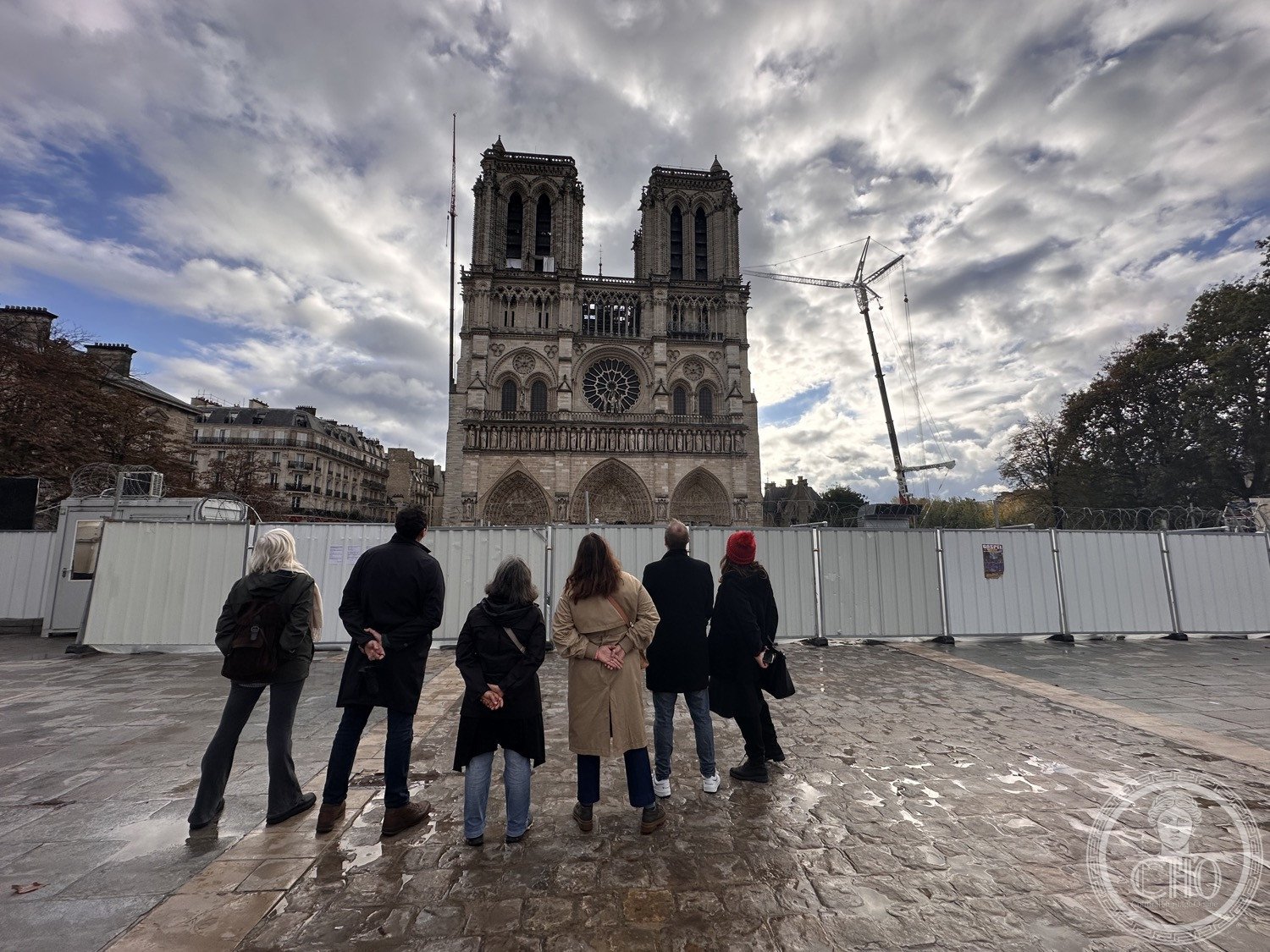
The west facade presents a densely carved Gothic portal, restored along with the rest of the exterior stonework. Inside, the nave rises to a considerable height, its proportions shaped by the flying buttresses that made such tall, thin walls possible.
Three rose windows survive. The north rose window retains a substantial proportion of its original thirteenth-century glass and depicts the Virgin and Child surrounded by Old Testament figures. The south rose window is largely nineteenth-century glass from the Viollet-le-Duc restoration, showing Christ among the Apostles and saints, while the west rose window sits above the central portal.
Visitors can climb the north tower, reaching a gallery associated with the cathedral’s gargoyles, and the Treasury holds items connected with the cathedral’s history. The new spire, following the restoration, was chosen through a design competition.
Practical information
- Access: the cathedral nave is open for visits and worship; entry to the towers and Treasury is separate and paid
- Tower visits: climbing the north tower requires advance booking through the cathedral’s official website
- Official information: check notredamedeparis.fr for current visiting arrangements, as these have changed since the 2024 reopening
Getting there
Notre-Dame is reached by Metro Line 4 to the Cité station, or by RER B or C to Saint-Michel Notre-Dame, both within easy walking distance on the Île de la Cité. Travellers arriving from Charles de Gaulle Airport can take the RER B line directly to Saint-Michel Notre-Dame.
Nearby
- Sainte-Chapelle — a short walk west, a Gothic chapel with an extensive programme of stained glass
- Conciergerie — a short walk west, former royal palace and prison, including the cell associated with Marie Antoinette
- Île Saint-Louis — adjoining island lined with seventeenth-century townhouses
- The Louvre — to the north-west, housing the Mona Lisa and the Venus de Milo
- Musée d’Orsay — on the Left Bank, home to a major collection of Impressionist painting
Sources
- UNESCO
- Victor Hugo, Notre-Dame de Paris (1831)
- notredamedeparis.fr
Gallery
Find it on the map
See this place and what’s around it →📷 Become a Cultural Heritage Online photographer
Share your photos of places: they stay published under your name as the author. The more they're seen, the more you get noticed — and soon a contest will reward the most appreciated photos.
Log in or sign up free to add a photoRequest to use these images
Each photograph is by the person named on it. Cultural Heritage Online is the seller: it runs the payment, handles tax and delivers the file, and the photographer receives 70% of the price net of tax. Buying gives you the right to use the image in your own project — a website, an article, a presentation — with the file and a written licence. Read the Terms of Sale.
What you receive. The file as it is held in our archive: the photographer's own original, without the Cultural Heritage Online watermark, unretouched and not enlarged. This is a working archive built over many years by many people, so the files differ — some were taken recently, others years ago with the equipment of their time. Older pictures are usually smaller: a camera from fifteen or twenty years ago simply recorded fewer pixels than a phone does today, so the resolution is lower and the print comes out smaller. We say so rather than hide it. The size, weight, format and year of each one are printed below it, and the print size is given at 300 dpi. Nothing is upscaled to make a number look better. Where the picture on this page has been cropped for the layout, the file you receive is the full frame, which may be wider or taller than what you see here.
Notre-Dame de Paris — lateral view, October 2024
Photo: Luigi De Marchi
€8.00
1500 × 1125 px · JPG · 506.0 KB
prints 13 × 10 cm at 300 dpi · taken 2024
Notre-Dame de Paris — facciata post-restauro, ottobre 2024
Photo: Luigi De Marchi
€3.00
2200 × 1650 px · JPG · 1.1 MB
prints 19 × 14 cm at 300 dpi · taken 2024
Is this page about you?
This page is read by travellers and heritage enthusiasts who find it on Google. Tell us how you are connected to this place and we will take it from there.