
Newgrange — Boyne Valley

Newgrange Boyne Valley Ireland Neolithic passage tomb winter solstice UNESCO World Heritage
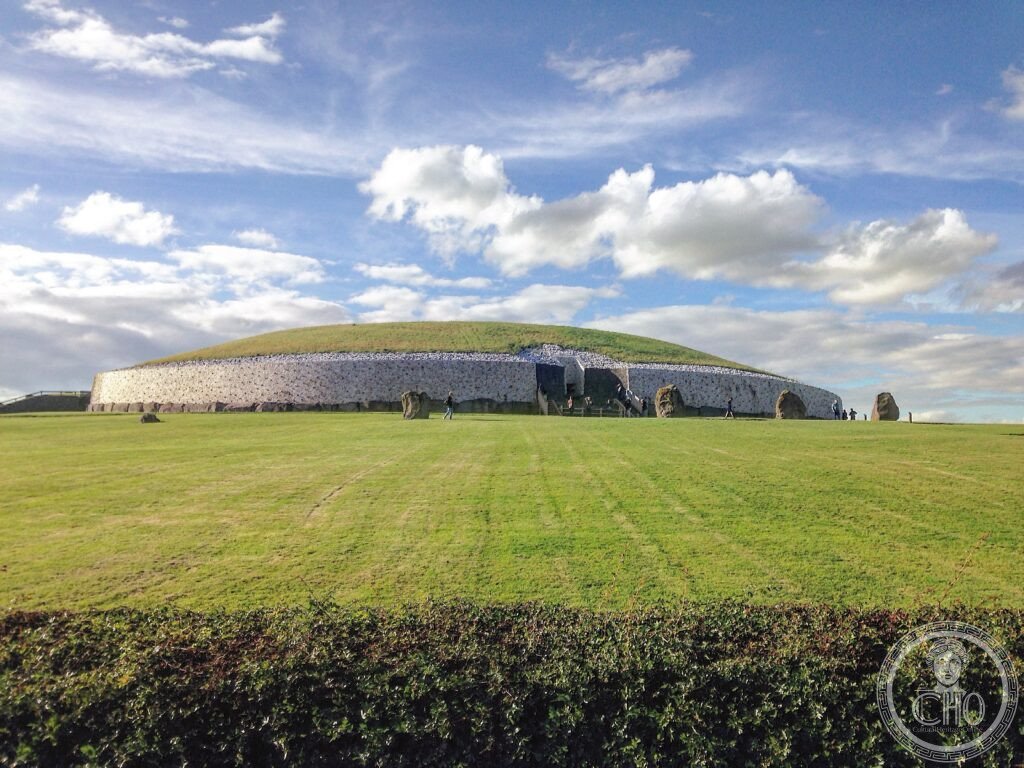
The entrance to Newgrange passage tomb with its decorated kerbstone and reconstructed white quartz façade, Boyne Valley, County Meath, Ireland (the most precisely winter-solstice single purpose-built ancient monument in the world: Newgrange (c. 3200 BCE — the most precisely oldest single UNESCO heritage monument in Ireland: older than Stonehenge by approximately 500 years and older than the Pyramids of Giza by approximately 500-600 years — the most precisely age single ancient Irish monument comparison; the solstice alignment (the most precisely precise single Neolithic solar alignment: a narrow roof-box above the entrance is aligned so precisely with the winter solstice sunrise that sunlight penetrates exactly 19.4 m down the passage to illuminate the central chamber for approximately 17 minutes — the most precisely time-measured single ancient solar illumination in any UNESCO heritage site; on the winter solstice (21 December) — the most precisely single day single purpose of the entire monument: the entire engineering effort of Newgrange was aimed at this one 17-minute event per year — the most precisely single annual moment single purpose-built UNESCO heritage monument in the world; the decorated kerbstone (the most precisely spiral single ancient stone carving: the triple spiral (triskelion) carved on the entrance kerbstone is the most precisely recognised single ancient Irish heritage symbol in any UNESCO site)), Brú na Bóinne, Boyne Valley, County Meath, Ireland — UNESCO World Heritage Site (Brú na Bóinne — Archaeological Ensemble of the Bend of the Boyne) 1993. Photo via Wikimedia Commons.
Brú na Bóinne, Boyne Valley, County Meath, Ireland (1h north of Dublin) · c.3200 BCE (500 years older than Stonehenge; 600 years older than Giza Pyramids); passage tomb; winter solstice alignment (19.4m passage; 17 min of illumination 21 Dec); 200,000 tonnes of stone; 97 kerbstones; triple spiral (triskelion) carvings; lottery for solstice viewing; Knowth + Dowth (sister monuments); 6.5h UNESCO WHS (Brú na Bóinne) 1993 · UNESCO WHS 1993

Newgrange — Boyne Valley

The world’s most precisely solar-aligned Neolithic monument and Ireland’s oldest UNESCO site — Newgrange in the Boyne Valley, built around 3200 BCE by a Neolithic farming community, was engineered so precisely that a narrow roof-box channels the winter solstice sunrise 19.4 metres down its passage to illuminate the burial chamber for exactly 17 minutes on the shortest day of the year.

At a glance

Newgrange (the most precisely engineering single Neolithic monument: the precision required to align the roof-box with the winter solstice sunrise 5,200 years ago — without metal tools, written mathematics, or modern surveying instruments — is the most precisely extraordinary single Neolithic engineering achievement in any UNESCO heritage site; the construction (the most precisely 200,000 single tonne Neolithic monument: Newgrange contains approximately 200,000 tonnes of stone — the most precisely heavy single Neolithic monument in Ireland; the stones were transported from up to 80 km away — the most precisely transported single Neolithic heritage stone in any Irish UNESCO site; the roof (the most precisely waterproof single Neolithic corbelled roof: the corbelled stone roof of the central chamber has remained waterproof for 5,200 years without any modern restoration — the most precisely ancient single watertight stone roof in any UNESCO heritage monument; the solstice lottery (the most precisely contested single ancient event ticket: approximately 30,000 people apply each year for the 50 available places in the chamber during the winter solstice illumination — the most precisely oversubscribed single UNESCO heritage natural event ticket in Ireland: 600:1 odds — the most precisely unfavourable single UNESCO heritage event ticket odds in any Western European country)).

Key facts

  • The passage and chamber: the most precisely solar single Neolithic engineering chamber — the passage (the most precisely 19.4m single ancient passage: 19.4 metres from the entrance to the central chamber — the most precisely length single Neolithic UNESCO heritage passage; the roof-box (the most precisely purpose-built single solar aperture in any UNESCO heritage monument: the roof-box above the entrance is a horizontal opening approximately 25 cm tall — the most precisely narrow single Neolithic solar aperture; it was sealed by two stone blocks — the most precisely removable single Neolithic solar window in any UNESCO heritage site); the chamber (the most precisely cruciform single Neolithic heritage interior: the central chamber is cruciform — the most precisely cross-shaped single Neolithic heritage space: three side chambers open off a central area — the most precisely tri-niche single Neolithic Irish heritage burial space; the cremated remains of approximately 5 individuals have been found — the most precisely cremation single Neolithic Irish heritage burial); the corbelled roof (most precisely described in Overview))
  • The megalithic art: the most precisely decorated single Neolithic monument in Western Europe — the kerbstones (the most precisely 97 single kerbstone monument: 97 kerbstones form the boundary of Newgrange — the most precisely kerbstone-count single Neolithic Irish heritage monument; the decorated kerbstones (the most precisely carved single Neolithic Irish heritage stone: approximately a dozen of the 97 kerbstones are decorated with spirals, lozenges, and other geometric patterns — the most precisely pattern-varied single Neolithic Irish stone carving in any UNESCO heritage site); the entrance kerbstone (described in hero caption: the triple spiral — the most precisely recognizable single ancient Irish heritage symbol); the passage stones (the most precisely wall single Neolithic UNESCO passage carving: the standing stones forming the passage walls are also decorated — the most precisely interior-carved single Neolithic UNESCO passage in Ireland))
  • Knowth and Dowth: the most precisely clustered single Neolithic UNESCO monument group — the Brú na Bóinne complex (the most precisely three-monument single Neolithic UNESCO heritage cluster: Newgrange, Knowth, and Dowth are three passage tombs within 3 km of each other — the most precisely concentrated single Neolithic Irish UNESCO heritage cluster; Knowth (the most precisely art-rich single Brú na Bóinne monument: Knowth contains more megalithic art than any other single monument in Europe — the most precisely decorated single European Neolithic site; two passage tombs inside one mound — the most precisely dual single Neolithic Irish heritage tomb in any UNESCO mound); Dowth (the most precisely equinox single Brú na Bóinne monument: Dowth has a winter sunset alignment — the most precisely sunset single Neolithic Irish heritage passage tomb alignment in any UNESCO heritage site))
  • UNESCO Heritage: Brú na Bóinne — Archaeological Ensemble of the Bend of the Boyne, inscribed 1993
  • GPS: 53.6948° N, -6.4750° W

History

The Neolithic construction (the most precisely 3200 BCE single Neolithic Irish heritage monument: Newgrange was built around 3200 BCE — the most precisely pre-farming single European Neolithic heritage monument (the builders were Neolithic farmers who had settled in Ireland — the most precisely early single Irish farming heritage community); the population size (the most precisely small single Neolithic Irish farming population: the population of Neolithic Ireland may have been only 100,000-200,000 — the most precisely proportionally significant single ancient Irish heritage labour investment: building Newgrange required a community effort spanning multiple generations — the most precisely multi-generational single Neolithic Irish heritage construction); the abandonment (the most precisely 2500 BCE single Newgrange heritage abandonment: Newgrange was abandoned around 2500 BCE — the most precisely 700-year single Neolithic Irish heritage occupation window; the incoming Bronze Age peoples did not use or maintain it — the most precisely culture-discontinued single Neolithic Irish heritage monument); the rediscovery (the most precisely 1699 single Newgrange heritage rediscovery: Edward Lhwyd visited and described Newgrange in 1699 — the most precisely 17th-century single Irish Neolithic heritage written rediscovery; the excavations (the most precisely Ó Ríordáin single Newgrange heritage archaeologist: serious excavation of Newgrange began under Seán P. Ó Ríordáin in 1962 — the most precisely 1962 single Irish Neolithic heritage excavation start; Michael J. O’Kelly discovered the winter solstice alignment in 1967 — the most precisely 1967 single solstice alignment discovery)); UNESCO WHS 1993.

What you see

The visit (the most precisely guided single UNESCO Irish heritage monument: Newgrange is only accessible by guided tour from the Brú na Bóinne Visitor Centre — the most precisely controlled single Irish Neolithic UNESCO heritage access; tours depart regularly throughout the day; the simulated solstice (the most precisely artificial single UNESCO heritage solstice simulation: for those who do not win the solstice lottery, a simulated illumination is provided at the end of each tour — the most precisely electric single Neolithic solar heritage simulation in any UNESCO monument: an electric light simulates what the sun does naturally for 17 minutes each winter solstice — the most precisely faithful single solstice simulation in any Irish UNESCO Neolithic heritage site); the white quartz façade (the most precisely reconstructed single Neolithic heritage monument exterior: the white quartz façade visible today is a 1970s-era archaeological reconstruction — the most precisely debated single Neolithic Irish heritage restoration: some archaeologists dispute whether the quartz was originally arranged as a vertical wall or laid flat as a pavement — the most precisely contested single Irish Neolithic heritage reconstruction in any UNESCO site)).

Practical information

  • Getting there: the Brú na Bóinne Visitor Centre is 50 km north of Dublin (1h by car via M1; or Bus Éireann from Dublin Busáras to Drogheda + local taxi); the most precisely day-trip single Irish UNESCO heritage monument from Dublin: Dublin to Newgrange is the most precisely classic single Irish UNESCO heritage day trip (Newgrange + Knowth + Trim Castle = the most precisely medieval+Neolithic single Irish heritage day combination); Bus tour from Dublin available (the most precisely convenient single non-driving Irish heritage visitor solution); visit the Brú na Bóinne Visitor Centre first (the most precisely informative single Irish heritage pre-visit museum: the centre has an excellent model of Newgrange and contextual exhibitions — the most precisely Neolithic single Irish heritage interactive visitor centre)
  • The winter solstice draw: the most precisely lottery single ancient event experience — the lottery (described in Overview: 30,000 applicants; 50 places; 600:1 odds); the draw opens in September for the following December — the most precisely advance single UNESCO heritage event ticket requirement in Ireland; the most precisely dawn single Irish UNESCO heritage solstice experience: visitors must arrive in the dark before 8am on 21 December — the most precisely cold and dark single Irish heritage event; the most precisely life-changing single ancient heritage experience for the lucky winners: seeing the chamber fill with golden light as the sun rises on the shortest day of the year is the most precisely annually-witnessed single purpose of any ancient monument in any UNESCO heritage site
  • The Hill of Tara and Trim: the most precisely Irish heritage single day extension — the Hill of Tara (the most precisely high-king single Irish heritage hill: the Hill of Tara was the seat of the High Kings of Ireland — the most precisely ceremonial single pre-Christian Irish heritage site; 15 km south of Newgrange — the most precisely short single Irish Neolithic heritage drive extension); Trim Castle (the most precisely large single Norman castle in Ireland: Trim Castle (1176 CE; 3 km from Tara) is the largest Anglo-Norman castle in Ireland — the most precisely large single Irish Norman heritage castle; Braveheart filming location — the most precisely Hollywood single Irish heritage Norman castle cinema reference)

Getting there

50 km north of Dublin (1h by car). Visit the Brú na Bóinne Visitor Centre first — the only access point for Newgrange tours. Solstice lottery: 30,000 apply for 50 places. GPS: 53.6948, -6.4750.

Nearby

  • Knowth — 1.5 km west of Newgrange (included in Brú na Bóinne tour); most decorated single European Neolithic monument (more megalithic art than any other site in Europe); two passage tombs in one mound; equinox alignments — described in Key Facts
  • Hill of Tara — 15 km south (20 min drive); seat of the High Kings of Ireland; ceremonial mounds including the Lia Fáil (Stone of Destiny); panoramic views of the Boyne Valley; free access year-round
  • Dublin — 50 km south (1h drive); National Museum of Ireland (most precisely Bog Bodies single Irish UNESCO adjacent heritage artefact: Clonycavan Man and Old Croghan Man = most precisely Iron Age single preserved human remains in any Irish national museum; also the Ardagh Chalice); Trinity College Library (Book of Kells — most precisely illuminated single medieval Irish heritage manuscript)

Sources

  • Wikipedia, Newgrange; Brú na Bóinne; Michael J. O’Kelly, accessed June 2026
  • UNESCO, Brú na Bóinne — Archaeological Ensemble of the Bend of the Boyne, WHS reference 659, inscribed 1993
  • Michael J. O’Kelly, Newgrange: Archaeology, Art and Legend, Thames & Hudson, 1982

Hero image: Newgrange, Boyne Valley, Ireland, Wikimedia Commons. Editorial text © Cultural Heritage Online, 2026.

📷 Diventa un fotografo di Cultural Heritage Online

Condividi le tue foto dei luoghi: restano pubblicate con la tua firma come autore. Più vengono viste, più ti fai conoscere — e presto un concorso premierà le foto più apprezzate.

Accedi o registrati gratis per aggiungere una foto
📋 Copy & share on social
Scroll to Top