
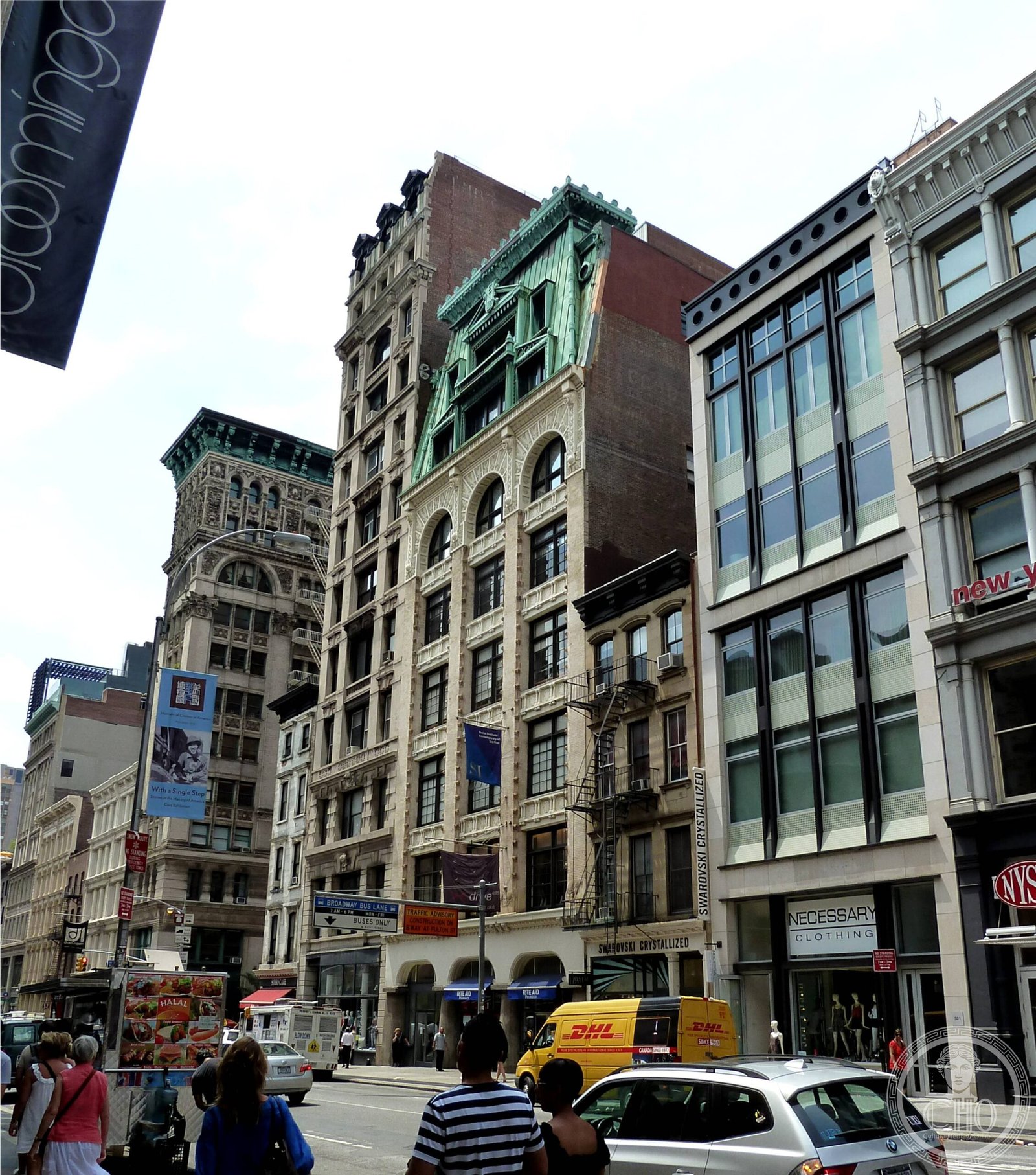
A landmark Art Nouveau commercial loft building on Broadway, the New Era Building exemplifies the architectural ambitions of 1890s Manhattan, when cast iron and ornamental detail transformed the neighborhood into a vital center of trade and manufacture.
At a glance
Completed in 1893, the New Era Building stands at 495 Broadway in SoHo, between Spring and Broome Streets. Its Art Nouveau style reflects the design movements reshaping American commercial architecture at the turn of the twentieth century.
History
The New Era Building was constructed in 1893, a period when SoHo’s cast-iron district was thriving. The building served as a commercial loft structure, housing manufacturing and trade operations that defined the neighborhood’s character during the Gilded Age.
What you see
The building exemplifies Art Nouveau principles in its commercial form. Cast iron and ornamental detailing characterize the facade, reflecting the design language that made SoHo’s warehouse district architecturally distinctive. The structure balances functional commercial space with decorative ambition.
Cultural significance
The New Era Building represents the fusion of commerce and design that defined 1890s Manhattan. It survives as part of SoHo’s remarkable collection of cast-iron loft buildings—a district now recognized as one of the finest examples of nineteenth-century commercial architecture in America.
Key facts
- Address: 495 Broadway, Manhattan, New York City
- Built: 1893
- Architectural style: Art Nouveau
- Coordinates: 40.72208333, -73.99981944
- Country: United States
Practical information & getting there
The New Era Building is located in the SoHo neighborhood of lower Manhattan, accessible via multiple subway lines serving the Spring Street and Broadway-Lafayette stations. The surrounding district offers galleries, shops, and restaurants within the historic cast-iron district.
Sources & resources
Find it on the map
See this place and what’s around it →📷 Become a Cultural Heritage Online photographer
Share your photos of places: they stay published under your name as the author. The more they're seen, the more you get noticed — and soon a contest will reward the most appreciated photos.
Log in or sign up free to add a photoIs this page about you?
This page is read by travellers and heritage enthusiasts who find it on Google. Tell us how you are connected to this place and we will take it from there.