

Glass by Gallé, furniture by Majorelle, ironwork that grows like vines: the museum gathers the whole École de Nancy under one roof, in the villa of the man who collected it.
At a glance
The Musée de l’École de Nancy is the museum dedicated to the École de Nancy, the regional alliance of artists and manufacturers that made the city a capital of French Art Nouveau around 1900. It is housed in the former villa of Eugène Corbin, a department-store owner and patron who assembled and donated much of the founding collection. The displays bring together glass, furniture, ceramics and metalwork by Émile Gallé, Louis Majorelle, the Daum brothers, Jacques Grüber and Victor Prouvé.
Key facts
- Type: decorative-arts museum
- Building: former villa of the collector Eugène Corbin
- Movement: École de Nancy / French Art Nouveau
- Key makers shown: Gallé, Majorelle, Daum, Grüber, Prouvé
- Status: municipal museum of the City of Nancy
History
The École de Nancy was formally founded in 1901 under Émile Gallé to unite the region’s glassmakers, cabinetmakers and designers in a shared programme of art applied to industry. Eugène Corbin, a wealthy merchant and supporter of the movement, gathered a large collection of its work.
Corbin gave his collection and his villa to the city, and the museum opened in the years after the First World War. Since then the holdings have grown, and the building and its garden have been arranged to evoke the domestic settings for which much of the work was made, rather than a neutral gallery.
What you see
The visit moves through period rooms where furniture, lighting, glass and textiles are shown together as ensembles. Gallé’s cameo glass and Daum’s coloured vases sit beside Majorelle’s inlaid furniture and Grüber’s stained-glass panels.
The garden continues the experience, with an aquarium pavilion and monumental funerary gate among the set pieces. The whole is meant to be read as a living interior, the way the École de Nancy intended its objects to be used.
Practical information
- Opening: closed on some weekdays; check current hours before visiting
- Setting: a villa and garden west of central Nancy
- Time needed: 1–1.5 hours
Getting there
Nancy is about 1.5 hours from Paris by direct TGV. The museum lies west of the centre on rue du Sergent Blandan, reachable by city bus or a 30-minute walk from Nancy-Ville station.
Nearby
- Villa Majorelle, the first Art Nouveau house in Nancy
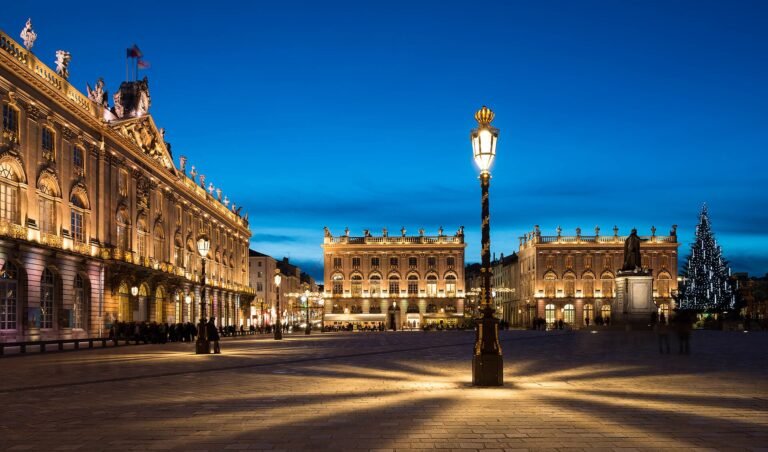
- Place Stanislas, the UNESCO-listed central square
- Nancy — The École de Nancy and French Art Nouveau (CHO city guide)
Sources
- Musée de l’École de Nancy, official museum site (musee-ecole-de-nancy.nancy.fr)
- City of Nancy, municipal museums
- Encyclopaedia Britannica, “Émile Gallé” and “Art Nouveau”
Find it on the map
See this place and what’s around it →Record researched and written by Luigi De Marchi for Cultural Heritage Online, 2026.
📷 Become a Cultural Heritage Online photographer
Share your photos of places: they stay published under your name as the author. The more they're seen, the more you get noticed — and soon a contest will reward the most appreciated photos.
Log in or sign up free to add a photoIs this page about you?
This page is read by travellers and heritage enthusiasts who find it on Google. Tell us how you are connected to this place and we will take it from there.