
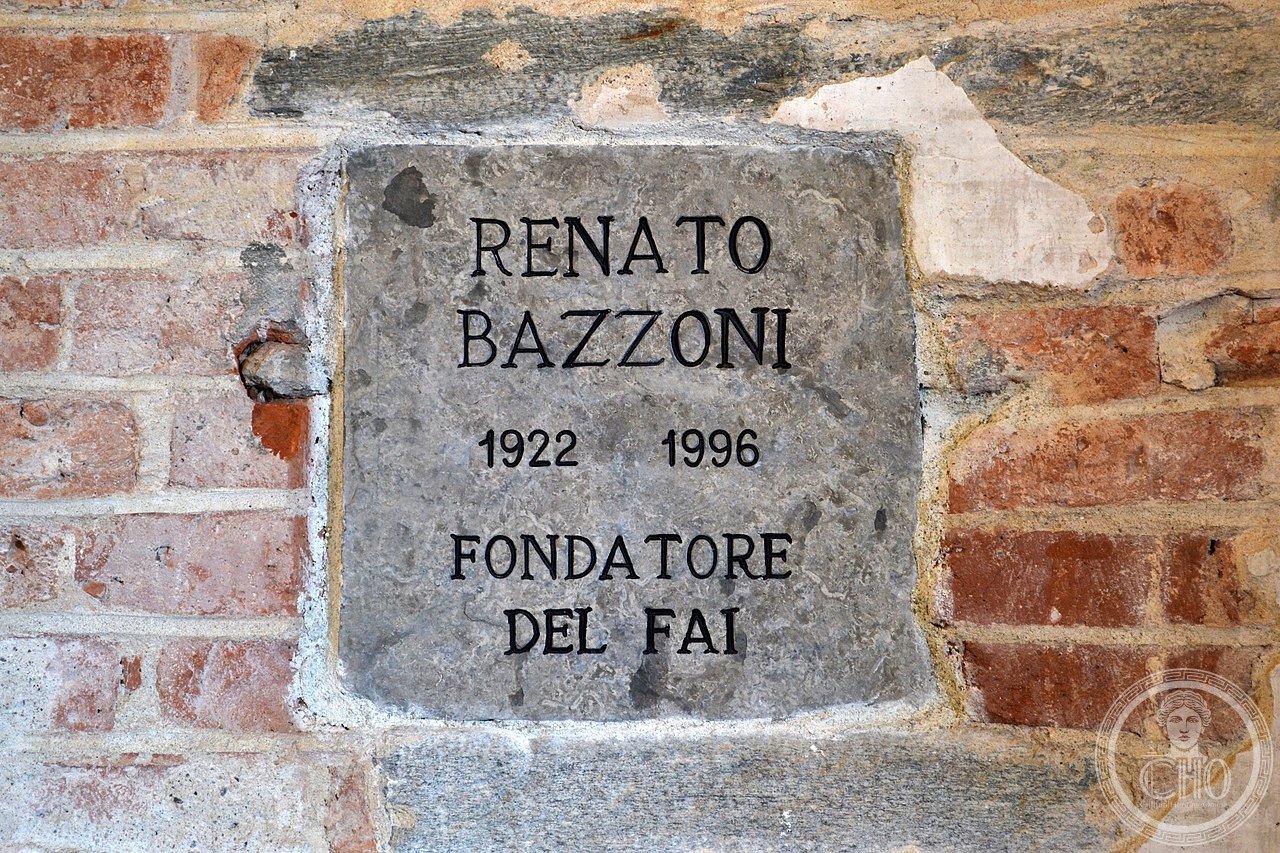
The Monastero di Torba (FAI) is a Longobard-era Benedictine foundation where a Roman watchtower was converted to a convent in the 8th century CE — its oratory of Santa Maria contains one of the most important cycles of early medieval fresco painting in northern Italy, and the site forms part of the Longobard Places of Power UNESCO serial inscription along with the nearby complex of Castelseprio.
At a glance
Monastero di Torba (Torba Varese Lombardia Italy 45.8085 N 8.7175 E FAI UNESCO-serial (Longobardi) 2011 reference 1318: the site history: the tower at Torba was originally constructed in the late Roman period (4th–5th century CE; the construction type (small-format limestone blocks with tile courses) matches the late-Roman military architecture of the Gallia Cisalpina (northern Italy) zone; the exact date is unknown but the construction technique is consistent with 4th-century military engineering); the Longobard period (6th–8th century CE): after the Longobard conquest of northern Italy (568 CE; the Longobardi (Lombards) entered Italy from Pannonia (modern Hungary/Austria) under King Alboin on 2 April 568 CE and conquered the Po plain within 2 years; they took Pavia (their capital) in 569 CE and Milan by 570 CE; they failed to take Venice, Ravenna, and Rome — all of which remained Byzantine; the Longobard kingdom lasted until the Carolingian conquest by Charlemagne in 774 CE); the tower at Torba was incorporated into the Longobard defensive system of the Olona valley (the Olona river runs from the Alps to Milan; the Castelseprio–Torba defensive complex controlled the approach from the north (the Alps and the Verbano lakes) to Milan); the 8th-century conversion: a group of Benedictine nuns established a small monastic community within the Longobard tower complex at Torba (the specific date is unknown; the presence of nuns is documented by an 8th-century inscription carved into the tower wall naming 4 specific nuns); the Santa Maria oratory (the oratory was built by the nuns within the complex; the frescoes date from the 8th century CE (the earlier cycle) and 10th century CE (the later cycle); the specific significance: the 8th-century Longobard-period frescoes are among the few surviving examples of pre-Carolingian painting in northern Italy (the Carolingian conquest of 774 CE disrupted the cultural continuity of Longobard art; most Longobard-period work was replaced or overpainted in the Carolingian period; the Torba frescoes survived because the site was small and remote); the FAI acquisition (1978 CE: the FAI acquired the Monastero di Torba from a private owner (the Visconti di Modrone family had owned the property since the medieval period); it was the first historic property acquired by the FAI after its founding in 1975 CE; the restoration (1978–1990 CE) was directed by Piero Gazzola and published as the model for Italian historic property restoration ethics).
Key facts
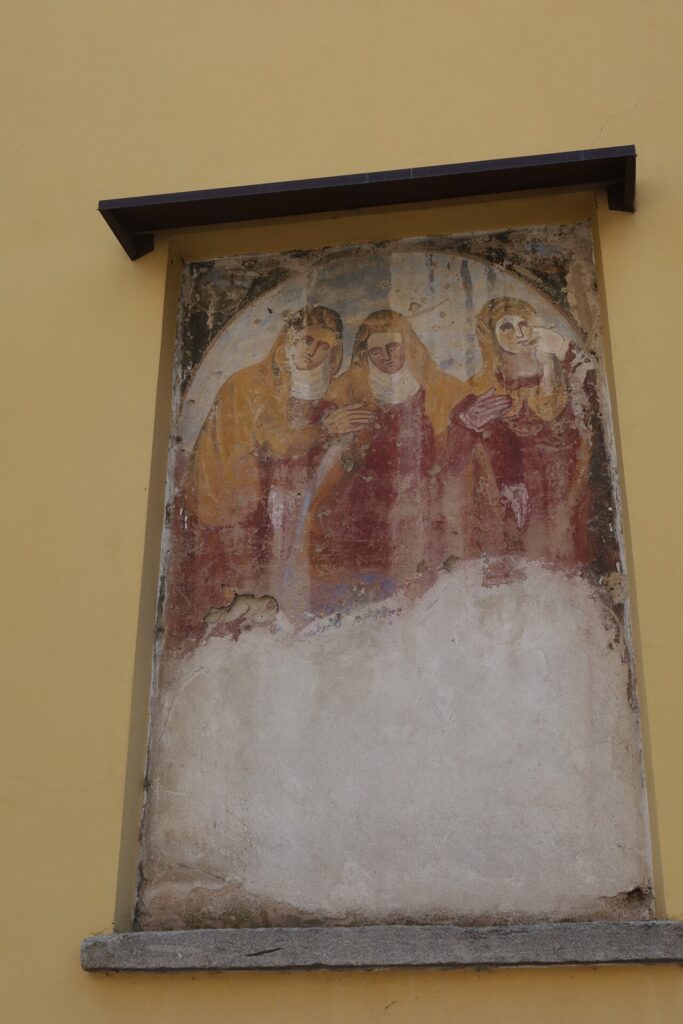
- The Santa Maria oratory frescoes and why Torba and Castelseprio together form the most important Longobard artistic complex in existence: the Santa Maria oratory at Torba (8th–10th century CE; the structure: a single-nave chapel (12m × 5m; entrance from the east; altar at the west end) attached to the southern face of the tower; the interior: fresco paintings on all 4 walls and the apse; the 8th-century cycle (the earlier, Longobard-period cycle): the surviving fragments show standing figures of saints and a Madonna (the figures are rendered in a flat, hieratic style consistent with the Byzantine tradition still in use in northern Italy in the 8th century); the 10th-century cycle (the later, post-Carolingian cycle): more narrative (scenes from the New Testament); the specific inscriptions: 2 dedicatory inscriptions naming specific women (the 4-nun inscription; the “Alona” inscription naming a specific benefactress — the most complete early medieval women’s monastic dedication inscription surviving in Italy); the Castelseprio connection (1.5 km from Torba; accessible on foot via the FAI trail): the Castelseprio archaeological park (the ancient Longobard city of Sibrium) contains the oratory of Santa Maria foris portas (outside the walls; the most mysterious early medieval fresco cycle in Italy; discovered in 1944 CE by Gian Pietro Bognetti under plaster; the frescoes depict the life of Christ in a style that is simultaneously Byzantine (the face types, the drapery system) and proto-Renaissance (the spatial recession, the narrative fluidity); the date of the frescoes is disputed (proposals range from the 6th century CE (pre-Longobard) to the 10th century (Carolingian or Ottonian)); the artist is unknown; the frescoes are the most debated work of early medieval art in Italy)
- GPS Monastero di Torba: 45.8085° N, 8.7175° E
History
From the Roman tower to the Longobard fortress to the Benedictine convent to the FAI (568 CE Longobard conquest: the Longobardi arrived in Italy under King Alboin in 568 CE (the sources for the event: Paul the Deacon, Historia Langobardorum (c.785 CE), the most important primary source for Longobard history; Fredegar, Chronicle (c.660 CE)); the Longobard kingdom of Italy (568–774 CE): the kingdom centered on Pavia (the royal capital) and Milan (the economic capital); the northern mountain approaches to the Po plain were defended by a chain of castles and fortified towers along the Ticino, the Olona, and the Sesia river valleys; the Castelseprio–Torba complex was the key node in the Olona valley defense (the Olona river valley is the natural approach route from the Como lakes and the Simplon Pass to Milan); the Carolingian conquest (774 CE): Charlemagne crossed the Alps in the spring of 773 CE and besieged Pavia; the Longobard king Desiderius surrendered in June 774 CE; the Longobard kingdom was incorporated into the Carolingian Empire; the Torba monastery survived the conquest and continued functioning under Carolingian patronage; the later medieval period: the monastery gradually lost its function and the complex was incorporated into the Visconti di Modrone estate; the 20th century: the property passed through several owners; 1978 CE the FAI acquisition; the restoration: the project directed by Piero Gazzola (1908–1979 CE; the leading Italian architectural conservationist of the 20th century; the founder of ICOMOS (International Council on Monuments and Sites)) established the ethical framework for reversible intervention in historic fabric that became the standard for Italian restoration practice; the UNESCO inscription: Monastero di Torba is one of 7 sites in the serial UNESCO inscription “Longobard Places of Power in Italy (568–774 AD)” (reference 1318, inscribed 2011); the other 6 sites are: Cividale del Friuli, Brescia (Monastero di Santa Giulia), Castelseprio-Torba (Torba + Castelseprio together form one serial component), Spoleto (Tempietto sul Clitunno), Campello sul Clitunno (Tempietto), Benevento (Santa Sofia)).
What you see
The tower, the oratory, and the FAI trail to Castelseprio (visit (2–3 hours including Castelseprio): 1) the entrance (Via Castelseprio, Torba di Castelseprio; the FAI ticket office is at the entrance to the complex; the complex is reached by a 5-minute walk from the parking area on Via Castelseprio through a typical Lombard landscape of low hills covered with chestnut and oak forest; the first view: the tower (square, 14m × 14m base, approximately 20m surviving height; the tower silhouette above the tree line is visible from 500m)); 2) the tower interior (4 floors surviving; the ground floor has been interpreted as a storage/stable area (the absence of windows and the access only from above suggests a non-residential function); the upper floors have monopore windows (single-light Longobard-type windows with a central dividing column) and traces of painted plaster; the top floor: the terrace with the view north toward the Varese pre-Alps and south toward Milan); 3) the Santa Maria oratory (attached to the south face of the tower; the key elements: the dedicatory inscriptions in the north wall (displayed with explanatory labels); the fresco fragments (the most substantial are the standing saint figures in the apse and the narrative scenes on the north wall; the frescoes are not well-lit — bring a torch or use the FAI-provided flashlight); 4) the FAI trail to Castelseprio (30-minute walk through the Parco Regionale della Valle del Lanza; the trail is signed with FAI yellow and blue markers; the Santa Maria foris portas oratory at Castelseprio is open Tue–Sun 9–7 PM in summer; the fresco cycle is the highlight of the combined visit).
Practical information
- Getting from Milan or Varese and combining with the Castelseprio UNESCO site: transport from Milan: S5 suburban train from Milan Porta Garibaldi to Castronno (50 min; €5; the Castronno station is 3.5 km from Torba); from Castronno station: taxi (call +39 0331 820200) or bicycle rental (the Via Greenway dell’Olona cycling route passes Castronno); from Varese: bus line C22 Varese–Busto Arsizio (direction Busto) to the Castelseprio stop (20 min from Varese; the stop is 2 km from Torba; no taxi from this stop — pre-arrange with the FAI visitor office (+39 0331 820301) for a joint visit to Torba + Castelseprio); by car: Autostrada A8 (Milano–Varese); exit at Busto Arsizio; follow signs for Castelseprio (the signs are in the Parco Regionale della Valle del Lanza; the parking area at Torba is signed from Via Castelseprio; the parking area holds 30 cars); hours: Wed–Mon 10 AM–5 PM (winter); 10 AM–6 PM (summer); closed Tuesdays; admission: €6 adults; free for FAI members; the combined Torba + Castelseprio ticket (€8) is the recommended option
Getting there
Car from Milan (A8 exit Busto Arsizio, follow Castelseprio signs, 50 min). Or S5 train Milan Porta Garibaldi→Castronno (50 min, €5) + 3.5 km by taxi. Open Wed-Mon 10-17/18. Admission €6 (€8 combined with Castelseprio). GPS: 45.8085, 8.7175.
Nearby
- Castelseprio — 1.5 km on foot (FAI trail; the oratory of Santa Maria foris portas with the disputed early medieval fresco cycle (6th–10th century CE); the most debated work of early medieval art in Italy; UNESCO WHS 2011 same serial inscription)
- Sacro Monte di Varese — 12 km north (UNESCO WHS 2003 serial 9 Sacri Monti; 14 chapels (1604–1680 CE) depicting the Mysteries of the Rosary; 3 km pilgrimage path from Santa Maria del Monte village; the most important Sacro Monte for Baroque painting content)
Gallery
More photographs
Sources
- Wikipedia, Monastero di Torba; Castelseprio; Longobard Places of Power in Italy, accessed June 2026
- UNESCO, Longobard Places of Power in Italy (568–774 AD), WHS reference 1318, inscribed 2011
- FAI — Fondo Ambiente Italiano, Monastero di Torba property page, fondoambiente.it, 2026
Find it on the map
See this place and what’s around it →📷 Become a Cultural Heritage Online photographer
Share your photos of places: they stay published under your name as the author. The more they're seen, the more you get noticed — and soon a contest will reward the most appreciated photos.
Log in or sign up free to add a photoIs this page about you?
This page is read by travellers and heritage enthusiasts who find it on Google. Tell us how you are connected to this place and we will take it from there.