
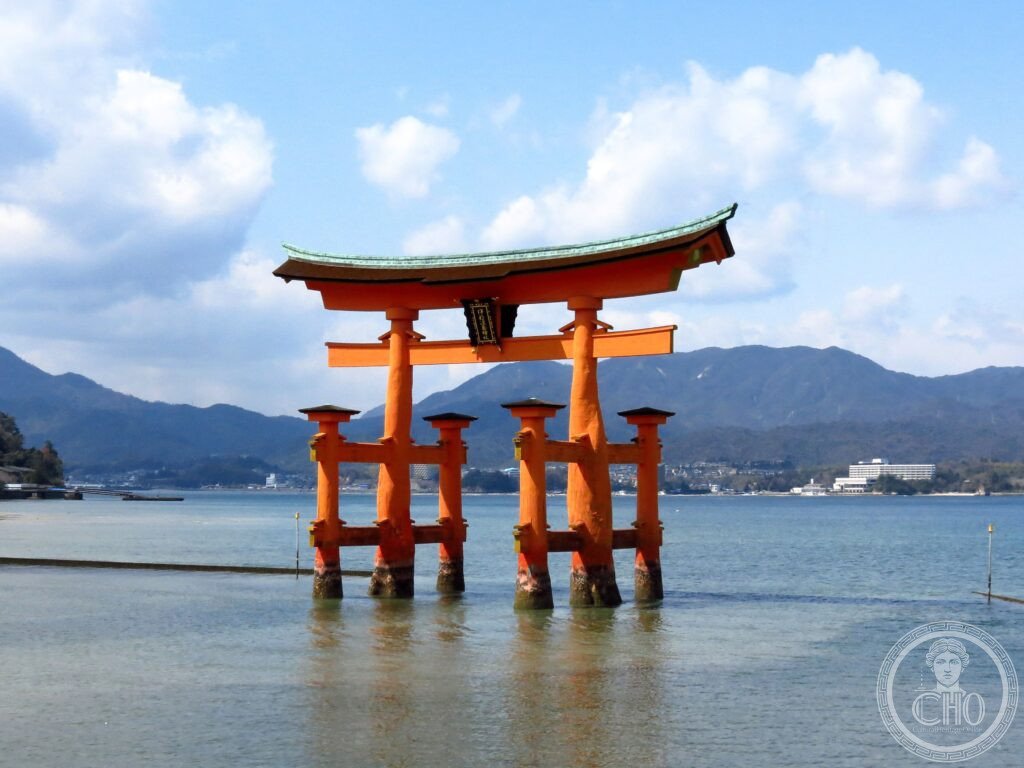
Miyajima (Itsukushima)
The most iconic Shinto gate in Japan and the island traditionally considered too sacred for birth or death — Miyajima, whose Itsukushima Shrine has stood on stilts over Hiroshima Bay since the 6th century, is named in the Three Views of Japan as the most beautiful single landscape in the country, and its vermilion torii gate standing in the tide offers one of the most photogenic moments in all of Asian heritage.
At a glance
Miyajima Island (Itsukushima; UNESCO WHS 1996; the name “Miyajima” means “shrine island” — the most precisely named island in Japan; the name “Itsukushima” means “island of worship” — the most accurately named island in Japanese Shinto geography; the island has been considered sacred since at least 593 CE — the most continuously venerated island in Japan (1,400+ years of recorded sacred use)); the deer (free-roaming deer on the island — the island’s most persistent wildlife feature; the deer are considered messengers of the gods (the most theologically functional single animal species in any Shinto shrine precinct; the same deer-messenger tradition applies at Nara; the Miyajima deer are slightly smaller and slightly more aggressive than the Nara deer — the most frequently pinched-from tourist food bag deer in Japan); the island (the island covers 30 km² but is 79% protected primary forest — the most extensively forested island relative to its area in any Japanese UNESCO WHS site; the protected forest (the forest of Mount Misen — the most sacred forest in Miyajima: it has never been logged; the primeval cedars and camphor trees on the mountain path are the oldest unlogged trees accessible by foot in Hiroshima Prefecture); the Kobo Daishi meditation cave (806 CE; the founding pilgrimage point for the Shingon Buddhist tradition on the island — the most precisely dated single religious event in Miyajima’s medieval history)).
Key facts
- The Itsukushima Shrine and the O-torii: the most photographed sacred gateway in Asia — the shrine (founded 593 CE; the current structure commissioned c. 1168 CE by the imperial regent Taira no Kiyomori — the most politically powerful single patron of Japanese Heian period religious architecture; the shrine’s design (the most unusual single design decision in any Shinto shrine: the shrine is built over the sea on stilts — the most explicitly maritime Shinto shrine in Japan; the reason: the island was considered so sacred that common people were forbidden to set foot on it (the most restrictive single access policy in Japanese sacred geography); the shrine was built on stilts over the water so that pilgrims could approach by boat and worship without touching the sacred ground of the island; the tide flushes the sea beneath the shrine twice daily — the most naturally self-cleaning sacred building in Japan); the O-torii gate (the current gate (the 8th iteration — the most replaced single Shinto torii gate in Japan; each gate stands for approximately 70–80 years before the seawater rots the wood; the current gate was constructed in 1875 from camphor (kusunoki) wood (the most rot-resistant Japanese sacred wood; all major Shinto torii gates are made from camphor where structural longevity is required); the gate is 16 m high, weighs 60 tonnes, and is not anchored to the seabed — the most gravity-stabilised single large wooden structure in Japan: the weight of the roof holds it in place without any foundation; the effect at high tide (the most cited visual effect in Japanese tourism: the gate appears to float on the surface of the sea — the most precisely stage-managed single sacred illusion in Japanese heritage landscape design)))
- The Three Views of Japan (Nihon Sankei): the most celebrated cultural ranking in Japanese scenic heritage — the Three Views (the Nihon Sankei (日本三景): the three most beautiful views in Japan, named by the Confucian scholar Hayashi Razan in 1643 — the most influential single cultural ranking of scenic beauty in Japanese history: the three views are Miyajima (Itsukushima Shrine) in Hiroshima + Amanohashidate (the pine-covered sandbar in Kyoto Prefecture, the most paradoxical scenic viewpoint: it is best appreciated by bending over and looking at it upside-down between your legs — the most physically unusual viewing instruction attached to any Japanese scenic landmark) + Matsushima (the pine-covered bay islands in Miyagi Prefecture near Sendai — the most poetic single bay in Japan: Matsuo Bashō, the greatest haiku poet (1644–1694), visited Matsushima in 1689 and reportedly said nothing — the most eloquently silent critical reception of any Japanese landscape); the ranking is the most enduringly cited aesthetic canon in Japanese scenic culture: used continuously since 1643 to organize heritage tourism — the most persistently relevant single scenic classification in any national tourism culture))
- Hiroshima Peace Memorial (UNESCO WHS 1996): the most morally significant heritage site in Japan — the A-Bomb Dome (the Hiroshima Peace Memorial (Genbaku Dome): the ruined framework of the Hiroshima Prefectural Industrial Promotion Hall, the only building within 500 m of the atomic bomb hypocentre (6 August 1945) to survive partially standing — the most powerful single symbol of nuclear destruction in the world; the most politically debated single UNESCO inscription in the world: the United States (1996) and China (1996) entered formal objections to the inscription (the only time two permanent UN Security Council members simultaneously objected to a World Heritage inscription — the most diplomatically contested single WHS inscription in UNESCO history); the hypocentre (580 m directly above the dome at the moment of detonation — the most precisely located single point of historical mass destruction in 20th-century Japan); the park (the Hiroshima Peace Memorial Park (120,000 official death-toll; approximately 200,000 total deaths: the most precisely counted single nuclear casualty figure in history))
- Heritage: UNESCO World Heritage Site, Itsukushima Shinto Shrine, inscribed 1996
- GPS: 34.2955° N, 132.3197° E
History
Sacred history (the Itsukushima Shrine was founded in 593 CE by Saeki Kuramoto (the most precisely dated single founding event in Miyajima’s documented history: 593 CE corresponds to the reign of Empress Suiko — the most religiously active reign in early Japanese imperial history); the Taira patronage (Taira no Kiyomori (1118–1181 CE) rebuilt the shrine in its current form around 1168 CE — the most transformative single patron of Miyajima’s heritage; the Taira clan’s fall at the Battle of Dan-no-ura (1185; the most decisive naval battle in 12th-century Japan) left Miyajima’s shrine orphaned as a national institution; the succeeding Minamoto shogunate maintained the shrine — the most politically resilient single sacred site in medieval Japanese power transitions); the island restrictions (the most unusual social restrictions of any Japanese island: until the Meiji era, no childbirth and no deaths were permitted on the island (the most extreme single sacred purity code in Japanese Shinto practice); the dead were taken by boat to the mainland (the most precise single example of a sacral geography of death in Japanese culture); even today the island has no cemetery — the most unusual infrastructure absence in any Japanese municipality); UNESCO WHS 1996.
What you see
The Miyajima visit (the ferry from Miyajimaguchi (the most reliably beautiful approach to any Japanese heritage site: the 10-minute ferry ride from Miyajimaguchi station reveals the island rising from the bay with the mountains behind — the most perfectly stage-managed first view of any Japanese Shinto site); the tidal schedule (the most important single practical fact of any Miyajima visit: the timing of high and low tide determines what the visit looks like; at high tide, the O-torii floats; at low tide, you can walk to its base and photograph it up-close — the most contrasting single landscape transformation in any Japanese heritage site; the Japan Tide Tables (available at the ferry terminal) are the most consistently useful single piece of planning information for Miyajima); the ropeway to Mount Misen (the 535-m summit; the finest panorama in Hiroshima Prefecture; 2h hike down through the primeval forest — the finest forest walk in any Japanese UNESCO WHS); the momiji manju (the most famous single Miyajima food: the small maple-leaf-shaped cakes filled with sweet red bean paste — the most immediately identifiable single souvenir food in Japan).
Practical information
- Getting there: from Hiroshima (the most direct approach: JR Sanyo Line from Hiroshima station to Miyajimaguchi station (25 min) then JR ferry (10 min) — the most efficiently served single island Shinto heritage site in Japan; the ferry (the JR Miyajima Ferry — covered by JR Pass (the most cost-effective single rail pass in Japan for tourists who travel between cities; the ferry being included is the most practically significant single JR Pass benefit for Miyajima visitors)); from Kyoto or Osaka (the Shinkansen Nozomi to Hiroshima (1h 40min from Shin-Osaka; the single fastest connection between Osaka and Hiroshima on the Tokaido-Sanyo Shinkansen — the most frequent Shinkansen service in Japan) then JR + ferry; the most time-efficient 2-city itinerary in the Kansai-Hiroshima corridor: Kyoto (2 nights) + Hiroshima + Miyajima (1 night each)); the visitor fee (Miyajima introduced a visitor fee of ¥300 per person in 2023 — the most recently introduced UNESCO site visitor levy in Japan: the fee can be paid on the ferry); the accommodation (staying on the island overnight is the most recommended single decision in any Miyajima trip: after the day-trippers leave by 5pm, the island becomes quiet and the deer become active at dusk — the most reliably atmospheric single evening in any Japanese UNESCO site)
- Hiroshima city: the most morally significant heritage destination in Japan — the Hiroshima Peace Memorial Park and Museum (described in Key Facts; the A-Bomb Dome; the Genbaku Dome; the Peace Memorial Museum (the most affecting single museum in Japan: the personal belongings of victims — the lunchbox found on the dead schoolchild, the shadow of a man burned into the stone steps of the Sumitomo Bank — are the most viscerally confronting individual artefacts in any heritage museum in Asia; the Children’s Peace Monument (the Sadako memorial: the 1,000 origami cranes — the most widely reproduced single peace symbol in Japanese heritage)); the Hiroshima castle (1591; the most completely reconstructed modern castle in Hiroshima: destroyed in the atomic blast, rebuilt 1958 — the most historically resilient single castle reconstruction in Japan); UNESCO WHS 1996)
- The Seto Inland Sea and Shimanami Kaidō cycling route: the finest coastal landscape in western Japan — the Shimanami Kaidō (the most popular cycling route in Japan: the 70-km cycling path crossing 6 Seto Inland Sea islands via 7 suspension bridges between Onomichi (Hiroshima Prefecture) and Imabari (Ehime Prefecture, Shikoku); the most scenic inland sea cycling in Asia; the Tatara Bridge (the longest cable-stayed bridge on the route: 1,480 m span — the most technically impressive single span on the Shimanami Kaidō); the Seto Inland Sea (the most island-dense enclosed sea in Japan: 3,000+ islands; the finest octopus fishing in Japan; the finest salt production in Japan (the Oshima salt flats); the finest lemon cultivation in Japan (the Setouchi lemons — the most distinctively Inland Sea single agricultural product; the most widely used Japanese citrus in craft cocktails and cooking since the citrus trend of the 2010s))
Getting there
JR Sanyo Line Hiroshima → Miyajimaguchi (25 min) then JR Ferry (10 min; JR Pass valid). Visitor fee ¥300. Stay overnight to experience the island after day-trippers leave. GPS: 34.2955, 132.3197.
Nearby
- Hiroshima Peace Memorial (UNESCO WHS 1996) — 25 km east (30 min by JR); the most morally important heritage site in Japan — described in Key Facts and Practical section; the essential Miyajima itinerary: Day 1 (arrive afternoon; Hiroshima Peace Memorial Park at 3–5pm; A-Bomb Dome at sunset) + Day 2 (Miyajima day trip: O-torii at high tide in the morning + Mount Misen ropeway at noon + momiji manju at departure)
- Himeji Castle (UNESCO WHS 1993) — 150 km east (1h Shinkansen from Hiroshima to Himeji); the most perfectly preserved feudal castle in Japan and the finest example of Japanese castle architecture — Himeji-jo (the White Egret Castle or White Heron Castle; 1601; the most intact and most visited feudal castle in Japan; the 8-storey central tower (the donjon; 46 m; the tallest donjon in any Japanese castle — the most imposing single wooden vertical structure in Japan’s Edo period architecture; the complex system of nested defensive walls (the most elaborate concentric castle defence system in Japan: 83 buildings connected by a maze of corridors designed to trap attackers in a labyrinth — the most deliberately disorienting defensive architecture in Japanese castle history)); the cherry blossoms (the most photographed single spring event at any Japanese castle: the moat walkway lined with cherry trees in late March/early April — the most precisely timed single seasonal visit objective in Japanese heritage tourism)
- Nara and the Kasuga-taisha Shrine (UNESCO WHS 1998) — 340 km east (1h 30min by Shinkansen + train from Hiroshima); Japan’s ancient capital and the most extensive collection of Nara-period (710–794 CE) sacred architecture — Nara (the Tōdai-ji (the Great Buddha Hall: the largest wooden building in the world (57 m high; 57 m wide; 50 m long) and the home of the 15-m Daibutsu (the Great Buddha of Nara — the largest bronze statue in Japan and the most important single Buddhist sculpture in Japanese history); the free-roaming deer (approximately 1,200 deer: the most densely populated free-roaming deer in any Japanese city — the most frequently photographed single urban wildlife encounter in Japan; the deer bowing for shika senbei (deer crackers) — the most reliably repeatable single tourist interaction in Japan))
Sources
- Wikipedia, Itsukushima Shrine; Miyajima; O-torii; Nihon Sankei, accessed June 2026
- UNESCO, Itsukushima Shinto Shrine, WHS reference 776, inscribed 1996
- Arata Isozaki, Japan-ness in Architecture, MIT Press, 2006
Find it on the map
See this place and what’s around it →📷 Diventa un fotografo di Cultural Heritage Online
Condividi le tue foto dei luoghi: restano pubblicate con la tua firma come autore. Più vengono viste, più ti fai conoscere — e presto un concorso premierà le foto più apprezzate.
Accedi o registrati gratis per aggiungere una foto