
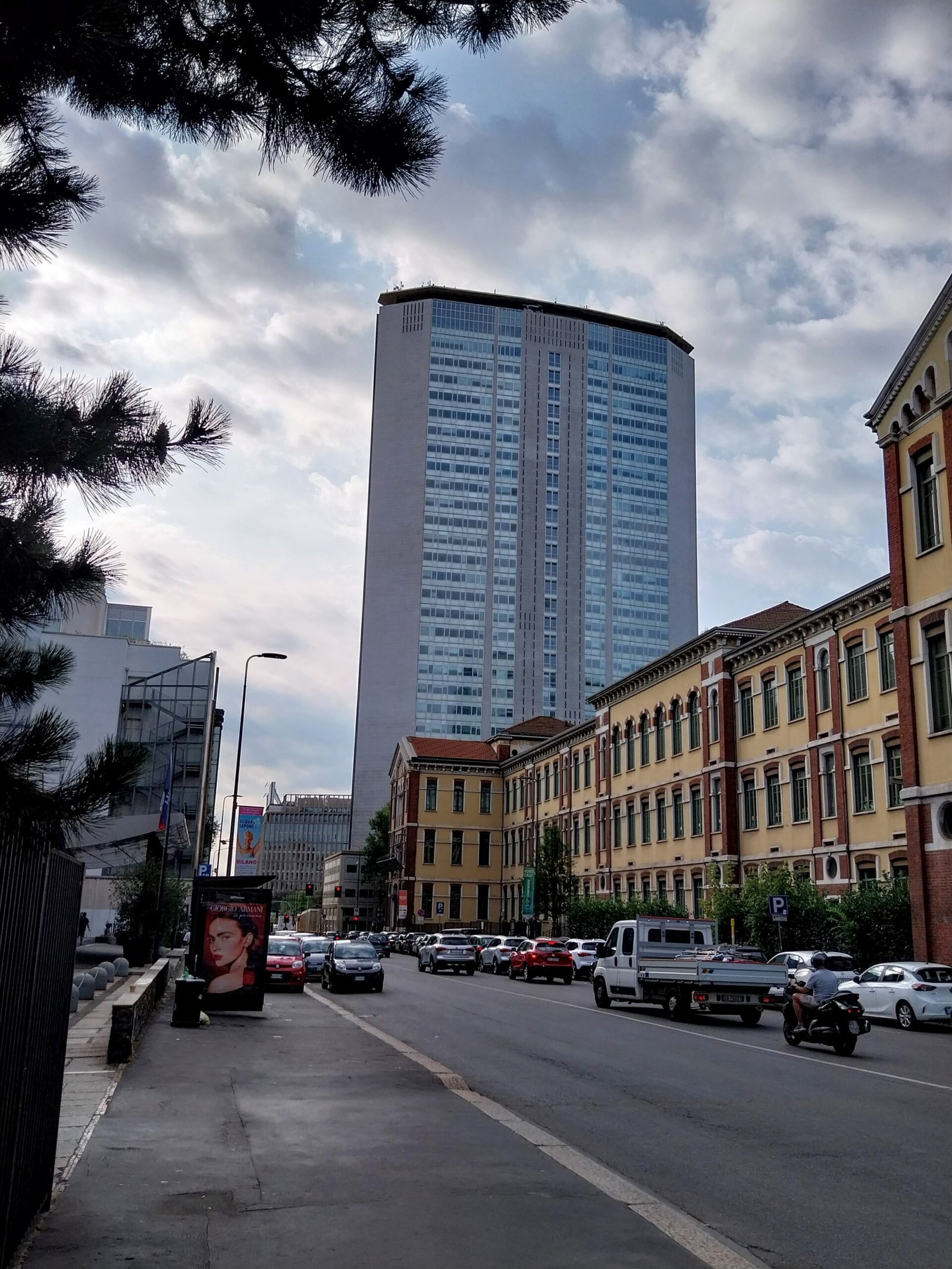
Milan spans the full arc from Art Nouveau Liberty to post-war design culture: Sommaruga’s Palazzo Castiglioni announced the Italian Liberty in 1903; Gio Ponti’s Pirelli Tower redefined the European skyscraper in 1958; and the Triennale di Milano has mediated between art, design and industry for nearly a century in between.
At a glance
Milan’s role in the CHO period — roughly 1900 to 1970 — is that of the Italian city most consistently engaged with European modernity. Its Liberty phase produced Palazzo Castiglioni (1903), one of the first and most ambitious Art Nouveau facades in the country; its Rationalist phase generated the Triennale (1933) and a sustained conversation with the international modern movement; and its post-war design culture, centred on the Furniture Fair and the Politecnico, made it the global capital of industrial design by the 1960s. The Pirelli Tower (1958), designed by Gio Ponti and structural engineer Pier Luigi Nervi, is the definitive statement of Italian modernism — a 127-metre skyscraper whose tapered diamond plan and curtain-wall envelope have influenced high-rise design worldwide.
Key facts
- Country: Italy (Lombardia)
- Key periods: Liberty milanese (1900–1914); Razionalismo (1930s); Mid-century design (1950s–1970s)
- Key figure: Gio Ponti (1891–1979) — architect, designer, founder of Domus magazine; Pirelli Tower, Villa Planchart
- Also notable: Giuseppe Sommaruga (Palazzo Castiglioni 1903), Piero Portaluppi (Villa Necchi Campiglio 1935), BBPR studio (Torre Velasca 1958)
- Institutions: Triennale di Milano (1933, Giovanni Muzio), Salone del Mobile (annual), Politecnico di Milano
- Essential sites: Pirelli Tower, Villa Necchi Campiglio, Palazzo Castiglioni, Torre Velasca, Milano Centrale
History
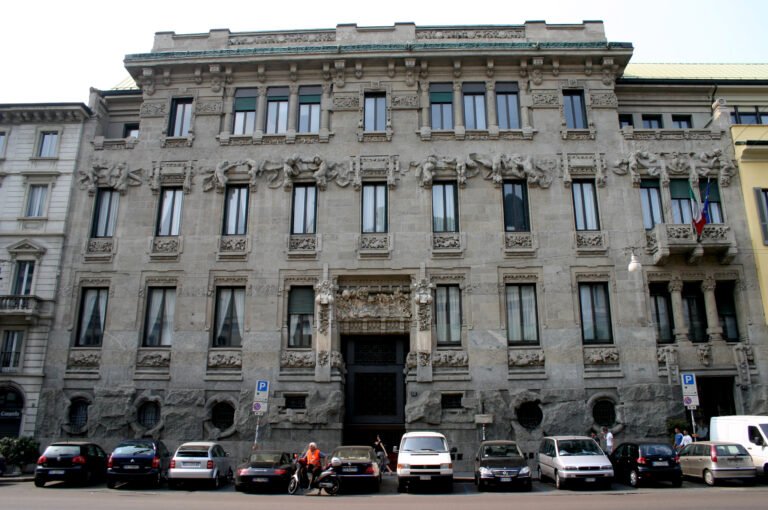
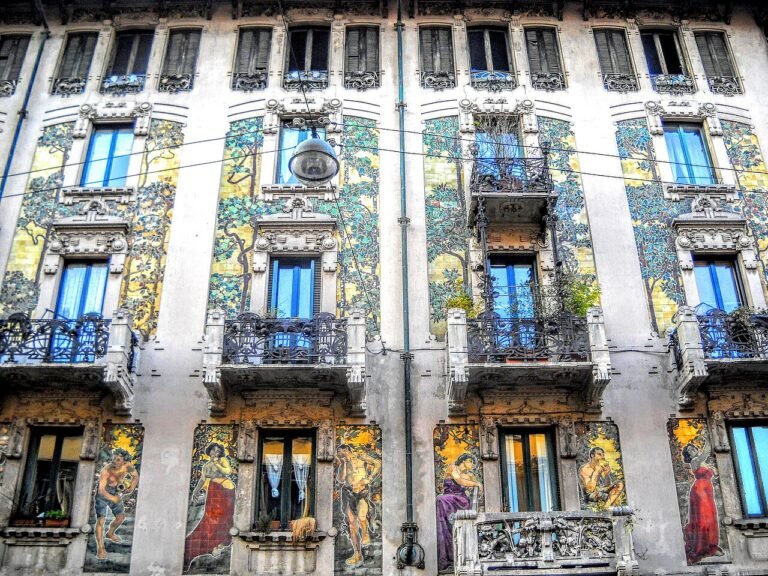
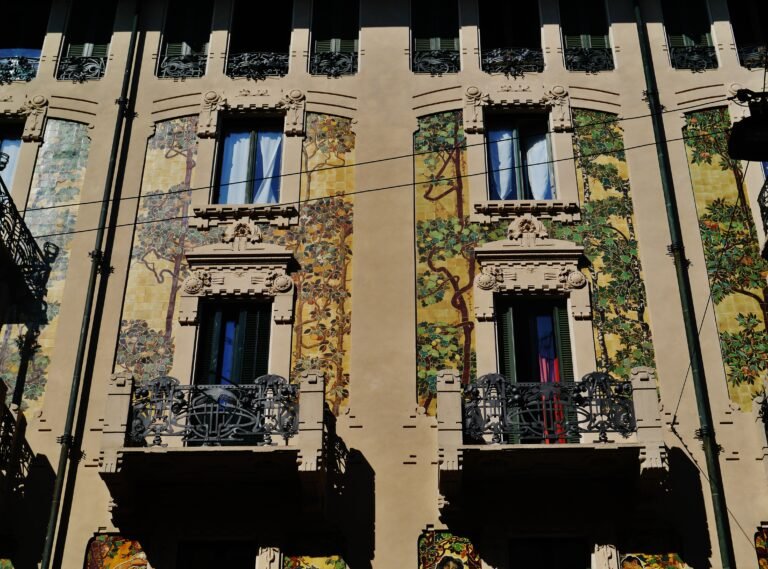
Giuseppe Sommaruga’s Palazzo Castiglioni (Corso Venezia 47, 1903) was the first major Liberty building in Milan and caused an immediate public scandal: two female caryatids on the entrance pilasters were considered obscene and removed within weeks of completion. The episode accelerated the Liberty movement’s reception in the city — within five years Corso Venezia, Corso Buenos Aires and the surrounding streets were lined with Liberty apartment blocks whose ornamental programmes referenced the Viennese Secession, French Art Nouveau and Italian Renaissance simultaneously.
Gio Ponti — architect, designer, journalist, polymath — spent almost his entire career in Milan. He founded the magazine Domus in 1928 and edited it for most of the following fifty years, making it the primary international platform for Italian design culture. His Pirelli Tower (1956–1958), designed with structural engineer Pier Luigi Nervi, stood as the tallest building in Italy until 1960 and remains the most elegant Italian skyscraper: its plan tapers to pointed ends at both narrow faces, eliminating the need for a corner column and giving the curtain wall a continuous uninterrupted surface. The BBPR studio’s Torre Velasca (1956–1958), completed the same year, chose the opposite approach — a reference to the medieval fortress tower, with upper floors that overhang the base — making the two buildings the defining poles of the Italian high-rise debate.
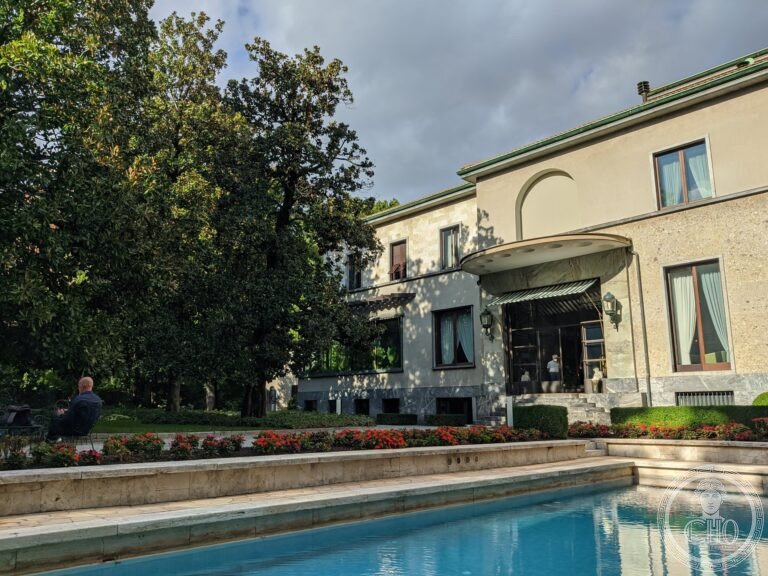
Villa Necchi Campiglio (Via Mozart 14, 1932–1935), designed by Piero Portaluppi for the industrial Necchi-Campiglio family, is the most complete surviving Art Déco domestic interior in Milan: its swimming pool, tennis court and furnished rooms are preserved under FAI (Fondo Ambiente Italiano) guardianship and open to the public.
What you see
Palazzo Castiglioni (Corso Venezia 47) is a private building but its facade — with the replaced caryatids, the sinuous ironwork and the carved stone portals — is fully visible from the street. The Porta Venezia and Corso Venezia Liberty walk covers twelve significant buildings within 600 metres; pick up the free heritage map at the city’s tourist offices. Villa Necchi Campiglio (Via Mozart 14) is open Thu–Sun for guided tours; FAI membership gives free access and supports Italy’s historic properties network.
The Pirelli Tower (Via Fabio Filzi 22) houses the Lombardia regional government and is accessible on guided tours arranged through the regional administration. The Torre Velasca (Piazza Velasca 5) is a private office building whose exterior is freely visible and most dramatic when approached from Via Verziere to the south. Milano Centrale railway station (Piazza Duca d’Aosta) is always accessible and free to visit — its enormous steel-and-stone departures hall, completed in 1931 in a blend of Art Déco and Fascist classicism, is among the grandest station interiors in Europe.
Practical information
- Villa Necchi Campiglio: open Thu–Sun; villanecchicampiglio.it (FAI)
- Pirelli Tower: guided tours on request; regione.lombardia.it
- Triennale di Milano: open Tue–Sun; triennale.org
- Milano Card: covers public transport and discounts at major museums
- Time needed: 2 days for Liberty + Rationalist + Design itinerary; 3 if including Salone del Mobile / Design Week period (April)
Getting there
Malpensa Airport (MXP, 50 km northwest) connects to Milano Centrale by Malpensa Express (50 min) and by bus (70 min). Linate Airport (LIN, 8 km east) is served by bus M4 metro line to the centre (15 min from 2023). From Milano Centrale, metro M2 (green) and M3 (yellow) serve the historic centre; the Pirelli Tower is a 3-minute walk from Centrale itself. High-speed trains connect Milan to Rome (3h), Venice (2h15), Turin (1h) and Paris (7h).
Related in CHO
- Palazzo dell’Arte — Triennale di Milano by Giovanni Muzio (existing CHO card ID 4523)
- Torino — Pietro Fenoglio and the Italian Liberty Capital
- Venezia — Carlo Scarpa and Venetian Modernism
Sources
Find it on the map
See this place and what’s around it →Record researched and written by Stefano Vigolo for Cultural Heritage Online, 2026.
Events here — now on & upcoming
- Fuorisalone – Milano Design Week 202712 Apr 2027 — 18 Apr 2027See the event →
- Death Anniversary: Giuseppe Sommaruga — March 27, 191727 Mar 2027See the event →
- Birth Anniversary: Alessandro Mazzucotelli — December 30, 186530 Dec 2026See the event →
- Death Anniversary: Alessandro Mazzucotelli — January 29, 193829 Jan 2027See the event →
- Birth Anniversary: Giulio Ulisse Arata — August 21, 188121 Aug 2027See the event →
- Death Anniversary: Giulio Ulisse Arata — September 15, 196215 Sep 2027See the event →
- Birth Anniversary: Luigi Broggi — May 6, 185106 May 2027See the event →
Historical events at this place (7)
📷 Become a Cultural Heritage Online photographer
Share your photos of places: they stay published under your name as the author. The more they're seen, the more you get noticed — and soon a contest will reward the most appreciated photos.
Log in or sign up free to add a photo