Mantova: Centro Storico

Mantova Centro Storico Gonzaga Camera degli Sposi Mantegna Palazzo Ducale Giulio Romano UNESCO 2008
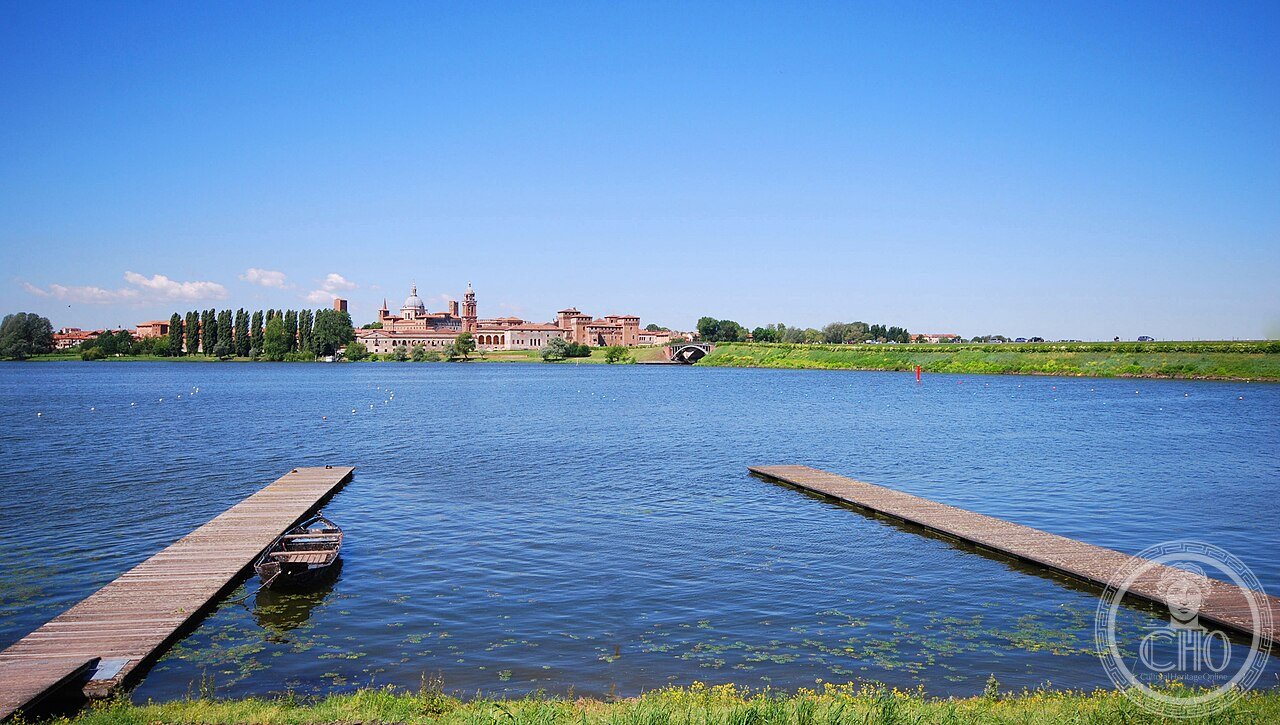
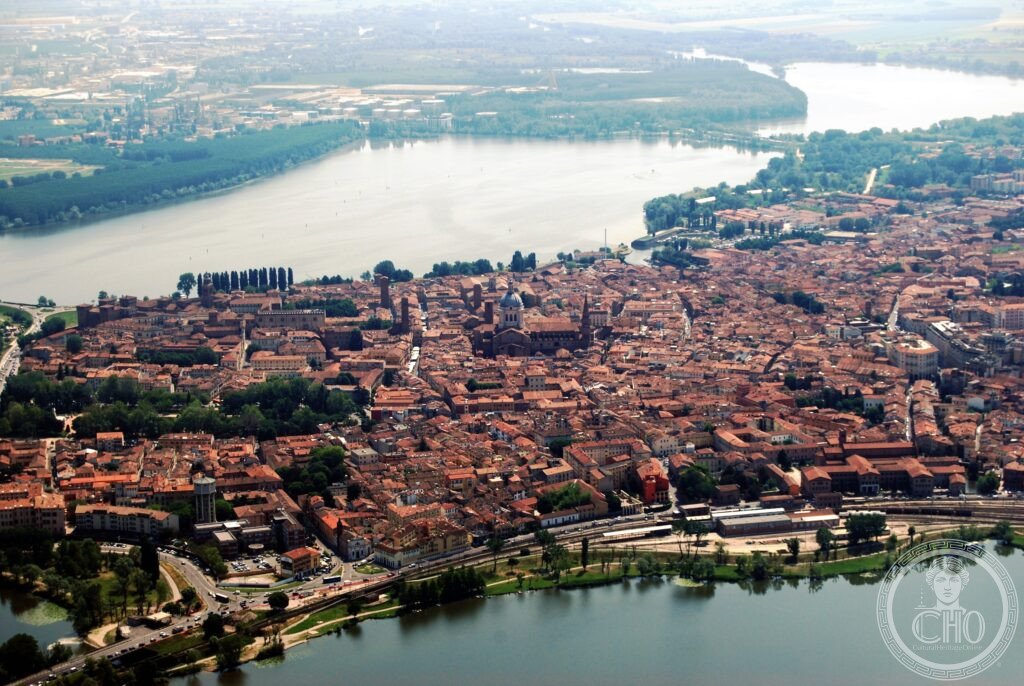
Vista aerea di Mantova e i tre laghi, Mantova, Lombardia, Italia. Il centro storico di Mantova (la penisola lacustre: la città è quasi interamente circondata da tre laghi (Lago Superiore, Lago di Mezzo, Lago Inferiore), formati dallo sbarramento del fiume Mincio; il Palazzo Ducale (il grande complesso palatino nel quadrante nord-orientale; il corpo principale affacciato sul Lago di Mezzo); il Palazzo Te (il palazzo extra-urbano sulla penisola meridionale, visibile come edificio isolato a sud-ovest del centro); la Basilica di Sant’Andrea (la facciata di Alberti, 1472 CE; la cupola ottagonale 1732 CE di Filippo Juvara)); UNESCO World Heritage Site 2008 (riferimento 1220: Mantua and Sabbioneta). Foto via Wikimedia Commons.
Mantova, Lombardia, Italia · Signoria Gonzaga 1328–1707 CE; Camera degli Sposi di Mantegna c.1465–74 (primo trompe-l’œil della storia); Palazzo Te di Giulio Romano 1525–35; Basilica Sant’Andrea di Alberti 1472; Virgilio e Monteverdi nati qui; UNESCO WHS 2008 (rif. 1220)

Mantova: Centro Storico

Mantova (UNESCO 2008) è la città della Camera degli Sposi di Mantegna (c.1465–74 CE) — la prima rappresentazione sistematica nella storia dell’arte occidentale in cui il soffitto dipinto è progettato come apertura illusoria verso il cielo (il trompe-l’œil architettonico che tre secoli dopo diventerà il linguaggio universale della pittura barocca nei palazzi d’Europa) e del Palazzo Te di Giulio Romano (1525–35 CE), il manuale visivo del Manierismo romano trasmesso alla pittura nordeuropea attraverso il canale padano.

At a glance

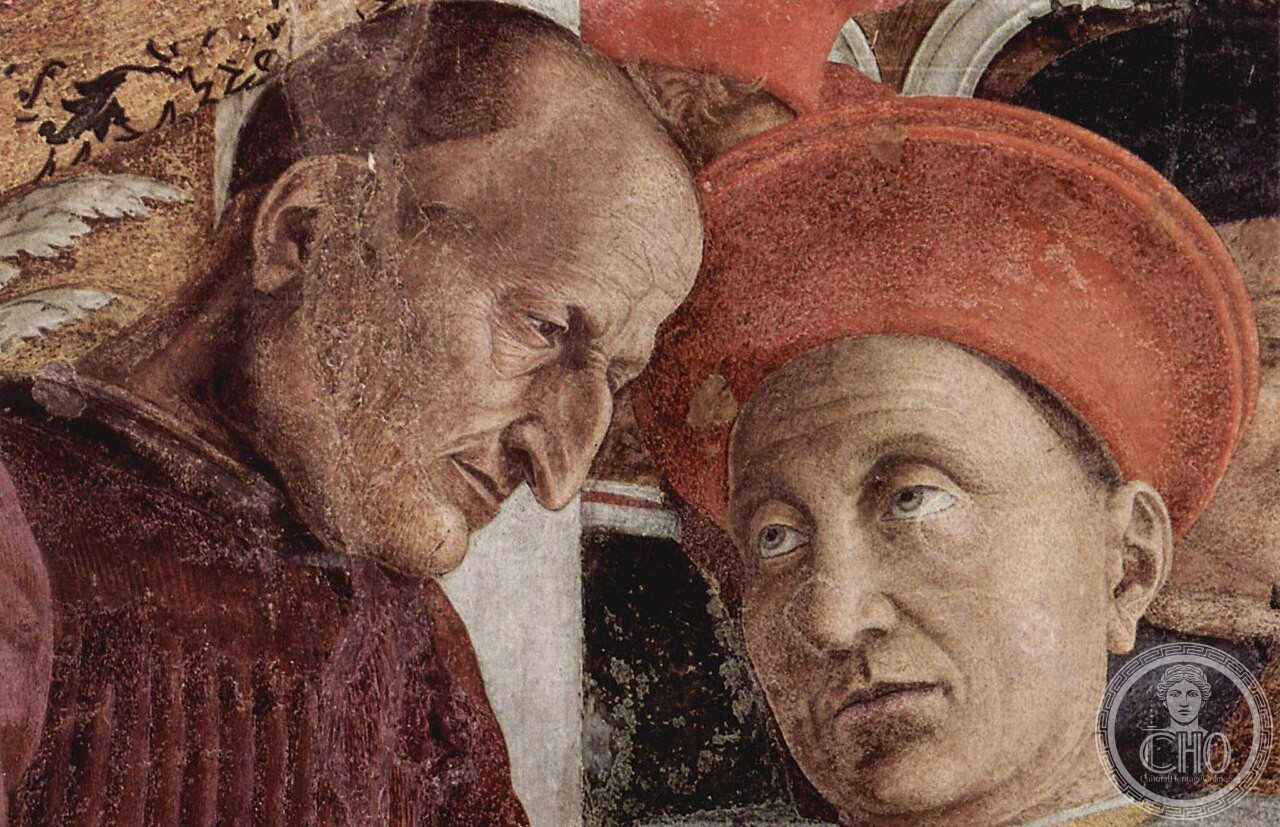
Mantova centro storico (the most precisely Mantova zone Mantova Lombardia Italy 45.1564 N 10.7913 E UNESCO WHS 2008 reference 1220: the serial inscription (the UNESCO WHS 2008 Mantua and Sabbioneta inscription includes 2 cities: Mantua (the capital of the Gonzaga signoria 1328–1707 CE; the Palazzo Ducale; the Camera degli Sposi; the Palazzo Te) + Sabbioneta (30 km southwest; the ideal city founded by Vespasiano Gonzaga Colonna (1531–1591 CE) as a planned Renaissance utopia; the Teatro all’Antica (1588–90 CE; Vincenzo Scamozzi; the first purpose-built theater in Italy (the Teatro Olimpico in Vicenza (1580 CE; Palladio+Scamozzi) is the oldest surviving; Sabbioneta’s Teatro all’Antica (1590 CE) is the second)); the Mantegna Camera degli Sposi (the Camera Picta: the painted room; the north and west walls of the Camera degli Sposi (c.1465–74 CE; Andrea Mantegna (c.1431–1506 CE); the painting program: Ludovico II Gonzaga and his court (the west wall: the Meeting scene; Ludovico receives a message while his family and court surround him; identified individuals: Ludovico, his wife Barbara of Brandenburg, their children, the court dwarf, the court dog); the north wall (the Arrival scene: the Gonzaga welcoming a dignitary (usually identified as Cardinal Francesco Gonzaga); the ceiling (the oculus: the circular painted opening (2.7 m diameter) in the center of the vault; the oculus shows a sky with clouds and 2 groups of figures looking down from a balustrade (court ladies, putti, an orange tree in a tub, a peacock; the peacock is the symbol of Juno, the patroness of the Gonzaga dynasty); the specific innovation: this is the first systematic Western use of illusionistic ceiling painting in which the architectural frame (the balustrade, the oculus rim) is painted as if real (the viewer stands under a real opening; the figures above look down; this creates a complete dissolution of the boundary between the real space of the room and the painted space above)); Virgil (70–19 BCE: born in the village of Andes, near Mantua (the exact location is disputed: either the current village of Pietole Vecchia or the nearby Virgilio municipality); “Tityre, tu patulae recubans sub tegmine fagi” (the opening of the Eclogues); the Mantuan civic identity (Mantua has used Virgil as its primary identity symbol since the Middle Ages: the Piazza Virgiliana, the Piazza Sordello fountain of Virgil, the Virgil Museum)).

Key facts

  • Il Palazzo Te di Giulio Romano (1525–35 CE) e la Sala dei Giganti — la prima stanza totalmente affrescata della storia: the Palazzo Te (the summer palace of Federico II Gonzaga (1500–1540 CE; the 5th Marquess of Mantua and the first Duke of Mantua (1530 CE)); built on the Isola del Te (an island formed by the Mincio river southwest of the city center); architect: Giulio Romano (c.1499–1546 CE; the pupil of Raphael who took over the Raphael workshop after Raphael’s death (1520 CE); Giulio Romano moved from Rome to Mantua in 1524 CE after his drawings for I Modi (the erotic sonnet illustrations by Pietro Aretino) caused a scandal); the construction (1525–35 CE: 10 years; the villa was used immediately during construction (Federico II entertained Charles V here in 1530 CE on the occasion of the Duke of Mantua investiture)); the specific Mannerist language of the exterior (the Palazzo Te exterior is Giulio Romano’s Mannerist manifesto: the architrave and frieze show triglyph blocks that have “slipped down” (they hang below the cornice rather than filling the frieze slot) — a deliberate violation of the classical rule that Giulio Romano used to signal that this is a summer pleasure palace (less serious, more playful, than a formal palace); the Sala dei Giganti (the Room of the Giants: the most spectacular single room of the Italian Renaissance; 4 walls + ceiling + floor covered continuously with the scene of the Fall of the Giants (Zeus hurls the Olympians’ thunderbolts at the Titans who are being crushed by collapsing columns and stones); the continuous all-surface coverage (the fresco wraps from floor to ceiling without a visible break; the trompe-l’œil ceiling columns crash into the painted floor; this is the first room in Western history where the architectural surface and the pictorial surface are fully fused (no clear boundary between them)); the acoustic effect (the dome shape of the room (a shallow elliptical vault) creates the same acoustic echo as the Baptistery of Pisa: a single spoken vowel resonates for 4–5 seconds; contemporary visitors reported that the giants’ simulated screams in the paintings were reinforced by the echo of real voices in the room)); the Camera degli Sposi (in the Palazzo Ducale, Castello San Giorgio; open Tue–Sun 8:30 AM–7:15 PM; €20 Palazzo Ducale (includes Camera degli Sposi + 11 rooms of the Appartamento Ducale); the Camera degli Sposi requires advance booking (€2 supplement + booking fee; available at mantovacultura.it); maximum 35 visitors per 15-min slot; summer waiting times up to 2 hours without booking))
  • GPS (Piazza Sordello, Palazzo Ducale): 45.1564° N, 10.7913° E

History

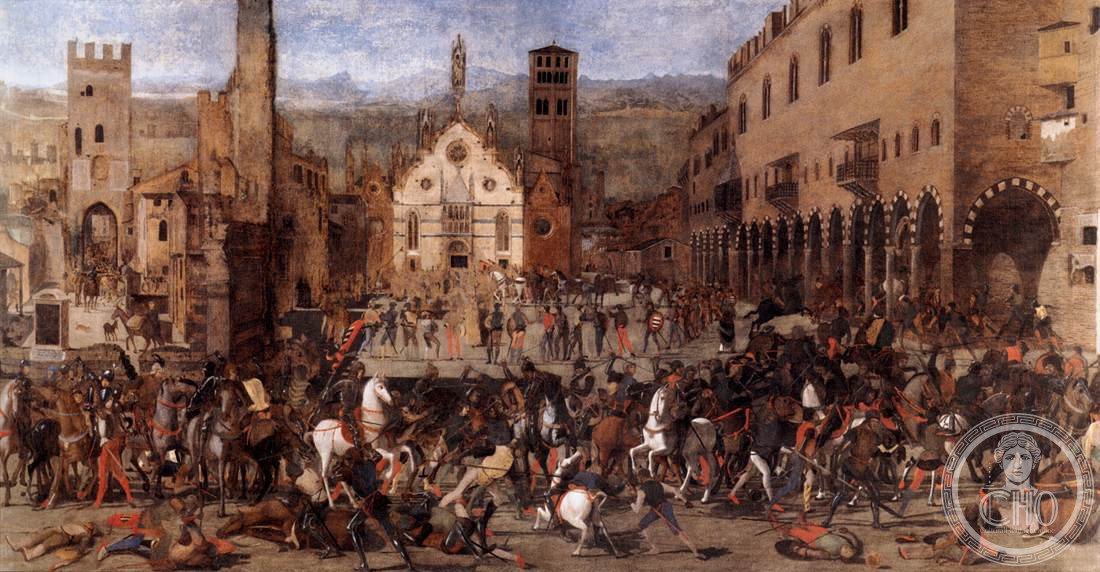
Da Virgilio alla signoria Bonacolsi alla Gonzaga a Mantegna a Giulio Romano a Monteverdi all’UNESCO 2008 (the most precisely Mantova zone history: the Gonzaga period (1328 CE: Luigi I Gonzaga overthrew the Bonacolsi signoria in a battle in the Piazza Sordello (the piazza in front of the Palazzo Ducale); the specific artistic record of the battle (a fresco in the Palazzo Ducale (c.1494 CE; Domenico Morone) shows the battle with recognizable portraits of the Gonzaga and Bonacolsi families (the Gonzaga in red; the Bonacolsi in black); the Gonzaga dynasty (1328–1707 CE: 379 years of uninterrupted rule; the specific patronage: (1) Mantegna: Andrea Mantegna was appointed court painter of Mantua in 1460 CE (the appointment letter is preserved: “the best painter of our time”; the Camera degli Sposi (c.1465–74 CE); the Triumph of Caesar (9 painted canvases; c.1484–1505 CE; acquired by Charles I of England in 1628 CE; now in the Royal Collection at Hampton Court); (2) Giulio Romano: the Palazzo Te (1525–35 CE); the Palazzo Ducale additions (the Sala dei Marchesi; 1538 CE); (3) Monteverdi (Claudio Monteverdi (1567–1643 CE): court musician of the Gonzaga from 1590 to 1612 CE; L’Orfeo (1607 CE: the first opera to use a full orchestra (40 instruments) and to achieve a dramatic through-composition structure; the libretto by Alessandro Striggio the Younger; the first performance on 24 February 1607 CE at the Gonzaga court in the Palazzo Ducale; the score is the oldest surviving opera in the repertoire that is regularly performed today)); the Sack of Mantua (1630 CE: the Sack of Mantua by Habsburg forces (during the War of Mantuan Succession); the most severe sack of an Italian city since the Sack of Rome (1527 CE); the Gonzaga collection (the most important private art collection in 17th-century Italy) was sold to Charles I of England in 1627–28 CE (before the Sack): 28 Raphaels, 9 Mantegnas, Titians, Rubens, etc.)); 2008 CE UNESCO inscription reference 1220.

What you see

Il Palazzo Ducale e la Camera degli Sposi, il Palazzo Te (Sala dei Giganti), la Basilica di Sant’Andrea, e Sabbioneta (the most precisely Mantova zone visit (1.5–2 days): Day 1 (Mantova): 9 AM: Palazzo Ducale (Piazza Sordello 40; open Tue–Sun 8:30 AM–7:15 PM; €20; the Camera degli Sposi (book in advance at mantovacultura.it; €2 supplement); the Appartamento dei Nani (the dwarf’s apartment: the miniaturized suite of rooms designed for the Gonzaga court dwarfs; ceiling height 1.5 m; doorways 0.9 m; one of the most unusual architectural spaces in any royal palace in Europe)); 12 PM: Sant’Andrea (the Basilica di Sant’Andrea: designed by Leon Battista Alberti (1472 CE); the single nave (the largest single-nave church in the world after St Peter’s Basilica in Rome; 73 m long × 19 m wide; no side aisles — the walls are instead divided by giant pilasters and alternating arched niches and chapel entrances; the pattern became the standard for High Renaissance church design (Michelangelo referenced it explicitly in his design for St Peter’s)); 2 PM: Palazzo Te (Viale Te 13; open Mon 1 PM–6 PM, Tue–Sun 9 AM–6 PM; €15 (includes Sala dei Giganti + Sala di Psiche + Loggia di Davide)); the Sala di Psiche (the feast of the gods: the room was used for Federico II’s banquets; the erotic scenes at the top of the lunettes (Giulio Romano, based on the I Modi composition style) were covered with whitewash after 1580 CE and rediscovered during restoration); 5 PM: Piazza delle Erbe + Rotonda di San Lorenzo (the Romanesque rotunda, c.1082 CE: the oldest building in Mantova; frescoes (11th–13th century CE)); Day 2: Sabbioneta day-trip (30 km; bus APAM from Mantova; 50 min; €4.50; the UNESCO ideal city: the Galleria degli Antichi (1583 CE; the gallery of 228 m: the longest gallery in Italy at the time of construction); the Teatro all’Antica (1590 CE; Scamozzi; trompe-l’œil stage perspective of infinite depth); the Palazzo del Giardino (1579 CE: the 6-room summer villa of Vespasiano Gonzaga)).

Practical information

  • Come raggiungere Mantova e prenotare la Camera degli Sposi in anticipo: transport (Trenitalia da Milano Centrale: 2h (€12.60; every 2 hours); da Verona: 40 min (€6.50; every 30 min); da Bologna: 2h20 (€16.80; change at Parma or Modena)); la prenotazione Camera degli Sposi (mantovacultura.it; la Camera degliSposi accetta max 35 visitatori/slot di 15 minuti; in estate (luglio-agosto) si esaurisce 2–4 settimane in anticipo nei weekend; prenotare subito appena si decide di andare; il sistema di prenotazione apre a rotazione ogni 3 mesi per il trimestre successivo; la visita del Palazzo Ducale è accessibile senza prenotazione (la Camera è inclusa nel biglietto Palazzo Ducale €20 + €2 prenotazione Camera)); la bici (Mantova è piatta e si gira perfettamente in bici; bike rental da Mantova Bike (€12/giorno) in Via Ariosto 3 (200 m dalla stazione); il percorso del Mincio (la ciclabile lungo il Mincio dal Lago Superiore al Lago Inferiore: 8 km andata-ritorno; panorama sulle torri di Mantova dall’acqua; le aironi cenerini (Ardea cinerea) sul Mincio; apertura del Palazzo Te visibile dal pontile di sbarco dei barconi))

Getting there

Trenitalia da Milano (2h, €12.60) o da Verona (40 min, €6.50). Stazione a 700m dal Palazzo Ducale. Palazzo Ducale €20 (Camera degli Sposi inclusa, prenotazione +€2). Palazzo Te €15. GPS Palazzo Ducale: 45.1564, 10.7913.

Nearby

  • Sabbioneta (UNESCO 2008) — 30 km ovest (serial con Mantova; città ideale rinascimentale di Vespasiano Gonzaga; Teatro all’Antica 1590 CE (Scamozzi); Galleria degli Antichi 228 m; bus APAM da Mantova 50 min €4.50)
  • Verona: Romeo e Giulietta e Arena — 40 km est (UNESCO WHS 2000 ref 797; Arena di Verona (30 CE; 22.000 posti; opera estiva; capienza maggiore di qualsiasi altro anfiteatro romano nell’uso attuale); Trenitalia da Mantova 40 min €6.50)

Sources

  • Wikipedia, Mantua; Camera degli Sposi; Palazzo Te; Giulio Romano; Andrea Mantegna, accessed June 2026
  • UNESCO, Mantua and Sabbioneta, WHS reference 1220, inscribed 2008
  • Chambers, D.S. & Jane Martineau (eds.). Splendours of the Gonzaga. London: Victoria and Albert Museum, 1981 (the catalogue of the 1981 V&A exhibition, the most comprehensive account of Gonzaga art patronage)

Hero image: Mantova, laghi e centro storico, Lombardia, Italy, Wikimedia Commons. Editorial text © Cultural Heritage Online, 2026.

📷 Diventa un fotografo di Cultural Heritage Online

Condividi le tue foto dei luoghi: restano pubblicate con la tua firma come autore. Più vengono viste, più ti fai conoscere — e presto un concorso premierà le foto più apprezzate.

Accedi o registrati gratis per aggiungere una foto
📋 Copy & share on social
Scroll to Top