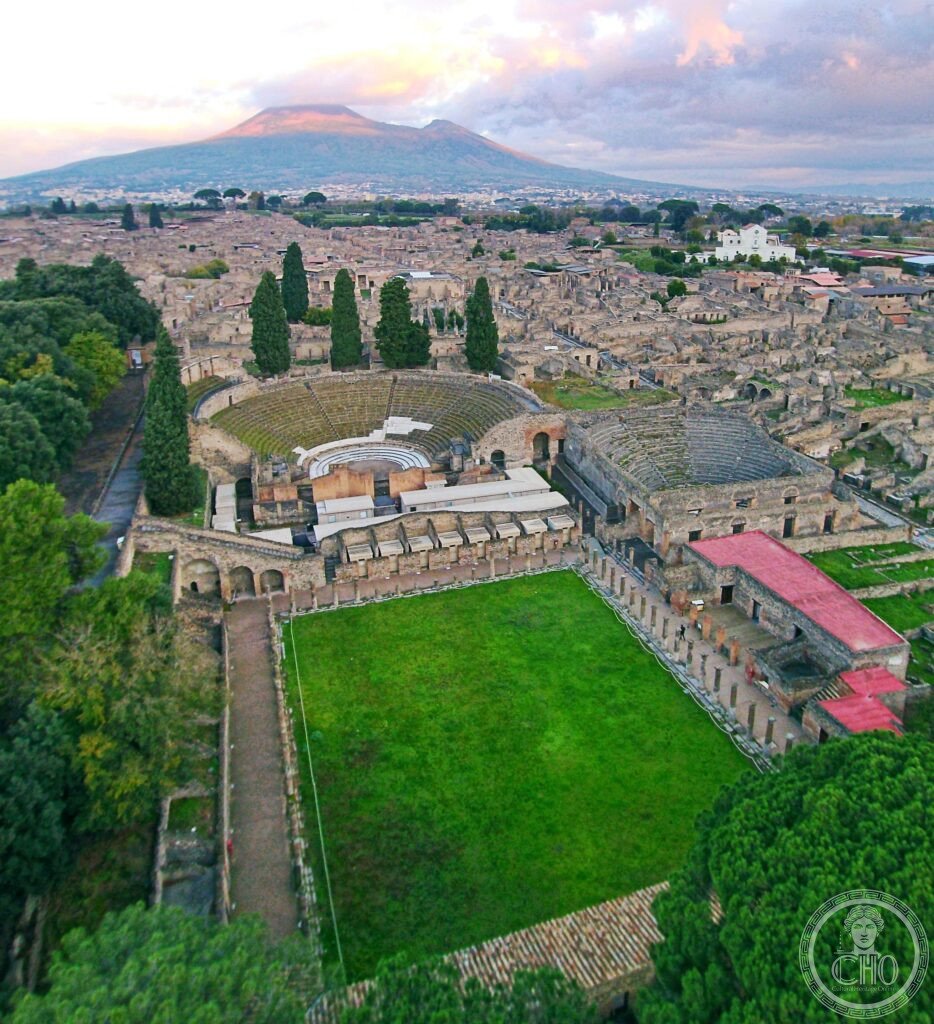
Pompei ed Ercolano: Area Archeologica

Pompei Via dell Abbondanza foro Vesuvio 79 CE scavi museo patrimonio UNESCO 1997
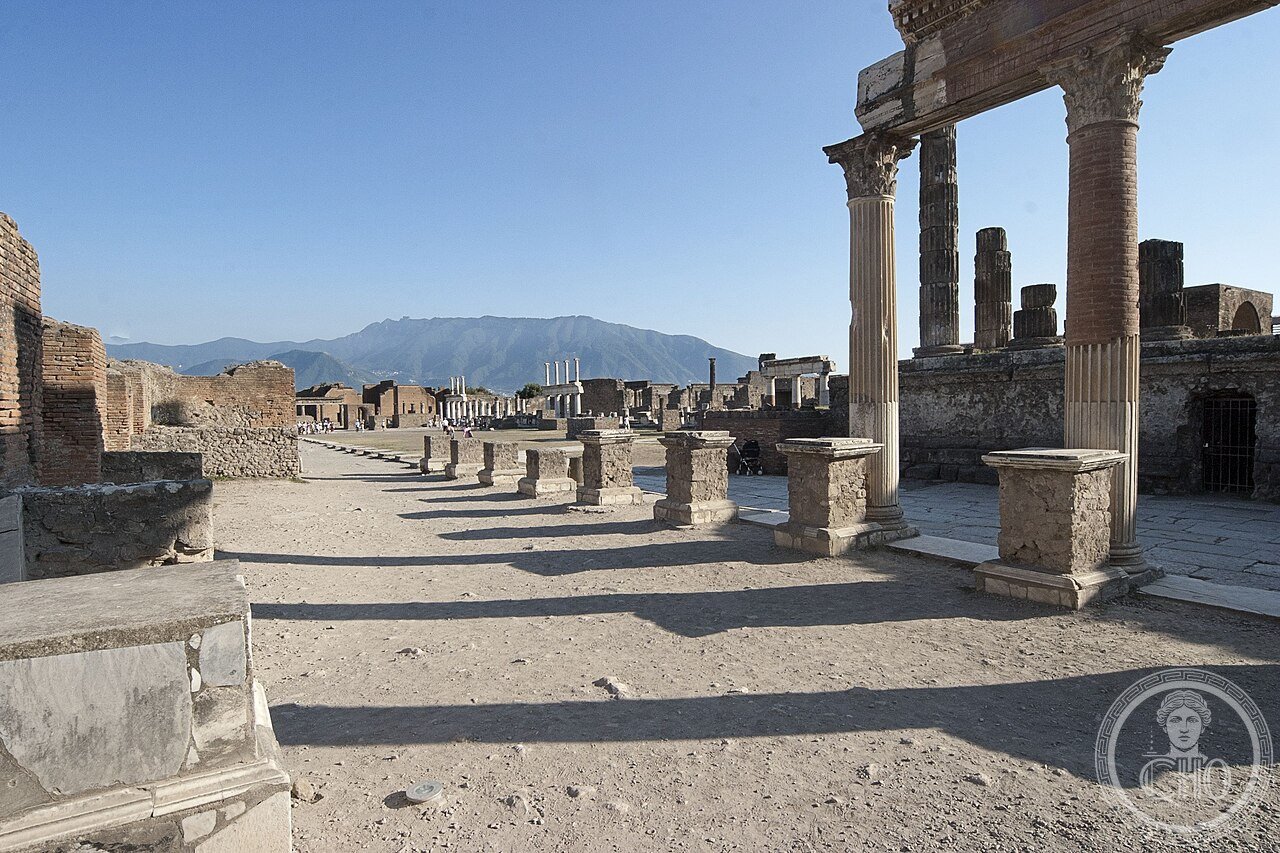
Pompei: scavi, Campania, Italia. Una delle strade principali di Pompei (la Via dell’Abbondanza: la decumana massima di Pompei; 820 m di lunghezza; il basolato originale in lava del Vesuvio; i piedistalli delle fontane pubbliche agli incroci (12 fontane nelle strade principali; la pressione dell’acqua era sufficiente per raggiungere il primo piano degli edifici); le insegne dipinte sui muri (annunci elettorali, pubblicità di terme, menù di thermopolii); al fondo la sagoma del Vesuvio (1.281 m s.l.m.; “mons Vesuvius” nella letteratura latina; attivo dal 63 CE (sequenza di terremoti che precede l’eruzione); “il 24 di agosto, verso mezzogiorno, il cielo diventò buio come la notte” (Plinio il Giovane, Epistulae VI.16 e VI.20, le due lettere a Tacito; le migliori testimonianze letterarie dirette di un’eruzione vulcanica nell’antichità)). UNESCO World Heritage Site 1997 (riferimento 829: Archaeological Areas of Pompei, Herculaneum and Torre Annunziata). Foto via Wikimedia Commons.
Pompei + Ercolano, Campania, Italia · Eruzione Vesuvio 24 agosto 79 CE; 2.000+ calchi; Villa dei Misteri (89 figure ciclo iniziatico); Thermopolium di Regio V (2019 scavi, menu dipinto); Ercolano (carta papiro carbonizzata leggibile con multispettrale); UNESCO WHS 1997 (rif. 829)

Pompei ed Ercolano: Area Archeologica

Pompei ed Ercolano (UNESCO 1997) sono le uniche città romane del I secolo CE preservate nella loro forma urbana completa — il Vesuvio le ha sepolte il 24 agosto 79 CE sotto 4-6 m di pomici e lapilli (Pompei) e 23 m di fango piroclastico (Ercolano), e il pyroclastic surge ha carbonizzato senza bruciare il legno degli arredi, i papiri della biblioteca di Ercolano, e il pane nel forno di Modestus (il pane è al Museo Nazionale di Napoli, ancora riconoscibile come una pagnotta rotonda divisa in 8 spicchi).

At a glance

Pompei ed Ercolano area archeologica (the most precisely Pompei zone Pompei Campania Italy 40.7506 N 14.4874 E UNESCO WHS 1997 reference 829: the calchi (the plaster casts of Pompeian victims: the technique (Giuseppe Fiorelli, the Soprintendente di Pompei 1860–75 CE: the invention of the plaster injection method (Fiorelli noticed that the pumice layer contained voids (cavities) where the organic material (bodies, wood, fabric) had dissolved; he injected liquid plaster into the cavities; when the plaster hardened, he chipped away the surrounding pumice; the result: the 3D form of the body at the moment of death); the number (the current count of plaster casts: approximately 2,000+ (the exact count is uncertain: the Pompeii Parco Archeologico database lists 1,044 casts catalogued to 2018 CE; the total cast production since Fiorelli is approximately 2,000; some casts have been destroyed or deteriorated)); the specific casts (the dog (the famous cast of a dog in a running position (the dog was chained; it died struggling against its chain; cast in the House of Vesuvius Victim (IX.2.26)); the pregnant woman (cast 44 in the Granary; the skeletal evidence confirms pregnancy; the woman was approximately 7 months pregnant); the gladiators (2 men found in the arena gladiatorum (the gladiators’ barracks; Reg. V.5.3): their equipment was still beside them); the recently completed “Il Grande Progetto Pompei” (2012–16 CE: €105 million EU-funded restoration of Regio V (the northeast quadrant of Pompei); 10 previously unexcavated blocks; the key discovery: the Regio V insula 10 complex (2018–ongoing excavations: the Thermopolium of Regio V (2019 CE): a perfectly preserved fast-food counter with the painted menu still on the counter (the 9 painted food images: duck, rooster, dog, wine flask, garland; the actual food remains inside the dolia (storage jars) at the time of the eruption: fragments of duck, pig, goat, fish, snail, egg, fava bean)); the Villa dei Misteri (Villa of the Mysteries; outside the Porta Ercolano (the northwest gate); the most important single room of Roman painting: the megalographic cycle (the “Room of the Great Painting”: 29 life-size figures on a red (Pompeian red) background; the subject: the Dionysiac mystery rite (an initiation ceremony for young women into the cult of Dionysus); the 12 scenes (identified from left to right: the Boy Reading, the Preparation, the Sacrifice, the Dionysian Scroll, Silenus Playing, the Goat, the Mask, the Winged Flagellant, the Flagellated, the Kneeling Figure, the Bride, the Matron); the specific Pompeian red (the pigment: cinnabar (mercuric sulphide; minium rubrum Pliny called it; mined mainly from the mines of Sisapo in Baetica (Spain); the most expensive pigment in the Roman world; Vitruvius lists it as 50 denarii per pound)); the Ercolano papyri (the Villa of the Papyri (2 km from the Ercolano excavation site; not fully excavated; accessible only via virtual reality exhibit in the Herculaneum Conservation Project museum): the 1,800 carbonized papyrus scrolls (the only surviving ancient library: the scrolls were carbonized (not burned) by the pyroclastic surge; the temperature was insufficient to combust the organic material but sufficient to convert it to carbon; the British Museum multi-spectral imaging project (2017 CE): the first partially legible Herculaneum papyrus scroll unrolled digitally (PHerc.118: a work by Philodemus of Gadara, the Epicurean philosopher who lived in the villa c.70–40 BCE)).

Key facts

  • Il Thermopolium di Regio V (2019) e perché la scoperta è unica nella storia dell’archeologia romana: the Thermopolium (the discovery: announced 26 December 2020 CE (the press release from the Parco Archeologico di Pompei); the thermopolium (a Roman fast-food counter: the L-shaped masonry counter with a top surface of cut marble (opus sectile); the dolia (ceramic storage jars) embedded in the counter top; 9 dolia were found; 3 contained animal bones at the time of eruption); the painted menu (the 9 figures painted on the front face of the counter (below the counter-top marble): a Nereid on a seahorse (a mythological scene in the central position, indicating the counter’s identity as a quality establishment); a rooster (pollo arrosto: the most common cheap meat sold at Roman thermopolia); a duck (anatra: the second most common); a dog on a leash (the dog identifies the thermopolium as belonging to the family of a gladiator (the leashed dog was the symbol of the lanista, the gladiator trainer, in Pompei); a garland of wine; the food remains (the dolia residue was analyzed by the Parco’s laboratory: the confirmed food items: Pecora (sheep), Sus (pig), Gallus (rooster), and unidentified fish bones; also snail shells and fava beans); the specific unique aspect (no other preserved thermopolium in the Roman world has both the painted menu and the food residues still in situ at the moment of the eruption — Pompei’s 89 other identified thermopolia all lacked one or both elements))
  • GPS (Ingresso Porta Marina): 40.7506° N, 14.4874° E

History

Dagli Osci ai Romani all’eruzione del 79 CE alla riscoperta nel 1748 all’UNESCO 1997 (the most precisely Pompei zone history: the pre-eruption Pompei (the founding: Pompei was founded by the Oscans (an Italic people; the Oscan name for the city was “Pumpe” — probably from a Latin root related to the number 5 (pumperia = a group of 5 families; or from Oscan pompe = a water channel)); the Samnite Wars (the 4th–3rd century BCE: Pompei changed hands between Samnites, Etruscans, and eventually Rome (the city became a Roman ally in 89 BCE during the Social War)); the eruption (the Plinian eruption of 24 August 79 CE (or 24 October 79 CE: the date is disputed; the traditional date is 24 August based on Pliny the Younger’s letters; the October date is supported by the discovery of autumn fruits (pomegranate, walnuts, chestnuts) in the 2019 excavations and by the warm clothing of the victims (who would not have worn heavy cloth in August in Campania); Pliny the Elder commanded the Misenum fleet; he crossed the bay in a liburnian to rescue friends; he died on the beach at Stabiae (not Pompei) on 25 August (Pliny the Younger: “his body was found on the 26th, intact and uninjured; it looked more like a sleeping man than a dead one”)); the rediscovery (the accidental discovery: 1748 CE; the systematic excavation: started under Charles VII of Naples (later Charles III of Spain) who had purchased the entire site in 1738 CE; the Villa of the Papyri at Ercolano (1750 CE); the Bourbon Excavations Museum (the first finds (mosaics, bronzes, jewelry) were taken to the Palazzo Reale di Portici (the “Portici collection”); subsequently moved to the Museo Borbonico (= the current Museo Nazionale di Napoli)); the “locked room” (the Gabinetto Segreto of the Museo Nazionale di Napoli: the room with all the erotic art of Pompei, including: the famous bronze of Pan and the she-goat (from the Villa dei Papiri); the collection of phallic amulets and lamps; accessible to the public from 2000 CE); 1997 CE UNESCO inscription reference 829.

What you see

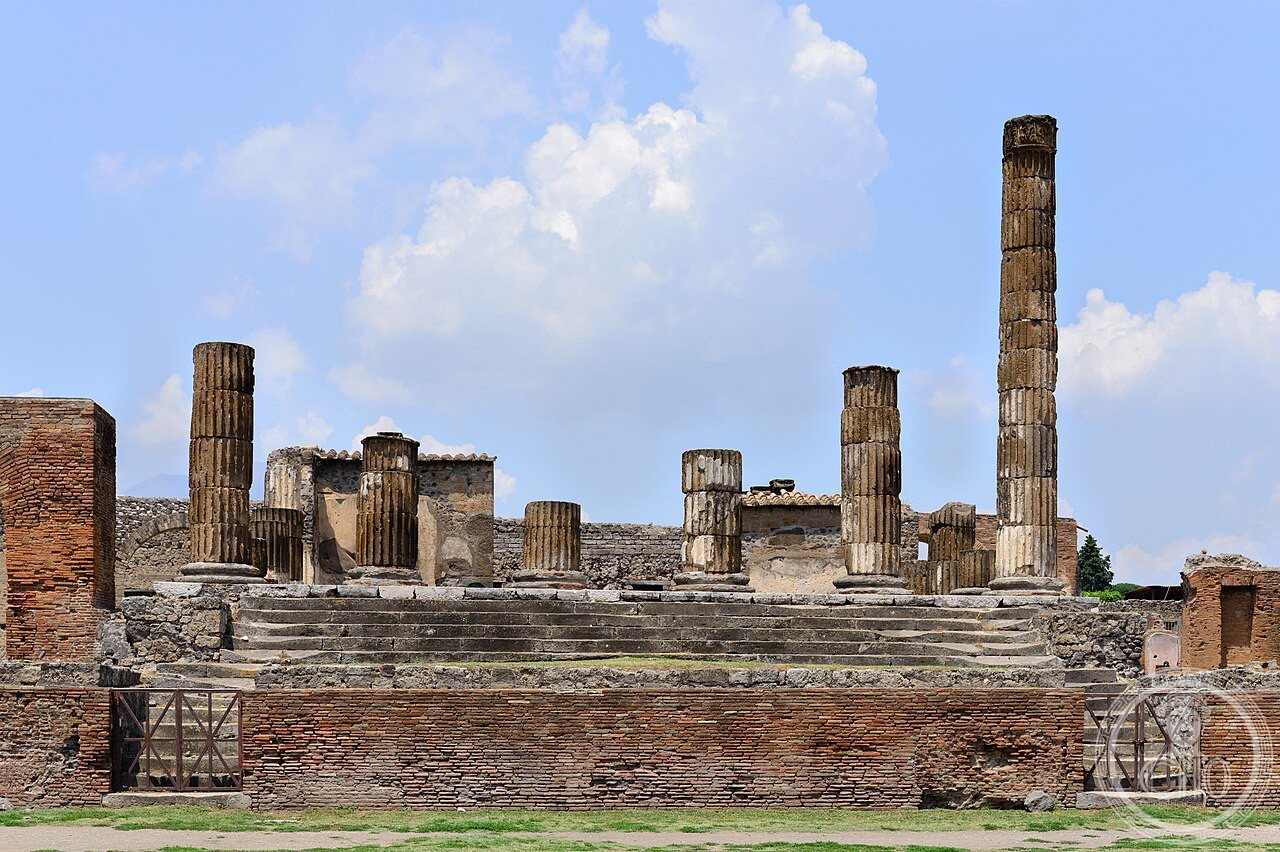
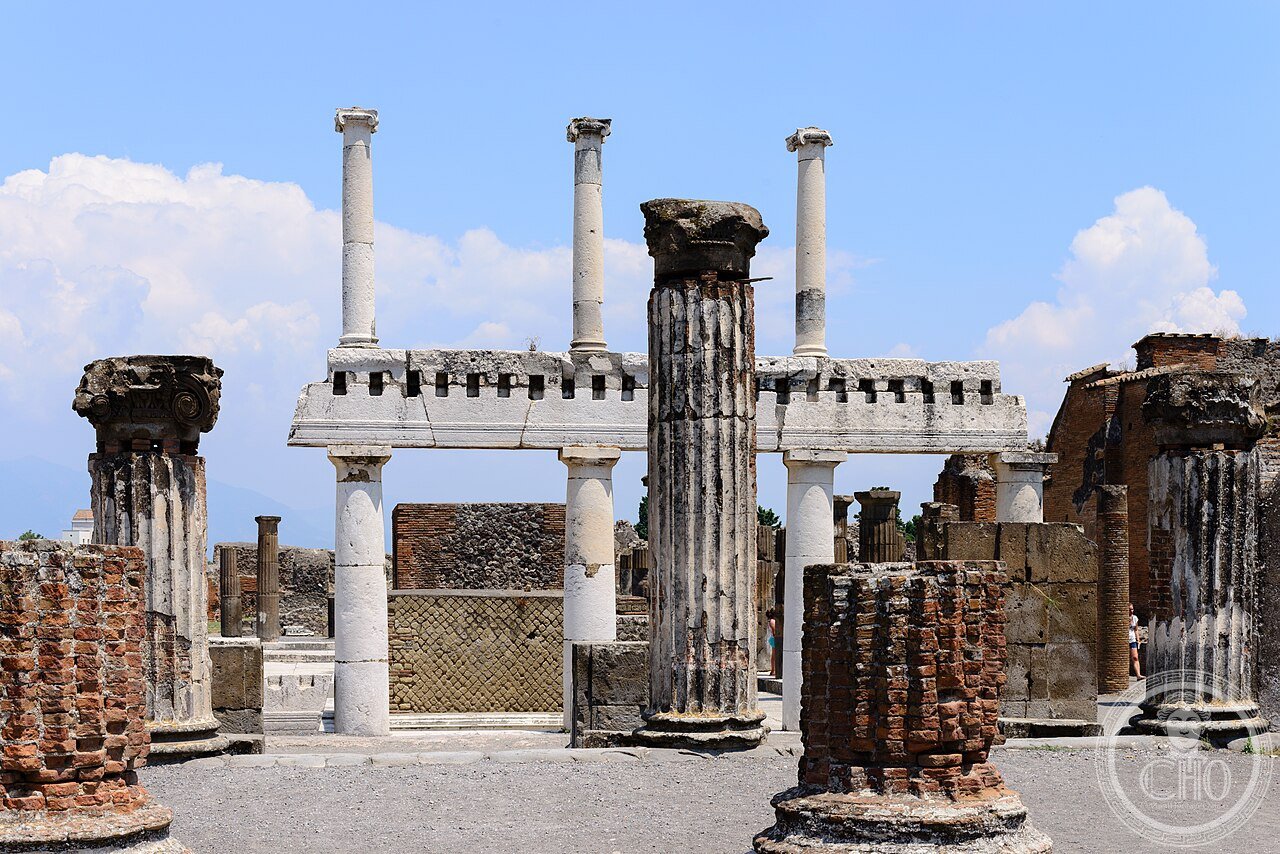
Il Foro, la Villa dei Misteri, l’Anfiteatro, il Lupanar, e Ercolano (separate site 15 km) (the most precisely Pompei zone visit (minimum 5 hours for Pompei; 3 hours for Ercolano): the Pompei circuit (the Porta Marina entrance (Via Villa dei Misteri 2; the main entrance; open daily 9 AM–7 PM April–October; 9 AM–5 PM November–March; €20 Pompei only; €25 combo Pompei + Ercolano + 3 other sites in 3 days; book at ticketone.it/pompei at least 72 hours in advance to avoid queues of 30–90 min); the must-see circuit (3 hours minimum): the Foro (the civic center; the Temple of Jupiter at the north end; the Basilica on the south; the Temple of Apollo on the west; the Forum market (macellum) on the northeast); the Via dell’Abbondanza (the main commercial street; 820 m; the shop fronts; the bakeries (4 pistrinae with millstones still in situ); the thermopolia (the bar-restaurants with the masonry counters); the political graffiti on the walls (the electoral programmata: “Vote for Marcus Cerrinius Vatia for aedile; he deserves it” (CIL IV.2983; the most frequently cited political graffito))); the Villa dei Misteri (2 km from the Porta Marina; accessible on foot via Via Villa dei Misteri; the most important cycle of Roman painting; the 89 life-size figures in the triclinium (the main dining room); allow 45 min minimum); the Anfiteatro (the oldest surviving permanent amphitheater in the Roman world (80 BCE; the oval arena 135 m × 104 m; capacity 20,000; used for gladiatorial combats and venationes (animal hunts)); the Odeon (the small theater; built c.80 BCE; capacity 1,500; used for musical performances; the most complete Roman small theater with all its tiers intact)); the Ercolano (separate site: 15 km northwest of Pompei via Circumvesuviana from Pompei Scavi station; 30 min; €2.50; the Ercolano Scavi station; the main entrance at Corso Resina 187; open daily 9 AM–6 PM April–October; 9 AM–3:30 PM November–March; €13 solo; the specific Ercolano advantage over Pompei: (1) the houses have their upper floors intact (the pyroclastic surge compressed the superstructure rather than blowing it off; at Pompei the roof tiles were blown by the pumice fall); (2) the organic material (wood furniture, ropes, cloth, food) survived carbonized rather than burned; (3) the density of finds per square meter is 10× Pompei; (4) the fresco quality is higher because Ercolano attracted wealthier residents)).

Practical information

  • Come arrivare a Pompei da Napoli e combinare Pompei+Ercolano in una giornata: transport (the Circumvesuviana (the suburban railway of Naples; line Napoli–Sorrento; stop “Pompei Scavi–Villa dei Misteri” (NOT the main FS Pompei station which is 1 km from the scavi); frequency: every 20–30 min from Napoli Piazza Garibaldi (the Napoli Centrale underground level); journey time: 35–40 min; ticket: €3.60; the Circumvesuviana from Napoli Piazza Garibaldi direction Sorrento; stop “Ercolano Scavi” for Herculaneum (20 min from Napoli; €2.50)); the combo visit (1 day for both sites: the optimal order: 9 AM arrive Pompei Scavi (1 stop before Ercolano on the return from Napoli); 9–2 PM: Pompei (5 hours; the Villa dei Misteri + the Via dell’Abbondanza circuit + the Foro + the Anfiteatro + the Lupanar); 2:20 PM: Circumvesuviana from Pompei Scavi to Ercolano Scavi (25 min); 3 PM–6 PM: Ercolano (3 hours; the Casa dei Papiri (exterior view only); the Casa del Bicentenario (the Christian cross-shaped carbonized mark on the wall (2nd floor): the oldest evidence of Christianity in any Roman building); the Casa del Fauno Ubriaco (the “Drunken Faun”); the Casa dei Cervi (the walled garden overlooking the ancient coastline)); combo ticket (€25 for Pompei + Ercolano + 3 other sites in the Parco Campania; valid 3 days; buy at parkpompei.it or ticketone.it))

Getting there

Circumvesuviana da Napoli Piazza Garibaldi (35 min, €3.60, ogni 20-30 min; fermata “Pompei Scavi–Villa dei Misteri”). Trenitalia da Roma Termini (2h20, €29, alta velocità fino a Napoli poi Circumvesuviana). GPS Porta Marina: 40.7506, 14.4874.

Nearby

  • Ercolano: Scavi Romani — 15 km nord-ovest (Circumvesuviana da Pompei Scavi 25 min €2.50; Casa del Bicentenario; Casa dei Cervi; papiri carbonizzati; mobilio ligneo conservato integro)
  • Napoli: Museo Nazionale (MANN) — 25 km nord (Circumvesuviana da Pompei Scavi a Napoli Piazza Garibaldi 35 min €3.60; il Gabinetto Segreto; il Mosaico di Alessandro; il Toro Farnese; Ercolano papyri Sez. IV)

Sources

  • Wikipedia, Pompeii; Herculaneum; Villa of the Mysteries; Thermopolium of Regio V, accessed June 2026
  • UNESCO, Archaeological Areas of Pompei, Herculaneum and Torre Annunziata, WHS reference 829, inscribed 1997
  • Pliny the Younger, Epistulae VI.16 and VI.20 (letters to Tacitus describing the eruption, the oldest first-person account of a volcanic eruption)

Hero image: Pompeii, Campania, Italy, Wikimedia Commons. Editorial text © Cultural Heritage Online, 2026.

📷 Diventa un fotografo di Cultural Heritage Online

Condividi le tue foto dei luoghi: restano pubblicate con la tua firma come autore. Più vengono viste, più ti fai conoscere — e presto un concorso premierà le foto più apprezzate.

Accedi o registrati gratis per aggiungere una foto
📋 Copy & share on social
Scroll to Top