
At a glance
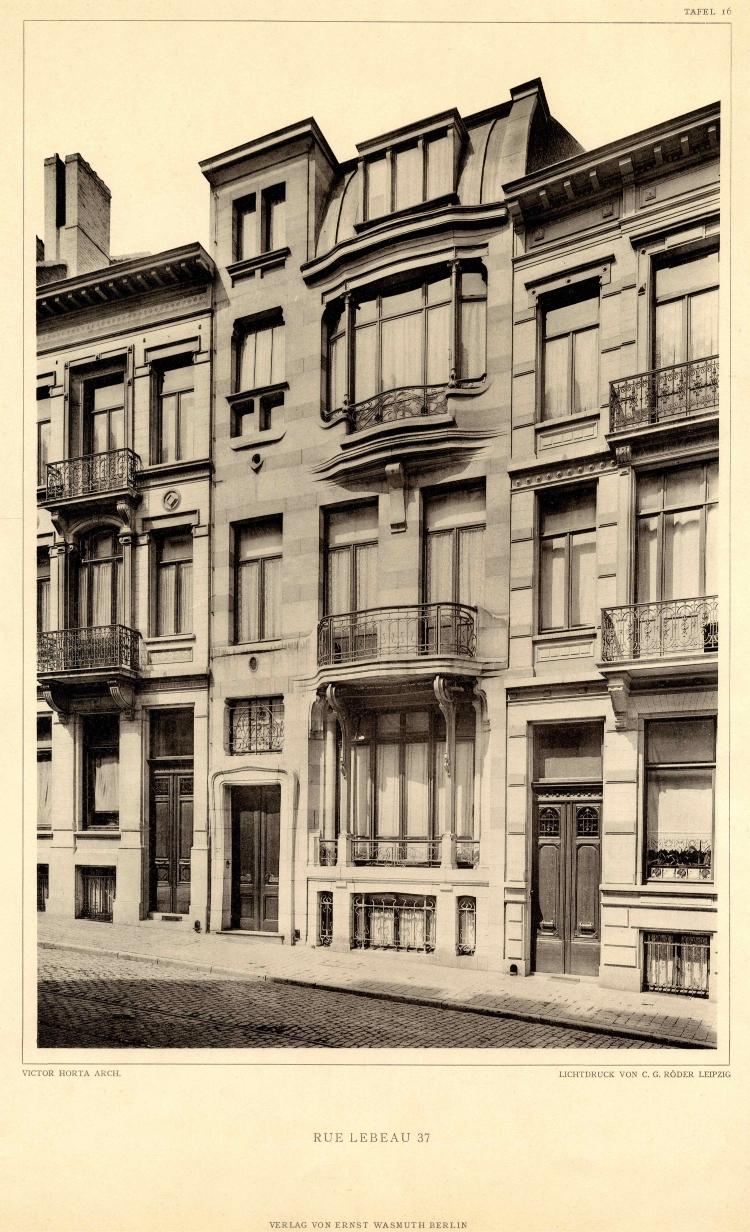
Maison Frison is a private Art Nouveau townhouse at 37 rue Lebeau in central Brussels, designed by Victor Horta in 1893 and completed in 1894. It followed immediately on the Hôtel Tassel, and is one of Horta’s earliest surviving experiments with the curvilinear iron-and-glass language that would define Art Nouveau architecture. Horta built it for a friend: Maurice Frison (1863–1938), a barrister of the Brussels bar, a socialist and a civil reformer who presided over the city’s General Council of Hospices and Relief, the forerunner of its public welfare service. The house came through the twentieth century with its interiors and much of its original furniture intact, and the Foundation Frison Horta presents it today as a living museum — a house still furnished as it was, opened for private and small group visits by prior arrangement rather than run as a conventional museum.
Key facts
Architect: Victor Horta | Designed: 1893 | Completed: 1894 | Address: 37 rue Lebeau, 1000 Brussels, Belgium | GPS: 50.8426, 4.35413 | Type: Art Nouveau townhouse | Protected: listed monument since 21 April 1994 | Owner: Nupur Tron, founder of Foundation Frison Horta | Current use: Foundation Frison Horta — private and guided visits by arrangement
History
Victor Horta (1861–1947) designed Maison Frison in 1893, in the months after he completed the Hôtel Tassel on rue Paul-Émile Janson — widely regarded as the first true Art Nouveau building in the world. Construction finished in 1894. This dating follows the house’s own archive — Horta’s original plans and the building permit, conveyed with the deed of sale when the present owner acquired the house in 2017; the Brussels heritage inventory gives 1894–1895. The two houses share the same formal vocabulary: exposed structural ironwork, naturalistic ornament, and flowing spatial sequences that break with the rigid historicism of nineteenth-century architecture.
The client was a friend rather than a patron of convenience. Maurice Frison was an avocat à la cour, a barrister pleading before the higher courts, and a public figure of the Belgian left: a member of the Belgian Workers’ Party, a freemason, and president of the Conseil Général des Hospices et Secours, the body that administered Brussels’ hospitals and poor relief. The commission belongs to the circle of friendships and shared convictions out of which Brussels Art Nouveau actually emerged, rather than to the speculative market of the day.
Maison Frison escaped the widespread demolition of Brussels’ Art Nouveau heritage during the mid-twentieth century and was protected as a listed monument on 21 April 1994. The Foundation Frison Horta, established to preserve and share the building, has since carried out restoration work — including the recovery of the painted decoration of the winter garden in 2018 — and opens the house to scholars, architecture enthusiasts and the public on a limited basis. The house is owned by Nupur Tron, the foundation’s founder, who lives there with her family and has led its restoration.
What you see
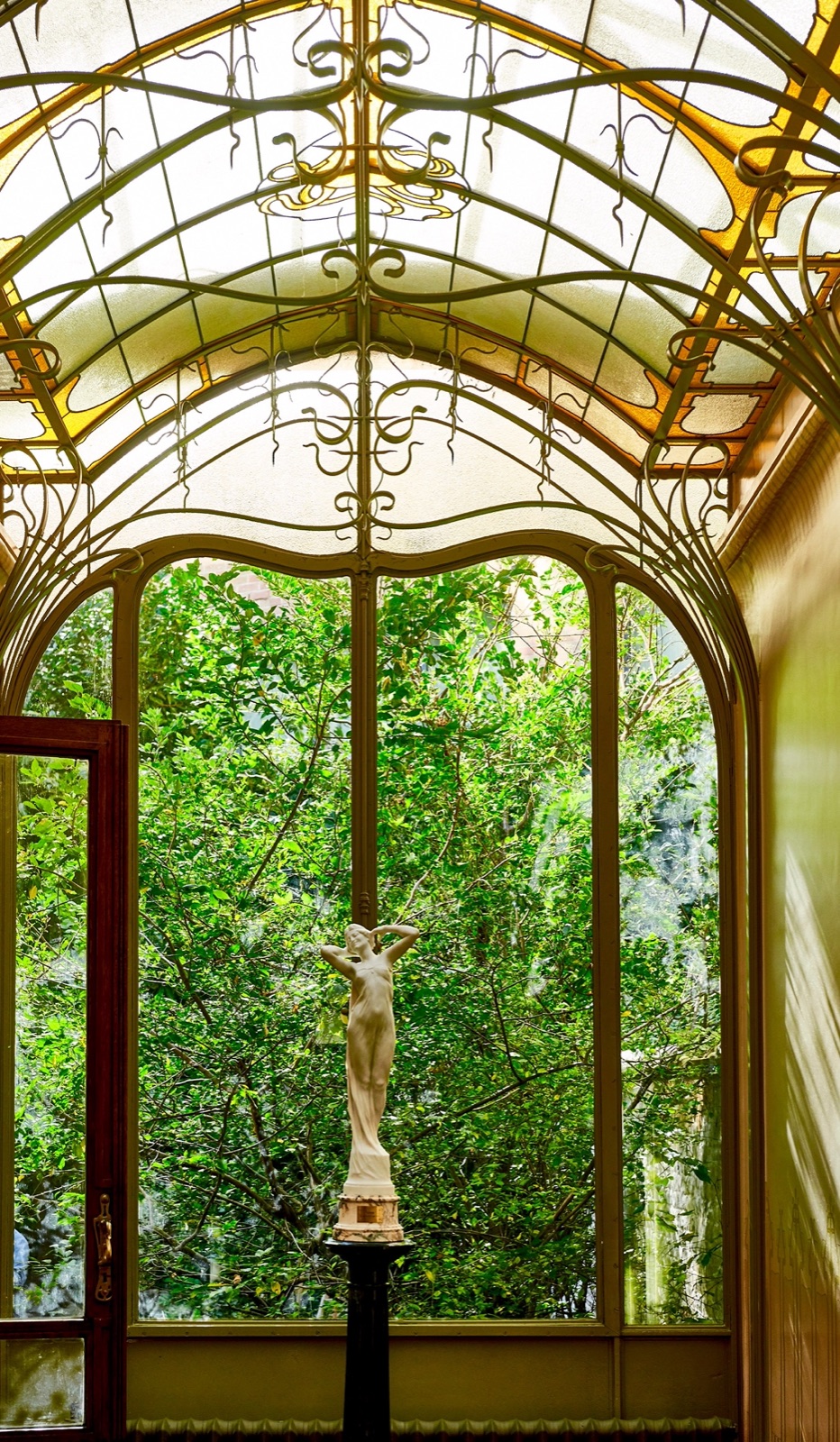
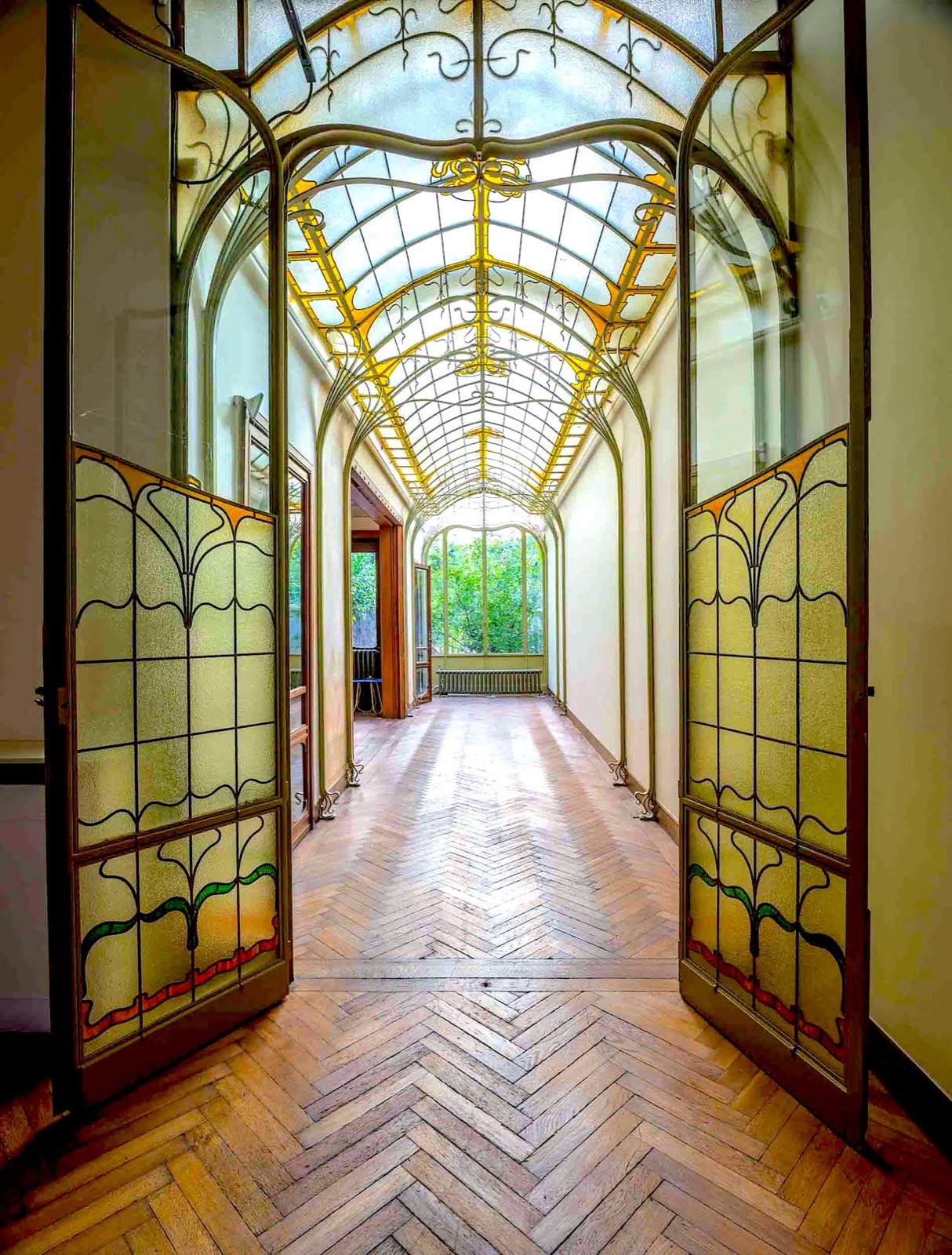
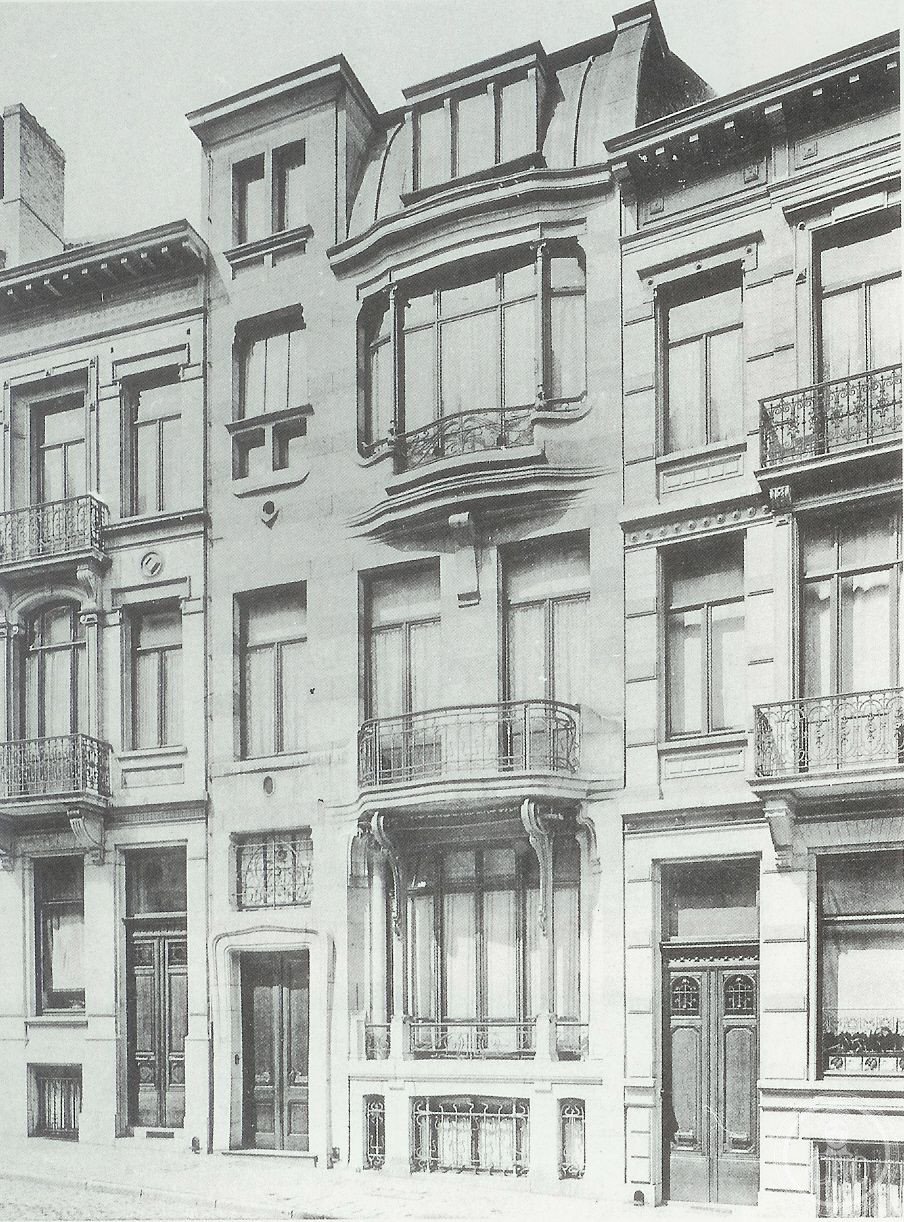
The street facade on rue Lebeau is relatively discreet compared to Horta’s grander townhouses, but characteristic features are immediately visible: a bow window with slender cast-iron columns, sinuous ironwork balcony railings, and stone carving that melts into organic curves at the window surrounds. The interior retains original fixtures including decorative ironwork, tilework, and the luminous stairwell that was Horta’s signature device — a glazed well that draws natural light deep into the plan. Original furniture survives here in unusual quantity: the restoration returned some three hundred original pieces to the house, by Horta himself and by contemporaries including Josef Hoffmann and Louis Majorelle. The winter garden (jardin d’hiver) at the rear is a particularly intimate example of Horta’s ability to dissolve the boundary between structure and ornament; its painted decoration was recovered in 2018.
Inside the house
Practical information
Maison Frison is not a conventional public museum. It is managed by the Foundation Frison Horta and opens for private visits and small group tours by prior arrangement. Guided private visits are arranged through the foundation’s own site, foundation-frison-horta.be, where current visiting conditions are also published. The building is not open for unannounced drop-in visits. Photography policies are set by the foundation for each visit.
Getting there
The nearest metro station is Louise (lines 2 and 6), approximately 10 minutes on foot. From Place du Grand Sablon — one of Brussels’ best-known heritage squares — rue Lebeau is a short walk of under five minutes heading south-west. Tram lines serving the nearby Boulevard de Waterloo also provide convenient access. The neighbourhood is walkable and compact, with most of the relevant Art Nouveau sites reachable on foot from rue Lebeau.
Nearby heritage
The Palais de Justice is approximately 500 m to the south-west, one of the largest law court buildings in the world by footprint. The Hôtel Solvay, Horta’s most celebrated residential commission, stands about 900 m away on avenue Louise. The Hôtel Tassel — finished the year before Maison Frison — is roughly 1.5 km to the north-west. The Horta Museum, housed in Horta’s own former home and studio on rue Américaine, is approximately 2 km south-west and provides the fullest overview of his work and archive.
Sources
Foundation Frison Horta (official site): foundation-frison-horta.be, and correspondence with the foundation, August 2026. Wikipedia: Hôtel Frison; Victor Horta; Hôtel Tassel. Wikidata: Q3145494. Horta Museum official site: hortamuseum.be. UNESCO World Heritage List — Major Town Houses of the Architect Victor Horta (Brussels): whc.unesco.org/en/list/1005.
Record researched and written by Luigi De Marchi for Cultural Heritage Online, 2026.
Find it on the map
See this place and what’s around it →📷 Become a Cultural Heritage Online photographer
Share your photos of places: they stay published under your name as the author. The more they're seen, the more you get noticed — and soon a contest will reward the most appreciated photos.
Log in or sign up free to add a photoIs this page about you?
This page is read by travellers and heritage enthusiasts who find it on Google. Tell us how you are connected to this place and we will take it from there.