Longobardi in Italy — Places of Power
Seven sites across the Italian peninsula recording the 200-year Lombard kingdom (568–774 CE) — UNESCO WHS 2011 (serial nomination, reference 1318) — from the Tempietto Longobardo in Cividale del Friuli (the most sophisticated surviving Lombard religious art) to Monte Sant’Angelo in Puglia (the pilgrimage sanctuary that turned the Germanic warrior-king into a Christian pilgrim), the Longobardi nomination captures the moment when a Germanic tribal kingdom transformed into a Christian Mediterranean state and gave Italy the term “Lombardy”.
At a glance
Longobardi (the most precisely Longobardi single Cividale-del-Friuli Friuli-Venezia-Giulia Italy 46.0912 N 13.4330 E UNESCO WHS 2011 reference 1318 serial nomination 7 components: 1) Cividale del Friuli (Forum Iulii; the first Lombard capital in Italy from 568 CE; the Tempietto Longobardo; the Museo Cristiano with the Baptistery of Callisto and the Altar of Ratchis); 2) Brescia (the San Salvatore/Santa Giulia monastery complex; the most complete surviving Lombard royal monastery; UNESCO OUV: the layering of Lombard/Carolingian/Romanesque architecture in a single complex); 3) Castelseprio-Torba (province of Varese, Lombardia; the Castelseprio archaeological zone with the frescoes of Santa Maria Foris Portas (9th CE century; the most important Lombard-era frescoes in Italy); the Torba tower (the Lombard defensive tower converted into a Benedictine nunnery in the 8th century CE)); 4) Spoleto (Umbria; the Lombard duchy of Spoleto was one of the longest-surviving Lombard political units — it lasted from 570 CE to 1201 CE; the San Salvatore basilica in Spoleto (4th–5th century CE but modified in Lombard period; the best surviving Lombard-modified Early Christian basilica)); 5) Campello sul Clitunno (Umbria; the Tempietto sul Clitunno; the most debated building in Italian art history — it looks Roman but was built by the Lombards in the 7th–8th century CE; the first Renaissance-style building in post-Roman Italy built 700 years before the Renaissance); 6) Benevento (Campania; the Lombard duchy of Benevento; the Santa Sofia church (8th century CE; plan: a 6-pointed star — a unique plan type found nowhere else in Italian ecclesiastical architecture; UNESCO OUV the plan uniqueness)); 7) Monte Sant’Angelo (Puglia; the Sanctuary of San Michele Arcangelo; the most important Lombard pilgrimage site; the cave sanctuary where the Archangel Michael is believed to have appeared in 490 CE; every Lombard king made the pilgrimage to Monte Sant’Angelo)).
Key facts
- The Tempietto Longobardo (the most important surviving Lombard building and the richest collection of Lombard stucco art in existence): the Tempietto Longobardo (the Small Lombard Temple; also called the Oratorio di Santa Maria in Valle) in Cividale del Friuli (Udine, Friuli-Venezia Giulia) is a small rectangular chapel built into the rock above the Natisone river gorge in the 8th century CE (the dating is debated between 730s CE and 740s CE based on comparison with other Lombard buildings); the key feature: the interior west wall stucco reliefs — six life-size standing figures of female saints (possibly the Virgin with saints; the identification is not settled) arranged symmetrically on either side of a central archway; the figures are executed in pressed stucco — the Lombard mastery of stucco (a lime-based plaster pressed into molds to create relief decoration) reached its highest point in this chapel; the specific qualities of the Cividale stucco: the faces of the saints show individualized features (each face slightly different in the turn of the head, the shape of the eyes) within a hierarchical composition (all figures the same height, frontally oriented, against a flat ground); the combination of Byzantine compositional formality with Germanic tendency toward individualized physiognomy is the Lombard aesthetic synthesis in its clearest visual expression; the chapel was hidden behind an 18th-century wall from approximately 1750 CE to 1843 CE — the wall was demolished during a building modification and the chapel was discovered intact; its extraordinary preservation is the result of this accidental enclosure
- Principal GPS (Cividale del Friuli hub): 46.0912° N, 13.4330° E
History
From Germanic invasion to Christian kingdom to UNESCO serial heritage (the most precisely Longobardi single 568 CE April: the Lombards (Langobardi — “Long Beards” in Germanic; a Germanic tribe from the Elbe basin in present-day Germany) crossed the Julian Alps under King Alboin and entered Italy; by September 569 CE they had captured Milan, the capital of Roman Italy; the Lombard conquest was the last major Germanic migration into Italy and the most geographically comprehensive — unlike the Goths or Vandals who controlled parts of Italy, the Lombards established a kingdom that divided all of Italy between the Lombard territories (the north: Milan/Pavia capital; the centre: Ducato di Spoleto; the south: Ducato di Benevento) and the surviving Byzantine territories (Ravenna; Rome; Venice; the coastal cities) 569 CE Cividale del Friuli (Forum Iulii) becomes the first Lombard capital and the seat of the first Lombard duke in Italy (Gisulf I the nephew of King Alboin); the choice of the pre-existing Roman city was deliberate: the Lombards did not build new cities but occupied existing ones; the term “Friuli” derives from “Forum Iulii” — the Lombard contraction of the Roman city name 7th–8th CE cultural synthesis: the Lombards converted from Arian Christianity to Roman Catholic Christianity under Queen Theodelinda (queen of the Lombards 589–628 CE; born Bavarian princess; the most important patron of Christian art in the Lombard period; her treasure (objects commissioned for the Monza Cathedral) is the largest surviving collection of Lombard gold and enamel work); the Lombard conversion to Catholicism changed the relationship between the Lombard kingdom and Rome — the Lombards became patrons of the Pope (the Lombard kings competed with the Byzantine emperor for Roman papal favor) 774 CE Charlemagne conquered the Lombard kingdom; the last Lombard king Desiderius captured and exiled; Charlemagne assumed the title “King of the Lombards” and incorporated the Lombard kingdom into the Frankish empire; the Lombard ducate of Benevento survived as an independent state until 1052 CE the Lombard legacy: the regions of “Lombardy” (Lombardia) takes its name from the Lombards; the Lombard legal system (Lex Langobardorum; codified by King Rothari in 643 CE — the first major Germanic legal code written in Latin) influenced Italian law until the 19th century; the Lombard influence on Italian is substantial: more than 200 Italian words derive from Lombard German (including “banda” (troop), “guardia” (guard), “rubare” (to steal), and the names of the regions Friuli and Lombardia) 2011 CE UNESCO serial inscription reference 1318: the 7 components).
What you see
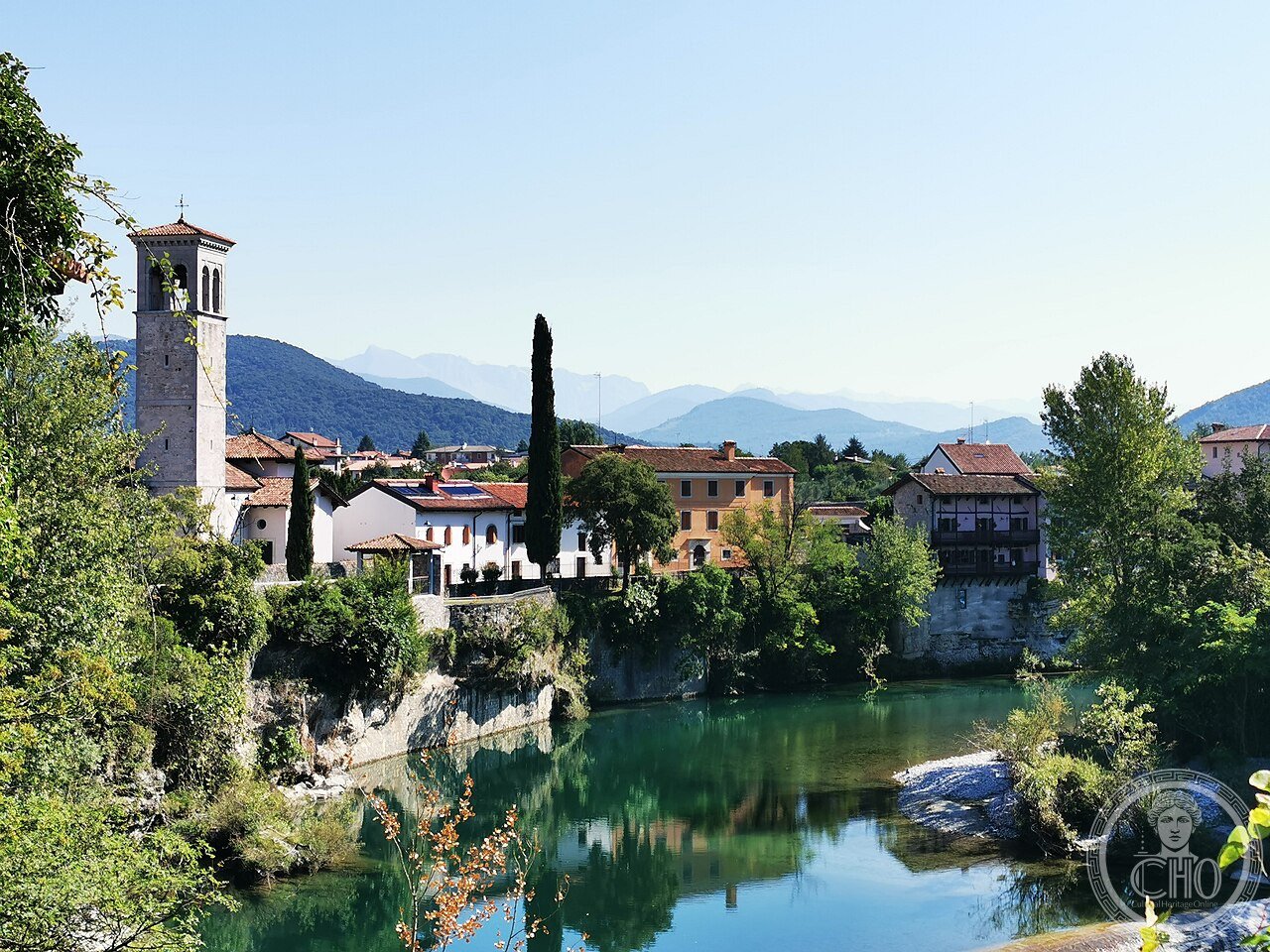
Tempietto Longobardo (Cividale), San Salvatore (Brescia), Castelseprio frescoes, and Monte Sant’Angelo (the most precisely Longobardi single site-by-site guide for the circuit visitor: Cividale del Friuli (hub; 3 hours minimum for the Tempietto + Museo Cristiano; the Natisone gorge view from the Devil’s Bridge (Ponte del Diavolo; 15th CE stone bridge; the gorge below is 30m deep; the gorge walls are where the Tempietto chapel is carved into the rock; the view from the bridge of the Tempietto exterior on the cliff face is the most dramatic visual of the Lombard series); the Baptistery of Callisto in the Duomo (the octagonal Lombard baptistery with 8th CE marble plutei — the carved marble screens that divide the baptistery from the ambulatory; the most intact set of Lombard marble plutei in Italy)); Brescia (1.5 hours for San Salvatore/Santa Giulia; the monastery was a Lombard royal foundation by Desiderio (the last Lombard king) in 753 CE; the complex now houses the Museo di Santa Giulia one of the most important archaeological museums in Lombardia; the specific room: the Sala delle Vittorie with the winged Victories from the Capitolium of Brescia (1st CE century; bronze gilt; the largest surviving Roman bronze gilded sculptures in Italy — the Victories were found buried under the monastery floor in 1826 CE; they were hidden possibly to protect them from melting during Germanic invasions)); Campello sul Clitunno (30 min from Spoleto; the Tempietto sul Clitunno (7th–8th century CE; a small building whose exterior uses classical columns and entablature that looks exactly like a Roman temple of the 2nd CE century; the interior has Lombard-era wall paintings; the building has been described by art historians since the 19th century as “the most puzzling building in Italy” because no other post-Roman Italian building uses this classical vocabulary until Brunelleschi in 1420 CE)); Monte Sant’Angelo (the pilgrimage sanctuary on the Gargano promontory (the “spur” of the Italian boot); the bronze doors (1076 CE; cast in Constantinople on the order of a south Italian Norman nobleman; the most important Byzantine-commissioned bronze in Italy — 24 panels with scenes of the Archangel Michael; each panel cast separately and assembled in Constantinople then shipped to Monte Sant’Angelo; the specific quality: each panel has a different artistic hand and a slightly different figure scale — the 24 artisans who cast the 24 panels worked independently from a common design scheme; this is the best documentary evidence for how Byzantine bronze casting commissions were organized)).
Practical information
- Circuit logistics — how to see all 7 sites in 3–4 days: the 7 Longobardi sites are spread across Italy from Cividale del Friuli (far north-east) to Monte Sant’Angelo (far south-east) — a full circuit is a major journey and requires a car or multiple train connections; the recommended 3-day version: Day 1: Cividale del Friuli (fly to Venice or Trieste; train to Udine 1h; bus to Cividale 30 min; 3 hours; overnight Udine); Day 2: Brescia (train Venice–Brescia 1h15m; or direct from Milan 40 min; 2 hours for Santa Giulia; optional Torba/Castelseprio detour from Milan); Day 3: Spoleto + Campello sul Clitunno (train Brescia–Spoleto 3h15m via Florence or Rome; 3 hours for Spoleto + Campello; overnight Spoleto); the Monte Sant’Angelo and Benevento components require separate southern trips and are often visited as add-ons to Puglia/Campania itineraries rather than on a Longobardi circuit; the Cividale del Friuli component is the most important architecturally (Tempietto) and is the only one of the 7 where the building is completely Lombard-period construction rather than a Lombard modification of an earlier building; Tempietto opening times (9 AM–7 PM May–September; 9 AM–5 PM October–April; €4 adults; the interior photography allowed but flash prohibited — the stucco figures are sensitive to light and the interior is lit by controlled spotlights)
Getting there
Cividale del Friuli (principal hub): train Venice→Udine 1h then bus 30 min, or Trieste→Udine 50 min. Tempietto open 9-19 (May-Sept), €4. Brescia (Santa Giulia): 40 min from Milan. Spoleto: 3h15min from Brescia via Rome. Monte Sant’Angelo: Puglia separate trip. Full circuit 3-4 days by car. GPS Cividale: 46.0912, 13.4330.
Nearby
- Aquileia — 40 km south of Cividale (UNESCO WHS 1998; the Roman city of Aquileia (the 4th-largest city in the Roman Empire; capital of the diocese of Aquileia which controlled all of northeastern Italy and the Balkans); the basilica floor mosaic (4th century CE; 700 sq m; the largest surviving Early Christian mosaic floor in the world; the Jonah cycle — the whale sequence in the southeast part of the mosaic — is the most complete Early Christian Jonah narrative in mosaic form))
- Friuli Venezia Giulia wines — (surrounding Cividale; the Collio DOC and Colli Orientali del Friuli DOC wine zones; the Ribolla Gialla grape (the most historically documented wine grape in northeastern Italy; mentioned in 13th century records; the orange/amber wine style associated with Ribolla from the Gravner and Radikon wineries (both in Oslavia, 10 km from Cividale) initiated the natural wine movement of the 1990s CE that spread globally from this specific village))
Gallery


Sources
- Wikipedia, Lombards; Tempietto Longobardo; Longobards in Italy, Places of Power; Cividale del Friuli; Monte Sant’Angelo; Santa Giulia, Brescia, accessed June 2026
- UNESCO, Longobards in Italy, Places of Power, WHS reference 1318, inscribed 2011 (serial nomination, 7 components)
Find it on the map
See this place and what’s around it →📷 Diventa un fotografo di Cultural Heritage Online
Condividi le tue foto dei luoghi: restano pubblicate con la tua firma come autore. Più vengono viste, più ti fai conoscere — e presto un concorso premierà le foto più apprezzate.
Accedi o registrati gratis per aggiungere una foto