
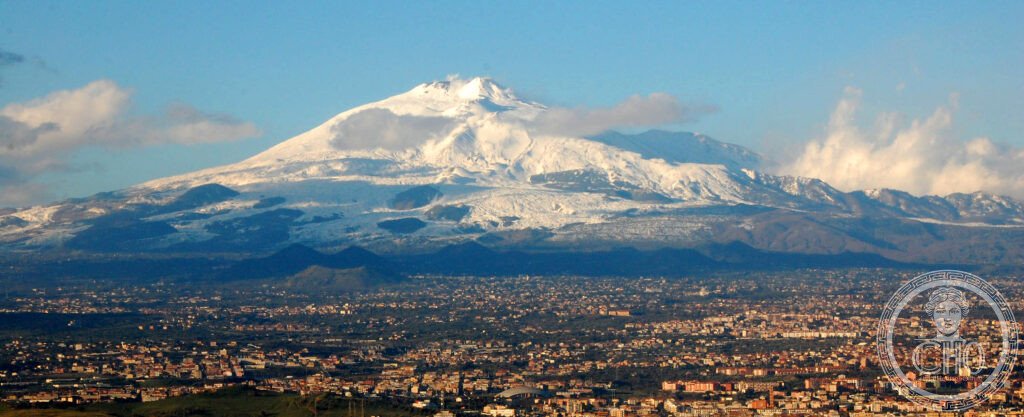
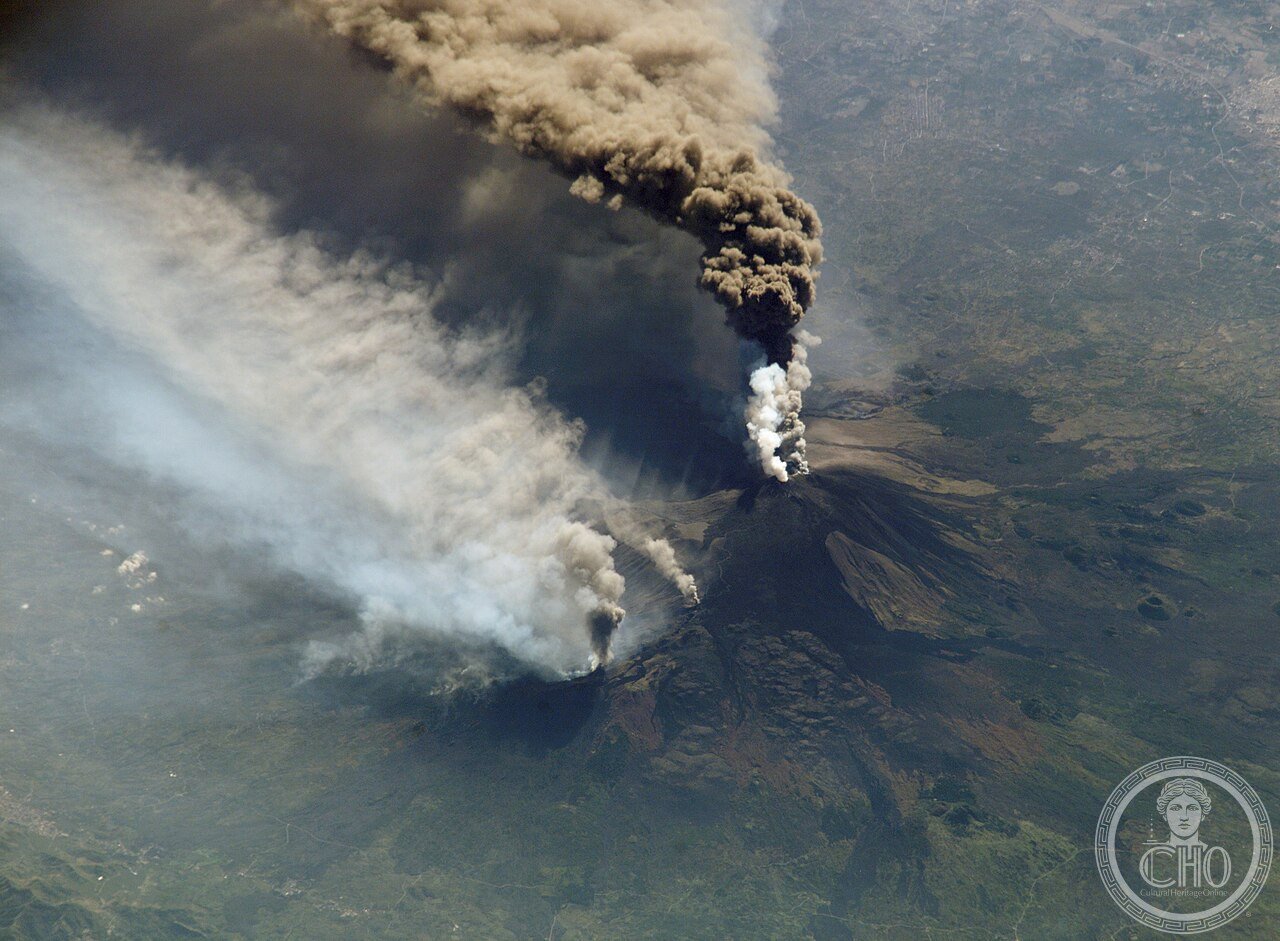
Europe’s most persistently active volcano dominates the eastern coast of Sicily, its summit craters in near-continuous eruption for millennia. Etna has fed Greek myth, destroyed and rebuilt the land around Catania, and today offers skiing, hiking and wine country on the same mountain, within a single day.
At a glance
Monte Etna is an active stratovolcano rising above the boundary where the African plate slides beneath the Eurasian plate. Water released from the subducting slab lowers the melting point of the mantle above it, producing the large volumes of magma that make Etna the most productive volcano in Europe; a deep hotspot may also contribute magma independently of the subduction process. The summit stands at roughly 3,357 metres, though the exact height shifts after every major eruption cycle as craters build up or collapse.
The mountain and its surroundings are protected within the Parco dell’Etna, established in 1987 and covering some 59,000 hectares. The park takes in the summit craters, the Valle del Bove caldera on the east flank, the lateral cones and lava fields, and the beech and birch forests that climb the lower slopes.
Key facts
- Summit altitude: approximately 3,357m, recalculated after major eruptions
- Type: active stratovolcano above the Eurasian-African subduction zone
- Protected area: Parco dell’Etna, established 1987, roughly 59,000 hectares
- Valle del Bove: a caldera around 7km by 5km on the east flank, formed by a major flank collapse about 35,000 years ago
- Recognition: inscribed as a UNESCO Natural Heritage site in 2013 (reference 1427)
History
Etna’s documented eruptive history stretches back to 693 BCE, and the mountain has shaped Greek and Roman imagination for as long. In myth it was the forge of Hephaestus, called Vulcan by the Romans, and the Cyclops Polyphemus was said to live in caves at its base, the setting for his encounter with Odysseus in Homer’s Odyssey. The philosopher Empedocles was said, according to Diogenes Laertius, to have thrown himself into the crater to prove his immortality, a legend that has outlived any evidence for it. Aeschylus, writing after witnessing an eruption in 475 BCE, set the chained Prometheus beneath the volcano in his tragedy Prometheus Bound.
The most destructive eruption in the historical record came in 1669, when lava breached the lower walls of Catania and reached the sea, adding several square kilometres of new land to the coast, including the Praiola cape. The flow ran for months, and the eruption is remembered as the deadliest in Etna’s recorded history. During it, Carmelite monks from Catania attempted to divert the lava by breaking open the side of the flow with iron tools, one of the earliest documented attempts anywhere to redirect an active lava flow.
In 2013 Etna was inscribed as a UNESCO Natural Heritage site, recognised for its ongoing volcanic processes, the geological record exposed in the walls of the Valle del Bove, and the plant life that has colonised its fresh lava fields.
What you see
The mountain is approached from several directions, each showing a different face of the volcano. From Nicolosi, on the south side, a cable car climbs towards the upper station, from where guided walks lead into the summit crater area; above a certain altitude a guide is required under Sicilian civil protection rules, and visitors are given gas masks because the active craters emit sulphur dioxide. Nearby, the Silvestri craters, formed in an 1892 eruption, offer some of the best views into the Valle del Bove, the great collapsed caldera on the eastern flank.
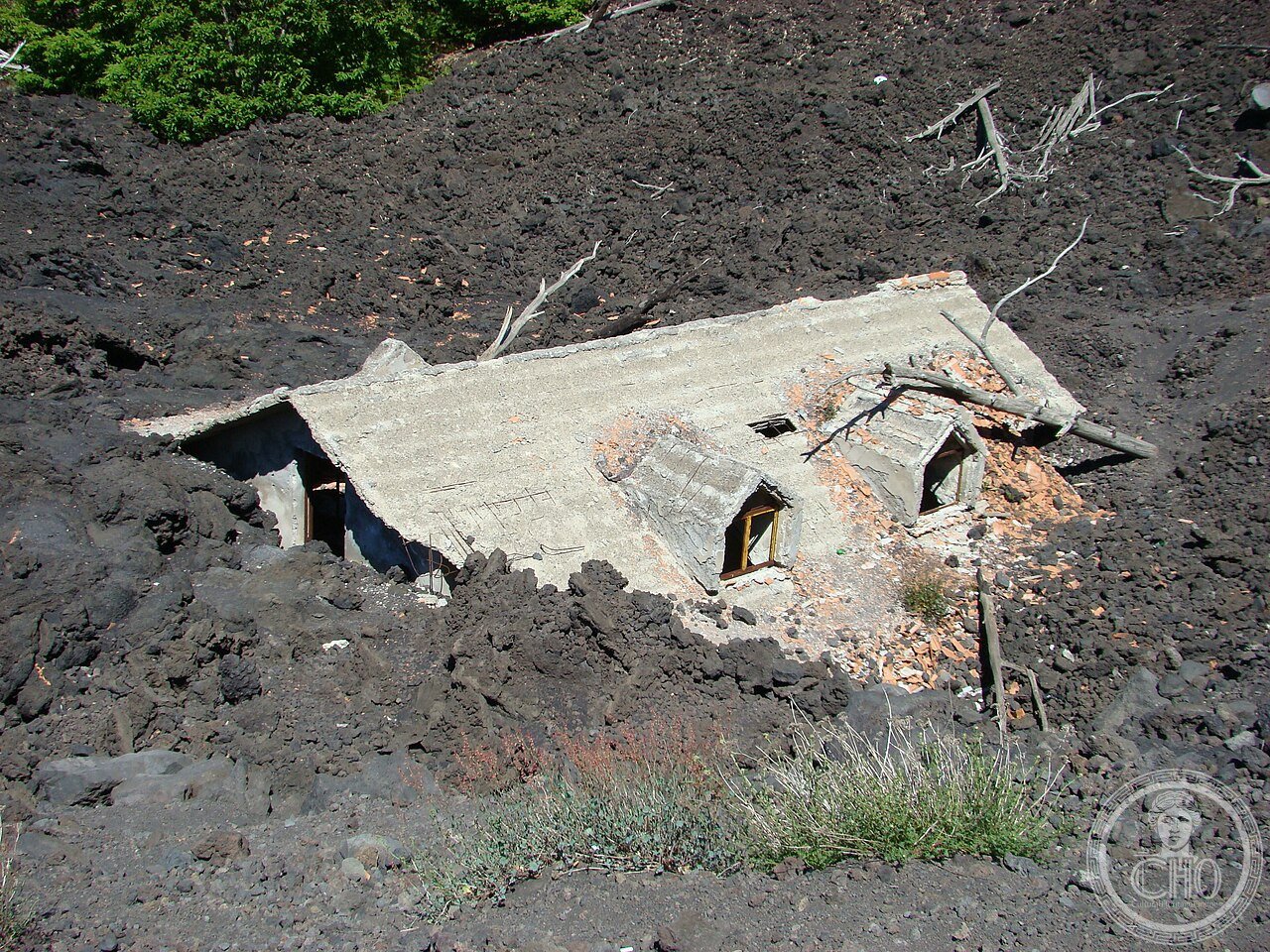
On the north face, Piano Provenzana sits within a landscape of solidified lava from the 2002 eruption, which destroyed the mountain refuges once built there; they have since been rebuilt in safer positions. To the east, the slopes around Zafferana Etnea fall within the Etna DOC wine zone, where Nerello Mascalese vines grow in volcanic soil; the Benanti winery here is among the oldest still operating on Etna and offers tastings. Further round, Linguaglossa gives access to the road leading to Piano Provenzana and holds a weekly market selling pistachios, honey and dried mushrooms grown on the volcano’s slopes.
Practical information
- Cable car and guided ascent: the Funivia dell’Etna runs from Nicolosi towards the upper station, but services can close when eruption activity or weather conditions require it; a guide is compulsory above a set altitude and check current access and any charges through the park’s official channels.
- Circumetnea railway: a narrow-gauge line circles the base of the volcano between Catania and Riposto; not every stop has a return service, so timetables should be checked directly with Circumetnea before travelling.
- Safety: the summit craters are active and produce toxic gas; independent ascent above the guided zone is not permitted.
Getting there
Catania is the main gateway to Etna. From the city or its airport, a direct AST bus service runs to Nicolosi on the south face, or a hire car allows a fuller circuit taking in Nicolosi, Zafferana and the wine country in a single day. The Circumetnea narrow-gauge railway offers a scenic alternative, looping around the base of the volcano between Catania and Riposto.
Nearby
- Zafferana Etnea — on the eastern slopes, at the heart of the Etna DOC wine zone, with wineries such as Benanti open for tastings.
- Linguaglossa — on the north-eastern approach, with a weekly market selling local pistachios, honey and mushrooms.
- Bronte — reached by the Circumetnea line, known for its pistachio production.
- Nicolosi — the main southern gateway to the park, with the cable car access point to the summit area.
Sources
- UNESCO World Heritage Centre
- Parco dell’Etna
- Circumetnea
- Homer, Odyssey
- Aeschylus, Prometheus Bound
- Diogenes Laertius
Gallery
Find it on the map
See this place and what’s around it →📷 Become a Cultural Heritage Online photographer
Share your photos of places: they stay published under your name as the author. The more they're seen, the more you get noticed — and soon a contest will reward the most appreciated photos.
Log in or sign up free to add a photo