
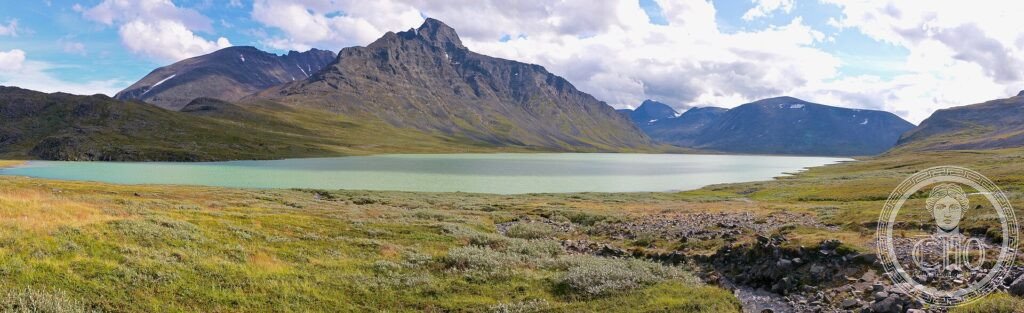
Beyond the Arctic Circle, in the north of Sweden, stretches Laponia: an immense land of mountains, glaciers, forests and marshes, crossed by the Sami with their reindeer herds as they have been for thousands of years. It is one of the last great territories where a nomadic culture bound to Arctic nature survives.
At a glance
The Laponian Area, in the far north of Sweden beyond the Arctic Circle, is one of the largest and best-preserved wildernesses in Europe, combining several national parks and reserves — among them Sarek and Padjelanta — of glaciated mountains, deep valleys, vast forests, rivers and marshes. It is also a living cultural landscape: the homeland of the Sami people, who have followed their reindeer herds across these lands with the seasons for thousands of years. This union of wild nature and ancient herding culture was inscribed by UNESCO in 1996 as a mixed site.
Key facts
- UNESCO: World Heritage since 1996 (Laponian Area), a mixed cultural and natural site
- Sami homeland: the land of the indigenous Sami and their reindeer
- Reindeer herding: a seasonal way of life thousands of years old
- Great wilderness: includes Sarek and Padjelanta national parks
- Arctic landscape: glaciated mountains, forests, rivers and marshes
- Largest in Europe: among the continent’s biggest protected areas
History
The Sami have lived across the north of Scandinavia since prehistoric times, and in this part of Swedish Lapland they developed a way of life centred on the reindeer, following the herds between the forests of the lowlands in winter and the mountains in summer along ancient migration routes. Their culture, language and relationship with the land are inseparable from this landscape.
The same region is a natural treasure: the trackless mountains of Sarek, the high plateau of Padjelanta, glaciers, the great Rapa delta and old-growth forests, home to bears, wolverines and eagles. Joining several parks and reserves, the Laponian Area was inscribed by UNESCO in 1996 as one of the rare mixed sites recognised for both outstanding nature and a living indigenous culture.
What you see
Laponia is largely roadless wilderness, explored on foot along trails such as the Kungsleden or in the trackless heart of Sarek by experienced hikers: turquoise glacier-fed lakes and rivers, sharp peaks, the wide Rapa valley and its delta, and the open tundra. Sami villages and reindeer, and the traditional structures of herding, mark the human presence.
The vastness and purity of the Arctic wilderness, still herded by the Sami, is the meaning of Laponia.
Practical information
- Area: several national parks; mostly wilderness, reached on foot
- Best time: summer (late June–September) for hiking
- Time needed: multi-day treks for the interior
- Note: demanding terrain; respect Sami land and reindeer
Getting there
The Laponian Area is in Norrbotten, the far north of Sweden, beyond the Arctic Circle. Gateways include Gällivare, Jokkmokk and the Kungsleden trail, reached by road and rail. GPS: 67.30° N, 17.80° E.
Nearby
- Jokkmokk — a Sami cultural centre and market town
- Sarek National Park — the trackless heart of the wilderness
- Kungsleden — the famous long-distance mountain trail
Sources
- UNESCO World Heritage Centre — “Laponian Area” (ref. 774)
- Laponiatjuottjudus / Swedish EPA — official bodies
- Encyclopaedia Britannica — Lapland; Sami
Find it on the map
See this place and what’s around it →📷 Become a Cultural Heritage Online photographer
Share your photos of places: they stay published under your name as the author. The more they're seen, the more you get noticed — and soon a contest will reward the most appreciated photos.
Log in or sign up free to add a photo