Langhe-Monferrato-Roero: Paesaggio Vitivinicolo del Piemonte
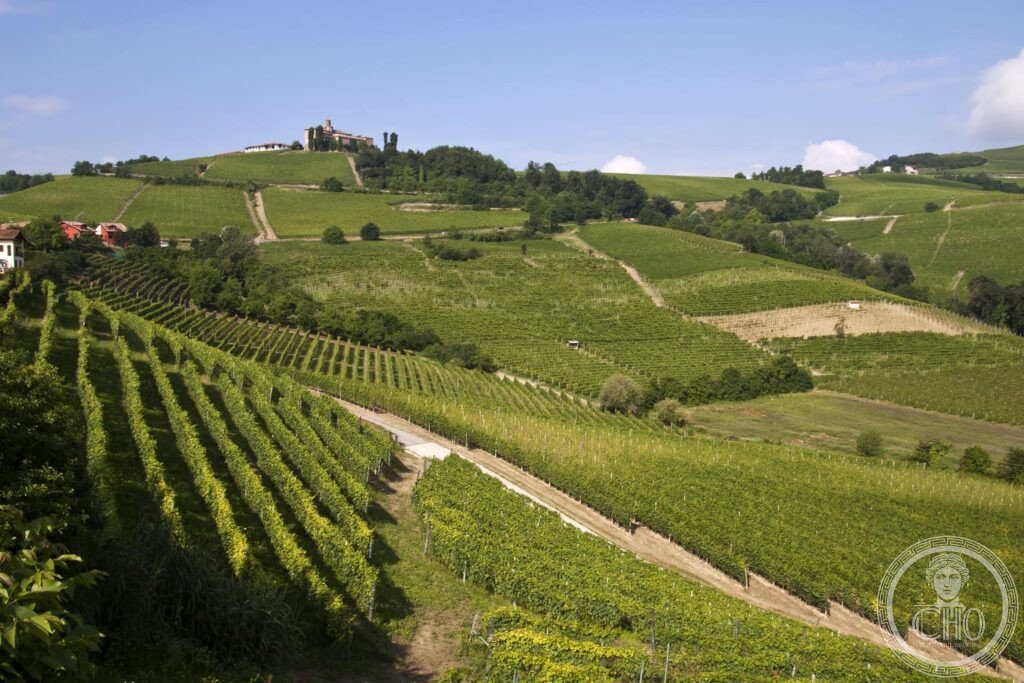
Il paesaggio vitivinicolo del Piemonte (UNESCO 2014, rif. 1390) è il paesaggio culturale della vite più articolato d’Italia — 74.000 ettari di colline a Langhe, Monferrato e Roero che producono 17 denominazioni DOCG tra cui Barolo (il “re dei vini”, invecchiamento minimo 38 mesi), Barbaresco (il “principe”, invecchiamento 26 mesi), e Asti Spumante (il più venduto vino dolce d’Italia per volume), un mosaico di castelli medievali, cantine, borghi, e boschi di nocciolo (la Nocciola Piemonte IGP, materia prima del cioccolato Nutella / Ferrero Rocher prodotto a Alba).
At a glance
Langhe Monferrato paesaggio vitivinicolo (the most precisely Langhe zone Langhe Monferrato Piemonte Italy 44.6370 N 8.0110 E UNESCO WHS 2014 cultural landscape reference 1390: the site (the UNESCO WHS Piedmont Wine Country (reference 1390): the inscribed area covers 10,789 ha (the “core zone”: the vineyard terraces and castelli documented in the UNESCO inscription) + 63,127 ha (buffer zone); the 6 “cultural landscape systems”: (1) the Langhe: the hills south of Alba between the Tanaro river and the Ligurian Apennines; the home of Barolo and Barbaresco; the soil (the Langhe is the specific geological area that produces the distinctive Barolo terroir: the soil types are: the “Tortonian soils” (blue-grey Mari calcarei (compact Miocene marl): the La Morra, Barolo, and Novello communes; these soils produce a more elegant, aromatic Barolo (the “La Morra style”) and the “Helvetian soils” (compact Serravallian marl + tuff): the Serralunga and Castiglione Falletto communes; these soils produce a more structured, tannic Barolo (the “Serralunga style”)); (2) the Asti / Canelli hills: the area southeast of Asti; the home of Moscato d’Asti and Asti Spumante; the “San Rocco Seno d’Elvio” subzone (the most productive Moscato area); (3) the Acqui-Casale Monferrato: the Brachetto d’Acqui DOCG and the Barbera del Monferrato Superiore DOC; (4) the Roero: the north side of the Tanaro river; the Roero DOCG (Arneis white + Nebbiolo red); the sand soils (the Roero soils are sandy Pliocene sands (more drainage, earlier harvests)); (5) the Nizza Monferrato: the Nizza Monferrato DOCG (Barbera d’Asti Superiore; the Nizza subzone: the most structured Barbera); (6) the Canelli: the Asti Spumante: 52 communes; the Canelli (the medieval capital of the Asti Spumante; the underground Cathedrals of Wine (the “cattedrali sotterranee” of Canelli: 6 historic wine cellars carved into the tuff between 1865 and 1900 CE; now UNESCO-recognised; the largest: the Cantina Bosca (1866 CE; 5 km of tunnels; the most important wine museum in Piedmont); the Coppo winery (the “Avej” label: the oldest Barolo available in the Canelli cellar is 1927 CE)).
Key facts
- Il Barolo: DOCG, terroir Tortonian vs Helvetian, invecchiamento 38 mesi obbligatorio, e il prezzo del tartufo bianco d’Alba nel 2023: the Barolo DOCG specifications (the Barolo is regulated by the DOCG decree of 1 July 1980 CE (updated 2010 CE): (1) the grape: Nebbiolo 100% (no other grape allowed); (2) the communes: Barolo, Castiglione Falletto, Serralunga d’Alba, La Morra, Grinzane Cavour, Diano d’Alba, Cherasco, Novello, Verduno; (3) the minimum aging: 38 months total (24 months in oak (the minimum oak period has been a contested issue: the traditional “Barolo wars” (1970s–90s CE): the “traditionalists” (Bartolo Mascarello, Giacomo Conterno) insisted on 36+ months in large Slavonian oak casks (“botti”); the “modernists&rd; (Angelo Gaja, Elio Altare) introduced 12–18 months in French barriques (225 L); the 2010 CE DOCG revision accepted both methods: “minimum 20 months in wood of any type”)); (4) the “Riserva”: minimum 62 months total; (5) the minimum alcohol: 13%; (6) the MGA system (the “Menzioni Geografiche Aggiuntive”: the 181 specific vineyards (MGA) recognised as individual crus within the Barolo DOCG since the 2010 CE revision: the most important: Cannubi (Barolo commune; the oldest documented Barolo vineyard: first cited 1751 CE in a Barolo commune tax register); Brunate (La Morra commune); Castiglione (Castiglione Falletto commune); Vigna Rionda (Serralunga d’Alba commune))); the tartufo bianco d’Alba (the Tuber magnatum Pico (the “white truffle”): the most expensive food by weight in the world: 2022 CE average price: €5,000–€15,000/kg (fresh; market price varies with annual harvest); the 2023 CE harvest was one of the smallest in 20 years (drought); the peak price reached €18,000/kg at the Alba truffle market (the “Mercato Mondiale del Tartufo Bianco d’Alba”: the Saturday market (October–January) in Piazza Risorgimento, Alba; €5 entry; the truffle trade is regulated by the Ente Fiera Internazionale del Tartufo Bianco d’Alba; the provenance certificate (the “scheda accompagnatoria”) is required for each truffle showing the date of harvest, the commune, and the name of the trifolao (truffle hunter)))
- GPS (La Morra, il belvedere delle Langhe): 44.6370° N, 8.0110° E
History
Dal Nebbiolo ai Savoia al Cavour al UNESCO 2014 (the most precisely Langhe zone history: the Nebbiolo origins (the Nebbiolo grape was first documented in the Langhe area in 1268 CE in a notarial act from the Rivoli castle (near Turin): “uva nebbiola” is listed among the grapes to be harvested; the name (“nebbia” = fog in Italian) refers to the fog of the Langhe October harvest season (the specific phenomenon: the Po plain fog (the “nebbia padana”) rises from the Po river every October and fills the Tanaro valley; the hilltop vineyards of La Morra stand above the fog line and the Nebbiolo grapes ripen in sunshine while the valley below is in fog; this allows the Nebbiolo to mature slowly without the risk of early frosts)); the Barolo myth and the House of Savoy (the legend that Barolo was first made as a dry wine for King Carlo Alberto of Savoy (1798–1849 CE) in 1843 CE by the French oenologist Louis Oudart (1790–1855 CE) at the invitation of the Marchesa Giulia Falletti di Barolo (1785–1864 CE): Oudart is credited with applying the French method of “vin sec” (dry wine: complete fermentation to dryness without residual sugar) to the Nebbiolo; before Oudart the local wine was “nebbiolo dolce” (sweet, partially fermented; unstable in bottle; unable to travel)); the UNESCO inscription (2014 CE: reference 1390; the inscription covers the 6 cultural landscape systems of Langhe-Monferrato-Roero; the nomination dossier notes the viticultural landscape as “outstanding universal value” because of the 700-year continuity of the vine-castle-village relationship visible in the landscape).
What you see
Alba, La Morra, Barolo, Barbaresco, le cantine, e il tartufo (the most precisely Langhe zone visit (3–5 days): Day 1 (Alba): the town (Alba: the capital of the Langhe; the historic center (the medieval towers; Via Maestra; the Duomo di San Lorenzo; the Palazzo del Comune (the headquarters of the Ente Fiera del Tartufo)); the wine shop street (Corso Vittorio Emanuele II: the highest density of independent wine shops in Piedmont; at least 30 enotecas between Via Maestra and Piazza Savona)); the Vinoteca Regionale (Corso Vittorio Emanuele 19; the regional enoteca selling wines from all 6 Langhe-Monferrato systems; Mon–Sat 10 AM–7 PM; the tasting menu: €15–25 for 5 wines + cheese/salumi board); Day 2 (La Morra + Barolo): the La Morra belvedere (the panoramic village of La Morra at 513 m: the best view of the Barolo MGA vineyards; the Enoteca Comunale di La Morra (Piazza Castello 10; open Tue–Sun 10 AM–6 PM; the comprehensive tasting of all 181 MGA Barolo crus available in one room; €8–20 for 3–5 wines)); the Barolo village (the Museo del Vino di Barolo (WiMu; Castello di Barolo; Piazza Falletti; open Tue–Sun 10:30 AM–7 PM; €12; the multimedia wine history museum designed by Studio Irenio Noguera + Francois Confino (Barcelona): the museum traces 700 years of Barolo history through objects, wine-making tools, and sensory installations)); Day 3 (Barbaresco + Treiso): the Barbaresco village (the Torre di Barbaresco (the 14th century CE tower: the symbol of the Barbaresco DOCG; open summer Sat–Sun; free entry; the view encompasses the Tanaro valley and the Langhe hills to the south)); the cantina (the Produttori del Barbaresco cooperative (Via Torino 54, Barbaresco; the most important Barbaresco cooperative: founded 1958 CE; 55 member vignerons; the cellar stores 200,000 bottles per vintage; open Mon–Sat 9 AM–6 PM; direct sales + tasting €10–18 for 3 wines)).
Practical information
- Il Mercato del Tartufo Bianco d’Alba: quando andare, cosa aspettarsi, quanto spendere: il Mercato (il “Mercato Mondiale del Tartufo Bianco d’Alba” (MMTBA): si svolge ogni sabato mattina da metà ottobre a metà gennaio in Piazza Risorgimento, Alba; orario 8:00–13:00; ingresso €5 (i proventi vanno all’Ente Fiera); il numero di banchi: 40–60 trifolai (i cercatori di tartufo) con esposizioni di 50 g–2 kg di tartufo bianco fresco; come acquistare (il processo): (1) annusare i tartufi prima di comprare (il profumo deve essere intenso, terroso, con note di aglio e miele; un tartufo senza profumo è inmaturo o passato); (2) chiedere la scheda accompagnatoria (obbligatoria per legge dal 2018 CE); (3) il prezzo medio 2023 CE: €8.000–€12.000/kg per tartufi di qualità A; la porzionatrice (si vendono anche tagli da 10–20 g: €80–€200); le ricette in loco: (il Ristorante Il Vicoletto, Via Giacomo Pertinace 7, Alba: un piatto di tajarin ai 30 tuorli con tartufo bianco a scaglie: €30–45 a persona depending on the weight of truffle used; the restaurant adds the truffle at table on a scale: €5/gram))
Getting there
Trenitalia da Torino a Alba (1h30, €8.90). Trenitalia da Milano a Alba (2h10, cambio Bra o Torino; €18.90). Auto: A6 Torino–Savona uscita Marene (30 km da Alba). GPS La Morra belvedere: 44.6370, 8.0110.
Nearby
- Torino: Palazzo Reale e Museo Egizio (UNESCO 1997) — 60 km nord (Trenitalia da Alba 1h30 €8.90; il Museo Egizio (la più importante collezione egizia fuori del Cairo; 30.000 pezzi; la statua di Ramesse II dal tempio di Derr 1289 BCE); il Palazzo Reale (serial Residenze Sabaude UNESCO))
- Canelli: le Cattedrali Sotterranee del Vino — 30 km est (6 cantine storiche scavate nel tufo 1865–1900 CE; la Cantina Bosca (5 km di gallerie; 1866 CE); bus da Asti 40 min €2.80)
Gallery


Sources
- Wikipedia, Langhe; Barolo DOCG; Barbaresco DOCG; Piedmont wine, accessed June 2026
- UNESCO, Piedmont Wine Country: Langhe-Monferrato-Roero, WHS reference 1390, inscribed 2014
- Gleave, David. The Wines of Italy. London: Salamander Books, 1989 (the standard reference for Barolo and Nebbiolo viticultural history)
Find it on the map
See this place and what’s around it →📷 Diventa un fotografo di Cultural Heritage Online
Condividi le tue foto dei luoghi: restano pubblicate con la tua firma come autore. Più vengono viste, più ti fai conoscere — e presto un concorso premierà le foto più apprezzate.
Accedi o registrati gratis per aggiungere una foto