
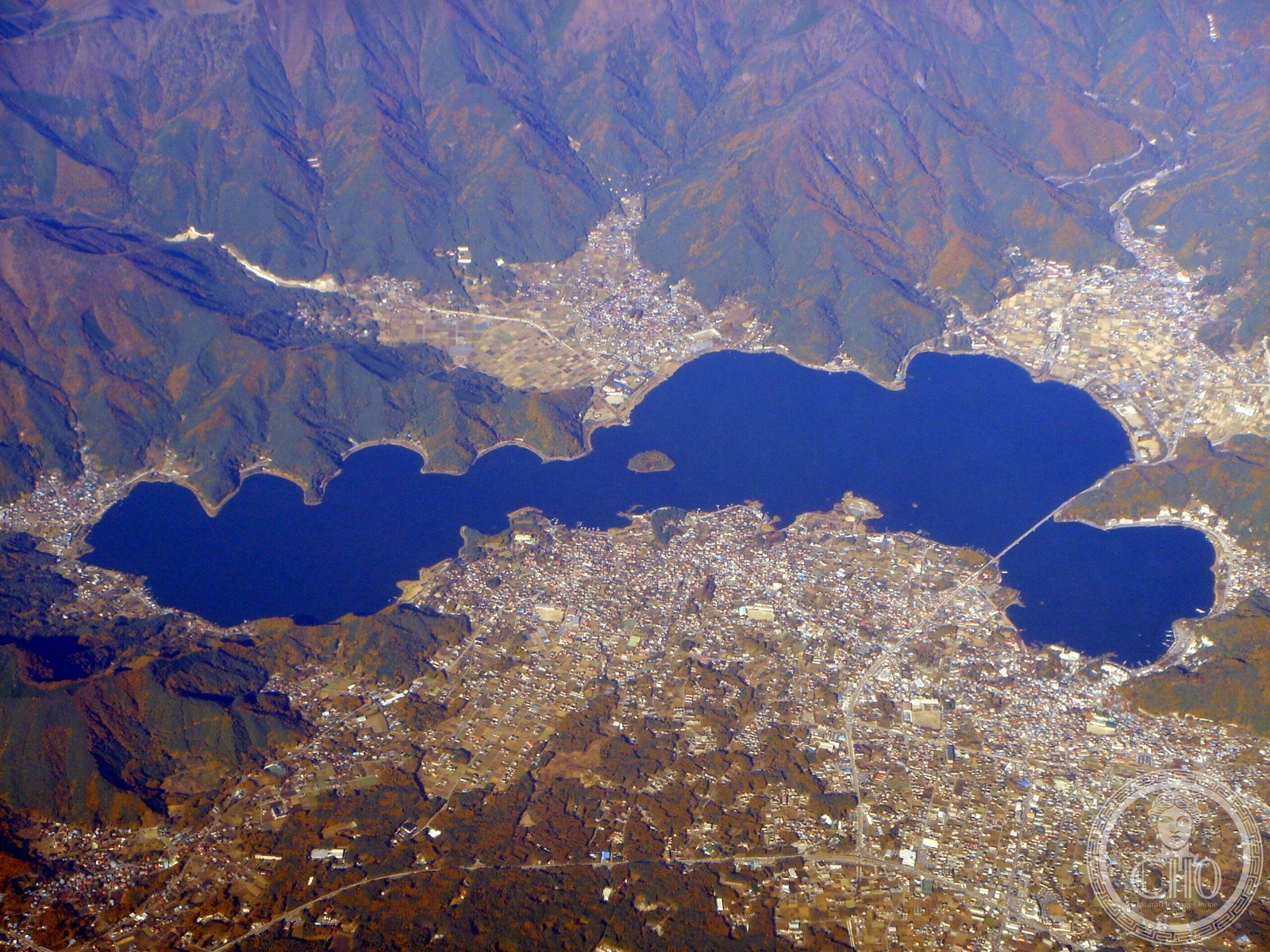
Japan’s second-largest of the Fuji Five Lakes, Lake Kawaguchi sits at 800 metres elevation in the shadow of Mount Fuji. Its longest shoreline and lowest elevation make it both the coolest and most accessible gateway for climbers and photographers seeking views of the sacred peak.
At a glance
Lake Kawaguchi is the most visited of the Fuji Five Lakes, drawing climbers, photographers, and resort visitors year-round. The town of Fujikawaguchiko offers lakeside hotels, windsurfing, camping, and excursion boats. Its position at the lowest elevation of the five lakes creates distinctive cool summers and frequently icy winters despite Japan’s temperate climate.
History
The lake has no natural outlet, causing periodic flooding of settlements along its shores—a problem solved only in 1914 with the construction of a canal linking it to a tributary of the Sagami River. During the Meiji period, Japanese white crucian carp and wakasagi were introduced to the lake, establishing a sports-fishing tradition that persists today. In 2013, Lake Kawaguchi was inscribed on the World Heritage List as part of the Fujisan Cultural Site, recognizing its significance within Japan’s sacred mountain landscape.
What you see
The lake itself spans the longest shoreline of the Fuji Five Lakes, framed by mountainous terrain and commanding views of Mount Fuji from numerous vantage points. The developed tourist infrastructure includes hotels, facilities for water sports, and viewing areas designed for photographers and visitors. The 1914 canal, though utilitarian, represents a key engineering intervention in the lake’s modern history.
Cultural significance
Lake Kawaguchi embodies the intersection of Japan’s natural and spiritual landscape. As the primary base for Mount Fuji climbers during the July and August season, it serves a pilgrimage function alongside recreation. Its inclusion in the Fujisan Cultural Site recognises the lake as integral to understanding Fuji’s cultural importance—not merely as a scenic backdrop but as a living gateway to one of Japan’s most revered peaks.
Key facts
- Country: Japan
- Town: Fujikawaguchiko, Yamanashi Prefecture
- Elevation: approximately 800 metres (2,625 ft)
- Surface area: second largest of the Fuji Five Lakes
- UNESCO World Heritage Site: Fujisan Cultural Site (inscribed 2013)
- Coordinates: 35.515°N, 138.757°E
Practical information & getting there
From Tokyo, take the JR Limited Express Fuji Excursion, which departs Shinjuku Station up to three times daily. Motorway coach services run frequently from Shinjuku Expressway Bus Terminal, Tokyo Station, and Shibuya Mark City, mostly operated by Fuji Kyuko. The lake lies within Fuji-Hakone-Izu National Park and is best visited outside the peak climbing season (July–August) for a more leisurely experience.
Sources & resources
- Lake Kawaguchi – Wikipedia
- Cultural Heritage Online
Find it on the map
See this place and what’s around it →📷 Become a Cultural Heritage Online photographer
Share your photos of places: they stay published under your name as the author. The more they're seen, the more you get noticed — and soon a contest will reward the most appreciated photos.
Log in or sign up free to add a photo