

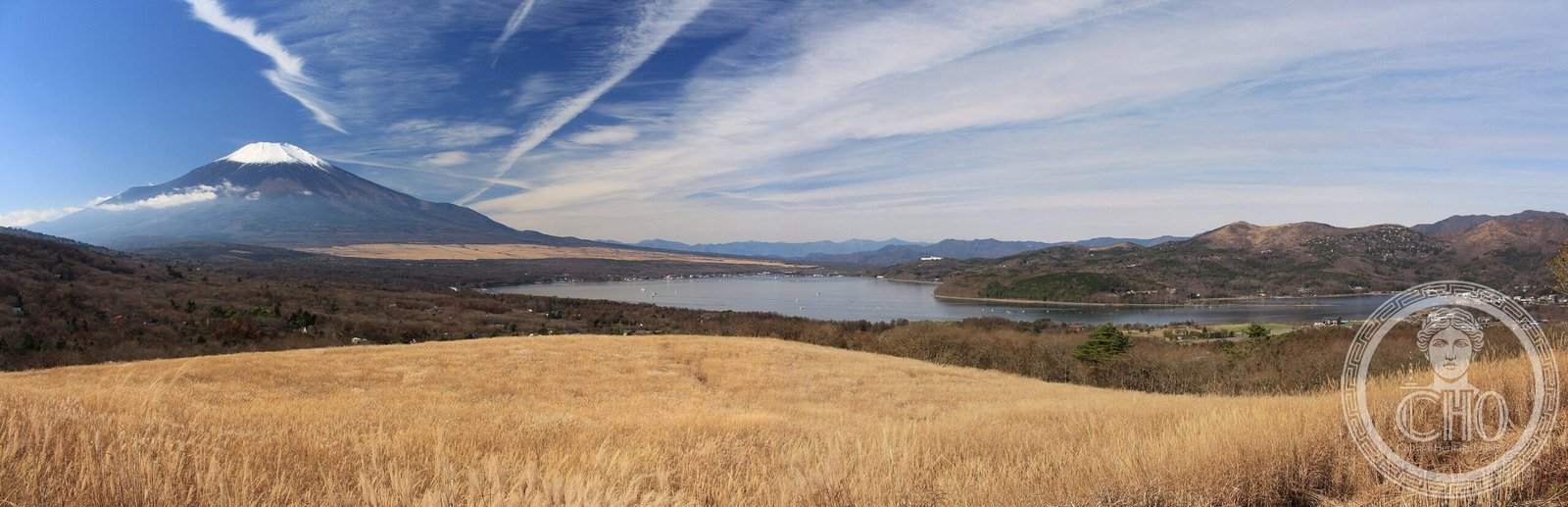
The largest and highest of the Fuji Five Lakes, this volcanic crater lake sits at 980 metres elevation near Mount Fuji, shaped by ancient lava flows and now a hub for water sports and nature tourism.
At a glance
Lake Yamanaka commands attention as Japan’s third-highest lake and the shallowest member of the famous Fuji Five Lakes cluster. Its maximum depth of just 13.5 metres belies its vast surface area and its pivotal role in the region’s hydrology—it is the only Fuji Five Lake with a natural outflow, drained by the Sagami River.
History
The lake owes its existence to lava flows from Mount Fuji’s ancient volcanic eruptions. During the Meiji period, carp, dace and smelt were introduced to its waters, though early attempts to establish sockeye salmon failed. In 1956, a rare variety of marimo (spherical green algae) was discovered here—a find of botanical significance.
More recently, invasive species including black bass and bluegill have begun to displace native fauna, a challenge facing many Japanese freshwater ecosystems.
What you see
The landscape is defined by the lake’s crystalline waters set against Mount Myōjinyama and the broader vista toward Mount Fuji. Small cabin communities and camping sites dot the shore, providing infrastructure for visitors without overwhelming the natural character.
Cultural significance
Lake Yamanaka acquired global recognition in 2013 when it was inscribed on UNESCO’s World Heritage List as part of the Fujisan Cultural Site—acknowledging the lake’s integral place in Mount Fuji’s sacred and cultural landscape.
Key facts
- Country: Japan
- Region: Yamanakako village, Yamanashi Prefecture
- Elevation: 980.5 metres (3,217 ft) mean surface altitude
- Maximum depth: 13.5 metres (44 ft)
- Status: UNESCO World Heritage Site (as part of Fujisan Cultural Site, 2013)
- Coordinates: 35.42°N, 138.88°E
- Protected area: Fuji-Hakone-Izu National Park
Practical information & getting there
Lake Yamanaka is a year-round destination for boating, fishing, water-skiing, windsurfing and swimming. Paragliding conditions at Mount Myōjinyama are optimal when westerly winds sweep across the lake. Camping and cabin accommodation are available on the shore. The lake lies within Fuji-Hakone-Izu National Park, ensuring access to broader hiking and scenic opportunities in the region.
Sources & resources
Find it on the map
See this place and what’s around it →📷 Become a Cultural Heritage Online photographer
Share your photos of places: they stay published under your name as the author. The more they're seen, the more you get noticed — and soon a contest will reward the most appreciated photos.
Log in or sign up free to add a photo