

Before the Maya, Before the Aztec
The oil flare that burns perpetually above a Pemex gas vent 200 metres from La Venta’s ceremonial precinct is an accidental monument to displacement. An ancient sacred centre surrounded by petroleum infrastructure, its most famous monuments loaded onto flatbed trucks in 1958 and driven to a city park — La Venta is one of the world’s great archaeological sites, and also one of its most overlooked. This was the ceremonial capital of the Olmec civilisation, flourishing between 900 and 400 BC, and the Olmec were the mother culture of Mesoamerica: the civilisation that came before the Maya, before the Aztec, before every complex society that followed in the region.
La Venta is located in the lowland jungle of Tabasco state, on what was originally an island in a coastal swamp — a deliberately isolated, easily defensible precinct approached by water. Its peak occupation coincides with the apogee of Olmec culture, approximately 800–500 BC, when La Venta was the largest settlement in Mesoamerica. The Olmec had already produced the first civilisation at nearby San Lorenzo (1500–900 BC); when San Lorenzo’s dominance ended, La Venta rose as the primary centre of Olmec religious and political authority.
The Great Pyramid and the Question of Priority
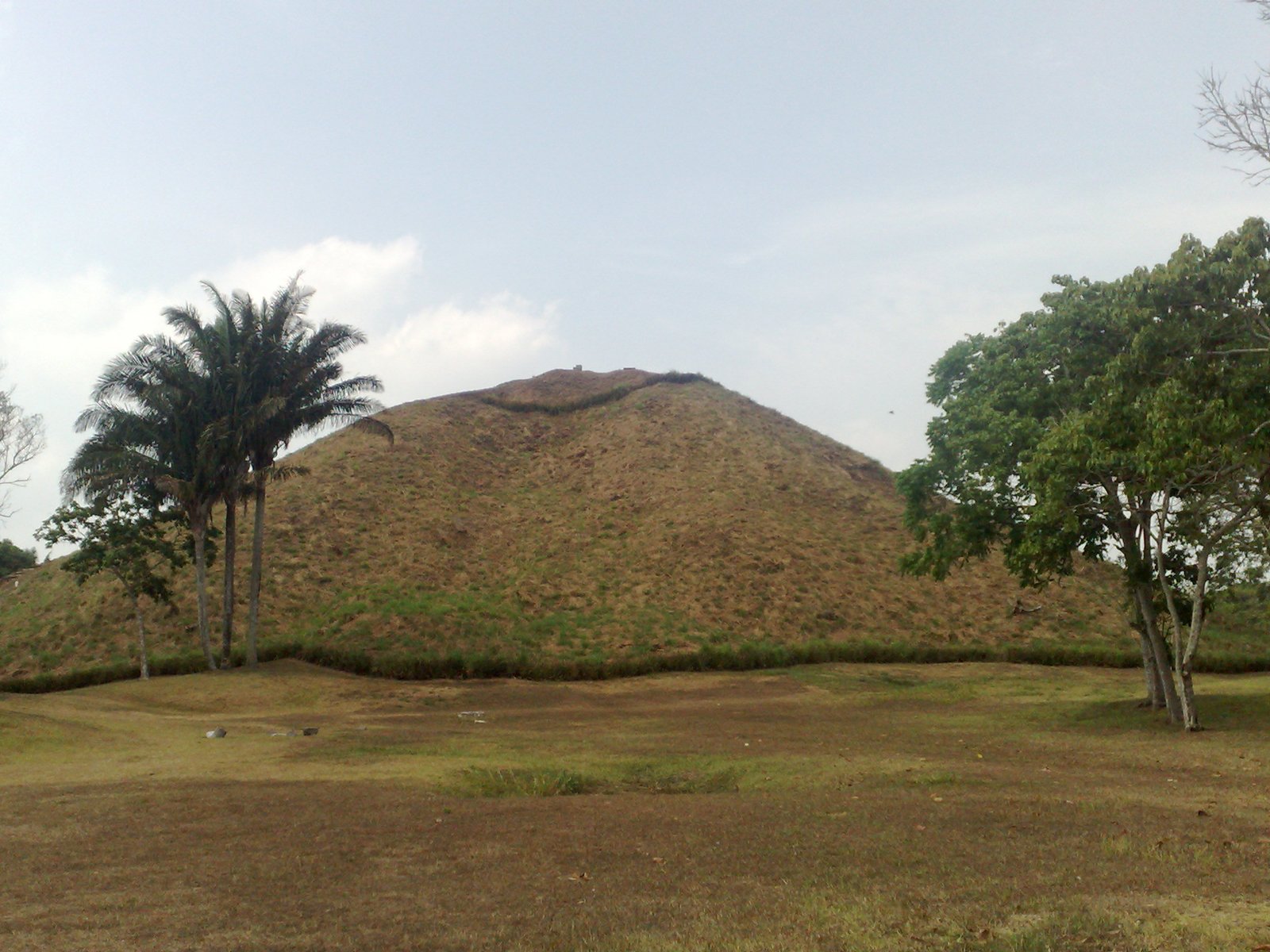
La Venta’s most imposing structure is its main mound: a fluted earthen pyramid approximately 30 metres high, constructed from approximately 100,000 cubic metres of fill. Its irregular shape — with a corrugated surface of ridges and depressions — has led some scholars to interpret it as a deliberate imitation of a volcanic cone, possibly Volcán San Martín in the nearby Tuxtla Mountains. If so, it is a landscape transplanted into architecture: the sacred mountain made portable and placed at the centre of human ceremony.
The dating of La Venta’s pyramid to c. 900 BC makes it a candidate for the earliest pyramid in Mesoamerica — predating the major Maya pyramids by several centuries. The claim is contested: definition matters (is a terraced platform a pyramid? is a funerary cairn?), and the Olmec themselves had mound-building traditions at San Lorenzo that slightly pre-date La Venta. What is certain is that La Venta’s pyramid established the architectural vocabulary that the Maya and subsequent cultures would develop for a millennium.
The Colossal Heads
La Venta’s four colossal basalt heads are among the most recognisable objects in Mesoamerican archaeology. Each head is a portrait: the faces are individually distinct — broad noses, full lips, flat foreheads — and each wears a distinctive helmet, variously interpreted as a ball game helmet or a ruler’s headdress. The heads weigh between 15 and 24 tonnes. The basalt was quarried at the Tuxtla Mountains, 90 kilometres away and across the Tonalá River, then transported by raft along coastal waterways — an organisational achievement that underscores the political complexity of Olmec society.
American archaeologist Matthew Stirling first excavated at La Venta in 1940, working under the auspices of the National Geographic Society and the Smithsonian Institution. Stirling correctly identified the heads as portraits of rulers and recognised the site’s fundamental importance to understanding Mesoamerican prehistory — at a time when most Mesoamerican archaeology focused exclusively on the Maya.
Jade Offerings and Ritual Deposits
Beneath La Venta’s plazas, Stirling and subsequent archaeologists discovered a series of massive buried offerings — what the literature calls “massive offerings” or “pavements.” The most extraordinary is a mosaic pavement composed of 485 pieces of serpentine, forming an abstract jaguar mask face, buried intact and immediately covered over: made to be seen once and then hidden forever. Multiple such deposits have been found, each representing thousands of person-hours of carving and transport of material that had no local source.
The Olmec relationship with jade and serpentine was not decorative but cosmological: green stone represented water, fertility, and the underworld. Cache offerings included celts (polished stone axes), figurines, and mirrors of ilmenite — the latter possibly used for fire-starting and shamanic light rituals. The quantity and quality of the buried material at La Venta suggests a civilisation that deliberately consumed its most precious objects in acts of sacred deposition.
Decommissioning and the Move to Villahermosa
Around 400 BC, La Venta was deliberately decommissioned. Monuments were defaced, offerings were cached, and the site was abandoned in what appears to have been an organised withdrawal rather than a conquest. The reasons remain debated: environmental change, political reorganisation, or the shift of Olmec influence to other centres.
In 1955, Petróleos Mexicanos began developing the oil fields in which La Venta sits. Facing the destruction of the monuments, Mexican archaeologist Carlos Pellicer Cámara negotiated the transfer of the colossal heads and other major sculptures to the newly created Parque Museo La Venta in Villahermosa — an open-air archaeological park where the actual monuments are displayed among tropical vegetation in approximate replica of their original relationships. The park opened in 1958. The original La Venta site remains accessible and contains the pyramid and the tomb structures, but most of its moveable monuments are now 130 kilometres away in Villahermosa.
Visiting La Venta and Parque Museo
The original archaeological zone of La Venta, near the town of La Venta in western Tabasco, is a federal zone administered by INAH. It contains the Great Pyramid, the North Court, and several tomb structures, and it is visited by relatively few tourists — the heat, humidity, and distance from major tourist circuits keep it quiet. The oil infrastructure surrounding the site is visible and audible.
For most visitors, the practical choice is the Parque Museo La Venta in Villahermosa (Tabasco’s state capital), which holds the four colossal heads and most other major sculptures in a well-maintained open-air setting. Villahermosa has direct flights from Mexico City (1 hour) and is the standard base for visiting both the park and the original site. The combination of both visits — the active archaeological zone and the museum park — takes a full day.
Essential Facts
- Civilisation
- Olmec (mother culture of Mesoamerica)
- Period
- c. 900–400 BC
- Key structures
- Great Pyramid (30m), North Court, 4 colossal heads, jade offering pavements
- Colossal heads
- 4 at La Venta; now displayed at Parque Museo La Venta, Villahermosa
- Location
- La Venta, Tabasco, Mexico (original site); Villahermosa, Tabasco (museum park)
- GPS (original site)
- 18.1003°N, 94.0353°W
- Key excavator
- Matthew Stirling (National Geographic / Smithsonian), from 1940
- Access
- INAH archaeological zone (original site) + Parque Museo La Venta (Villahermosa)
Find it on the map
See this place and what’s around it →📷 Become a Cultural Heritage Online photographer
Share your photos of places: they stay published under your name as the author. The more they're seen, the more you get noticed — and soon a contest will reward the most appreciated photos.
Log in or sign up free to add a photo