
On a small Estonian island in the Gulf of Riga, a distinctive way of life has persisted for centuries—one woven into textiles, songs, and seasonal rhythms that bind an entire community across generations.
At a glance
Kihnu cultural space encompasses the living traditions of the island’s inhabitants: a constellation of practices in dress, music, craft, and social ritual that together form a complete cultural world. The practice is sustained by roughly 450 people across four villages, each contributing to and inheriting knowledge of Kihnu’s distinctive ways.
Origins & history
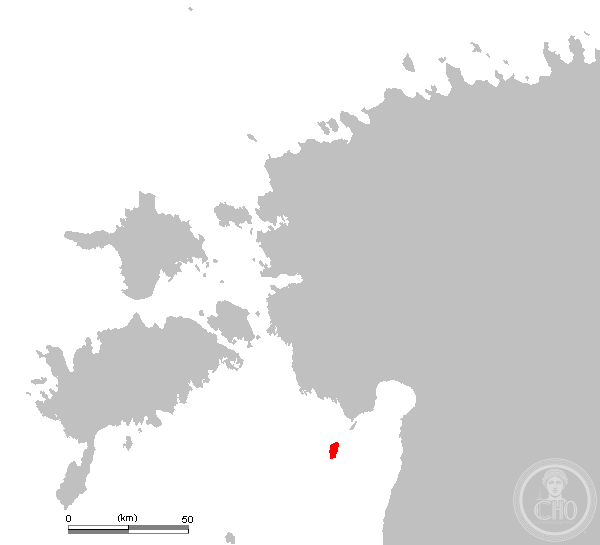
The name Kihnu appears in records as early as 1386, when it was documented as Kyne. The island’s cultural identity developed through its isolation in the Baltic Sea and its maritime economy—a geography that allowed traditions to deepen and differentiate from those of mainland Estonia. Today, Kihnu remains the largest island in the Gulf of Riga.
The practice
Kihnu culture is visible in the iconic vertical-striped skirts worn by women—so distinctive that in Estonian Sign Language, the island itself is signed by imitating those stripes. Textiles are central to the practice: traditional weaving, embroidery, and garment-making pass from one generation to the next through demonstration and participation.
Music, song, and seasonal celebrations mark the rhythm of island life. Customs connected to work, courtship, and commemoration structure daily and ceremonial time. Oral knowledge—about craft techniques, stories, calendar practices, and social protocols—forms the living spine of the community.
Cultural significance
Kihnu cultural space represents an integrated way of life in which material craft, language, music, ritual, and social organization form a single, coherent whole. The practice demonstrates how a small, geographically bounded community can maintain and transmit a complete cultural identity across time, resisting homogenization while remaining rooted in its specific place.
Key facts
- Location: Kihnu Parish, Pärnu County, Estonia (58.1296°N, 23.98607°E)
- Island area: 16.4 km² (6.3 sq mi); highest point 8.9 metres
- Population: approximately 450 residents across four villages: Lemsi, Linaküla, Rootsiküla, and Sääre
- UNESCO inscription: 2003 (reference 00042)
- UNESCO designation: Masterpiece of the Oral and Intangible Heritage of Humanity
Where to experience it
Kihnu island is reached by plane from Pärnu or by ferry from Manilaid on the mainland. The island remains the heartland of this cultural practice, where residents continue to weave, dress, sing, and gather according to traditions sustained across generations. Visitors can encounter the practice in daily island life and through community engagement.
Sources & resources
- Kihnu – Wikipedia
- Kihnu Cultural Space – UNESCO Intangible Cultural Heritage
- Cultural Heritage Online
Find it on the map
See this place and what’s around it →📷 Become a Cultural Heritage Online photographer
Share your photos of places: they stay published under your name as the author. The more they're seen, the more you get noticed — and soon a contest will reward the most appreciated photos.
Log in or sign up free to add a photo