

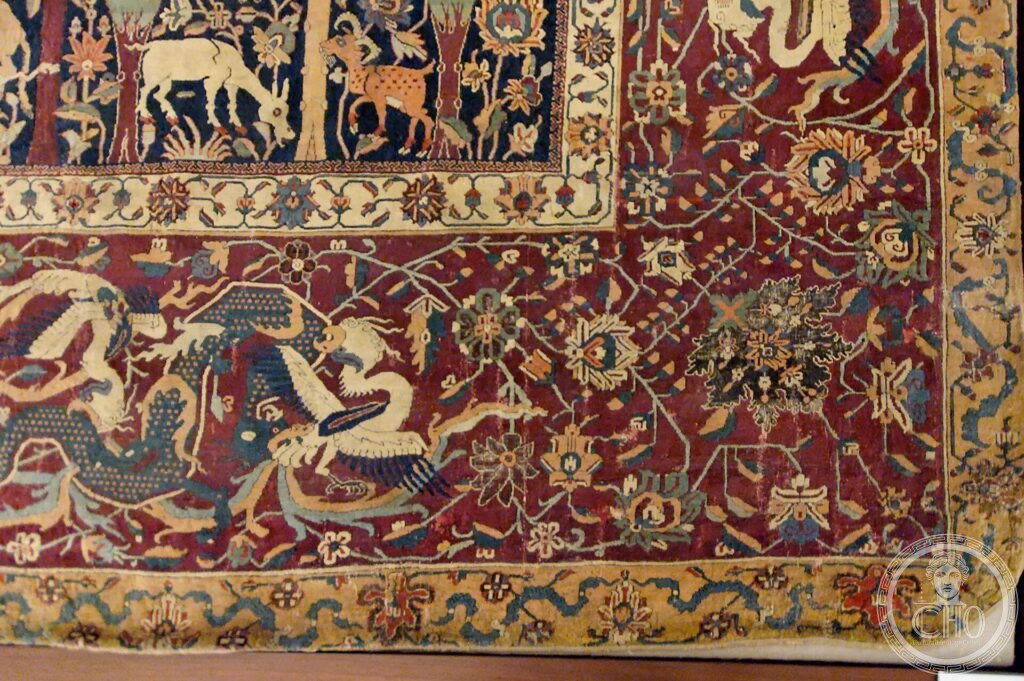
For centuries, Persian weavers have crafted carpets that embody the artistic, commercial, and domestic life of Iran. From royal court manufactories to nomadic tribes, this textile tradition blends utility with symbolic meaning, natural materials with intricate hand techniques, and regional identity with cross-cultural influence.
In UNESCO’s words
Long a centre for fine carpets, Kashan has almost one in three residents employed in carpet-making, with more than two-thirds of the carpet-makers being women. The carpet-weaving process starts with a design, elaborated from among a series of established styles, including motifs such as flowers, leaves, branches, animals and scenes taken from history. Woven on a loom known as a ''dar,'' the warp and woof are of cotton or silk. The pile is made by knotting wool or silk yarns to the warp with the distinctive Farsi knot, then held in place by a row of the woven woof, and beaten with a comb. The Farsi weaving style (also known as asymmetrical knotting) is applied with exemplary delicacy in Kashan, so that the back side of the carpet is finely and evenly knotted. The colours of Kashan carpets come from a variety of natural dyes including madder root, walnut skin, pomegranate skin and vine leaves. The traditional skills of Kashan carpet weaving are passed down to daughters through apprenticeship under instruction from their mothers and grandmothers. Apprenticeship is also the means by which men learn their skills of designing, dyeing, shearing, loom-building and tool-making.
Official description, UNESCO Intangible Cultural Heritage List — Traditional skills of carpet weaving in Kashan
At a glance
Kashan has long been a major centre for carpet-making, with nearly one in three residents employed in the craft. Weavers produce hand-knotted pile carpets using designs drawn from established styles—including flowers, leaves, branches, animals, and historical scenes. The warp and woof are typically cotton or silk, while the pile is created by knotting wool or silk yarns using the distinctive Farsi knot, a technique applied with exceptional delicacy in Kashan carpets.
Origins & history
The traditional knowledge of Kashan carpet weaving is passed from one generation to the next through apprenticeship, with daughters learning the weaving craft directly from their mothers and grandmothers. Men learn the complementary skills of designing, dyeing, shearing, loom-building and tool-making through the same apprenticeship system, ensuring that both the artistic and technical aspects of the tradition remain rooted in family knowledge.
The practice
Weavers work at looms known as a 'dar,' where they apply the Farsi knot—an asymmetrical knotting technique—to attach wool or silk yarns to the warp. Each row of knots is held in place by woven woof and beaten with a comb. The colours come from natural dyes including madder root, walnut skin, pomegranate skin and vine leaves. The back of a Kashan carpet is finished with exemplary fineness and evenness, a hallmark of the region's distinctive weaving style.
Cultural significance
More than two-thirds of Kashan's carpet-makers are women, making the craft central to the community's economic and social life. The tradition embodies deep knowledge of natural materials and ancestral techniques passed through family lines. By maintaining these methods and natural dyes rather than adopting industrial alternatives, Kashan's weavers preserve a cultural practice that connects them to their heritage and to one another across generations.
Key facts
- Country: Iran (Islamic Republic of)
- Inscribed: 2010
- UNESCO list: Representative List of the Intangible Cultural Heritage of Humanity
- UNESCO reference: 00383
- UNESCO vocabulary: Carpets; Decorative arts; Weaving
- Map: Kashan — the locality named in UNESCO’s official description of this element
- Related World Heritage site: Meidan Emam, Esfahan (a different UNESCO designation, not the place of the tradition)
Where to experience it
Kashan has long been a centre for fine carpets, with nearly one in three residents employed in the craft. Visitors can observe working looms and witness the intricate Farsi knotting technique applied with exemplary delicacy, see dye houses where natural colours are extracted from madder root, walnut skin, pomegranate skin and vine leaves, and purchase directly from artisans. The workshops of Kashan remain spaces where traditional skills pass from mothers and grandmothers to daughters through apprenticeship, and where men learn the complementary crafts of designing, dyeing, shearing, loom-building and tool-making.
Sources & resources
- UNESCO — official element page: Traditional skills of carpet weaving in Kashan
- UNESCO — open data record: Intangible Heritage List, reference 00383
- UNESCO — official video: UNESCO film on this element — embedded on this page
- UNESCO — official photograph: Photograph of this element — Nasim Moghaddam — 2009 by ICHHTO
- Reference — Wikipedia (secondary): Persian carpet — consulted as a secondary reference, not as confirmation
- Cultural Heritage Online: Our archive and city guides

Find it on the map
See this place and what’s around it →📷 Become a Cultural Heritage Online photographer
Share your photos of places: they stay published under your name as the author. The more they're seen, the more you get noticed — and soon a contest will reward the most appreciated photos.
Log in or sign up free to add a photo