
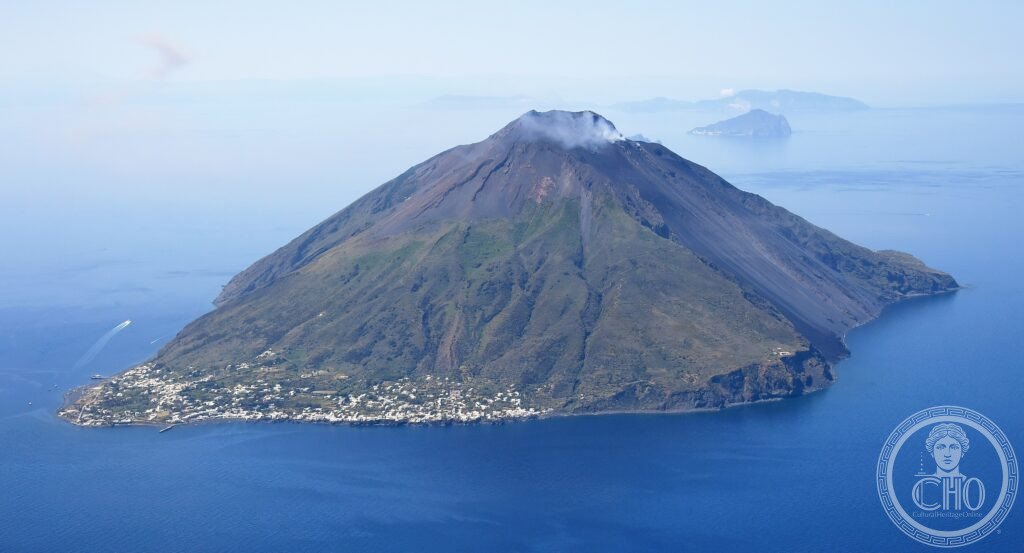
Seven volcanic islands off the northern coast of Sicily form what is often called the most complete open-air laboratory of active volcanism in the Mediterranean. Stromboli has erupted almost without pause for two millennia, Vulcano gave its name to volcanoes everywhere, and Lipari holds the richest prehistoric obsidian workshops in the region.
At a glance
The Aeolian archipelago lies off the coast of Messina, in the southern Tyrrhenian Sea. It comprises seven volcanic islands: Lipari, the largest and most populated; Stromboli, whose summit has been in near-continuous eruption for centuries; Vulcano, source of the word volcano itself; Salina, the highest and greenest of the group; Panarea, the smallest inhabited island, with a submarine volcanic field offshore; and the more remote Filicudi and Alicudi, both largely free of motor traffic.
The islands were inscribed as a UNESCO World Heritage Site in 2000, recognised for their record of ongoing volcanic processes and their long human history of settlement built around obsidian, wine and fishing.
Key facts
- Lipari: the largest island and main administrative centre, home to the Museo Archeologico Eoliano and its prehistoric and Greek collections.
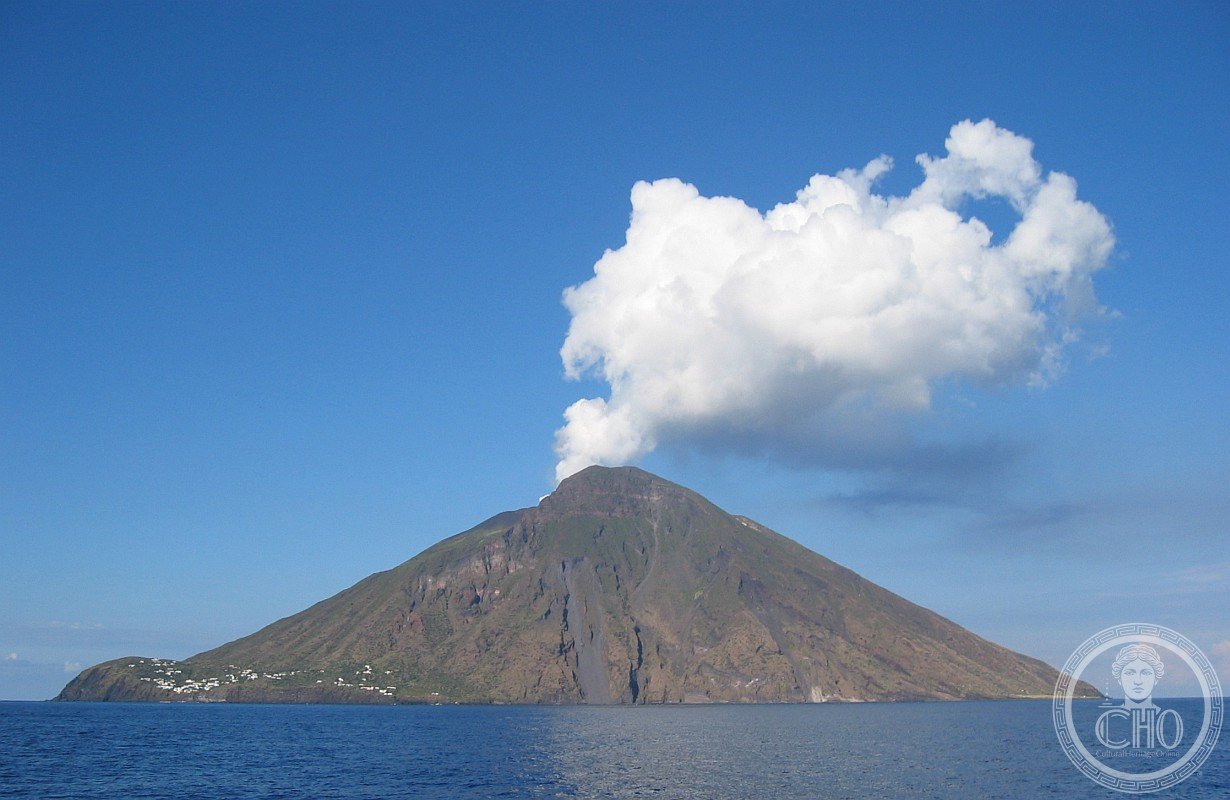
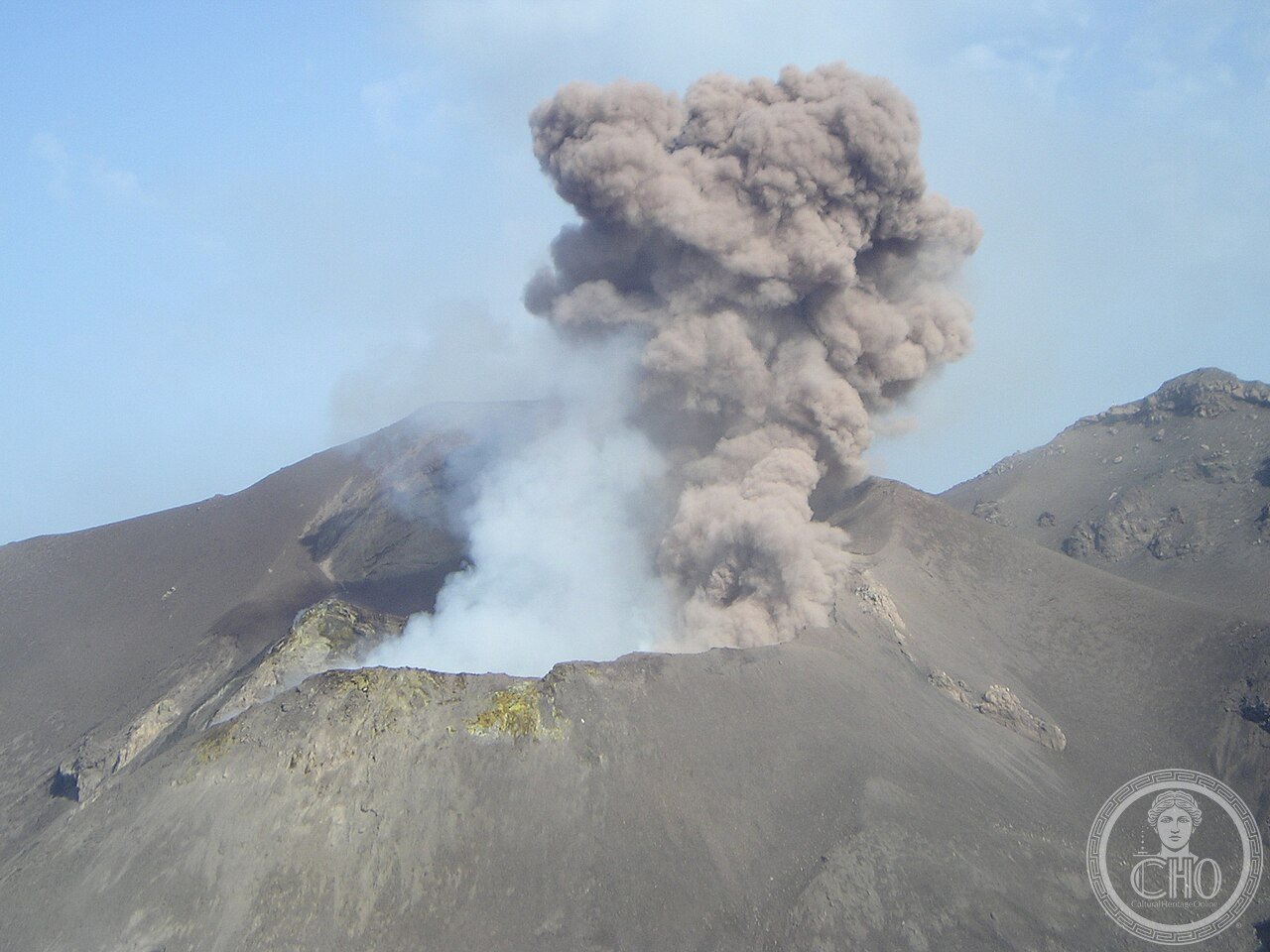
- Stromboli: a volcano rising to 924 metres, in near-continuous eruption since roughly 200 BCE, first described by the historian Diodorus Siculus.
- Vulcano: gave its name to volcanoes worldwide; its 1888–1890 eruption defined the “vulcanian” eruption type.
- Salina: the highest island, topped by Monte Fossa delle Felci, known for its Malvasia delle Lipari wine and its capers.
- Panarea: the smallest inhabited island, with a submarine volcano, Bottaro, in the sea nearby.
- Filicudi and Alicudi: the most remote islands of the group, with limited infrastructure and, on Alicudi, no roads at all.
History
The islands were first settled around 6000 BCE, when Lipari’s obsidian deposits made it a centre of prehistoric trade. Obsidian tools worked at Castellaro Vecchio, above the modern town, were exchanged across Italy, France, Tunisia and Malta for millennia, and pieces from Lipari have been found as far away as Brittany. Greek colonists from Cnidus and Rhodes founded the city of Lipara in 580 BCE, establishing a community known for holding property in common and for its naval campaigns against Etruscan raiders in the Tyrrhenian Sea.
Rome took the islands during the First Punic War, in 252 BCE, after a lengthy siege, and Lipari became a Roman municipium. The early medieval period brought Arab raids from Sicily, in 827 and 836 CE, which led to the temporary abandonment of the Greek population. The islands’ modern significance rests largely on their volcanic activity: the word volcano itself derives from the island of Vulcano, once known to the Greeks as Hiera and renamed by the Romans for Vulcanus, god of fire. The eruption of Vulcano’s Gran Cratere between 1888 and 1890 was studied by the volcanologist Giuseppe Mercalli and the physicist Johnstone Stoney, whose 1891 papers defined the “vulcanian” eruption type still used in volcanology today. The Aeolian Islands were added to the UNESCO World Heritage list in 2000.
What you see
On Stromboli, visitors climb toward the summit with a licensed guide, a requirement introduced after 2005 for safety reasons, to watch the crater’s frequent small eruptions after dark; from the sea, the volcano’s glow has long served sailors as a natural beacon, and it remains visible from ferries approaching the island at night. The Sciara del Fuoco, the long channel of solidified lava running down to the sea, is one of the island’s defining features.
On Vulcano, a path leads up to the Gran Cratere and its fumarole field, where sulphurous gases rise from the ground; visitors are advised not to wear silver jewellery near the vents, as it tarnishes quickly. At the port, a natural mud pool draws visitors for its warm, sulphurous therapeutic mud, which leaves a strong smell and can stain clothing.
On Lipari, the Spanish-built fortress standing on the ancient acropolis houses the Museo Archeologico Eoliano, whose collection of prehistoric and Greek material, including obsidian tools and imported Mycenaean ceramics, is considered among the finest of its kind in the Mediterranean.
Practical information
- Guides: climbing above a certain altitude on Stromboli requires a licensed guide; several local operators run the ascent, and current details are best checked with the municipality or a guide company directly.
- Ferries and hydrofoils: services connect the islands to each other and to the Sicilian mainland; timetables and fares should be checked with the ferry operators before travelling.
- Museum visits: the Museo Archeologico Eoliano in Lipari has set opening days and admission arrangements, confirmed through the museum’s own channels.
- What to bring: sturdy footwear for volcano hikes, and old clothing if visiting the sulphur mud pools on Vulcano, since the mud can stain fabric.
Getting there
The main gateway to the Aeolian Islands is the port of Milazzo, near Messina, reached by bus or train from Messina itself. From Milazzo, ferries and faster hydrofoils run out to Lipari, Vulcano, Salina, Panarea, Stromboli, Filicudi and Alicudi; services also connect from Naples for those approaching from the Italian mainland further north.
Nearby
- Vulcano — a short crossing from Lipari, known for its crater hike and thermal mud pools.
- Salina — near Lipari, the highest island of the group, known for Malvasia wine and capers.
- Panarea — reachable from Lipari, the smallest inhabited island, with a submarine volcano offshore.
- Stromboli — further north along the archipelago, its summit in near-constant eruption.
Sources
- UNESCO World Heritage Centre
- Museo Archeologico Eoliano
- Diodorus Siculus, Bibliotheca historica
- Lucretius, De Rerum Natura
Gallery
Find it on the map
See this place and what’s around it →📷 Become a Cultural Heritage Online photographer
Share your photos of places: they stay published under your name as the author. The more they're seen, the more you get noticed — and soon a contest will reward the most appreciated photos.
Log in or sign up free to add a photo