
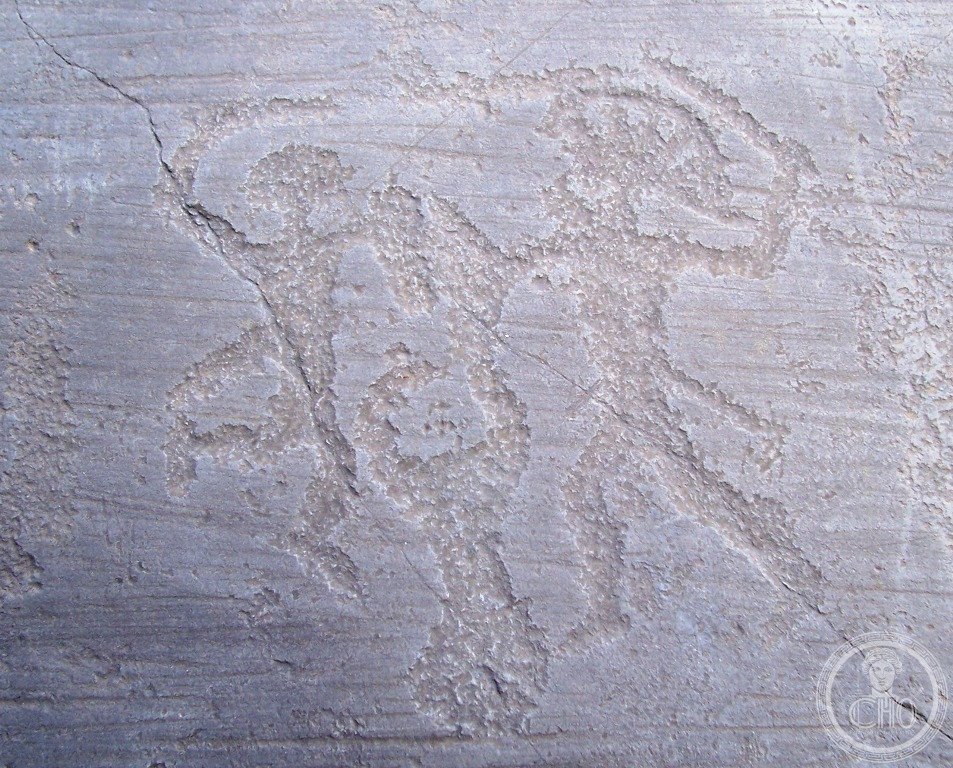
In an Alpine valley carved out by glaciers, more than 300,000 rock carvings tell ten thousand years of human history. They run from the hunters of the Neolithic to the warriors of the Iron Age and on to the Roman inscriptions. It was the first Italian site inscribed on the UNESCO World Heritage List, in 1979.
At a glance
Valcamonica is a pre-Alpine valley of glacial origin that runs for about 70 km between Lake Iseo and the Tonale Pass, in the province of Brescia. It holds one of the largest collections of prehistoric rock art in the world: more than 300,000 carvings made on slabs of Permian sandstone smoothed by the Würm glacier, spread over hundreds of rock surfaces around Capo di Ponte and the neighbouring towns.
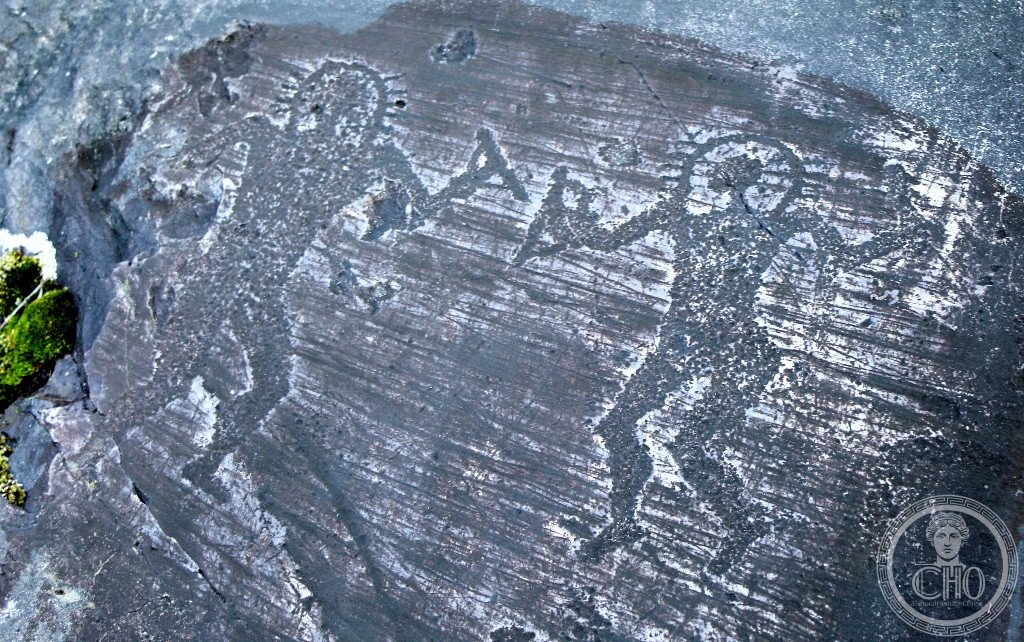
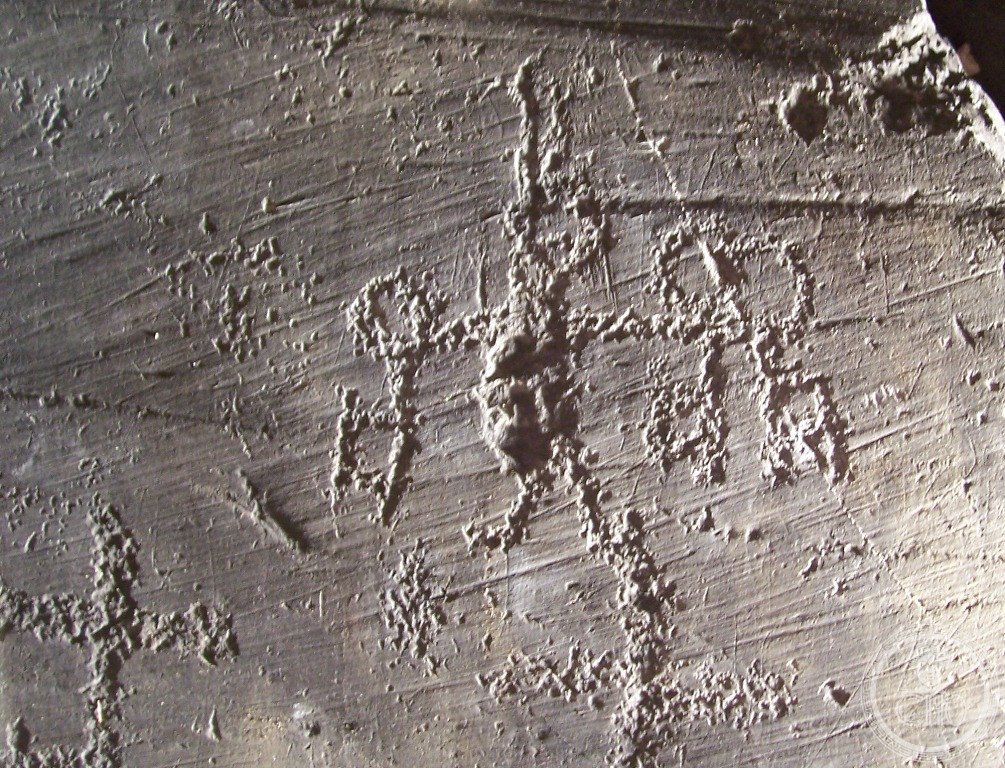
The carvings were made by percussion, striking the rock with a stone tool to remove the oxidised surface layer and expose the lighter stone beneath. The result shows best in raking light, when a low sun draws sharp shadows across the incised surfaces.
Key facts
- Location: Capo di Ponte and neighbouring towns, Valcamonica, province of Brescia, Lombardy.
- Extent: carvings spread over about 70 km of valley, on hundreds of glacial sandstone surfaces.
- Chronology: from about 8000 BC to the 16th century AD, with the richest phase in the Bronze Age.
- Symbol: the Rosa Camuna, a four-petalled motif of the Iron Age, today the official symbol of the Region of Lombardy.
- People: the Camunni, the pre-Roman population of the valley.
- Recognition: the first Italian site inscribed on the UNESCO World Heritage List, in 1979.
History
The first written reports of the carvings go back to a letter from a local priest of Darfo, who in 1887 described «strange traces on the rocks» to the Ateneo di Brescia. A first scientific description was presented at the International Congress of Prehistory in Monaco in 1906.
Systematic study of the site began in the fifties and sixties of the twentieth century with Emanuel Anati, who with his team recorded tens of thousands of carvings and founded the Centro Camuno di Studi Preistorici at Capo di Ponte. The chronology Anati drew up, in four main phases, remains to this day the reference framework for dating the carvings.
In 1979 Valcamonica was inscribed on the UNESCO World Heritage List, the first Italian place to receive that recognition.
What you see
The heart of a visit is the Parco Nazionale delle Incisioni Rupestri at Naquane, where a marked path leads through dozens of numbered rock surfaces. The most important of them, known as the Roccia Grande, carries more than a thousand overlapping carvings, built up over thousands of years. Recurring motifs include animals, human figures with raised arms, weapons, carts, sun discs and the Rosa Camuna.
The Museo Nazionale della Preistoria della Valle Camonica, in the centre of Capo di Ponte, keeps full-scale plaster casts of some of the most important surfaces, a few of them lit with optical fibres that reproduce the effect of raking light, together with the photographic and graphic archive Anati gathered over his research.
The visit conveys the continuity of the site well: the oldest carvings, naturalistic, give way over time to ever more abstract symbols, down to the Latin inscriptions left in Roman and post-Roman times.
Practical information
- Hours and tickets: the Naquane park and the other sites have hours and fares worth checking on the official site before visiting, since they change with the season.
- Best light: the carvings show best in the early morning or the late afternoon, when the raking sun brings out their outlines; in full midday sun they are almost invisible.
- Minor sites: besides Naquane, the valley has dozens of other carving sites, but the signage is often poor, so it is worth downloading the map from the official park site before setting out.
- Museum: the Museo Nazionale della Preistoria della Valle Camonica is in the centre of Capo di Ponte, a few minutes on foot from the park entrance.
Getting there
Capo di Ponte can be reached by train from Brescia on the Trenord regional line; the station is a short walk from the entrance of the Naquane park. For up-to-date times and frequencies it is best to consult the Trenord site.
Nearby
- Riserva Naturale Incisioni Rupestri di Ceto, Cimbergo e Paspardo — about 10 km from Capo di Ponte, with the Via delle Scope, which concentrates the largest number of Rose Camune.
- Parco Archeologico Comunale di Seradina-Bedolina — about 2 km from the Naquane park, known for the Roccia di Bedolina, which shows what has been read as a topographic map of an Iron Age settlement.
- Lake Iseo and Monte Isola — about 30 km away, reached by train from Capo di Ponte via Pisogne and then by ferry; Monte Isola is free of cars and holds the Pieve di Sant’Andrea, of the 11th century.
Sources
- UNESCO World Heritage List.
- Centro Camuno di Studi Preistorici.
- Museo Nazionale della Preistoria della Valle Camonica.
- Parco Nazionale delle Incisioni Rupestri (parcoincisioni.it).
- Ateneo di Brescia.
Gallery
Find it on the map
See this place and what’s around it →📷 Become a Cultural Heritage Online photographer
Share your photos of places: they stay published under your name as the author. The more they're seen, the more you get noticed — and soon a contest will reward the most appreciated photos.
Log in or sign up free to add a photo