
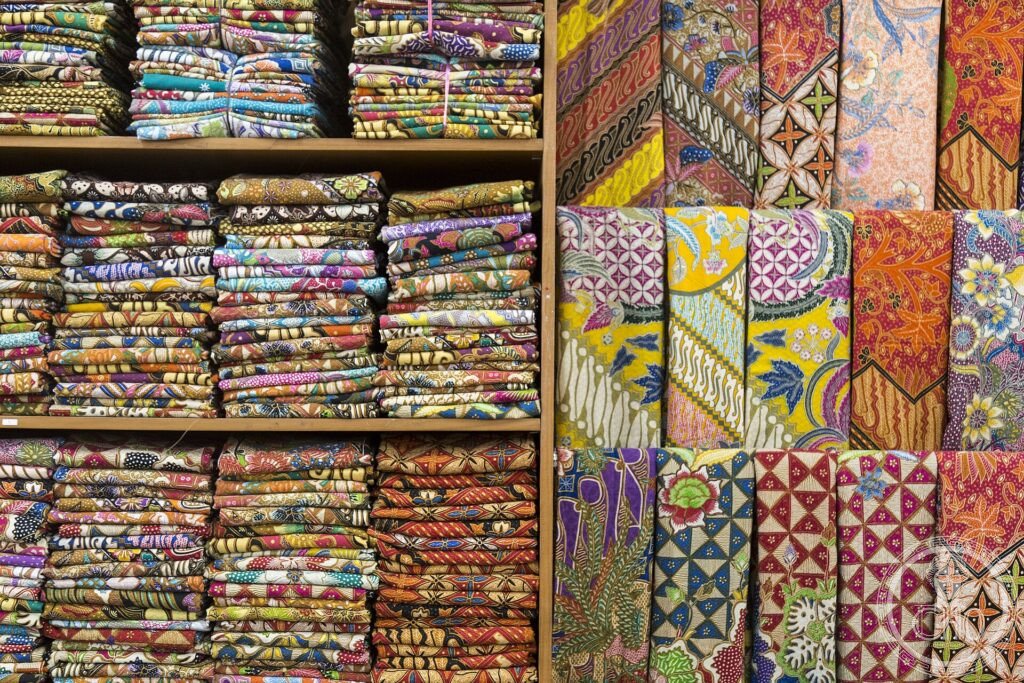
A wax-resist dyeing technique of extraordinary sophistication, Indonesian batik transforms cloth through cycles of wax application, immersion, and removal—each layer adding colour and pattern in precise, deliberate sequences.
At a glance
Batik artisans draw or stamp melted wax onto fabric, then immerse the cloth in dye. The wax prevents colour absorption, creating negative patterns. When removed, the wax reveals undyed cloth beneath, while multiple dye cycles build intricate, multicoloured compositions. Patterns carry meanings—some reserved for ceremonies, others born from market demand and fashion.
Origins & history
Wax-resist dyeing is ancient, practised across Egypt, southern China (among the Miao, Bouyei, and Gejia peoples), India, Malaysia, Nigeria, and Sri Lanka. The Indonesian—particularly Javanese—tradition developed into one of the world’s most refined versions, though its precise age remains uncertain.
The craft reached international consciousness through the 1817 History of Java, sparking collecting efforts and scholarly attention. The 19th and early 20th centuries brought innovations including stamp-printing of wax, dramatically increasing productivity while artisans adapted to new markets and aesthetic trends.
The practice
A batik maker holds cloth taut and applies hot wax with a brush or carved stamp called a canting or cap. The wax cools and hardens, adhering to the fibres. The cloth is then submerged in dye—traditionally indigo, but modern workshops employ a spectrum of colours.
Once dry, the wax is scraped or melted away, revealing sharp-edged or slightly blurred patterns where the dye could not penetrate. For complex designs, this cycle repeats: wax applied to new areas, a second colour introduced, wax removed again. The layering builds depth, shadow, and luminosity impossible in single-pass dyeing.
Workshop rhythms unite generations. Master artisans guide apprentices through pattern-drawing, wax temperature, timing, and the chemistry of different dyes. The work demands patience, steady hands, and intimate knowledge of how cloth drinks colour.
Cultural significance
Batik is woven into Indonesian identity and ceremony. Certain patterns are worn only at weddings, funerals, or royal occasions; their designs encode social role and spiritual intent. Beyond Indonesia, batik workshops and artists have inspired textile traditions worldwide, extending the practice’s influence far beyond its origins.
Contemporary batik makers balance heritage with innovation, serving both ceremonial demand and global fashion markets while maintaining the labour-intensive, hand-centred methods that define the craft’s soul.
Key facts
- Countries: Indonesia
- Heartland: Yogyakarta and other Javanese centres
- UNESCO Intangible Cultural Heritage reference: 00170
- Primary technique: wax-resist dyeing with brush (canting) or stamp (cap)
- Patterns: symbolic and ceremonial designs; market-driven innovations
Where to experience it
Yogyakarta remains the heartland of Indonesian batik, home to active workshops where artisans welcome visitors to observe wax application, dyeing vats, and the meticulous removal of cooled wax. Many studios sell finished textiles and teach short courses for those wishing to try the technique firsthand.
Sources & resources
- Batik — Wikipedia
- Indonesian Batik — UNESCO Intangible Cultural Heritage
- Cultural Heritage Online
Find it on the map
See this place and what’s around it →📷 Become a Cultural Heritage Online photographer
Share your photos of places: they stay published under your name as the author. The more they're seen, the more you get noticed — and soon a contest will reward the most appreciated photos.
Log in or sign up free to add a photo