
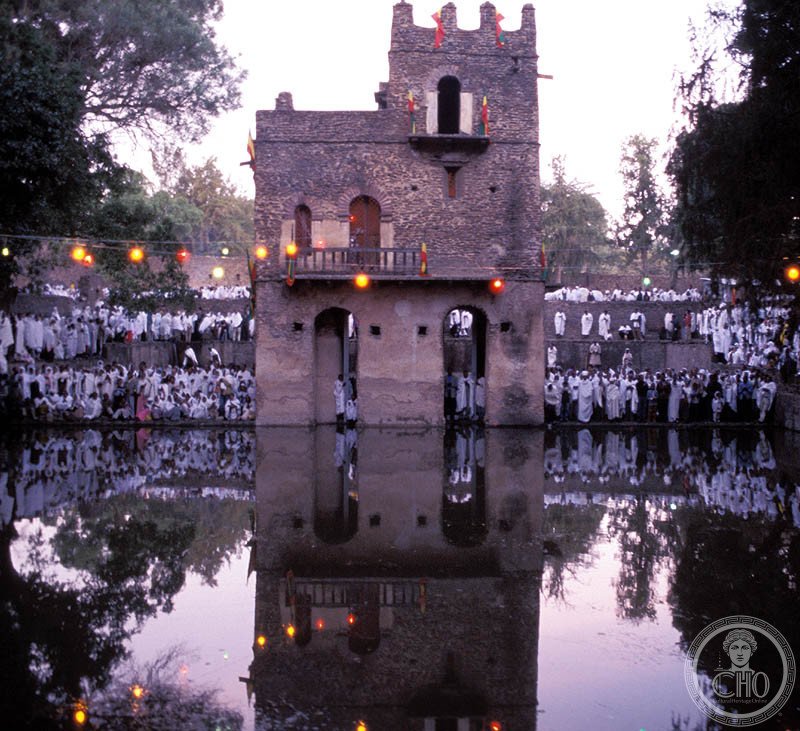
Ethiopia’s most exuberant Christian festival celebrates the baptism of Jesus through nocturnal liturgy, water blessing, ritual immersion, and daylong processions that restore the sacred Tabot—a model of the Ark of the Covenant—to its church shrine.
At a glance
Timkat is an Ethiopian Orthodox Tewahedo Church and Eritrean Orthodox Tewahedo Church observance of Epiphany, held on 19 January (or 20 in leap years), marking the 11th day of Terr in the Ge’ez calendar. The festival commemorates Jesus’s baptism in the River Jordan through a cycle of ceremonies spanning the night and following day, drawing entire communities into renewal of faith.
Origins & history
Timkat roots lie deep in Ethiopian Christian tradition, tying the observance of Epiphany to the baptismal theology central to the Ethiopian Orthodox church. The festival’s structure—nocturnal liturgy followed by public water blessing and procession—has evolved as a living enactment of Scripture, embedding baptismal renewal into communal memory and seasonal rhythm.
The practice
The Tabot, a sacred model of the Ark of the Covenant ordinarily hidden on every Ethiopian altar, becomes the focal point. Clergy reverently wrap it in fine cloth and bear it on the priest’s head in solemn procession. The Divine Liturgy begins near dawn at a stream or pool, around 2 a.m., in near darkness and cold.
As daylight approaches, water is blessed and sprinkled upon the faithful. Many wade or fully immerse themselves, renewing their baptismal vows with the water’s touch. Children dart freely through the assembly; elders march in dignified formation, singing long, low-pitched hymns in measured cadence; middle-aged men intone sacred songs.
Young men leap and dance with spirited vigor, their rhythmic movements repeating tirelessly. Women, dressed in their finest clothes, mark what has been called their “one real day of freedom in the year.” Clergy display robes and ceremonial umbrellas of brilliant colour. By noon, the Tabot is escorted back to the church in festive procession, followed by communal feasting in homes.
Cultural significance
Timkat stands as Ethiopia’s greatest Christian holiday, a moment when the sacred emerges from the sanctuary into public life. The festival affirms baptismal identity, washes the community in shared ritual, and renews bonds between laity and clergy, young and old, sacred and social.
For the Ethiopian Orthodox faithful, the water blessing sanctifies not only individual renewal but collective belonging. The festival’s nocturnal and diurnal cycles mirror the rhythm of Christ’s passion and resurrection, while its emphasis on water links ancient baptismal practice to Ethiopian geography and seasons.
Key facts
- Observed in Ethiopia and Eritrea on 19 January (20 in leap years)
- Anchor heartland: Gondar, Ethiopia (12.61209°N, 37.45961°E)
- Central ritual object: the Tabot, a liturgical model of the Ark of the Covenant
- Core ceremonies: nocturnal Divine Liturgy, water blessing at dawn, ritual immersion, processional return of the Tabot
- UNESCO Intangible Cultural Heritage inscription: 2019 (Reference 01491)
Where to experience it
Timkat is celebrated throughout Ethiopia, with Gondar as the heartland of the practice. Communities gather at streams, pools, and water sources in the pre-dawn darkness and return to daylight ceremony. Local Orthodox churches coordinate the ritual cycle; participation is open to believers and respectful observers.
Sources & resources
Find it on the map
See this place and what’s around it →📷 Become a Cultural Heritage Online photographer
Share your photos of places: they stay published under your name as the author. The more they're seen, the more you get noticed — and soon a contest will reward the most appreciated photos.
Log in or sign up free to add a photo