

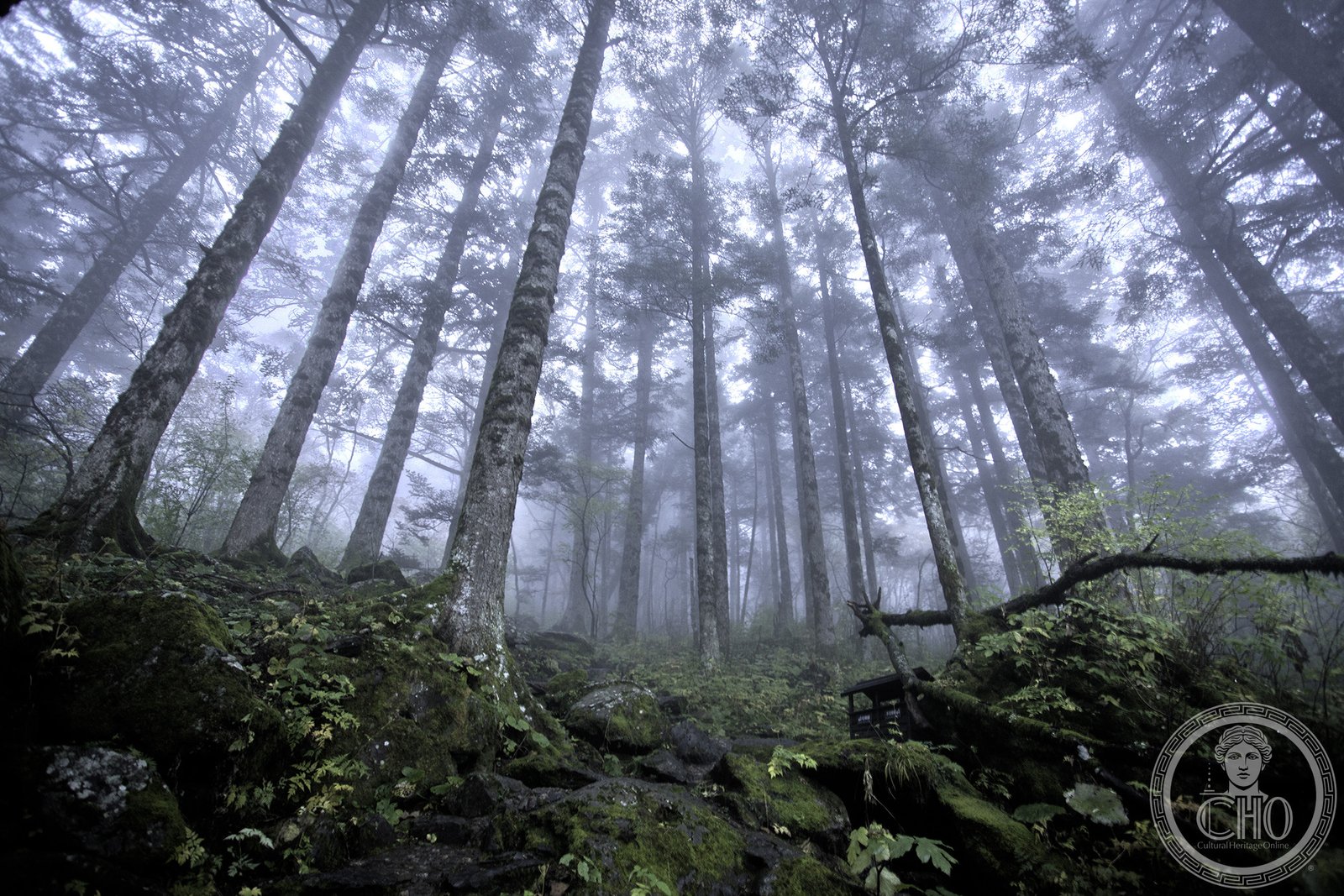
In Hubei, among the mountains that divide the plain of the Lower Yangtze from the uplands of Sichuan, Shennongjia National Park holds the largest intact primeval forest of central China. It takes its name from Shennong, the legendary “Divine Farmer” who according to tradition used these mountains to gather medicinal herbs. With summits above 3,000 metres, temperate forests running from 600 to 3,105 metres of altitude, and an exceptional biodiversity that includes 1,900 rare plant and animal species, it has been a UNESCO World Heritage site since 2016 as one of the chief biodiversity hotspots of Asia.
At a glance
Hubei Shennongjia (UNESCO 2016, ref. 1509) is a large protected forest area in western Hubei province, central China, covering 79,319 hectares at altitudes between 600 and 3,105 metres. It is the largest area of primeval forest in central China and one of the most biodiverse temperate forest ecosystems in East Asia. The reserve is named after Shennong, the mythological Divine Farmer and Herb Expert of Chinese legend, who is said to have gathered medicinal plants in these mountains. Shennongjia is home to endangered species including the golden snub-nosed monkey, clouded leopard, Asian black bear and Chinese giant salamander, as well as over 3,700 plant species.
Key facts
- UNESCO: World Heritage since 2016 (Hubei Shennongjia, ref. 1509)
- Area: 79,319 hectares (core zone + buffer zone)
- Elevation: 600–3,105 m (Shennong Summit — highest point in central China)
- Golden snub-nosed monkey: the reserve protects one of the key remaining populations
- Flora: over 3,700 plant species, including 205 tree species; numerous Chinese endemic plants
- Mythology: Shennong (“Divine Farmer”) is said to have tested medicinal herbs here — foundation myth of Chinese medicine
History
The Shennongjia mountains have been associated with Shennong — one of the Three Sovereigns of Chinese mythology, credited with teaching humanity agriculture and medicine — since ancient times. The legend says that Shennong built a series of terraces in these mountains to gather and test medicinal plants, some poisonous. The area remained difficult to access and thinly populated through Chinese history, which is why the forest survived.
In the 20th century, Shennongjia became known internationally through repeated reports of a large, bipedal, ape-like creature called the “Yeren” (Wild Man) — China’s Bigfoot — allegedly sighted by locals and investigators. Scientific expeditions in the 1970s–90s found no conclusive evidence but did document the remarkable biodiversity of the region. A nature reserve was established in 1982; national park status followed. UNESCO inscribed Shennongjia in 2016 for its outstanding universal value as a biodiversity hotspot and ancient forest landscape.
What you see
Shennongjia’s landscape ranges from subtropical valleys with ancient camphor trees at low elevations, through mixed deciduous and conifer forests in the middle zone, to subalpine grasslands and wind-sculpted fir forests near the summit of Shennong (3,105 m). The forest is extraordinarily dense and rich: Chinese fir, katsura trees, dawn redwood (once thought extinct), dove tree and Chinese parasol are all present.
The golden snub-nosed monkey — one of China’s most iconic endangered primates — is sometimes visible near the Dalongtan wildlife station in the core zone. The park has scenic roads, hiking trails and a cable car to the summit area.
Practical information
- Access: Shennongjia airport (HPG) has flights from Wuhan, Chongqing and Beijing (summer schedule); by road 4–5 hrs from Yichang or Wuhan
- Best time: May–October; summer (June–August) busiest but greenest; October for autumn colour; winter (–10°C at summit) for snow landscapes
- Muyu town: the main tourist base within the scenic area; hotels and restaurants
- Scenic routes: the park has a loop road and specific scenic zones; guided tours available at the entrance
Getting there
Fly to Shennongjia Hongping Airport (HPG) from Wuhan (1 hr) or Chongqing (45 min) — flights operate mainly May–October. By road: from Yichang (160 km, 4 hrs via Badong) or from Wuhan (500 km, 6 hrs via Yichang). GPS (park centre): 31.29° N, 110.19° E.
Nearby
- Three Gorges (Yangtze River) — the dramatic gorges downstream, accessible from Yichang (160 km south)
- Wudang Mountains (UNESCO) — the Taoist sacred mountains, 300 km north-east
- Wuhan — the provincial capital on the Yangtze, with museums and Yellow Crane Tower, 500 km east
Sources
- UNESCO World Heritage Centre — “Hubei Shennongjia” (ref. 1509)
- Encyclopaedia Britannica — Shennongjia
- WWF China — golden snub-nosed monkey conservation in Shennongjia
Find it on the map
See this place and what’s around it →
📷 Become a Cultural Heritage Online photographer
Share your photos of places: they stay published under your name as the author. The more they're seen, the more you get noticed — and soon a contest will reward the most appreciated photos.
Log in or sign up free to add a photo