

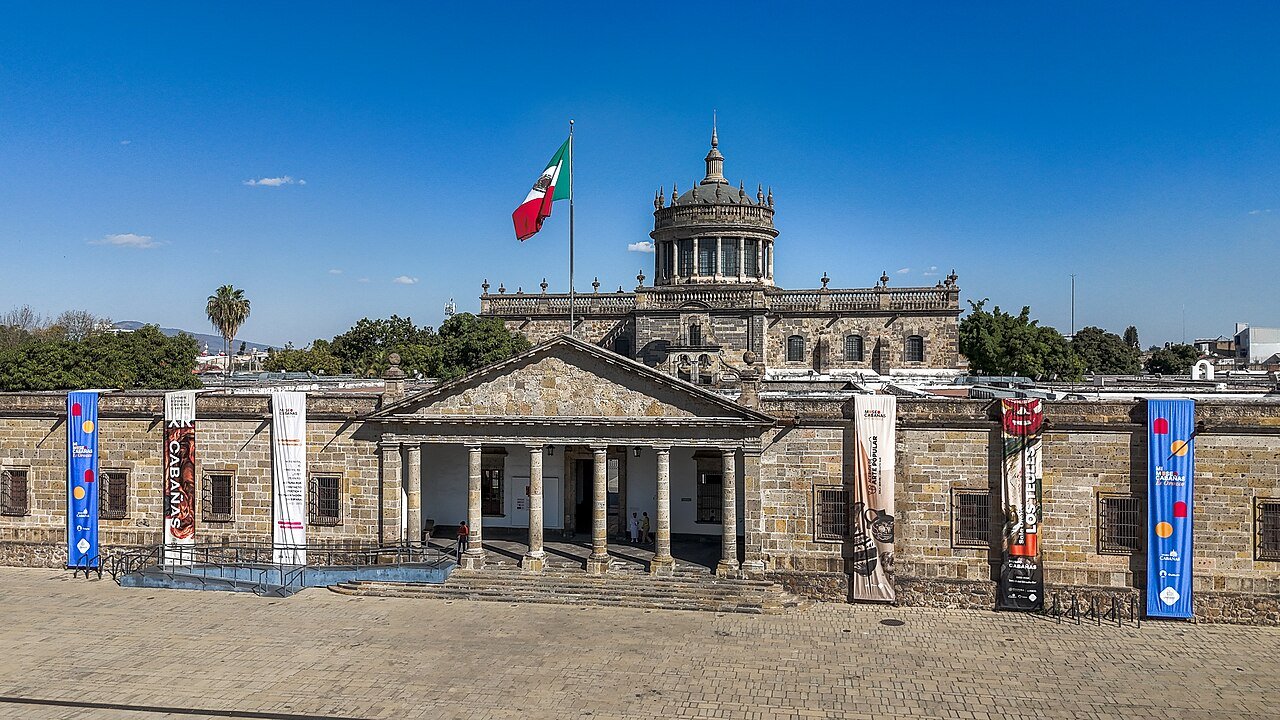
Founded as an Orphanage by Bishop Cabanas
The Hospicio Cabanas was established in 1791 by Juan Cruz Ruiz de Cabanas y Crespo, the Bishop of Guadalajara, as an institution to shelter and educate orphans, the elderly, the infirm, and the destitute of the Jalisco region. Bishop Cabanas envisioned a self-sufficient charitable institution combining residence, workshops, schoolrooms, a chapel, gardens, and administrative facilities within a single monumental complex. The project was ambitious in scale and took decades to complete, with construction continuing through the early nineteenth century. The Hospicio operated as a social welfare institution for over a century and a half, sheltering thousands of children and indigent adults throughout the colonial and independent Mexican periods. Its social mission gives the building a human dimension that purely ceremonial or governmental monuments lack — it was designed from the outset as a place of living, working, and learning for the most vulnerable members of Jalisco society.
The Neoclassical Architecture of Manuel Tolsa
The design of the Hospicio Cabanas was entrusted to Manuel Tolsa, the most distinguished architect and sculptor working in New Spain at the end of the eighteenth century. Tolsa, a Valencian by birth who had trained at the Royal Academy of Fine Arts of San Fernando in Madrid, brought to Guadalajara the refined neoclassical language of the Spanish Enlightenment — a style characterised by clean geometric volumes, restrained ornament, proportional harmony, and the rational organisation of space. The complex is built around 23 interior patios arranged in a systematic pattern, with the central chapel marking the exact geometric centre of the composition. The facade facing the Plaza Tapatia is measured and dignified, with a Doric portico and symmetrical towers that express institutional gravity without ostentation. The building covers approximately 24,000 square metres, making it one of the largest neoclassical complexes in the Americas.
Jose Clemente Orozco and the Murals Programme
The transformation of the Hospicio Cabanas from a historic welfare institution into an internationally recognised cultural monument was accomplished through the murals painted by Jose Clemente Orozco between 1936 and 1939. Orozco, a native of Jalisco and one of the three great Mexican muralists alongside Diego Rivera and David Alfaro Siqueiros, was commissioned by the Jalisco state government to decorate the interior of the central chapel. Working in fresco on the vaulted ceilings, the pendentives, the lunettes, and the interior walls, Orozco created a cycle of approximately 57 individual compositions covering 1,200 square metres of painted surface. The murals constitute the most complete and formally unified work of Orozco monumental painting, painted at the height of his powers and drawing on a lifetime of engagement with themes of conquest, suffering, liberation, and the ambivalence of progress and destruction.
El Hombre en Llamas: The Man of Fire
The centrepiece and most famous image of the Orozco murals at the Hospicio is El Hombre en Llamas — the Man of Fire — painted on the interior of the chapel dome directly above the crossing. A single male figure, stripped to pure geometric form and suffused with flame, spirals upward through the centre of the composition while four elemental figures — earth, fire, water, and air, or interpreted variously as representing the forces of history — radiate outward from the centre. The image is one of the most powerful works of twentieth-century art in any medium, combining the formal vocabulary of the Italian Renaissance fresco tradition with a raw emotional intensity and a modernist willingness to distort and abstract the human form in service of expressive force. Lying on the floor of the chapel and looking directly upward into the dome, viewers experience the figure as simultaneously falling and ascending — a deliberately ambiguous image of the human condition.
The Chapel of the Illusions
The chapel interior of the Hospicio Cabanas, now known informally as the Chapel of the Illusions (Capilla de las Ilusiones) after the optical and emotional effects of the Orozco program, is the primary destination for art tourists visiting Guadalajara. The entire interior surface — walls, pendentives, lunettes, vaults, and dome — is covered with Orozco compositions of varying scale and thematic content. Some sections depict the Spanish conquest with visceral brutality; others show the machinery of modern industrialism crushing the human body; others represent mythological archetypes drawn from Aztec and European traditions simultaneously. The coherence of the decorative programme, planned and executed by a single artist over three years with unprecedented creative freedom, sets it apart from comparable mural cycles in Mexico, where different sections were often assigned to different artists or completed over long and interrupted periods.
Current Use as a Cultural Centre
The Hospicio Cabanas ceased to function as a social welfare institution in 1980 and was converted into the Instituto Cultural Cabanas, a state-run cultural centre under the administration of the Jalisco state government. The transformation preserved the architectural fabric while opening the complex to public cultural programming including art exhibitions, concert performances, theatre productions, educational workshops, and permanent collection displays. The 23 patios of the complex are used for open-air events and temporary exhibitions. The museum function centres on the Orozco murals in the central chapel, supplemented by a permanent collection of Orozco drawings, studies, and easel paintings that allows visitors to understand the development of the mural programme. The Instituto also maintains a permanent exhibition on the history of the Hospicio and its social mission, contextualising the building within the broader history of charitable institutions in colonial and independent Mexico.
Guadalajara: Context of the Second City
Guadalajara, the capital of Jalisco state and Mexico second-largest metropolitan area with a population of approximately 5 million, provides the urban context in which the Hospicio Cabanas must be understood. The city is renowned as the cradle of several defining elements of Mexican national identity: mariachi music originated in the Jalisco region, tequila is produced from the blue agave fields surrounding the city, and the charro (horseman) tradition is deeply rooted in Jalisco ranch culture. The historic centre of Guadalajara, within which the Hospicio stands, was declared a UNESCO creative city and contains a remarkable concentration of colonial-era plazas, churches, and civic buildings within walking distance of each other. The Plaza Tapatia, a large pedestrianised civic square created in the 1980s, provides the immediate foreground to the Hospicio facade and links it visually to the Cathedral of Guadalajara to the west.
Visiting the Hospicio Cabanas Today
The Hospicio Cabanas — now formally the Instituto Cultural Cabanas — is open to the public six days a week (closed Mondays) and charges a modest entrance fee. The visit naturally centres on the central chapel and the Orozco murals, but the full exploration of the 23-patio complex rewards extended time. Guided tours in Spanish and English are available and strongly recommended for visitors without prior knowledge of Mexican muralism or the iconographic programme. The complex is located on the Plaza Tapatia in the historic centre of Guadalajara, within easy walking distance of the city cathedral, the Degollado Theatre, and the Mercado Libertad (Mercado San Juan de Dios), one of the largest indoor markets in Latin America. Guadalajara is served by the Miguel Hidalgo International Airport with direct connections to Mexico City, the United States, and other major hubs.
Find it on the map
See this place and what’s around it →📷 Become a Cultural Heritage Online photographer
Share your photos of places: they stay published under your name as the author. The more they're seen, the more you get noticed — and soon a contest will reward the most appreciated photos.
Log in or sign up free to add a photoIs this page about you?
This page is read by travellers and heritage enthusiasts who find it on Google. Tell us how you are connected to this place and we will take it from there.