
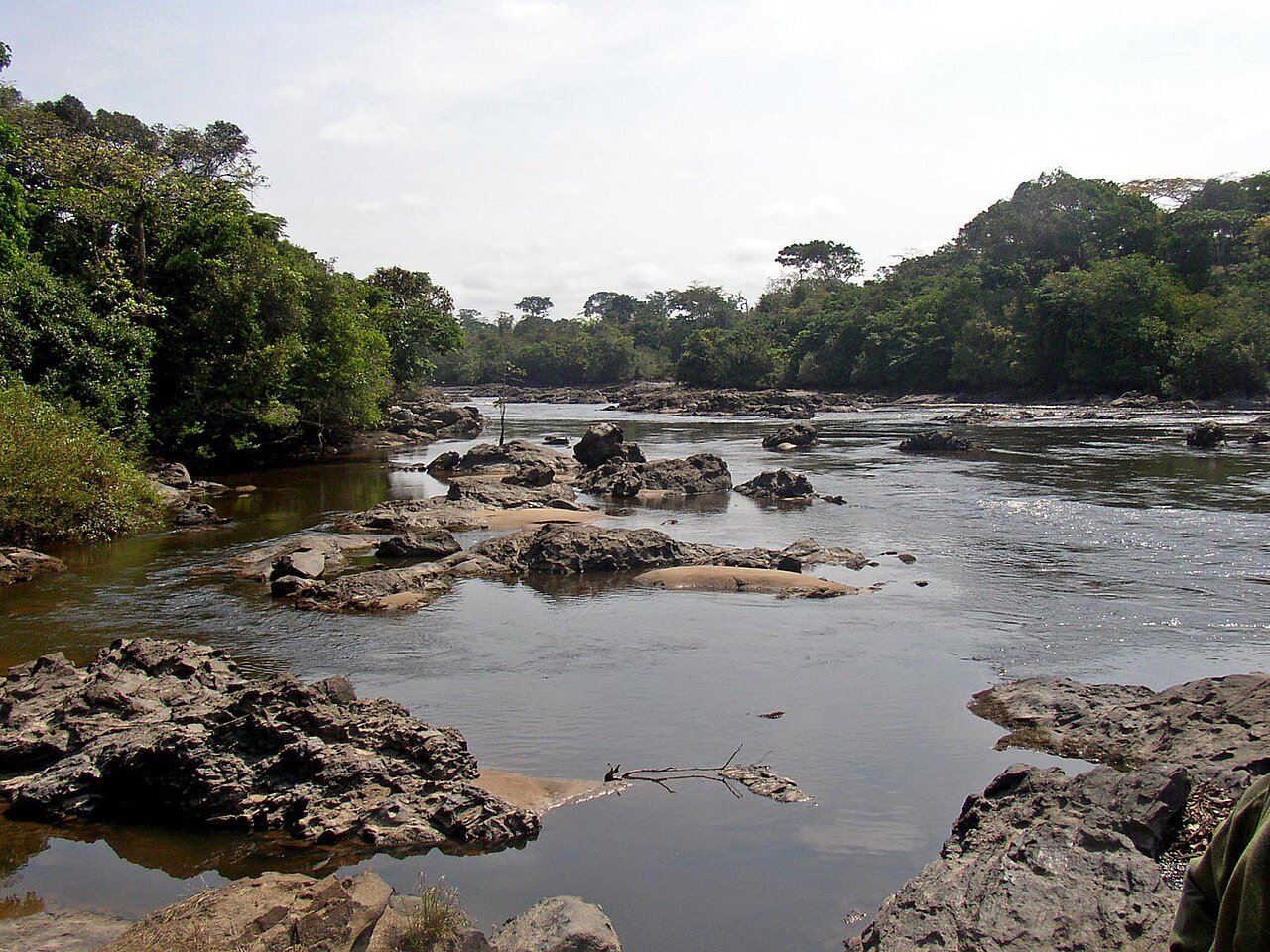
The Ituri Forest: A Rainforest of Global Importance
The Okapi Wildlife Reserve encompasses approximately 1.37 million hectares of the Ituri Forest in the northeastern Democratic Republic of Congo, making it one of the largest and most important tropical rainforest reserves in Africa. The Ituri is part of the vast Congo Basin forest, the second-largest tropical rainforest on Earth after the Amazon, and it shelters an extraordinary concentration of biodiversity found nowhere else on the planet. The forest has remained largely intact through geological history, serving as a refugium during past climatic shifts and allowing species to evolve in isolation over millions of years. This long history of ecological stability has produced a level of endemism — species found only here — that makes the Ituri Forest one of the highest-priority conservation areas in the world. UNESCO inscribed the reserve as a World Heritage Site in 1996.
The Okapi: An Animal Unlike Any Other
The okapi (Okapia johnstoni) is the flagship species of the reserve and one of the most extraordinary mammals on Earth. A close relative of the giraffe despite its superficially zebra-like appearance, the okapi was unknown to Western science until 1901, making its discovery one of the most dramatic zoological events of the twentieth century. Solitary and deeply forest-dependent, the okapi feeds on leaves, buds, and fruit in the dense understorey, using its elongated tongue — which can reach up to 45 centimetres in length — to strip foliage from branches. The striped hindquarters, which fade to plain chestnut on the forebody, serve as camouflage in the dappled light of the forest interior. The Ituri Forest holds the last viable wild population of okapi, estimated at between 10,000 and 35,000 individuals, making the reserve irreplaceable for the survival of the species.
Biodiversity: Chimpanzees, Forest Elephants, and 330 Bird Species
Beyond the okapi, the Ituri Forest supports an astonishing diversity of life. The reserve is home to forest elephant (Loxodonta cyclotis), a smaller and genetically distinct species from the savannah elephant, as well as six species of diurnal primate including the eastern chimpanzee (Pan troglodytes schweinfurthii), the olive colobus, and the Allen’s swamp monkey. The avifauna exceeds 330 documented species, with many Afro-tropical forest specialists that are absent from degraded or fragmented habitats. The forest also supports the Congo peafowl, a spectacular bird discovered only in 1936 and endemic to the Congo Basin. Freshwater fish diversity in the Ituri and Epulu rivers is also remarkable, with numerous species undescribed by science. The reserve can be considered a living laboratory of evolutionary biology.
The Mbuti: Indigenous Peoples of the Ituri
The Ituri Forest is the ancestral homeland of the Mbuti people, one of the oldest indigenous forest-dwelling communities in Africa. The Mbuti have lived in and with the forest for tens of thousands of years, developing an intimate ecological knowledge of its plants, animals, and seasonal rhythms that no external scientific programme can replicate. Their traditional practices — including net hunting, honey harvesting, and the use of medicinal plants — have historically had minimal impact on forest ecosystems. The relationship between the Okapi Wildlife Reserve and the Mbuti communities within and around its boundaries is complex, and conservation management has at times created tension over access rights and traditional resource use. International conservation guidelines increasingly recognise that the long-term success of forest protection depends on the active partnership of indigenous communities.
Conservation Status: In Danger Since 1997
The Okapi Wildlife Reserve has been listed on the UNESCO World Heritage in Danger register since 1997, reflecting the severity of threats facing the site. Armed conflict in northeastern Congo, including the devastating wars of 1996-2003 and subsequent decades of militia activity, has severely hampered conservation operations and led to the collapse of anti-poaching patrols in some areas. The reserve headquarters at Epulu were attacked and looted in 2012, with poachers killing 14 okapi held at the research station. Despite this setback, the Okapi Conservation Project has maintained a presence in the reserve and continues to work with local communities and ranger teams under extremely difficult conditions. The resilience of the forest ecosystem itself has been remarkable, but continued conflict poses an existential threat to effective management.
Logging, Mining, and the Pressure of Extraction
Alongside armed conflict, the Ituri Forest faces mounting pressure from industrial extraction. Artisanal and small-scale gold mining has expanded inside and around the reserve boundaries, bringing workers, roads, and demand for bushmeat into previously intact forest areas. The construction of informal roads associated with mining significantly increases hunter access to wildlife populations. Logging concessions in areas adjacent to the reserve, while formally outside its boundaries, degrade the forest corridor connectivity that large mammals such as elephant and okapi depend on for seasonal movement. The Democratic Republic of Congo has vast mineral wealth underlying much of its eastern territory, and the political pressure to exploit these resources creates a fundamental tension with conservation objectives that requires engagement at the highest levels of government.
Recovery Efforts and the Okapi Conservation Project
The Okapi Conservation Project, founded by American zoologist John Lukas in 1987 and now operating in partnership with the Congolese wildlife authority, has been the primary conservation force in the Ituri Forest for nearly four decades. The project maintains the Epulu Conservation and Research Centre, trains and equips eco-guards drawn from local communities, and runs community development programmes in villages surrounding the reserve. A captive breeding programme for okapi, coordinated through zoos worldwide under the Species Survival Plan, maintains a genetic insurance population against catastrophic loss in the wild. Recent years have seen improved security conditions in parts of the reserve and measurable recovery of wildlife populations in better-patrolled zones, offering cautious optimism about the reserve’s long-term future.
Visiting the Okapi Wildlife Reserve
The Okapi Wildlife Reserve is one of the most remote and logistically challenging World Heritage Sites to visit. Access is via the town of Kisangani in northeastern DRC, followed by a lengthy road journey — typically 12 to 15 hours on rough tracks — to the Epulu headquarters. The security situation in northeastern Congo must be carefully assessed before any visit, as conditions can change rapidly. Those who make the journey encounter a profoundly intact rainforest experience: guided forest walks with trained trackers, the possibility of encountering wild okapi on established track networks, and immersion in one of the least-visited and most ecologically significant forests on Earth. The Okapi Conservation Project can arrange guided visits with advance notice, and income from responsible ecotourism contributes directly to conservation funding.
Find it on the map
See this place and what’s around it →📷 Become a Cultural Heritage Online photographer
Share your photos of places: they stay published under your name as the author. The more they're seen, the more you get noticed — and soon a contest will reward the most appreciated photos.
Log in or sign up free to add a photo