

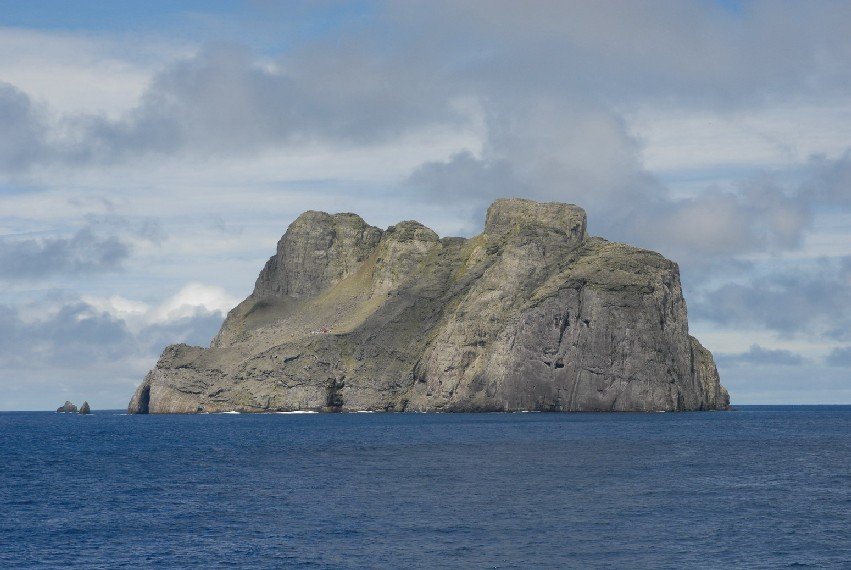
The Remote Island of Malpelo: 506 Kilometres from the Colombian Coast
Malpelo Island lies 506 kilometres off the Pacific coast of Colombia, one of the most isolated points in the eastern Pacific Ocean. The island itself is tiny — barely 1.4 kilometres long and 700 metres wide — a bare volcanic rock rising steeply from the ocean surface to a maximum elevation of 376 metres, with no fresh water, no soil worthy of the name, and no permanent human habitation. The Colombian Navy maintains a small permanent post on the island for territorial sovereignty, and the handful of rangers and naval personnel rotating through this posting represent the only human presence on what is otherwise a pristine and functionally uninhabited oceanic landmark. The Malpelo Fauna and Flora Sanctuary, inscribed as a UNESCO World Heritage Site in 2006, encompasses the island itself and a surrounding marine protected area of approximately 857,000 hectares of deep ocean, making it one of the largest no-take marine reserves in the eastern Pacific.
Volcanic Geology and Underwater Topography
Malpelo Island is the visible summit of an ancient submarine volcanic massif rising approximately 4,000 metres from the ocean floor. The island is composed of basalt and related volcanic rocks, dark grey to black in colour, sculpted by wave erosion into cliffs, sea stacks, and cathedral-like rock formations that are as dramatic above the waterline as the seascape below. The surrounding underwater topography is equally dramatic: the slopes of the volcanic massif plunge steeply into deep water, creating a series of walls, pinnacles, caves, and channels at dive depths ranging from the surface to beyond 50 metres. Submarine thermal vents in deeper water enrich the surrounding ocean with nutrients, driving the extraordinary productivity of the marine food web. The combination of volcanic geology, deep-water upwelling, and geographic isolation in the nutrient-rich Humboldt Current system creates the conditions for the wildlife spectacle that has made Malpelo world-famous among divers.
Hammerhead Shark Aggregations: The World Largest
Malpelo is globally recognised as the site of the largest known aggregations of scalloped hammerhead sharks (Sphyrna lewini) in the world. During peak aggregation periods — typically from June to November — schools of hundreds and sometimes thousands of scalloped hammerheads converge at specific dive sites around the island, particularly at the Bajo del Monstruo (Monster Pinnacle), a submerged rock formation at approximately 30 metres depth. The sight of a dense school of several hundred hammerheads circling in the blue water, their distinctive cephalofoil heads sweeping from side to side, is described by experienced divers as one of the most extraordinary wildlife experiences available anywhere on Earth. Scalloped hammerhead sharks are currently listed as critically endangered by the IUCN due to overfishing and the shark fin trade, making the Malpelo no-take zone a critical refuge for a species under severe pressure across its range.
Whale Sharks, Silky Sharks, and the Full Pelagic Suite
Alongside hammerheads, the waters around Malpelo support an exceptional diversity of shark species. Whale sharks (Rhincodon typus) aggregate around the island during periods of high plankton productivity, and schools of silky sharks (Carcharhinus falciformis) numbering in the hundreds are regularly encountered at open-water sites. Oceanic whitetip sharks (Carcharhinus longimanus), Galapagos sharks, and the rarely sighted shortfin mako can also be found in the deeper water channels. The presence of so many shark species in such high density is directly attributable to the no-take sanctuary status — the absence of fishing in the surrounding waters has allowed populations to recover to levels that have been eliminated from virtually every other accessible dive site in the eastern Pacific. Malpelo demonstrates in real time what a fully protected marine reserve can achieve for apex predator populations and for the broader ecosystem they regulate.
Endemic Species Above Water: The Malpelo Lizard and Sandpiper
The bare volcanic surface of Malpelo Island, despite its apparently inhospitable character, supports a small community of terrestrial endemic species that have evolved in isolation on this remote oceanic rock. The Malpelo lizard (Anolis agassizii) is the largest anole lizard in the world and exists only on Malpelo and its associated rock stacks — a remnant of a colonisation event that occurred when the island was either closer to the mainland or when sea levels were lower. The Malpelo sandpiper (Calidris pusilla), a subspecies of the western sandpiper, was historically resident on the island but may now be extinct on the island itself. Several endemic invertebrate species — crabs, insects, spiders — have been described from Malpelo, and the scientific survey of the island remains incomplete given the logistical difficulty of access. The seabird populations nesting on the island include Nazca boobies and red-footed boobies in significant numbers, with their guano fertilising the surrounding ocean and contributing to local marine productivity.
Dive Conditions at Malpelo
Malpelo offers some of the most challenging and technically demanding dive conditions in the world, which is part of why its marine life has been so well preserved. Currents around the island are strong and unpredictable, thermoclines can drop visibility dramatically in seconds, and surge against the volcanic walls requires precise buoyancy control. Water temperatures range from 18 to 27 degrees Celsius depending on the season and the upwelling conditions, and divers frequently encounter significant cold thermoclines even in shallow water. The combination of strong currents and cold water makes encounters with large pelagic species — hammerheads, whale sharks, silky sharks — more likely, as these animals use the current lines and thermal gradients as hunting and navigation tools. Malpelo is considered suitable only for experienced open-water divers with demonstrated skills in current diving, drift diving, and blue-water navigation.
Conservation Management: A No-Take Zone
The Malpelo Fauna and Flora Sanctuary is designated as a strict no-take zone — no fishing, no anchoring, no collection of biological specimens, and no waste disposal are permitted within the protected area boundaries. The sanctuary is managed by the Colombian Ministry of Environment and Sustainable Development in partnership with the Foundation Malpelo, a conservation NGO. The Foundation Malpelo coordinates scientific research, monitors shark populations through photo-identification and acoustic tagging programmes, and manages the liveaboard vessel permits that regulate visitor access. Enforcement is provided by the Colombian Navy, whose permanent post on the island allows monitoring of fishing activity within the sanctuary zone. The sanctuary is part of the Eastern Tropical Pacific Marine Corridor, a network of four linked marine protected areas — Malpelo, Cocos Island (Costa Rica), Galapagos (Ecuador), and Coiba (Panama) — that together protect a critical stretch of migratory habitat for pelagic species across national boundaries.
Getting There: Liveaboard Only
Access to the Malpelo Sanctuary is exclusively via liveaboard dive vessel, and a strictly limited number of permits are issued per year to control visitor impact on the marine environment. The typical liveaboard journey from Buenaventura on the Colombian Pacific coast to Malpelo takes approximately 36 hours each way, with the island visit itself lasting three to five days of intensive diving. The total trip duration is typically eight to ten days. A small number of specialist dive operators based in Colombia and internationally run regular itineraries to Malpelo, and the permits are typically booked months or years in advance. The nearest commercial airport is Cali or Bogota, both connected to Buenaventura by road. The trip represents a significant financial and logistical commitment — but for experienced divers, Malpelo consistently ranks among the top three dive sites in the world for the scale and intensity of its shark encounters.
Find it on the map
See this place and what’s around it →📷 Become a Cultural Heritage Online photographer
Share your photos of places: they stay published under your name as the author. The more they're seen, the more you get noticed — and soon a contest will reward the most appreciated photos.
Log in or sign up free to add a photo