
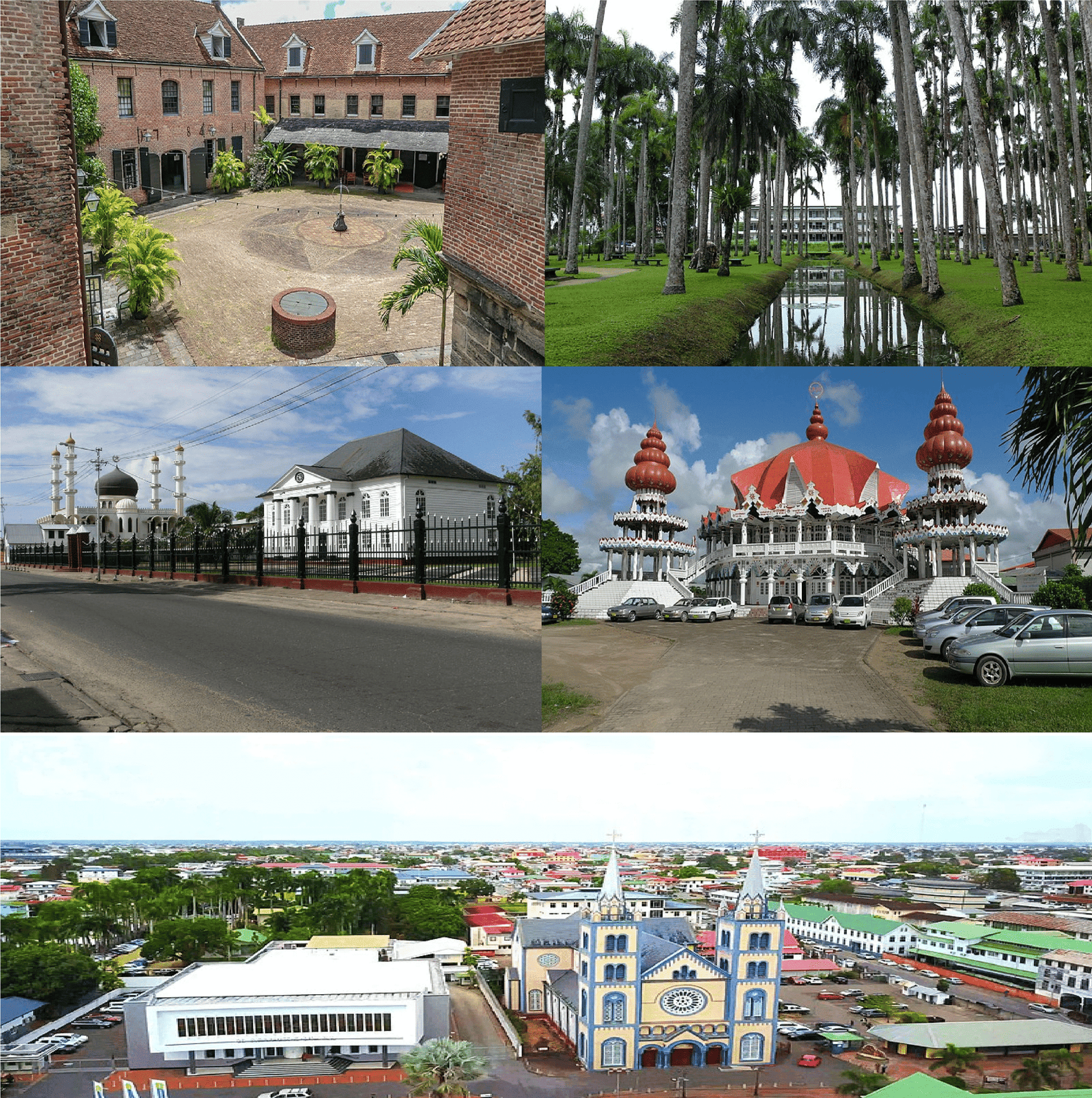
The only Dutch colonial urban ensemble in tropical South America: a remarkably intact historic core of wooden houses, Fort Zeelandia, the largest wooden cathedral in the Western Hemisphere, and a multicultural city born from the plantation economy of the Guiana coast.
At a glance
The Historic Inner City of Paramaribo, capital of the Republic of Suriname, was inscribed on the UNESCO World Heritage List in 2002 as the finest surviving example of Dutch colonial town planning and architecture in the tropics. Founded by the Dutch West India Company in 1613, Paramaribo preserves a remarkable ensemble of wooden colonial buildings that represent a unique synthesis of Dutch urban tradition and tropical building practice. This architecture cannot be found in the Netherlands itself; it exists only here.
Key facts
- UNESCO designation: 2002
- Founded: 1613 by Dutch West India Company
- Colonial period: 1667-1975 (Dutch Guiana)
- Fort Zeelandia: 1667; one of the oldest European forts in South America
- Cathedral of Saints Peter and Paul: 1885; largest wooden Catholic cathedral in the Western Hemisphere
- Languages: Dutch (official), Sranan Tongo, English, Hindi, Javanese
- Independence: 1975 from the Netherlands
History
The site of Paramaribo was settled by English colonists around 1630, then taken by the Dutch in 1667 in the Treaty of Breda — in which the Netherlands received Suriname from England in return for New Amsterdam (present-day New York). Under Dutch rule the plantation economy expanded rapidly, producing sugar, coffee, cotton, and cacao worked by enslaved Africans. The Maroons — enslaved people who escaped into the rainforest interior — waged successful guerrilla warfare for generations; the Dutch eventually signed peace treaties recognizing their autonomy.
When slavery was abolished in 1863, the Dutch colonial government imported indentured laborers from South Asia and Java, creating the extraordinary ethnic tapestry of modern Suriname: Afro-Surinamese Creoles, Hindustani, Javanese, Maroons, Amerindians, and a small Dutch and Chinese minority all share the city today.
What you see
The most distinctive feature of Paramaribo’s historic core is its wooden architecture: two- and three-storey buildings with load-bearing timber frames, plastered facades in cream, white, yellow, and terracotta, with wide verandas and jalousie shutters. This is not Dutch colonial transplanted but a local invention evolved over two centuries using tropical hardwoods, with no parallel in the Netherlands.
Fort Zeelandia (1667) sits on a bend of the Suriname River and now houses a museum. The Cathedral of Saints Peter and Paul (1885) is the largest wooden Catholic cathedral in the Western Hemisphere. The Neveh Shalom Synagogue and the Keizerstraat Mosque stand almost side by side — a symbol of Paramaribo’s remarkable religious pluralism.
Practical information
- Airport: Johan Adolf Pengel International Airport, 45 km south; taxi 45 minutes
- Fort Zeelandia Museum: Open Tuesday-Sunday
- Currency: Surinamese Dollar (SRD)
- Climate: Tropical; dry seasons most comfortable
- Walking tours: Available from Onafhankelijkheidsplein
Getting there
Paramaribo is served by Johan Adolf Pengel International Airport with connections to Amsterdam (KLM direct), Miami, Curacao, Georgetown (Guyana), and Belem (Brazil). From the airport taxis are the standard transfer to the city center. Within the historic core distances are entirely walkable.
Nearby
- Central Suriname Nature Reserve — UNESCO World Heritage rainforest reserve covering 10% of the country
- Commewijne River plantations — former sugar estates accessible by ferry
- Maroon villages on the Suriname River — boat excursions preserving African-derived material culture
- Brownsberg Nature Park — highland forest reserve, 3-4 hours south
Sources
- UNESCO World Heritage List: Historic Inner City of Paramaribo, no. 1017
- Wikipedia: Paramaribo
Find it on the map
See this place and what’s around it →📷 Become a Cultural Heritage Online photographer
Share your photos of places: they stay published under your name as the author. The more they're seen, the more you get noticed — and soon a contest will reward the most appreciated photos.
Log in or sign up free to add a photo