
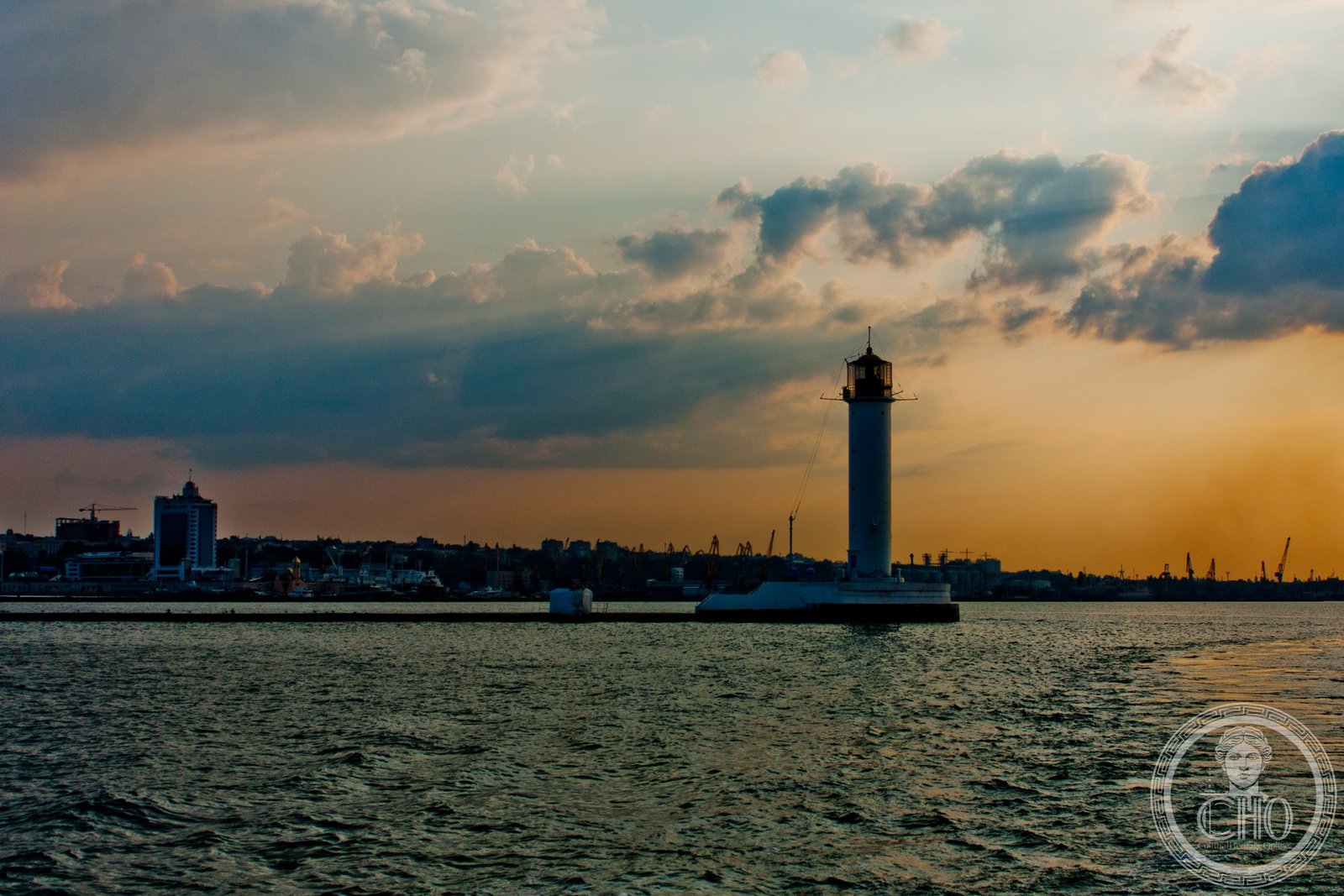
Founded by Catherine the Great in 1794 as the Russian Empire’s great southern port, Odesa grew into the most cosmopolitan city of the Black Sea — a neoclassical grid alive with Greek, French, Jewish, Italian, and Ottoman voices. UNESCO inscribed it in 2023, simultaneously placing it on the Danger List as Russian missiles struck the city.
At a glance
The historic centre of Odesa is an exceptional urban ensemble of 18th–20th century architecture on the northern shore of the Black Sea in Ukraine. From its foundation in 1794, the city was designed as a cosmopolitan commercial metropolis: an international port where Greek merchants, Jewish traders, French engineers, Italian architects, and Ottoman merchants created one of Europe’s most culturally layered cities. Its UNESCO inscription in 2023 — made simultaneously to the World Heritage List and the List of World Heritage in Danger, only the third time in UNESCO history — was an emergency measure prompted by the Russian military campaign against Ukraine and the direct missile damage already inflicted on the city’s heritage buildings.
Key facts
- UNESCO inscription: 2023 (World Heritage List and List of World Heritage in Danger simultaneously — only the third case in UNESCO history)
- Founded: 1794 CE by decree of Catherine the Great
- Founders’ architects: José de Ribas (Spanish-born general), Franz de Vollan (Dutch engineer), Thomas de Thomon (French architect), Franz Boffo (Italian architect)
- Potemkin Stairs: 193 steps, 1841–42; made globally famous by Eisenstein’s 1925 film Battleship Potemkin
- Odesa Opera and Ballet Theatre: designed by Viennese firm Fellner and Helmer, inaugurated 1887
- Coordinates: 46.4825°N, 30.7233°E (Potemkin Steps)
History
The site of Odesa was a small Ottoman fortress called Khadjibey when Catherine the Great’s forces captured it in 1789. After a second Russian-Ottoman war, the Empress decreed the founding of a new city on the site in 1794, named after the ancient Greek colony of Odessos (thought to be nearby — though scholars debate the location). The city was to be Russia’s great southern port, a rival to Constantinople.
The men who built Odesa were all foreigners. José de Ribas, the Spanish-born admiral who captured the Ottoman fort, gave his name to Deribasivska Street — still the city’s main promenade. The Dutch hydraulic engineer Franz de Vollan laid out the street grid. French architects Thomas de Thomon and subsequently Italian-born Franz Boffo designed its public buildings. The first governor, Armand-Emmanuel de Richelieu (a French duke who had fled the Revolution), governed from 1803 to 1815 and transformed Odesa into a genuinely cosmopolitan port city under a free-trade regime — the porto franco — that made it the fastest-growing city in the Russian Empire in the early 19th century.
Odesa’s cosmopolitan character was more than a political flourish. By 1850 the city had substantial Greek, Jewish, French, Italian, Polish, and German communities alongside Ukrainians and Russians. Its Jewish quarter, centred on Moldavanka, was one of the largest in the Empire — home to the Zionist movement’s early intellectual ferment (Jabotinsky was born here in 1880). The city produced Sholem Aleichem, the Bundist labour movement, and the revolutionary politics of 1905.
The Potemkin Stairs, built 1841–42 and designed to create a dramatic visual connection between the port and the city above, became immortal in Sergei Eisenstein’s 1925 film Battleship Potemkin, which recreated the Tsarist massacre of the 1905 uprising on these steps — an event that was fictional but became global historical memory.
The 20th century was brutal. Odesa suffered Romanian occupation and mass murder of its Jewish population during World War II. Soviet industrialization reshaped its port and southern districts. After 1991, Ukraine invested heavily in restoring the historic centre. Russia’s February 2022 invasion placed the city directly in the path of missile attacks. By the time UNESCO inscribed it in July 2023, several buildings in the historic centre had already been damaged or destroyed.
What you see
The historic centre is organized around a neoclassical grid. Primorsky Boulevard (formerly Nikolaevsky Boulevard) runs along the cliff above the port — a tree-lined promenade of empire-era mansions and institutional buildings that remains Odesa’s social and symbolic heart. At its eastern end, the Potemkin Stairs descend in a brilliant optical illusion: from the top, only landings are visible; from the bottom, only steps. The 193 steps take approximately three minutes to climb.
The Odesa National Academic Theatre of Opera and Ballet (1884–87) is the centrepiece of the historic centre — a Viennese Baroque confection designed by the firm Fellner and Helmer (who also designed the Vienna Volksoper and over 40 other European opera houses). Its interior, restored in the Soviet period and again after 1991, retains its original gilded horseshoe auditorium.
Deribasivska Street — named for de Ribas — is the pedestrianized main street, lined with 19th-century mansions in the eclectic Italian-French-Russian style typical of Odesa. The Passage (1899–1900) is the city’s most opulent commercial building, an arcade of shops under a glass roof. The Moldavanka district retains some of its 19th-century Jewish merchant character despite wartime damage.
The Odesa Archaeology Museum (founded 1825) is one of the oldest museums in Ukraine, with exceptional collections of Black Sea Greek antiquities, Scythian gold, and Egyptian artefacts — much of which has been moved to safety.
Practical information
- Warning: Odesa is in an active conflict zone; check current travel advisories before visiting. The UNESCO Danger listing reflects ongoing risk to the city’s heritage
- Opera Theatre: performances continue when security permits; check the theatre website for schedules
- Potemkin Stairs: freely accessible; funicular connecting stairs to harbour (when operational)
- Odesa Archaeology Museum: verify opening hours; collections partially evacuated
- Deribasivska Street: pedestrianized; lined with cafes and 19th-century architecture; City Garden at western end
Getting there
Odesa International Airport (ODS) is currently closed due to the conflict. Surface access is via train from Kyiv (approximately 7–9 hours) or by road. Check current Ukrainian government advisories and FCDO/State Department guidance before planning any visit. When access is restored, Odesa is best explored on foot; the historic centre is compact, roughly 2 km east–west and 1 km north–south on the cliff above the port.
Nearby
The Odesa region’s coastline includes the Bessarabian steppe landscape and the Danube Delta — a UNESCO Biosphere Reserve shared with Romania and among the largest river deltas in Europe. The wine-producing region around Shabo, 70 km southwest, produces wines from a French-introduced viticulture tradition established in the 19th century under the Odesa porto franco era.
Sources
- UNESCO World Heritage Committee, Historic Centre of Odesa, inscription 2023, Decision 45 COM 8C.2 (emergency inscription)
- Patricia Herlihy, Odessa: A History, 1794–1914, Harvard University Press, 1986
- Steven Zipperstein, The Jews of Odessa: A Cultural History, 1794–1881, Stanford University Press, 1985
- Wikipedia, Odesa (accessed 2026)
Find it on the map
See this place and what’s around it →📷 Become a Cultural Heritage Online photographer
Share your photos of places: they stay published under your name as the author. The more they're seen, the more you get noticed — and soon a contest will reward the most appreciated photos.
Log in or sign up free to add a photo