
Eleven penal sites across Australia and Norfolk Island document the largest forced migration for penal purposes in history: 166,000 British convicts transported between 1788 and 1868 CE, whose labour built a nation and whose stories shaped modern Australia.
At a glance
The Australian Convict Sites UNESCO World Heritage property, inscribed in 2010, is a serial site comprising 11 locations: Port Arthur and Coal Mines Historic Site in Tasmania, Hyde Park Barracks and Old Government House in Parramatta, Cockatoo Island in Sydney Harbour, Brickendon and Woolmers Estates in Tasmania, Kingston and Arthurs Vale Historic Area on Norfolk Island, and Fremantle Prison in Western Australia. Together they present the complete arc of the convict transportation system from arrival and forced labour to punishment, rehabilitation attempts, and eventual emancipation.
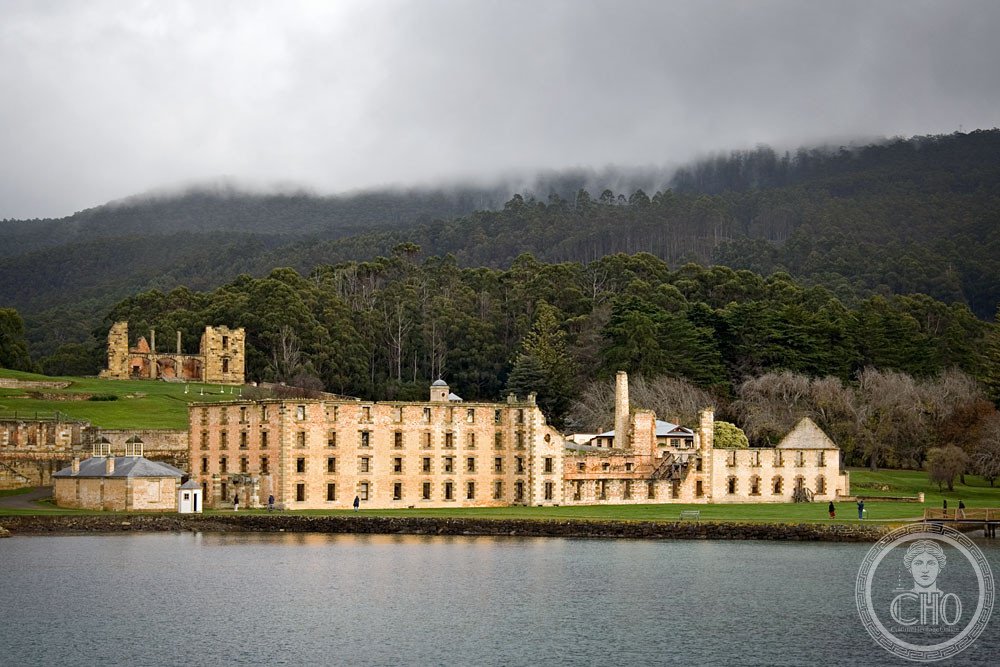
Port Arthur in Tasmania is the most visited and most complete of the 11 sites. Its 30-plus surviving buildings, set on a peninsula of dramatic Tasmanian coastal scenery, form the best-preserved convict settlement in the world.
Key facts
- UNESCO inscription: 2010, serial property
- Component sites: 11, across New South Wales, Western Australia, Tasmania, and Norfolk Island
- Transportation period: 1788 to 1868 CE
- Total convicts transported: approximately 166,000 in 806 voyages
- Origin: British Empire, England, Ireland, Scotland, Wales
- Primary site: Port Arthur, Tasman Peninsula, Tasmania
- Port Arthur operating years: 1830 to 1877 CE
History
Transportation of convicts to Australia began in 1788 when the British government sought an alternative to the American colonies as a destination for transported prisoners following the American Revolution. The First Fleet of 11 ships arrived at Botany Bay on 18 January 1788 carrying 736 convicts alongside their military guards, establishing the colony of New South Wales.
Over 80 years the transportation system grew into a vast apparatus of imperial justice and colonial labour. Convicts were sentenced for terms of 7 years, 14 years, or life for crimes ranging from theft to political dissent. Irish rebels transported after the 1798 uprising, Luddites who smashed textile machinery, and Chartists who demanded democratic reform all arrived alongside pickpockets and burglars.
Port Arthur was established in 1830 on the Tasman Peninsula as a timber station, quickly growing into the main penal settlement for secondary offenders. By the 1840s it housed over 1,100 prisoners and included a church, hospital, model prison, school, and extensive farms and workshops. The Separate Prison, built between 1848 and 1852 and influenced by the Philadelphia System of penal reform, isolated prisoners in individual cells to promote moral reformation through solitude and silence, an experiment now understood as psychologically devastating.
Transportation to eastern Australia ended in 1840 following widespread free-settler opposition. The last convict ship arrived in Western Australia in 1868, and Port Arthur closed as a penal settlement in 1877.
What you see
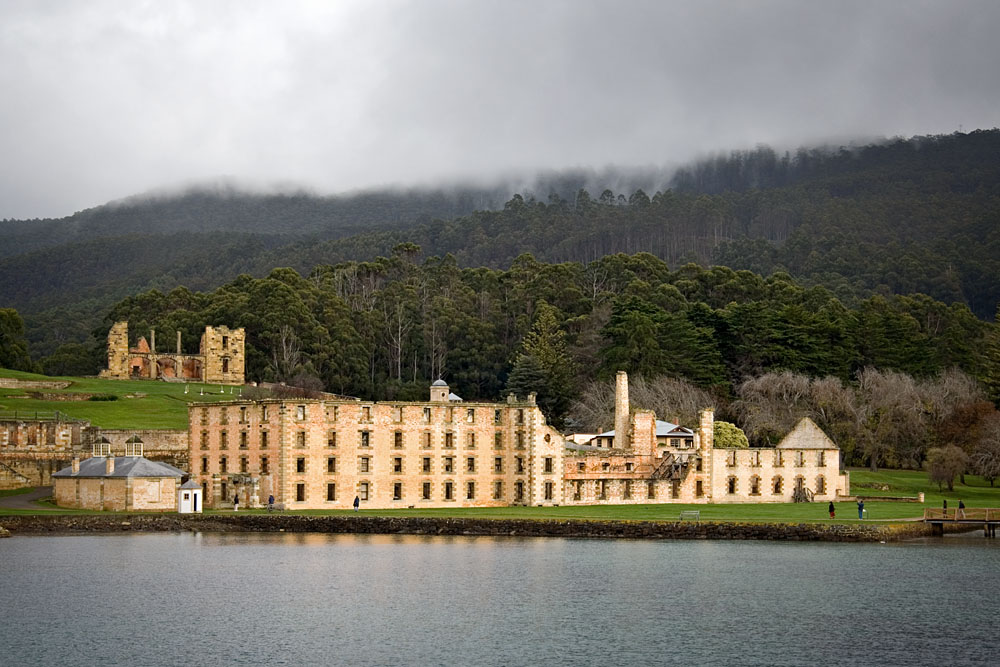
At Port Arthur, the defining structure is the Penitentiary, a vast four-storey flour mill converted into prisoner accommodation in 1848 capable of housing 480 men. The roofless shell retained after an 1897 fire has become the iconic image of the site. The intact Separate Prison allows visitors to experience the silence and isolation Victorian reformers believed would transform criminals.
The Church of St David from 1836, designed partly by convict architect William Beilby, stands roofless but structurally complete, its Gothic Revival arches framing the sky. The Commandant House from 1833, hospital, model school, and guard tower complete the ensemble of approximately 30 surviving structures across the 40-hectare peninsula.
In Sydney, Hyde Park Barracks from 1819, designed by Francis Greenway, a convict transported for forgery who became Australia first professional architect, is now a museum. Its elegant Georgian facade conceals dormitories where up to 600 male convicts slept in hammocks stacked three high. In Fremantle, the substantial limestone prison served from 1855 to 1991, making it the most recently operational of the inscribed sites.
UNESCO significance
The UNESCO inscription recognised the Australian Convict Sites as places of Outstanding Universal Value for three reasons: they are the best surviving examples of large-scale convict transportation and colonial expansion into the Pacific; they represent an important interchange of human values about punishment and penal reform in the 19th century; and they are directly associated with the founding of modern Australia as a nation.
The inscription acknowledges the contested nature of the legacy. For many Australians, especially those with convict ancestry estimated at over 20 percent of the population, the sites are part of a family story once considered shameful but now a source of pride and identity. For Aboriginal Australians, the arrival of the First Fleet represents the beginning of dispossession, a dimension the sites are increasingly required to address.
Practical information
Port Arthur Historic Site is open daily, located 100 km from Hobart via the Arthur Highway. Entry fees include access to the grounds and buildings; guided tours, harbour cruises, and evening ghost tours are available at extra cost. The site has a visitor centre, cafe, and heritage hotel accommodation. Hyde Park Barracks Museum in Sydney charges admission. Fremantle Prison in Western Australia offers day and night tours. Brickendon and Woolmers estates in Tasmania are still working farms with heritage accommodation.
Getting there
Port Arthur is accessible by car from Hobart in approximately 90 minutes via the Arthur Highway. Tour buses from Hobart operate daily. The Tasman Peninsula offers the Three Capes Track, one of Australia great long-distance coastal walks, beginning near the convict coal mines at Saltwater River. Hyde Park Barracks is in central Sydney near St James Station. Fremantle Prison is a short walk from Fremantle train station, 30 minutes from Perth city centre.
Nearby
The Tasman Peninsula combines Port Arthur with extraordinary natural scenery: the Tasman Arch, Tessellated Pavement, and Remarkable Cave are within 20 km. The Coal Mines Historic Site at Saltwater River, another of the 11 inscribed properties, is 45 km from Port Arthur and preserves ruins of an underground mine worked by convicts from 1833. Hobart offers MONA, the Museum of Old and New Art, one of Australia most acclaimed contemporary art museums housed in a subterranean gallery above the Derwent River.
Sources
- UNESCO World Heritage List: Australian Convict Sites, whc.unesco.org
- Port Arthur Historic Site official site, portarthur.org.au
- Hyde Park Barracks Museum, Museum of Applied Arts and Sciences, maas.museum
- Wikipedia: Australian Convict Sites, Port Arthur Tasmania, Transportation to Australia
- Hughes, Robert. The Fatal Shore. Collins Harvill, 1987.
Gallery
Find it on the map
See this place and what’s around it →📷 Become a Cultural Heritage Online photographer
Share your photos of places: they stay published under your name as the author. The more they're seen, the more you get noticed — and soon a contest will reward the most appreciated photos.
Log in or sign up free to add a photo