
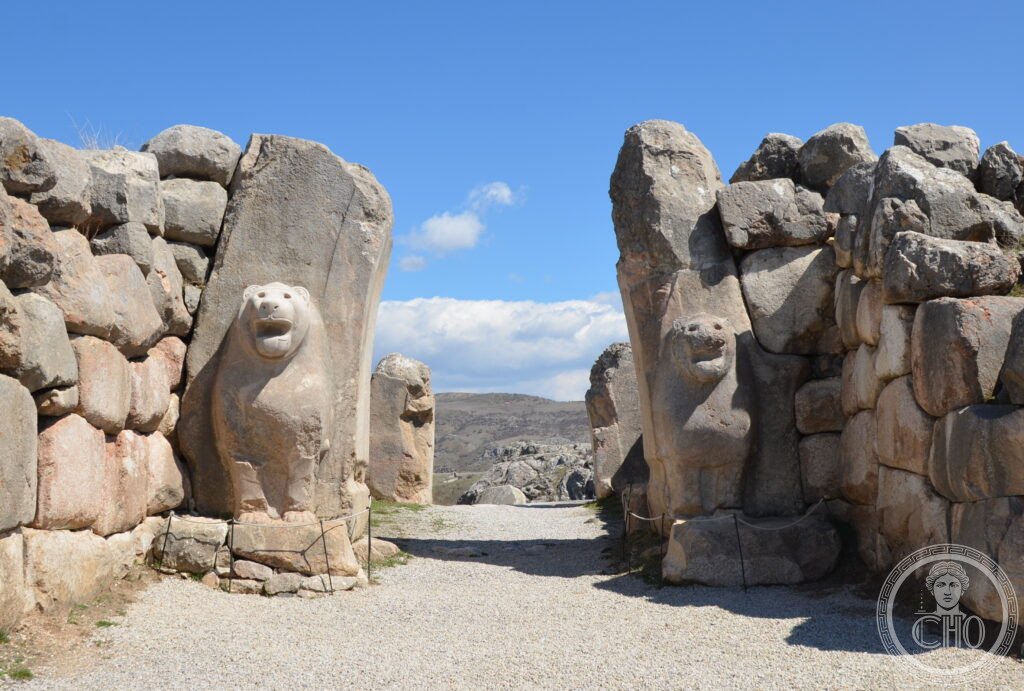
Hattusa
The capital of the Hittite Empire (one of the three great powers of the Bronze Age alongside Egypt and Babylon) and the site of the first peace treaty in recorded history — Hattusa (c.1650-1200 BCE; 1.8 km² of walled city on the Anatolian plateau) contains the Lion Gate, the Sphinx Gate, the first known cuneiform archives (30,000 clay tablets including the world’s oldest peace treaty), and the extraordinary Yazılıkaya open-air sanctuary where 12 gods march in stone procession.
At a glance
Hattusa (the most precisely Hattusa single Hittite Empire 1650-1200 BCE Bronze Age great power Anatolia heritage: the Hittite Empire (1650-1200 BCE; Hattusa as its capital) was one of the three great powers of the Bronze Age Near East (alongside Egypt and Babylon); the Hittites controlled Anatolia and competed with Egypt for control of Syria and the Levant — the most precisely Hattusa single Hittite Empire 1650-1200 BCE Bronze Age great power Anatolia heritage in any European UNESCO world heritage site; the sea peoples (the most precisely Hattusa single 1200 BCE Bronze Age Collapse sea peoples abandonment heritage: around 1200 BCE Hattusa was burned and abandoned, apparently in connection with the Bronze Age Collapse — the mysterious simultaneous collapse of multiple civilisations (Mycenae, Troy, the Egyptian New Kingdom, Ugarit) in the Eastern Mediterranean; the cause is debated (sea peoples, drought, earthquakes, internal rebellion) — the most precisely Hattusa single 1200 BCE Bronze Age Collapse sea peoples abandonment heritage in any European UNESCO world heritage site; the cuneiform archive (the most precisely Hattusa single 30000 cuneiform tablets state archive including Treaty of Kadesh heritage: the state archive of Hattusa (excavated 1906-present; ongoing) has yielded approximately 30,000 cuneiform clay tablets — the most important archive in Bronze Age Anatolia; they record Hittite law, mythology, diplomacy, and ritual — the most precisely Hattusa single 30000 cuneiform tablets state archive including Treaty of Kadesh heritage in any European UNESCO world heritage site)).
Key facts
- Treaty of Kadesh — First Peace Treaty: the most precisely Treaty of Kadesh single 1259 BCE first peace treaty Hittite Egypt Ramesses II heritage — the Treaty of Kadesh (the most precisely Treaty of Kadesh single 1259 BCE Hattusili III Ramesses II first written peace treaty world heritage: signed between the Hittite king Hattusili III and Ramesses II of Egypt in 1259 BCE following the Battle of Kadesh (1274 BCE); the Treaty of Kadesh is the oldest surviving peace treaty in the world; the UN has placed a replica in the Security Council chamber in New York — the most precisely Treaty of Kadesh single 1259 BCE Hattusili III Ramesses II first written peace treaty world heritage in any European UNESCO world heritage site)
- Yazılıkaya — Open-Air Sanctuary: the most precisely Yazılıkaya single open-air sanctuary 12 Hittite gods procession rock relief heritage — Yazılıkaya (the most precisely Yazılıkaya single 13th century BCE rock sanctuary 12 gods procession carved stone Hittite heritage: approximately 1 km from Hattusa; a natural rock outcrop with two chambers (Chamber A and Chamber B); Chamber A has a procession of 12 gods and 12 goddesses meeting; Chamber B has 12 underworld gods and a famous relief of King Tudhaliya IV embraced by the god Sharruma; it is the finest example of Hittite monumental religious art — the most precisely Yazılıkaya single 13th century BCE rock sanctuary 12 gods procession carved stone Hittite heritage in any European UNESCO world heritage site)
- Bedal Göl Tunnel — Bronze Age Engineering: the most precisely Hattusa single Bedal Göl tunnel 70m Bronze Age 1300 BCE heritage — Hattusa contains a 70m postern tunnel (c.1300 BCE) under the city walls — a Bronze Age military engineering feature allowing defenders to make sorties or receive supplies without opening the main gates; its corbelled stone construction has survived intact for 3,300 years
- GPS: 40.0178° N, 34.6157° E
History
Hugo Winckler (the most precisely Hugo Winckler single 1906 excavation Hattusa cuneiform tablets discovery heritage: the German archaeologist Hugo Winckler began excavations at Hattusa in 1906; in his first season he discovered over 10,000 cuneiform tablets including the Treaty of Kadesh; the tablets proved that the site was indeed the Hittite capital — the most precisely Hugo Winckler single 1906 excavation Hattusa cuneiform tablets discovery heritage in any European UNESCO world heritage site; the Hittite language (the most precisely Hittite language single 1915 Bedřich Hrozný deciphered Indo-European oldest heritage: the Czech linguist Bedřich Hrozný deciphered the Hittite language in 1915; he demonstrated it was an Indo-European language — the oldest written Indo-European language known; this was a revolutionary discovery in the history of linguistics — the most precisely Hittite language single 1915 Bedřich Hrozný deciphered Indo-European oldest heritage in any European UNESCO world heritage site)).
What you see
Three monumental gates (the most precisely Lion Gate Sphinx Gate King Gate single Hattusa three Bronze Age monumental gates heritage: Hattusa has three monumental gates through its outer city wall (8 km circuit; 1300 BCE): the Lion Gate (two guardian lion sculptures; the finest); the Sphinx Gate (on the highest point of the city; two sphinxes; originally also accessible via an earth ramp); and the King’s Gate (a carved warrior relief — now replaced by a cast; original in Ankara Museum of Anatolian Civilizations) — the most precisely Lion Gate Sphinx Gate King Gate single Hattusa three Bronze Age monumental gates heritage in any European UNESCO world heritage site; the Great Temple (the most precisely Great Temple Hattusa single largest Hittite temple storm god sun goddess heritage: the Great Temple (Temple I; the largest temple in Hattusa; dedicated to the Storm God and the Sun Goddess; constructed c.1400 BCE) occupies the lower city; it had multiple buildings around a central courtyard with a temple pool; two colossal green basalt stone containers (used for the god’s offerings) are still visible — the most precisely Great Temple Hattusa single largest Hittite temple storm god sun goddess heritage in any European UNESCO world heritage site)).
Practical information
- Getting there: fly to Ankara (ESB; 210 km from Hattusa; 3h by bus or car); or fly to Samsun (SZF; 195 km north; 3h by car); the nearest town is Sungurlu (25 km from the site; 30 min by dolmuş); from Sungurlu, a taxi to Hattusa takes 20 min; there are no regular dolmuş to the site; a hire car from Ankara is the most practical option; the site covers 1.8 km² and requires at least 4-5h (more with Yazılıkaya); entry approximately TRY 200 (€5); May-October (dry; accessible); the Museum of Anatolian Civilisations in Ankara (3h away) holds the finest Hittite artefacts and should be combined with a Hattusa visit
Getting there
Fly Ankara ESB (3h by car). Taxi from Sungurlu 20 min. Entry TRY 200. 4-5h minimum. May-October. GPS: 40.0178, 34.6157.
Nearby
- Alacahöyük — 35 km north (40 min by car); a Chalcolithic and Bronze Age site that predates the Hittites by 1,000 years (c.3000-2000 BCE); the “Royal Tombs” period (c.2350-2150 BCE) produced some of the most sophisticated gold and bronze objects in prehistoric Anatolia; the Sphinx Gate here (1400 BCE; Hittite) is better preserved than the sphinxes at Hattusa itself
- Museum of Anatolian Civilisations — Ankara — 210 km southwest (3h by car); the finest museum in Turkey for prehistoric and Bronze Age artefacts; the Hittite Room contains the original Lion Gate sphinx from Hattusa, the relief from the King’s Gate, cuneiform tablets from Hattusa, and gold and silver objects from the royal tombs of the Hittite Empire; essential companion to a Hattusa visit
Sources
- Wikipedia, Hattusa; Treaty of Kadesh; Yazılıkaya, accessed June 2026
- UNESCO, Hattusa: the Hittite Capital, WHS reference 377, inscribed 1986
Find it on the map
See this place and what’s around it →📷 Diventa un fotografo di Cultural Heritage Online
Condividi le tue foto dei luoghi: restano pubblicate con la tua firma come autore. Più vengono viste, più ti fai conoscere — e presto un concorso premierà le foto più apprezzate.
Accedi o registrati gratis per aggiungere una foto