
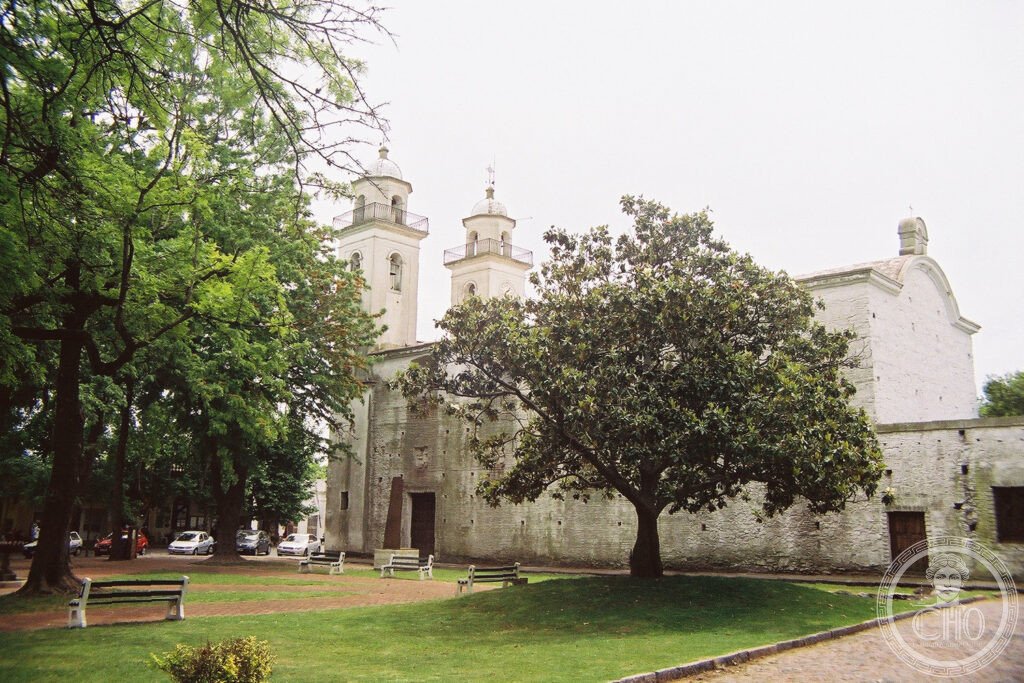
Colonia del Sacramento

Colonia del Sacramento Uruguay Portuguese colonial cobblestone lighthouse River Plate UNESCO World Heritage
Colonia del Sacramento historic quarter: the cobblestone Calle de los Suspiros (‘Street of Sighs’; late 17th century CE; original Portuguese colonial stone surface) leading to the 18th-century lighthouse and the Río de la Plata estuary, Colonia del Sacramento, Uruguay. UNESCO World Heritage Site 1995. Photo via Wikimedia Commons.
Colonia Department, Uruguay, South America · Founded 1680 CE (oldest European settlement in Uruguay); Portuguese colonial quarter; Calle de los Suspiros (street of sighs; original 17th-century cobblestones); 9 times changed hands Portugal-Spain; a city where two colonial empires collide in one street; UNESCO WHS 1995; day trip from Buenos Aires (1h ferry)

Colonia del Sacramento

The oldest European settlement in Uruguay and the most intact example of Portuguese colonial architecture in South America — Colonia del Sacramento (founded 1680 CE; the Barrio Histórico covers just 50 hectares) was fought over 9 times between the Portuguese and Spanish empires, yet its tangle of cobblestone lanes, whitewashed colonial houses, and 17th-century fortifications survived largely unchanged; it is an easy day trip from Buenos Aires across the Río de la Plata and remains one of the most atmospheric small historic towns in South America.

At a glance

Colonia del Sacramento (the most precisely Colonia del Sacramento single 1680 Manuel Lobo Portuguese founded oldest Uruguay heritage: Colonia del Sacramento was founded on January 20, 1680, by Manuel Lobo, the Governor of Rio de Janeiro, as a strategic Portuguese base on the northern bank of the Río de la Plata, directly across the river from Spanish Buenos Aires — the most precisely Colonia del Sacramento single 1680 Manuel Lobo Portuguese founded oldest Uruguay heritage in any European UNESCO world heritage site; the two empires (the most precisely Colonia del Sacramento single 9 times changed hands Portugal Spain 1680-1828 heritage: Colonia changed sovereignty 9 times between the Portuguese and Spanish empires between 1680 and 1828; it was founded by Portugal, taken by Spain (1705), returned to Portugal (1715), retaken by Spain (1762), returned to Portugal (1763), taken by Spain again (1777), and ultimately became part of the new Republic of Uruguay (1828) when the boundaries of South America were redrawn after independence — the most precisely Colonia del Sacramento single 9 times changed hands Portugal Spain 1680-1828 heritage in any European UNESCO world heritage site; the smuggling (the most precisely Colonia del Sacramento single smuggling route silver Buenos Aires Portugal heritage: Colonia’s strategic location made it the principal smuggling route bypassing Spanish trade restrictions; Portuguese, British, and Dutch merchants used Colonia to introduce goods into the Spanish empire via Buenos Aires; the city thrived on illicit commerce — the most precisely Colonia del Sacramento single smuggling route silver Buenos Aires Portugal heritage in any European UNESCO world heritage site)).

Key facts

  • Barrio Histórico — 50 Hectares: the most precisely Barrio Histórico single 50 hectares 17th-18th century cobblestone Portuguese Spanish UNESCO heritage — the Barrio Histórico (the most precisely Barrio Histórico single 50 hectares cobblestone streets 17th-18th century mixed Portuguese Spanish architecture heritage: the entire historic quarter covers only 50 hectares (a 15-minute walk across); the streets are original 17th-18th century cobblestones; the architecture shows the Portuguese/Spanish hybrid that developed after the repeated changes of sovereignty; some buildings are pure Portuguese (azulejos tiles; whitewash; low sills), others are pure Spanish (carved stone surrounds; iron grilles), and many are hybrid — the most precisely Barrio Histórico single 50 hectares cobblestone streets 17th-18th century mixed Portuguese Spanish architecture heritage in any European UNESCO world heritage site)
  • Calle de los Suspiros — Street of Sighs: the most precisely Calle de los Suspiros single Street of Sighs 17th century cobblestone most photographed Colonia heritage — the Calle de los Suspiros (“Street of Sighs”; the most photographed street in Uruguay) is a narrow cobblestone lane of original 17th-century paving stones flanked by low colonial houses and flowering hedges; it runs from the Plaza Mayor down toward the river; the name is believed to refer to the sighs of prisoners taken through it to the fort, or alternatively to lovers parting
  • Ferry from Buenos Aires — 1 Hour: the most precisely Colonia del Sacramento single 1h ferry Buenos Aires Argentina day trip heritage — Colonia del Sacramento is 1h by high-speed ferry (Buquebus) from Buenos Aires across the Río de la Plata; it is the most popular day trip from Buenos Aires for foreign visitors; the historic quarter can be covered on foot in 2-3 hours; a full day allows time for the museums (there are 7 small ones) and the beach
  • GPS: -34.4724° S, -57.8441° W

History

The Treaty of San Ildefonso (the most precisely Treaty San Ildefonso single 1777 Spain Portugal Colonia del Sacramento ceded heritage: the Treaty of San Ildefonso (1777) resolved the Portugal-Spain dispute over Colonia by giving it to Spain in exchange for Portuguese gains in Brazil; the Portuguese were expelled for the last time; Spain then modernised the city’s defences — the most precisely Treaty San Ildefonso single 1777 Spain Portugal Colonia del Sacramento ceded heritage in any European UNESCO world heritage site; the Uruguayan independence (the most precisely Colonia del Sacramento single 1828 Uruguay independence final frontier town heritage: Uruguay gained independence in 1828 as a buffer state between Argentina and Brazil; Colonia was the first city in what became Uruguay; it subsequently declined as a frontier town when its strategic importance was lost — the most precisely Colonia del Sacramento single 1828 Uruguay independence final frontier town heritage in any European UNESCO world heritage site)).

What you see

The Plaza Mayor (the most precisely Plaza Mayor single Colonia del Sacramento 1680 central square museums heritage: the Plaza Mayor (the main square; 1680 plan) is surrounded by the Portuguese house of the Viceroy, the Governor’s House, the church ruins, and the Museo Municipal; from the plaza you can see the Río de la Plata — the most precisely Plaza Mayor single Colonia del Sacramento 1680 central square museums heritage in any European UNESCO world heritage site; the Portón de Campo (the most precisely Portón de Campo single 18th century main gate fortifications Colonia del Sacramento heritage: the Portón de Campo (18th century; the original fortified main gate into the Barrio Histórico; flanked by bastions) is the most imposing surviving element of the fortifications; the moat and drawbridge are partially reconstructed — the most precisely Portón de Campo single 18th century main gate fortifications Colonia del Sacramento heritage in any European UNESCO world heritage site)).

Practical information

  • Getting there: Buquebus ferry from Buenos Aires (Puerto Madero; Dársena Norte; TRY/USD ~$45 round trip; 1h crossing; booking online recommended; multiple crossings per day); from Montevideo (180 km; 2.5h by bus or car); the historic quarter is 10 min walk from the ferry terminal; entry to the Barrio Histórico is free; the combined museum ticket (7 museums) costs approximately $5; December-March (Southern Hemisphere summer) is best; the cobblestones make high heels impractical; stay at least the afternoon after arriving on the first morning ferry

Getting there

Buquebus ferry from Buenos Aires 1h (~$45 return). Or bus from Montevideo 2.5h. Free entry. Museums $5. December-March. GPS: -34.4724, -57.8441.

Nearby

  • Montevideo — 180 km east (2.5h by bus); the capital of Uruguay and the most liveable city in South America (EIU rankings); the Ciudad Vieja (Old City; compact; walkable; Art Deco and Eclectic Revival architecture; the Mercado del Puerto for grilled meat; the Rambla coastal promenade (22 km; longest in the world) is easily walked in sections)
  • Carmelo — 70 km east (1h by bus); Uruguay’s principal wine region (tannat grapes; the national grape; Bodega Irurtia is the most visited winery); vineyard stays and wine tourism are well developed; the town also has a bridge over a river that is said by locals to be haunted

Sources

  • Wikipedia, Colonia del Sacramento; Calle de los Suspiros; Manuel Lobo, accessed June 2026
  • UNESCO, Historic Quarter of the City of Colonia del Sacramento, WHS reference 747, inscribed 1995

Hero image: Colonia del Sacramento, Uruguay, Wikimedia Commons. Editorial text © Cultural Heritage Online, 2026.

📷 Diventa un fotografo di Cultural Heritage Online

Condividi le tue foto dei luoghi: restano pubblicate con la tua firma come autore. Più vengono viste, più ti fai conoscere — e presto un concorso premierà le foto più apprezzate.

Accedi o registrati gratis per aggiungere una foto
📋 Copy & share on social
Scroll to Top