
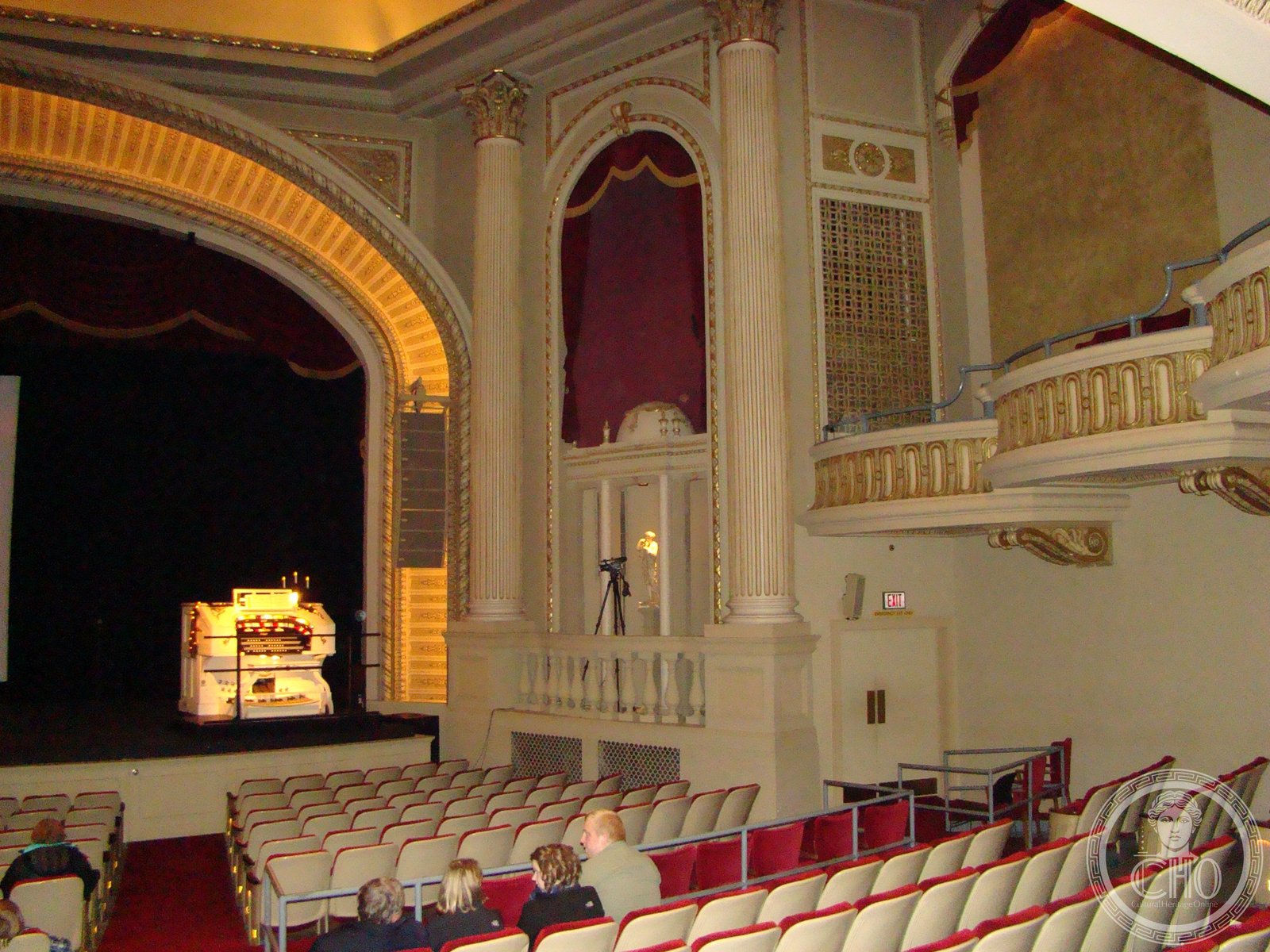
Built in 1927 on North Fourth Street in the commercial heart of Wausau, Wisconsin, the Grand Theatre has served Marathon County’s performing arts community for nearly a century — a 1920s movie palace in a north-central Wisconsin city whose lumber and paper economy underwrote the ambition its name announces.
At a glance
Wausau occupies a bend of the Wisconsin River in Marathon County, roughly in the geographic center of Wisconsin — a position that made it the natural commercial capital of the north-central region as the lumber industry moved through the river valley in the second half of the nineteenth century and the paper mills that replaced the sawmills established a more permanent industrial base. The city that grew up to serve this economy had, by 1927, generated sufficient prosperity and civic ambition to build a theater whose name asserted its regional pretensions directly: the Grand. The building has operated continuously as a performing arts venue through the full arc of the twentieth and early twenty-first century, adapting its programming from cinema to live performance as the regional entertainment economy required, and remains the primary professional performance space for the Wausau area and its surrounding rural communities.
Key facts
- Built: 1927.
- Style: 1920s atmospheric / eclectic ornamental.
- Address: 401 North Fourth Street, Wausau, Wisconsin 54403.
- County: Marathon County, north-central Wisconsin.
- Current use: Performing arts center.
- GPS: 44.9610° N, −89.6290° W.
History
Wausau’s relationship with the Wisconsin River is foundational to its history. The river’s flow through the valley — sufficient for log driving and for mill power — attracted the lumber operators who began harvesting the north-central Wisconsin pine forests in the 1840s and 1850s. By the time the Grand Theatre was built in 1927, the old-growth timber had been largely cleared, but the transition to paper manufacturing had maintained the industrial base: the Wisconsin River’s consistent flow served the paper mills’ water needs as effectively as it had served the sawmills, and the industry that replaced logging had been running for decades. The city’s population, economy, and civic infrastructure reflected a mature industrial community rather than a frontier settlement.
The decision to build a substantial theater in 1927 in a city of Wausau’s size reflects the cultural ambitions of the prosperous industrial small city in the 1920s. The decade was one of expanding consumer spending, and the entertainment economy was one of the primary destinations for that spending. The movie palace formula — ornate surroundings, a sense of occasion, an architecture that distinguished the cinema from the everyday commercial environment — was being executed in cities of Wausau’s size across the country, as regional theater operators recognized that small-city audiences had the same appetite for the movie palace experience as large-city audiences.
The subsequent transformation from cinema to performing arts center followed a trajectory common to hundreds of American movie palaces. The Grand’s survival in continuous operation, rather than conversion or demolition, reflects the strength of community commitment to live performance in Wausau — a city that has sustained a professional symphony orchestra (the Wausau Symphony) and a performing arts presentation series through the full post-cinema era.
What you see
The Grand Theatre’s North Fourth Street facade is an ornamental composition in the vocabulary of the 1920s movie palace: the decorative program is concentrated at the upper facade and the entrance canopy, with the scale and ambition of a building designed to signal its function from the street. The interior, which has been maintained and periodically renovated to preserve its original decorative character while meeting contemporary technical and accessibility standards, retains the proportions and ornamental richness that the 1920s movie palace formula prescribed.
Fourth Street in downtown Wausau runs through the commercial core of the city; the Grand’s placement on this street gave it visibility to the full pedestrian traffic of the downtown, and the building’s name above the entrance established its claim to be the principal entertainment venue of the region. The theater’s survival on this street through nearly a century of urban change marks the continuity between the industrial Wausau that built it and the contemporary city that maintains it as a regional cultural institution.
Practical information
- Events: Broadway touring productions, concerts, Wausau Symphony Orchestra, community events; check the Grand Theatre Wausau calendar.
- Tickets: available online and at the box office.
- Parking: surface lots and street parking in downtown Wausau around Fourth Street.
- Time needed: allow time for the performance plus a walk along Fourth Street’s commercial blocks toward the Wisconsin River waterfront.
Getting there
Central Wisconsin Airport (CWA) in Mosinee is approximately 12 miles south of downtown Wausau via US Highway 51; the airport connects to Chicago O’Hare and Minneapolis with connections to major hubs. Interstate 39 (also US 51) passes through the western edge of Wausau; the downtown core is a short drive east from the highway via Stewart Avenue. Highway 29 connects Wausau east to Green Bay (approximately 90 miles) and west to Eau Claire (approximately 110 miles).
Nearby
- Rib Mountain State Park — one of the highest points in Wisconsin (1,940 feet), with year-round recreation including skiing at Granite Peak in winter; the quartzite ridge is a billion-year-old monadnock rising abruptly from the Wisconsin River plain; approximately 5 miles southwest of downtown Wausau.
- Marathon County Historical Society Museum — regional history collections documenting the lumber era, paper industry, and Wausau’s German and Finnish immigrant communities; downtown location on McIndoe Street.
- Leigh Yawkey Woodson Art Museum — known for its annual Birds in Art exhibition and its decorative arts collection; a significant regional art museum in Wausau’s residential district; 1 mile west of downtown on Franklin Street.
- Wisconsin River Whitewater — the Class IV rapids in the Wisconsin River through Wausau’s Marathon Park have hosted national kayak and canoe competitions; paddling access at Marathon Park, 1 mile west of downtown.
Sources
- Grand Theatre Wausau — operating history and programming.
- Marathon County Historical Society — Wausau commercial and industrial history.
- Wisconsin Historical Society — statewide theater and commercial building surveys.
- Wisconsin Department of Natural Resources — Wisconsin River watershed history.
- Wikimedia Commons — building image.
Find it on the map
See this place and what’s around it →Record researched and written by Luigi De Marchi for Cultural Heritage Online, 2026.
📷 Become a Cultural Heritage Online photographer
Share your photos of places: they stay published under your name as the author. The more they're seen, the more you get noticed — and soon a contest will reward the most appreciated photos.
Log in or sign up free to add a photoIs this page about you?
This page is read by travellers and heritage enthusiasts who find it on Google. Tell us how you are connected to this place and we will take it from there.