
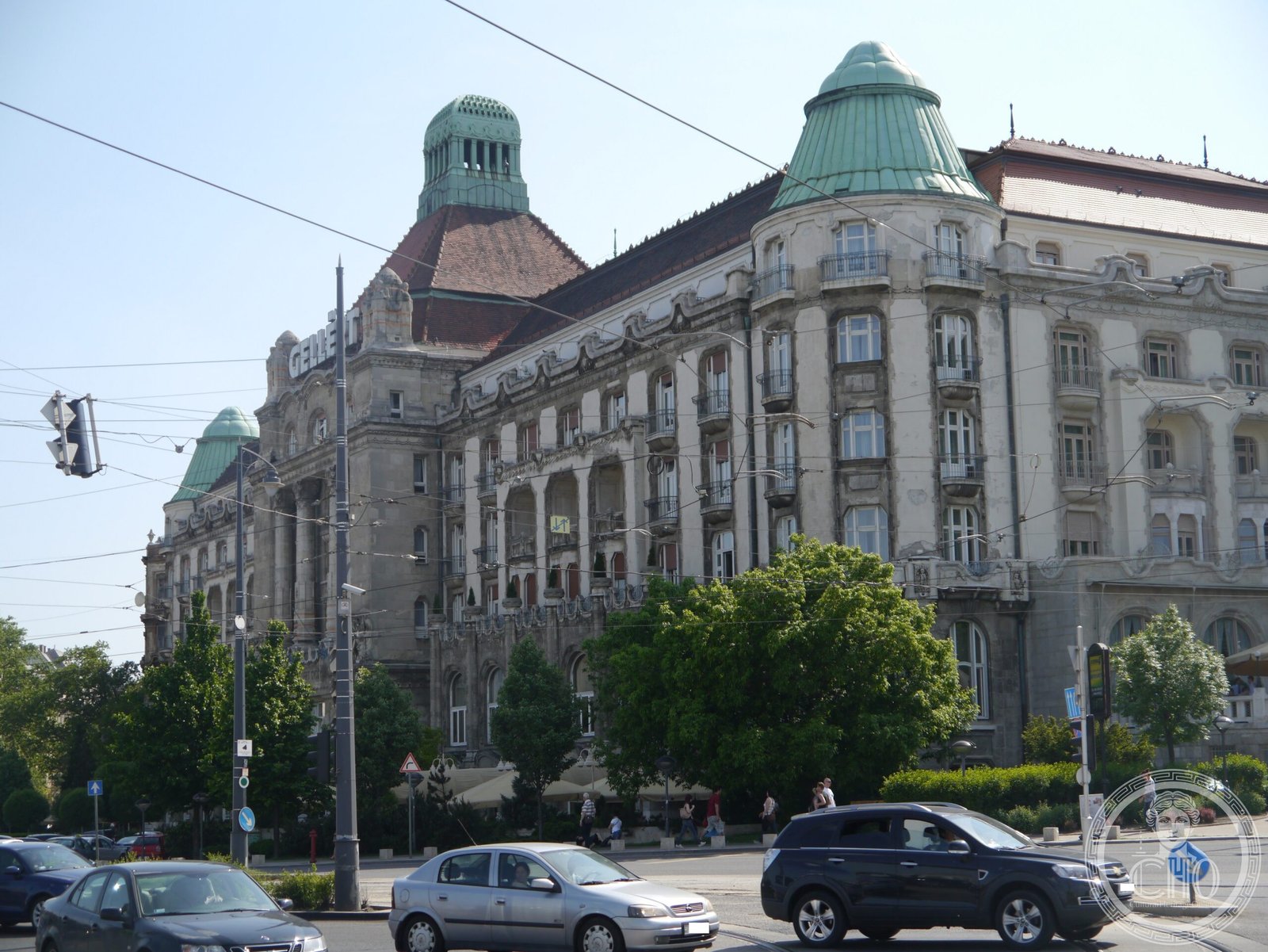
Spring water has been drawn here since the Middle Ages. The Secession gave it a palace.
At a glance
The Gellért Thermal Baths form part of the Hotel Gellért at Szent Gellért tér 1, at the Buda foot of the Liberty Bridge. Built between 1912 and 1918 in the Hungarian Secession style to designs by Artúr Sebestyén, Ármin Hegedűs and Izidor Sterk, the complex is among the finest Art Nouveau bath buildings in Europe. Its mineral springs were known long before; the modern building gave them a glass-roofed central hall, mosaic-tiled pools and richly coloured ceramic decoration. The baths closed in October 2025 for a major restoration, with reopening planned for 2028.
Key facts
- Architects: Artúr Sebestyén, Ármin Hegedűs, Izidor Sterk
- Built: 1912–1918
- Address: Szent Gellért tér 1, District XI, Budapest
- Part of: the Hotel Gellért complex
- Features: glass-roofed hall, mosaic tiling, Zsolnay ceramics
- Status: closed October 2025 for restoration; reopening planned 2028
History
The site has a long bathing history: medieval records mention healing waters here, and under Ottoman rule a bath stood on the spot, known in Hungarian as the Sáros (“muddy”) bath for the fine spring silt that settled in its pools. When the Liberty Bridge was built in the 1890s the old bath was demolished, and the city soon resolved to expropriate the springs and site for a grand new complex.
The Hotel Gellért and its baths rose between 1912 and 1918, late in the life of the Hungarian Secession; in the final year of the First World War, Russian prisoners of war worked on the construction. The completed bath was the capital’s first luxury-class spa.
Bombed late in the Second World War, the baths lost the Zsolnay pyrogranite facade of the women’s section and much wooden interior, and were rebuilt more plainly. A full restoration in 2008 returned much of the original splendour, before the building closed again in 2025.
What you see
The heart of the building is the indoor hall, where a barrel of glass and iron throws daylight onto galleries and a long pool lined with mosaic. Around it, ceramic columns and tilework carry the warm palette of the Hungarian Secession.
The domes outside swell with a baroque curve, and surviving stained glass from the Róth workshop catches the light in the men’s section. Even half-empty, the building reads as a temple to water rather than a mere swimming bath.
Practical information
- The baths are closed for restoration, with reopening planned for 2028 — check before travelling.
- The exterior and the Hotel Gellért facade remain visible from Szent Gellért tér.
- The setting, at the foot of Gellért Hill, rewards a walk up to the Citadella.
- Time needed: 15 minutes for the exterior while closed.
Getting there
The baths sit at Szent Gellért tér on the Buda bank, served by the M4 metro and by trams crossing the Liberty Bridge from Pest.
Nearby
- Gellért Hill and the Citadella.
- The Liberty Bridge and the Great Market Hall across the river.
- The Cave Church in the hillside above the baths.
Sources
- Wikipedia (EN/HU), “Gellért Baths / Gellért gyógyfürdő”.
- Hungarian heritage monument register.
- Budapest spa institutional information.
Find it on the map
See this place and what’s around it →Record researched and written by Luigi De Marchi for Cultural Heritage Online, 2026.
📷 Become a Cultural Heritage Online photographer
Share your photos of places: they stay published under your name as the author. The more they're seen, the more you get noticed — and soon a contest will reward the most appreciated photos.
Log in or sign up free to add a photoIs this page about you?
This page is read by travellers and heritage enthusiasts who find it on Google. Tell us how you are connected to this place and we will take it from there.