

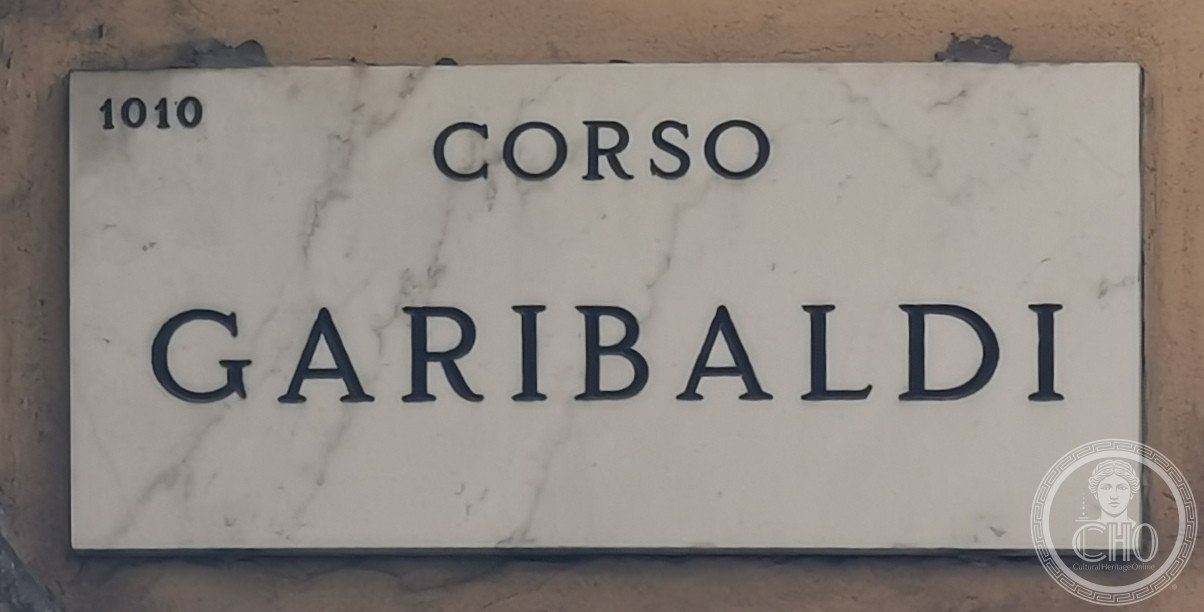
Corso Giuseppe Garibaldi is one of Milan’s oldest and most celebrated streets, running northward from Largo la Foppa through the Brera district toward Porta Garibaldi. Named in 1860 after the national hero Giuseppe Garibaldi, it follows a route already established in medieval times as the main road leading out of the city toward Como. Today the corso is known for its mix of 18th- and 19th-century palazzi, independent boutiques, galleries, and some of the city’s most historic bars and restaurants, making it one of the liveliest axes of central Milan.
At a glance
- Type
- Historic urban corso (street)
- Period
- Medieval origins; current urban form 18th–19th century
- Style
- Neoclassical and Eclectic street architecture
- Location
- Brera district, Milan, Lombardy, Italy
- Coordinates
- 45.4758° N, 9.1838° E
- Notable features
- Historic churches, patrician palazzi, Brera art quarter proximity
Overview
Corso Garibaldi stretches roughly 700 metres through the Brera neighbourhood, connecting the ancient city core to the Porta Garibaldi railway hub and the Isola district beyond. The street is lined with a dense fabric of palazzi dating from the 17th to early 20th centuries, punctuated by the facades of several Baroque and Neoclassical churches. It forms part of the broader Brera pedestrian network that centres on the Pinacoteca di Brera, one of Italy’s foremost art galleries.
History
The route of Corso Garibaldi corresponds to the ancient Strada per Como, the main northern exit from the Roman city of Mediolanum. During the medieval and Renaissance periods the street was known as Corso di Porta Comasina after the city gate it led to. In 1860, following Garibaldi’s expedition and the unification movement, Milan renamed the street in his honour. The 19th century brought significant architectural upgrading of the facades along the route, as patrician families rebuilt their palazzi in Neoclassical and Eclectic styles in line with the expanding modern city.
What you see
Walking north from Largo la Foppa, the visitor passes the church of Santa Maria Incoronata (15th century, notable for its double-nave structure), several Liberty-style apartment buildings, and a succession of 18th-century courtyard palazzi with arched portals. The street widens at Piazza XXV Aprile, where a triumphal arch commemorates the Porta Garibaldi. The facades display a textbook evolution of Milanese urban architecture from the Baroque through the early 20th century.
Cultural significance
Corso Garibaldi is an index of Milan’s urban memory: its streetline preserves the footprint of the Roman and medieval city beneath layers of Baroque and Neoclassical remodelling. Together with Via Brera and Corso Como, it defines the cultural axis of the Brera district, which hosts the Accademia di Belle Arti di Brera, the Pinacoteca, and some of Milan’s most concentrated gallery culture.
Practical information
- Address
- Corso Giuseppe Garibaldi, 20121 Milano MI
- Opening hours
- Public street, always accessible
- Admission
- Free; individual museums and galleries along the route charge separate entry fees
Getting there
Metro M2 (green line) to Moscova or Garibaldi FS station, both within a short walk of the corso. Tram lines 2 and 4 run along adjacent streets. The corso is fully pedestrian-friendly and connects to the wider Brera walking circuit around the Pinacoteca.
Sources & resources
Find it on the map
See this place and what’s around it →📷 Become a Cultural Heritage Online photographer
Share your photos of places: they stay published under your name as the author. The more they're seen, the more you get noticed — and soon a contest will reward the most appreciated photos.
Log in or sign up free to add a photo