

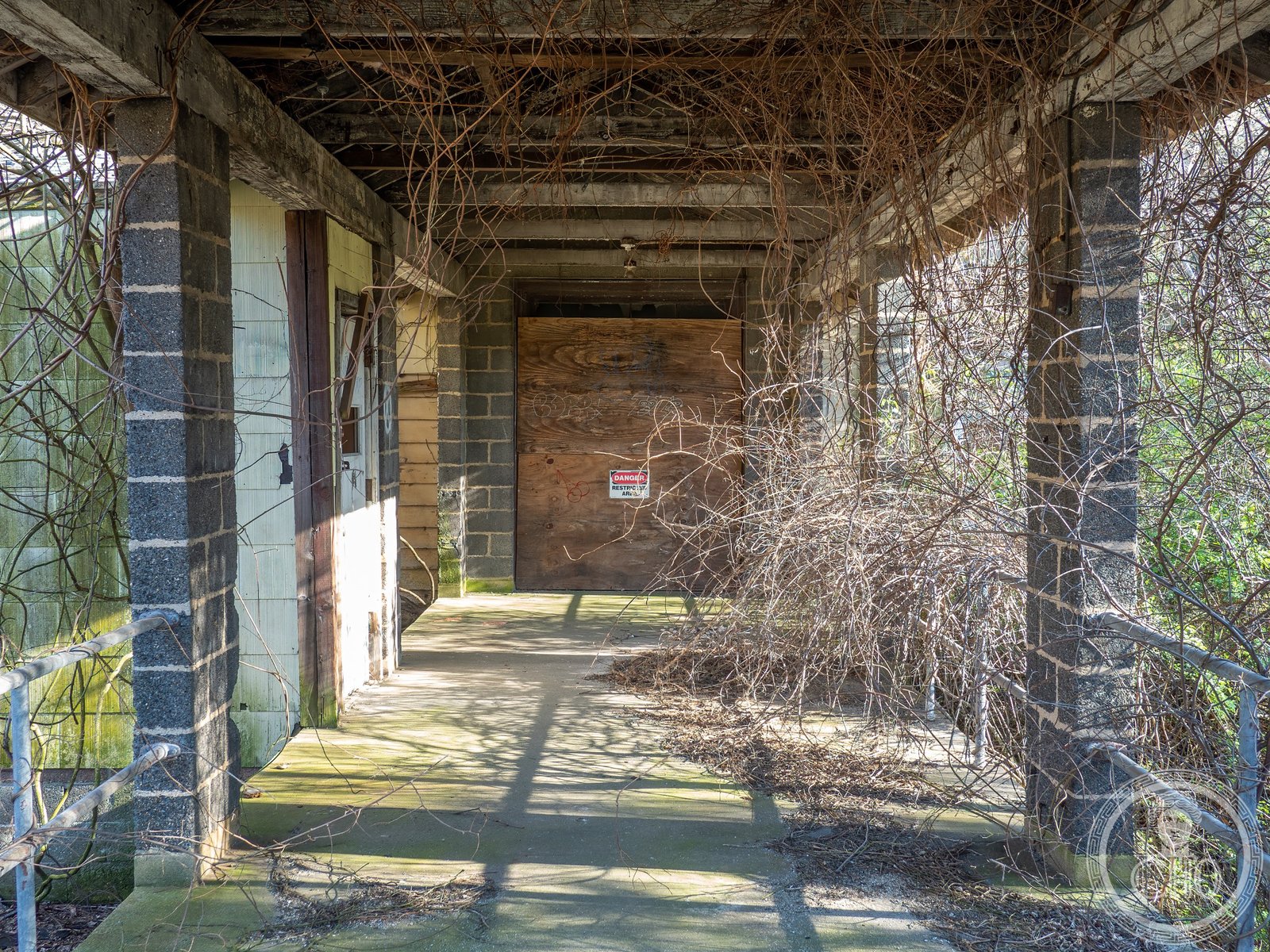
New York City's first municipal airport, opened 1931, preserves one of the most intact Art Deco aviation complexes in America — terminal building and Hangar Row, now within the Gateway National Recreation Area.
At a glance
Floyd Bennett Field opened on May 23, 1931, as New York City's first municipal airport, built on filled marshland at the edge of Jamaica Bay in southeastern Brooklyn. The terminal building and Hangar Row, designed by the NYC Bureau of Architecture in the stripped Art Deco manner characteristic of municipal infrastructure in the late 1920s, form one of the best-preserved pre-war aviation complexes in the United States. The field never achieved the commercial ambitions its builders intended — LaGuardia Airport captured the passenger market after 1939 — but it became instead the departure point for a remarkable series of record-breaking solo and long-distance flights in the 1930s: Wiley Post, Amelia Earhart, and Howard Hughes all used Floyd Bennett as their starting runway. Today, as part of Gateway National Recreation Area, the terminal and hangars are among the most atmospheric Art Deco industrial ensembles accessible to the public in New York.
Key facts
- Opened: May 23, 1931
- Designed by: NYC Bureau of Architecture (terminal building and Hangar Row)
- Address: Flatbush Avenue, Marine Park, Brooklyn, NY 11234
- GPS: 40.5921°N, -73.8930°W
- Status: National Historic Landmark (terminal and hangars)
- Current use: Gateway National Recreation Area, National Park Service
- Style: Art Deco / PWA Moderne industrial
History
The field is named for Floyd Bennett (1890–1928), a New York-born Naval aviator who piloted Commander Richard Byrd on his 1926 flight over the North Pole — a feat that made both men national heroes. Bennett died two years later of pneumonia contracted during a rescue mission in Canada, before the airport that would bear his name broke ground. Construction began in 1929 as the city's response to the booming aviation industry: hundreds of acres of Jamaica Bay marshland were dredged and filled to create four runways radiating from the central terminal complex.
The terminal building, completed with the Hangar Row in 1931, is a long, low structure in the Art Deco industrial style: horizontal concrete massing, recessed window banding, and geometric ornamental detailing at the entrance pavilion and cornice line. The six hangars running parallel to the main runway are larger volumes, their scale calibrated for the long-range aircraft of the 1930s, with the same Art Deco geometric detailing at the facade parapets. Within a year of opening, the field became the preferred departure point for headline-making flights: Wiley Post flew his solo around-the-world record in 1933, Howard Hughes departed on his 1938 around-the-world speed record, and Amelia Earhart used Floyd Bennett as her departure point for several transoceanic attempts.
Commercial passenger traffic never materialized at the expected scale — the Brooklyn location was inconvenient for Manhattan-based travelers — and when LaGuardia Airport opened in 1939 on the Queens waterfront, Floyd Bennett's civilian chapter effectively ended. The US Navy took over the field that year and operated it as a naval air station for three decades. After the Navy's departure in 1971, the National Park Service acquired the property and incorporated it into the newly established Gateway National Recreation Area, preserving the 1931 structures as a National Historic Landmark ensemble.
What you see
Approaching Floyd Bennett Field from Flatbush Avenue, the first impression is of isolation: the road crosses Marine Park into an expanse of open sky and scrubby grassland, with no surrounding urban context. The terminal complex appears ahead — a long horizontal structure, its Art Deco detailing visible even from a distance in the flat, treeless landscape. Up close, the main terminal building (Building 1, now the NPS visitor center) shows the characteristic grammar of 1920s municipal Art Deco: concrete surfaces articulated by horizontal banding, the entrance canopy projecting from the central bay, geometric moldings at the window heads. The proportions are austere — this is a working building, not a show building — but the craftsmanship of the ornamental details is careful and specific.
Hangar Row extends along the runway apron in a single line of six bays. The hangar doors — each spanning the full width of a bay designed for large biplane and early monoplane aircraft — are enormous when seen from ground level. The Art Deco detailing repeats on each hangar facade: stepped parapet, recessed cornice line, geometric panel reliefs flanking the central opening. Several hangars are now used by the NPS as maintenance facilities; others stand partially empty, their interiors open to visitors during NPS open house events. Walking the line of hangars, the scale of the 1930s aviation enterprise becomes concrete in a way no museum display can match.
Practical information
- Access: Gateway National Recreation Area — site open daily during daylight hours, free admission
- NPS Visitor Center: Ryan Visitor Center in the historic terminal building (Building 1); check NPS website for hours
- NPS aviation museum: Historic Aircraft Restoration Project uses several hangars; open weekend afternoons (check NPS schedule)
- Parking: Free on-site parking off Flatbush Avenue
- Facilities: Restrooms in the terminal building; picnic areas in the park grounds
Getting there
Floyd Bennett Field is at the southern end of Flatbush Avenue in Brooklyn, approximately 12 miles from Midtown Manhattan. By car, take Flatbush Avenue south from Kings Highway in Brooklyn; the main entrance is at the end of the road past Marine Park. No direct subway; the Q35 bus runs from the Flatbush Avenue–Brooklyn College station (2/5 trains) to Riis Park and passes the Floyd Bennett Field entrance. Travel time from Midtown by public transit is approximately 1.5 hours.
Nearby
- Marine Parkway Bridge (1937) — the Art Deco vertical lift bridge east of the field, connecting Brooklyn to the Rockaway Peninsula in Queens
- Riis Park (1937) — Jacob Riis Park and Beach, Rockaway Peninsula; a WPA-era Art Moderne bathhouse complex adjacent to the bridge's Rockaway end
- Jamaica Bay Wildlife Refuge — the Jamaica Bay unit of Gateway NRA, 5 miles west; over 330 bird species recorded
Sources
- National Historic Landmark nomination — Floyd Bennett Field (terminal and hangars)
- National Park Service — Gateway National Recreation Area, Floyd Bennett Field history
- NYC Landmarks Preservation Commission documentation
- New York City Municipal Archives — aviation infrastructure records, 1929–1931
Find it on the map
See this place and what’s around it →Record researched and written by Luigi De Marchi for Cultural Heritage Online, 2026.
📷 Become a Cultural Heritage Online photographer
Share your photos of places: they stay published under your name as the author. The more they're seen, the more you get noticed — and soon a contest will reward the most appreciated photos.
Log in or sign up free to add a photo