

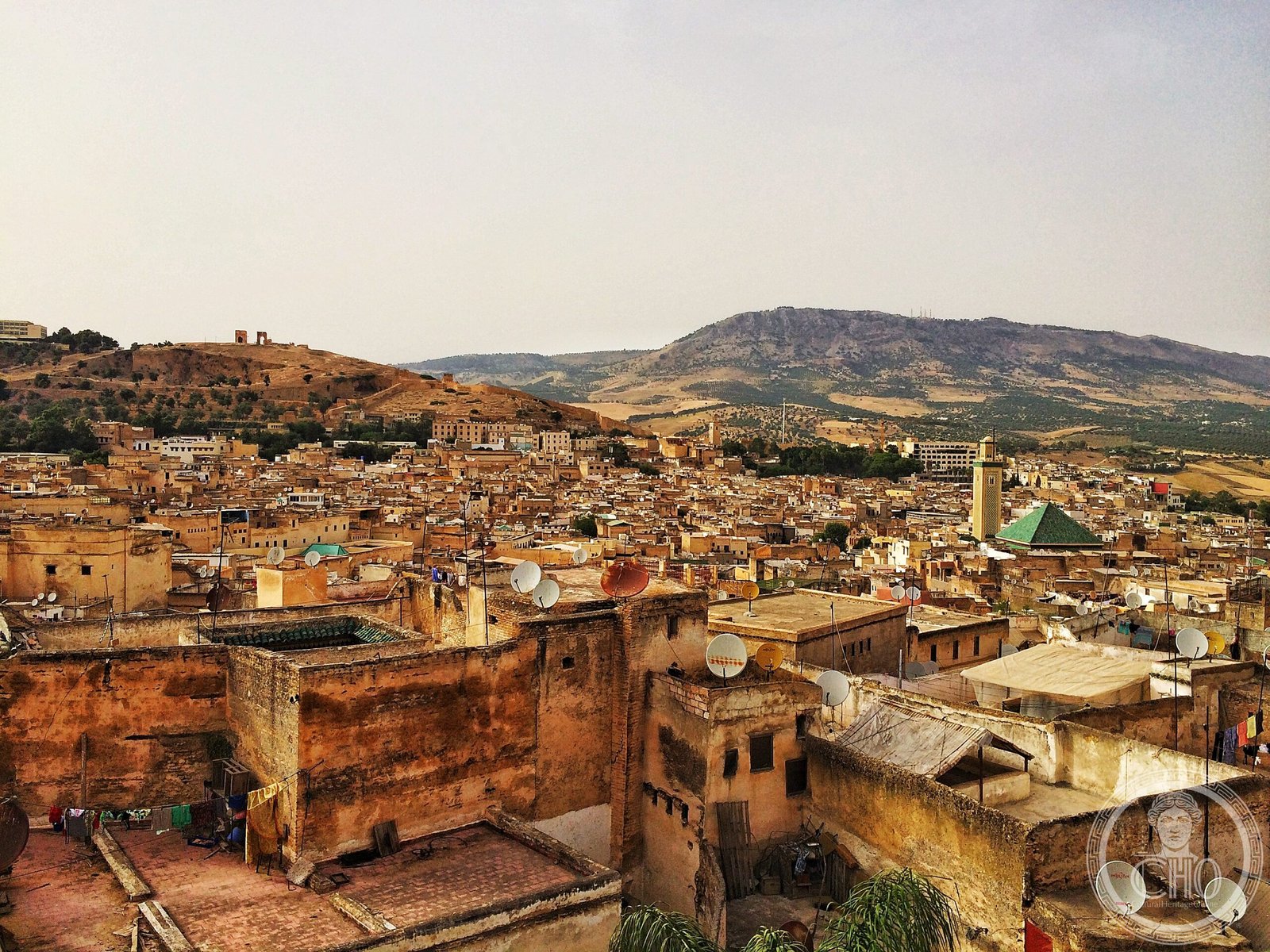
The oldest quarter of Fez, founded as the Idrisid capital in the late 8th century, Fes el Bali remains one of the world’s best-preserved medieval Islamic cities, with labyrinthine souks, historic monuments, and a living urban fabric that has endured over 1,200 years.
At a glance
Fes el Bali is the historic heart of Fez and one of three main districts of the city. It forms part of the medina alongside Fes Jdid, with the French-built Ville Nouvelle completing modern Fez. The district earned UNESCO World Heritage status for its exceptional preservation of pre-modern urban planning and architectural heritage.
History
Founded between 789 and 808 AD as the capital of the Idrisid dynasty, Fes el Bali began as two separate settlements on either side of the Fez River. These merged under Almoravid rule in the 11th and 12th centuries, creating a unified city.
When Marrakesh became the political capital, Fes el Bali did not decline. Instead, its economic and religious importance sustained growth through subsequent centuries. In the 13th century, the Marinid dynasty built Fes Jdid as a new administrative center adjacent to the original quarter, reflecting the city’s continued significance.
What you see
The district retains its medieval character through winding alleys, market streets (suqs), and substantial sections of historic fortification walls. At its center stands al-Qarawiyyin University, organized around a mosque founded in the 9th century—among the oldest continuously functioning universities in the world.
Beyond the university, Fes el Bali contains the celebrated Chouara Tanneries, numerous mosques, madrasas (theological schools), hammams (bathhouses), caravanserais, and traditional residences. These structures exemplify Moroccan and Moorish architectural conventions and craft traditions.
Cultural significance
Fes el Bali represents a rare urban survival—a pre-modern Islamic city where medieval street patterns, commercial organization, and social structures remain largely intact. The preservation of its fabric offers scholars and visitors direct experience of medieval North African urbanism.
The district’s religious and educational legacy, centered on al-Qarawiyyin, has shaped Islamic intellectual life for over a millennium. Its markets and crafts continue to sustain traditional artisanal practices central to Moroccan cultural identity.
Key facts
- Founded 789–808 AD as capital of the Idrisid dynasty
- Originally two settlements that merged under the Almoravids (11th–12th centuries)
- Al-Qarawiyyin University mosque founded in the 9th century
- UNESCO World Heritage Site listed 1981 (as Medina of Fez)
- Location: Fez, Morocco
- Coordinates: 34.0651, -4.9797
Practical information & getting there
Fes el Bali is accessible on foot from modern Fez. The medina’s narrow streets require pedestrian navigation; sturdy shoes and advance planning are recommended. Local guides familiar with the quarter’s layout are available and enhance understanding of its history and ongoing community life. Respect for residents and prayer times is essential when visiting.
Sources & resources
Find it on the map
See this place and what’s around it →📷 Become a Cultural Heritage Online photographer
Share your photos of places: they stay published under your name as the author. The more they're seen, the more you get noticed — and soon a contest will reward the most appreciated photos.
Log in or sign up free to add a photo