

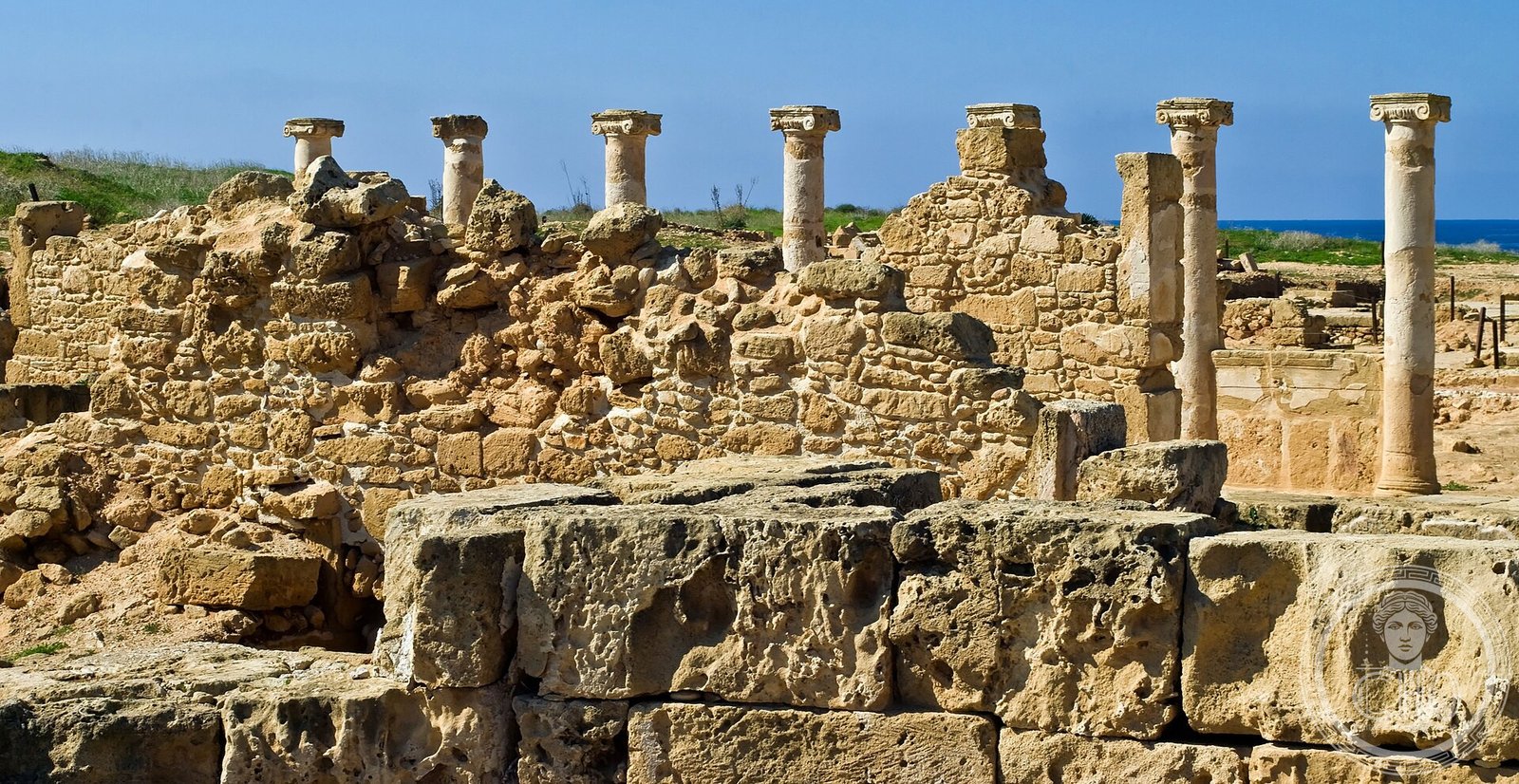
One of the Eastern Mediterranean’s richest archaeological sites, this sprawling park in southwest Cyprus preserves layers of Greek, Roman, and Byzantine civilization—crowned by four exceptional villas whose mosaics rank among antiquity’s finest.
At a glance
Paphos Archaeological Park contains the principal remains of ancient New Paphos, a coastal city that flourished from Hellenistic times through the Middle Ages. Ongoing excavations continue to yield extraordinary finds, particularly Roman-period domestic mosaics of exceptional artistry and preservation.
History
The site’s occupation spans from prehistoric times onward, with major development during the Hellenistic and Roman periods. New Paphos became a significant urban center, attracting wealth and cultural refinement evident in its architectural and artistic remains. The city declined during the medieval period but left behind a dense archaeological record.
What you see
Four elaborate Roman villas dominate the park’s most celebrated features: the House of Dionysos, House of Aion, House of Theseus, and House of Orpheus. Each retains exceptional mosaic pavements; the Orpheus mosaic is particularly renowned. Beyond the villas, visitors encounter an agora (marketplace), asklipieion (healing sanctuary), early Christian basilica, odeion (concert hall), and a Hellenistic-Roman theatre. A necropolis called the “Tombs of the Kings” represents another major element of the complex.
Cultural significance
Paphos Archaeological Park forms one of three components of the Paphos archaeological complex, inscribed on the UNESCO World Heritage List in 1980. The site was recognized for its outstanding Roman mosaics, the quality of its ancient remains, and its historical and religious importance to Mediterranean civilization.
Key facts
- Location: Paphos, southwest Cyprus (34.75566667°N, 32.40416667°E)
- UNESCO World Heritage Site (inscribed 1980) as part of the Paphos archaeological complex
- Ongoing excavations continue to uncover new finds
- Four major Roman villas with preserved mosaic floors
Practical information & getting there
The park is situated within the New Paphos section of the coastal city. For visiting hours, current admission fees, guided tour availability, and detailed directions, consult the official Paphos tourism website or contact local visitor services in advance.
Sources & resources
Find it on the map
See this place and what’s around it →📷 Become a Cultural Heritage Online photographer
Share your photos of places: they stay published under your name as the author. The more they're seen, the more you get noticed — and soon a contest will reward the most appreciated photos.
Log in or sign up free to add a photo