
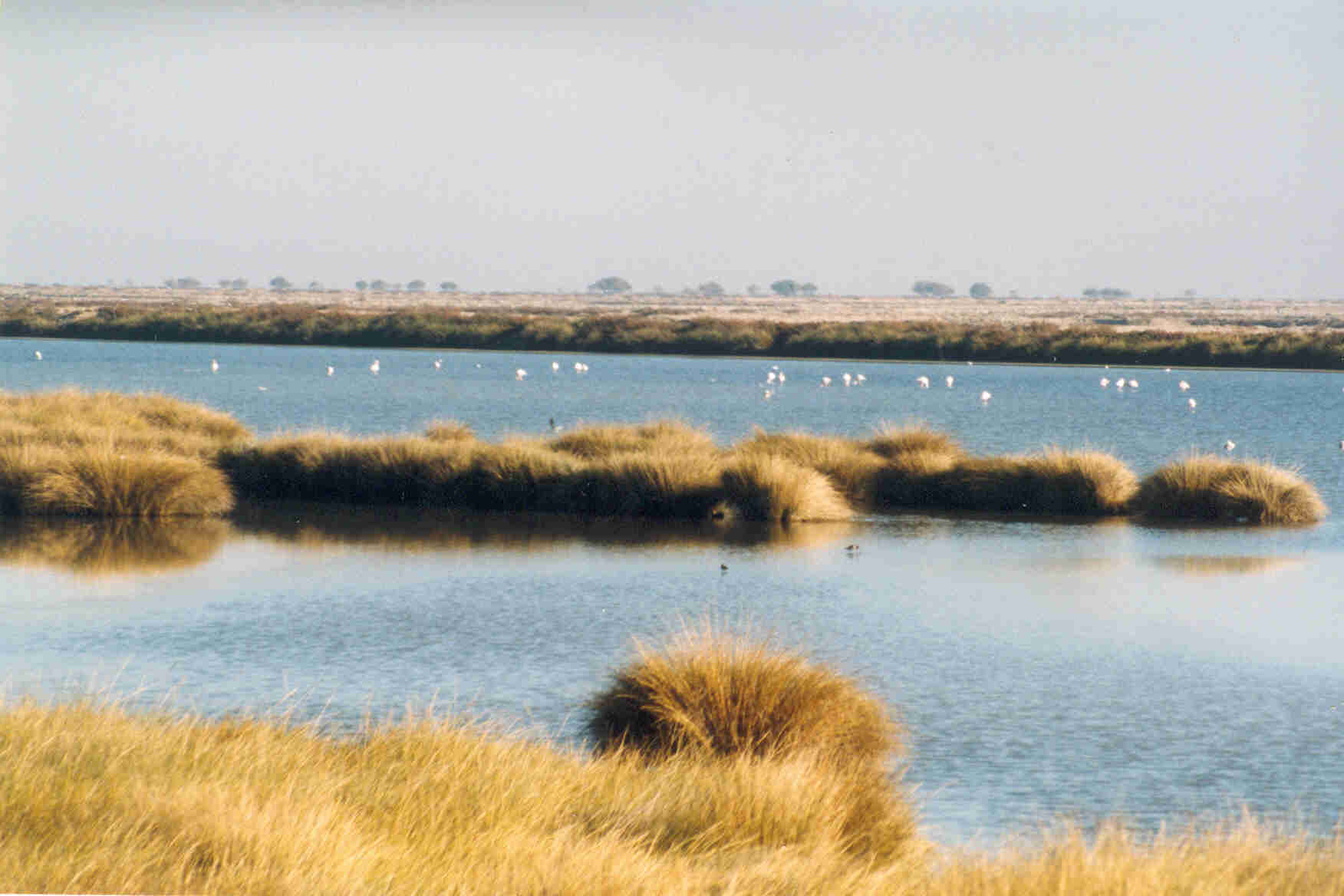
Europe’s largest nature reserve straddles the delta where the Guadalquivir flows into the Atlantic, sheltering migratory birds, endangered lynx, and Spanish imperial eagles across 543 square kilometres of marshes, streams and dunes.
At a glance
Doñana encompasses both a National Park (1969) and Natural Park (1989, expanded 1997) managed as a single protected landscape. The reserve covers 543 km² across three provinces in Andalusia, protecting a remarkable delta ecosystem where over 300 bird species may be sighted annually.
History
The park takes its name from Doña Ana de Silva y Mendoza, wife of the 7th Duke of Medina Sidonia. In 1969, the World Wildlife Fund partnered with the Spanish government to purchase and protect a section of the marshes. The Natural Park designation followed in 1989 and expanded in 1997 to create a protective buffer zone. UNESCO recognized the site as a World Heritage Site in 1994.
Since establishment, the reserve has faced ongoing threats from marsh drainage, agricultural water extraction, upstream mining pollution, and tourism development.
What you see
Doñana is defined by its landscape rather than built heritage: expansive salt marshes, shallow streams, mobile sand dunes, and brackish wetlands create a mosaic of aquatic and terrestrial ecosystems. The terrain shifts between open water, reed beds, and coastal formations shaped by Atlantic tides and the Guadalquivir delta.
Cultural significance
Doñana holds unique biodiversity for Europe, hosting thousands of migratory birds annually—up to 200,000 individuals in winter alone. It serves as a crucial breeding ground and transit point between European and African continents, positioned strategically near the Strait of Gibraltar. The reserve harbours endangered species including the Spanish imperial eagle and Iberian lynx, making it essential for conservation science. The park is twinned with France’s Parc Naturel Régional de Camargue, reflecting shared ecological importance.
Key facts
- Country: Spain
- Location: Provinces of Huelva, Cádiz, and Seville, Andalusia
- Area: 543 km² (209.65 mi²)
- Protected area: 135 km²
- Coordinates: 37°N, 6.5°W
- UNESCO World Heritage Site: 1994
- Annual visitors (2006): 376,287
Practical information & getting there
Doñana is located primarily in Huelva province, with most territory in the municipality of Almonte. Several scientific institutions maintain monitoring stations within the park boundaries. For visiting information and current access details, consult local tourism authorities in Huelva or Andalusia.
Sources & resources
Find it on the map
See this place and what’s around it →📷 Become a Cultural Heritage Online photographer
Share your photos of places: they stay published under your name as the author. The more they're seen, the more you get noticed — and soon a contest will reward the most appreciated photos.
Log in or sign up free to add a photo