
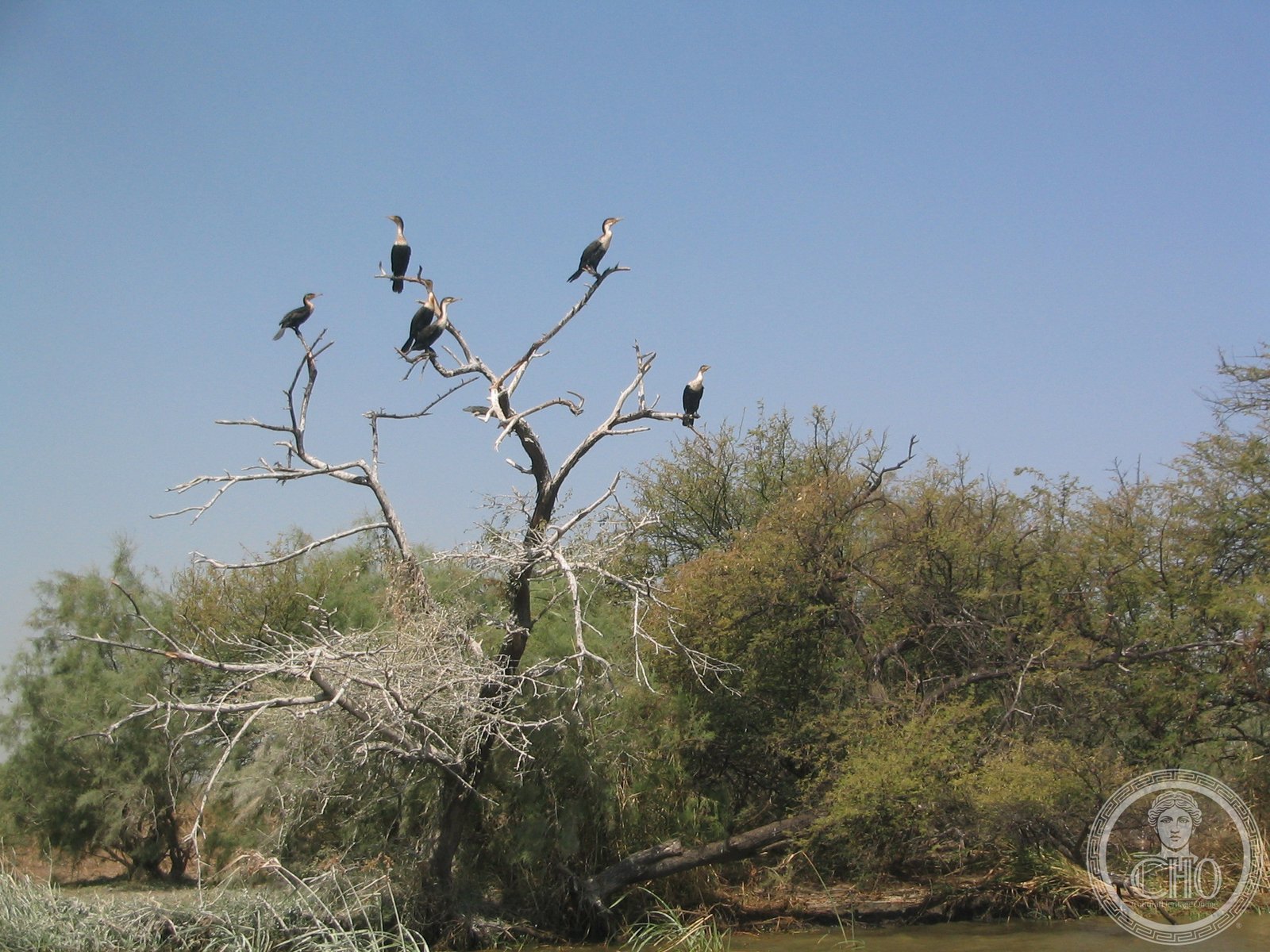
On the delta of the Senegal River, a few kilometres from the Mauritanian border, the Djoudj National Bird Park is the first stopping place after the Sahara desert for the millions of migratory birds that cross Africa every year. The third most important bird sanctuary in the world, it holds up to 3 million birds at peak season — white pelicans, flamingos, fish eagles — in a mosaic of lakes, channels and thickets that would be either flooded or dry without its controlled waters. A UNESCO World Heritage site since 1981.
At a glance
Djoudj National Bird Sanctuary (Parc National des Oiseaux du Djoudj), in north-western Senegal near the Mauritanian border, is one of the world’s most important wetland bird sanctuaries. Covering 16,000 hectares of the Senegal River delta — a complex of streams, ponds, lakes and backwaters — it receives up to three million birds each year as they arrive at the first major wetland south of the Sahara on the West African Flyway. The park is especially famous for its pelicans and herons (it hosts the world’s largest breeding colony of great white pelicans outside of Africa’s Rift Valley), as well as flamingos, raptors and thousands of migratory waders. UNESCO inscribed it in 1981.
Key facts
- UNESCO: World Heritage since 1981 (Djoudj Bird Sanctuary, ref. 25)
- Area: 16,000 hectares of Senegal River delta wetlands
- Birds: up to 3 million individuals per season; over 400 species recorded
- Pelicans: one of the largest great white pelican breeding colonies in West Africa
- Flyway: first major wetland south of the Sahara on the East Atlantic Flyway
- Threats: invasive aquatic plants (water hyacinth, Typha) have periodically threatened the habitat
History
The delta of the Senegal River has been a wetland for migratory birds for as long as birds have crossed the Sahara, but formal protection began with the establishment of the national park in 1971. The timing was significant: the great droughts of the Sahel in the 1970s had severely reduced wetland habitats across West Africa, making Djoudj’s managed water even more critical for birds crossing the Sahara. UNESCO inscribed Djoudj in 1981 as one of the first African natural World Heritage Sites.
The park subsequently faced serious threats from invasive aquatic plants, particularly water hyacinth and Typha (cattail reed), which colonised the channels and choked the open water. Periodic placement on the UNESCO List of World Heritage in Danger (1984–1988, 2000–2006) led to management interventions. Mechanical clearing, biological control and improved water-level management have restored much of the open-water habitat, and the park was removed from the endangered list in 2006 after significant recovery.
What you see
The park is best experienced by boat: flat-bottomed pirogues navigate the channels and open lagoons, passing nesting pelican colonies in dead trees, flocks of flamingos in the shallows, herons and egrets on the banks, and thousands of waders — black-tailed godwits, avocets, ruff — on exposed mudflats. In winter the numbers are extraordinary: dozens of pelicans circling overhead, great rafts of garganey ducks, and the pink flush of flamingos on the horizon.
January and February are the peak months, when the largest numbers of Palearctic migrants are present. The park entrance is at the village of Djoudj, 60 km from Saint-Louis.
Practical information
- Best time: November–April (dry season; peak December–February for migrants)
- Boat trips: guided pirogue trips are the main way to visit; arrange at the park entrance
- Entry fee: national park admission applies
- Base: Saint-Louis (city), 60 km south; excellent base with colonial architecture and a daily fish market
Getting there
Djoudj is 60 km north of Saint-Louis in northern Senegal. From Saint-Louis, take the road to Rosso (N2) then the signed turn-off to the park. Taxis and organised tours available from Saint-Louis. GPS: 16.36° N, 16.27° W.
Nearby
- Saint-Louis (UNESCO) — the historic colonial capital of Senegal and French West Africa, 60 km south
- Langue de Barbarie NP — a sandbar peninsula national park with nesting sea turtles and more birds
- Banc d’Arguin — the great UNESCO tidal flat of Mauritania on the Atlantic coast, 300 km north
Sources
- UNESCO World Heritage Centre — “Djoudj National Bird Sanctuary” (ref. 25)
- Encyclopaedia Britannica — Djoudj National Bird Sanctuary
- BirdLife International — Djoudj IBA fact sheet
Find it on the map
See this place and what’s around it →📷 Become a Cultural Heritage Online photographer
Share your photos of places: they stay published under your name as the author. The more they're seen, the more you get noticed — and soon a contest will reward the most appreciated photos.
Log in or sign up free to add a photo