
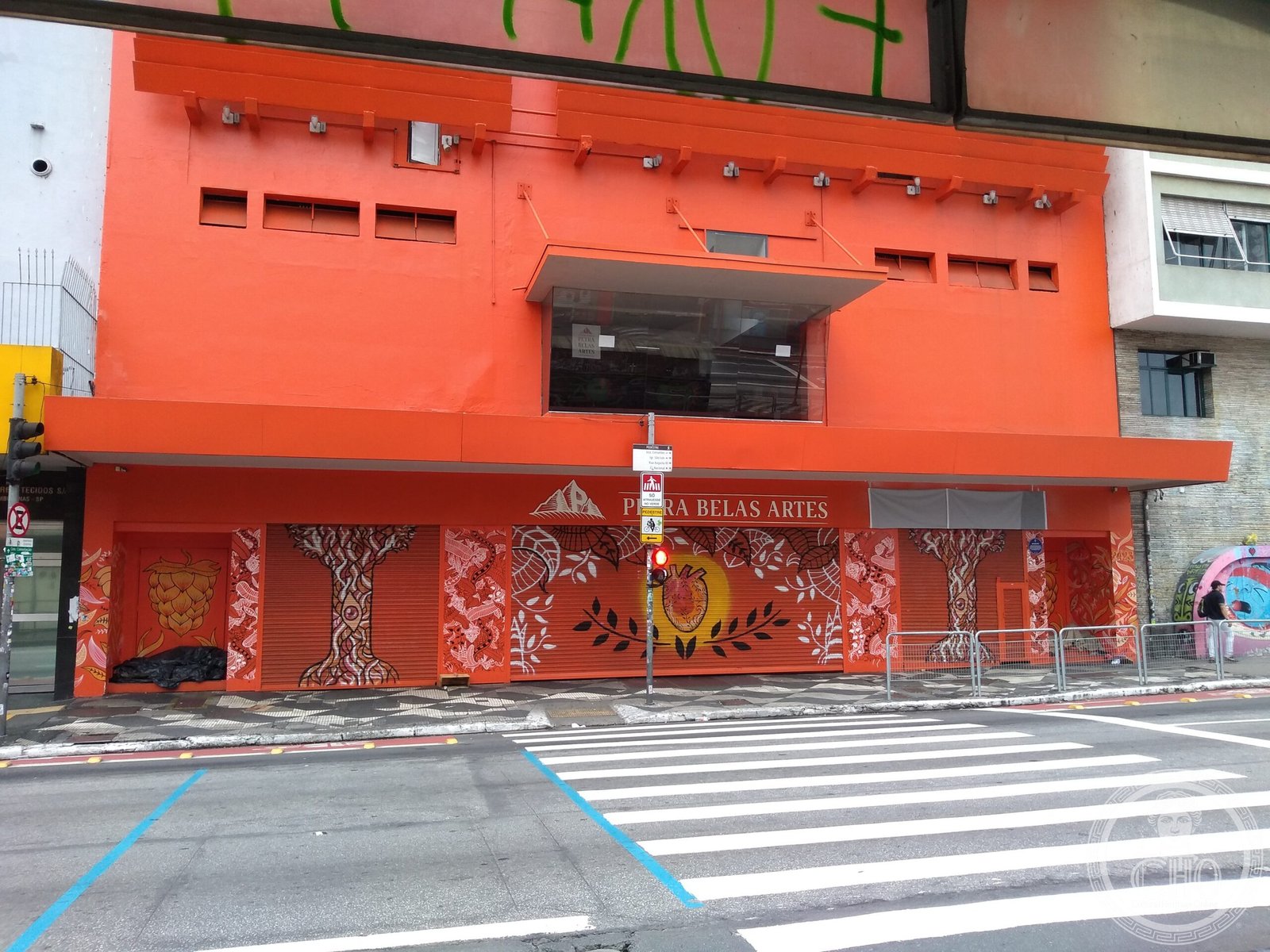
Cine Belas Artes is São Paulo's most beloved repertory cinema, housed in a refined Modernist building designed by Italian-Brazilian architect Giancarlo Palanti and completed in 1954 on Rua da Consolação. Preceded by a 1943 predecessor called Cine Ritz on the same site, the current structure became the cultural centre of Paulistano cinephile life across six decades, screening independent, foreign, and art-house films when the rest of the city offered only Hollywood blockbusters. Threatened with closure multiple times and saved each time by civic mobilisation — including a 90,000-signature petition in 2011 — it was declared a state heritage monument in 2013, cementing its place as an irreplaceable landmark of Brazilian urban culture.
At a glance
- Location
- Rua da Consolação, 2.423, Consolação, São Paulo, Brazil
- Style
- Brazilian Modernism (1950s)
- Predecessor
- Cine Ritz, inaugurated 1943
- Current building
- Designed 1952, completed 1954
- Architect
- Giancarlo Palanti
- Renamed Belas Artes
- July 1967
- Auditoriums
- Six (named after Brazilian artists)
- Heritage status
- São Paulo state heritage monument, 2013
Overview
Cine Belas Artes occupies a pivotal position on Rua da Consolação in the Consolação neighbourhood, one of São Paulo's most culturally dense districts. Since its reopening as Belas Artes in July 1967 — inaugurated with the screening of “The Russians Are Coming” — the venue has been the preferred destination for Paulistano audiences seeking cinema beyond the mainstream. Its six auditoriums, each named after a canonical Brazilian artist — Villa-Lobos, Cândido Portinari, Oscar Niemeyer, Aleijadinho, Mário de Andrade, and Carmen Miranda — reflect an institutional commitment to national culture as much as to world cinema.
History
The site's cinema history begins in 1943, when the Cine Ritz opened its doors, renamed Cine Trianon in 1948. The building was rebuilt in 1952–1954 to a new Modernist design by Giancarlo Palanti, and reopened as Cine Belas Artes in 1967. The 1980s brought further transformation: the single auditorium was divided into six smaller rooms, each bearing the name of a major Brazilian cultural figure. A suspected arson attack in 1982 caused serious damage; the case was never resolved. The cinema faced closure in 2002 but was rescued by HSBC sponsorship and restored in 2003–2004. A second crisis erupted in 2011 when closure was again announced; this time over 90,000 residents signed a petition, forcing a reprieve. Heritage designation followed in 2013.
Architecture & Design
Giancarlo Palanti — born in Milan, active in São Paulo from 1937 — designed the Cine Belas Artes building with the clean geometric rationalism that defined Brazilian Modernism of the 1950s. The project shares sensibilities with the broader Art Déco-to-Modernism transition visible across São Paulo's mid-century commercial streetscape: streamlined volumes, flat facades with rhythmic fenestration, and an emphasis on materials and proportion over ornament. The interior foyer, with its terrazzo floors and geometric lighting fixtures, retains the mood of refined mid-century cinema architecture — a space conceived to signal cultural seriousness before the first frame appeared on screen. The six auditoriums, introduced in 1980, preserved the building's essential character while adapting it to the multiplex era.
Cultural significance
In a city of over twenty million, Cine Belas Artes has functioned as a civic institution as much as a commercial venue. It introduced generations of Paulistanos to European auteur cinema, Latin American new wave, and Brazilian independent film at moments when such work had no other regular exhibition space in the city. Its survival — against economics, fire, and closure threats — reflects a broad public understanding that certain cultural spaces are irreplaceable. The auditorium names pay tribute to the full range of Brazilian artistic genius across music, visual art, architecture, literature, and popular culture, making every visit a reminder of that inheritance.
Visiting today
Cine Belas Artes continues to operate on Rua da Consolação, showing art-house, repertory, and independent films across its six auditoriums. Programming leans toward Brazilian cinema, European art films, and retrospectives. Ticket prices are moderate by São Paulo standards. The cinema's foyer is itself worth a visit for its mid-century interior. Check current programming and sponsorship status directly with the venue, as the cinema has periodically changed its commercial name under successive sponsors since 2014.
Getting there
Cine Belas Artes is located at Rua da Consolação, 2.423, in the Consolação neighbourhood. The nearest Metro station is Consolação on Line 2 (Green), a short walk north along Rua da Consolação. Bus lines serving Avenida Paulista and Rua da Consolação stop within a block of the cinema. The venue is roughly 400 metres west of Avenida Paulista and sits in a dense cultural corridor alongside the MASP museum, the Instituto Moreira Salles, and several other cinemas and theatres.
Sources & resources
Find it on the map
See this place and what’s around it →📷 Become a Cultural Heritage Online photographer
Share your photos of places: they stay published under your name as the author. The more they're seen, the more you get noticed — and soon a contest will reward the most appreciated photos.
Log in or sign up free to add a photoIs this page about you?
This page is read by travellers and heritage enthusiasts who find it on Google. Tell us how you are connected to this place and we will take it from there.