
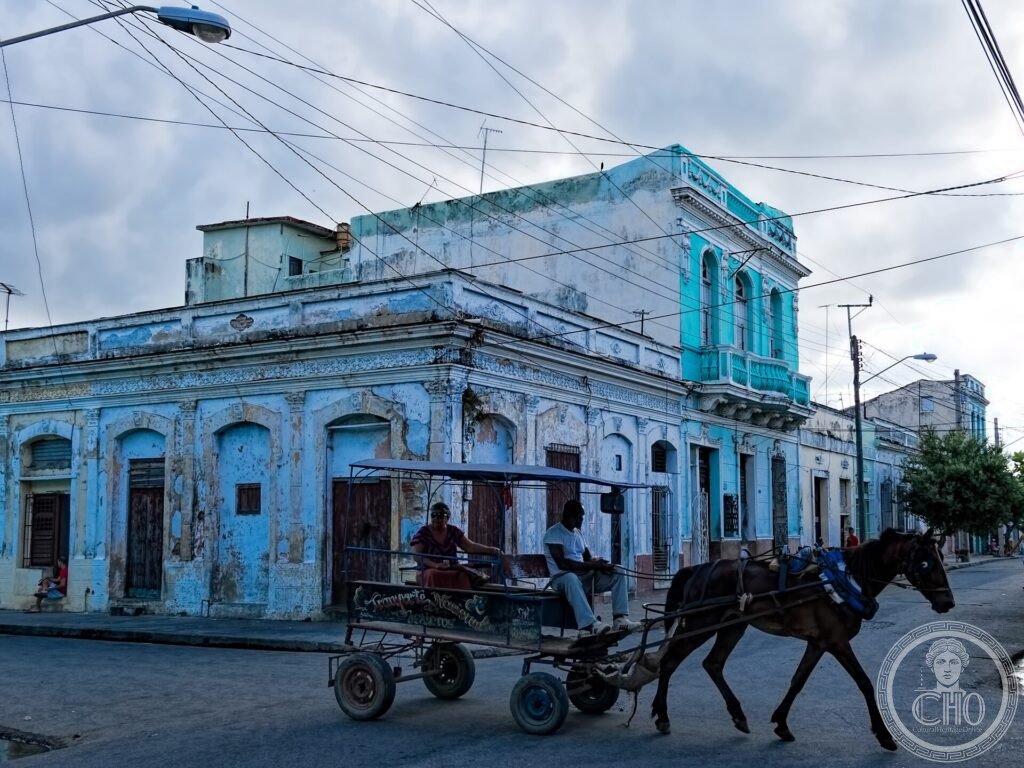
Facing a bay on Cuba’s southern coast, Cienfuegos was founded in 1819 by settlers of French origin and grew through the nineteenth century. Its regular grid and neoclassical elegance, rare in the Caribbean, earned it the name “Pearl of the South”: a city of the Enlightenment in the tropics.
At a glance
Cienfuegos, on a bay of Cuba’s southern coast, is a rare example of a 19th-century town built from the start on Enlightenment ideals of order and good planning. Founded in 1819 by settlers of French origin, it grew on a regular grid around a fine central square, its public buildings, mansions and arcades in a coherent neoclassical style influenced by Spain, France and the United States. Nicknamed the “Pearl of the South”, its historic centre was inscribed by UNESCO in 2005.
Key facts
- UNESCO: World Heritage since 2005 (Urban Historic Centre of Cienfuegos)
- Founded: 1819, by settlers of French origin
- Neoclassical: a coherent 19th-century architectural ensemble
- Grid plan: laid out on Enlightenment principles of order
- “Pearl of the South”: the city’s nickname
- Parque José Martí: the grand central square
History
Spain encouraged the settlement of Cuba’s south coast, and in 1819 a group led by a Frenchman from Louisiana founded a town on the bay of Jagua, naming it after a Spanish official. Unusually, it was planned from the outset on a strict grid with a central square, and as it grew rich on sugar in the 19th century it built itself in a unified neoclassical taste, blending Spanish, French and North American ideas.
The result was a city of arcaded streets, theatres and mansions remarkably coherent for the Caribbean, a model of 19th-century town planning. The historic centre preserves this Enlightenment city largely intact.
What you see
At the centre, the broad Parque José Martí is ringed by the cathedral, the elegant Tomás Terry theatre, the former government palace and arcaded buildings. Radiating streets lead to mansions and, along the bay, the eclectic Palacio de Valle. Colour and arcades give the colonial streets their Caribbean character within the neoclassical order.
The waterfront on the great bay completes the setting of the “Pearl of the South”.
Practical information
- Old town: walkable around Parque José Martí
- Time needed: half a day
- Note: on the south coast, between Havana and Trinidad
- Setting: on the Bay of Cienfuegos
Getting there
Cienfuegos is on the southern coast of Cuba, about 250 km south-east of Havana and near Trinidad. It is reached by road. GPS: 22.146° N, 80.444° W.
Nearby
- Trinidad — the UNESCO colonial town to the east
- El Nicho — waterfalls in the Escambray mountains
- Bay of Cienfuegos — the harbour and the Jagua castle
Sources
- UNESCO World Heritage Centre — “Urban Historic Centre of Cienfuegos” (ref. 1202)
- Oficina del Conservador de la Ciudad de Cienfuegos — official body
- Encyclopaedia Britannica — Cienfuegos
Find it on the map
See this place and what’s around it →📷 Become a Cultural Heritage Online photographer
Share your photos of places: they stay published under your name as the author. The more they're seen, the more you get noticed — and soon a contest will reward the most appreciated photos.
Log in or sign up free to add a photo