
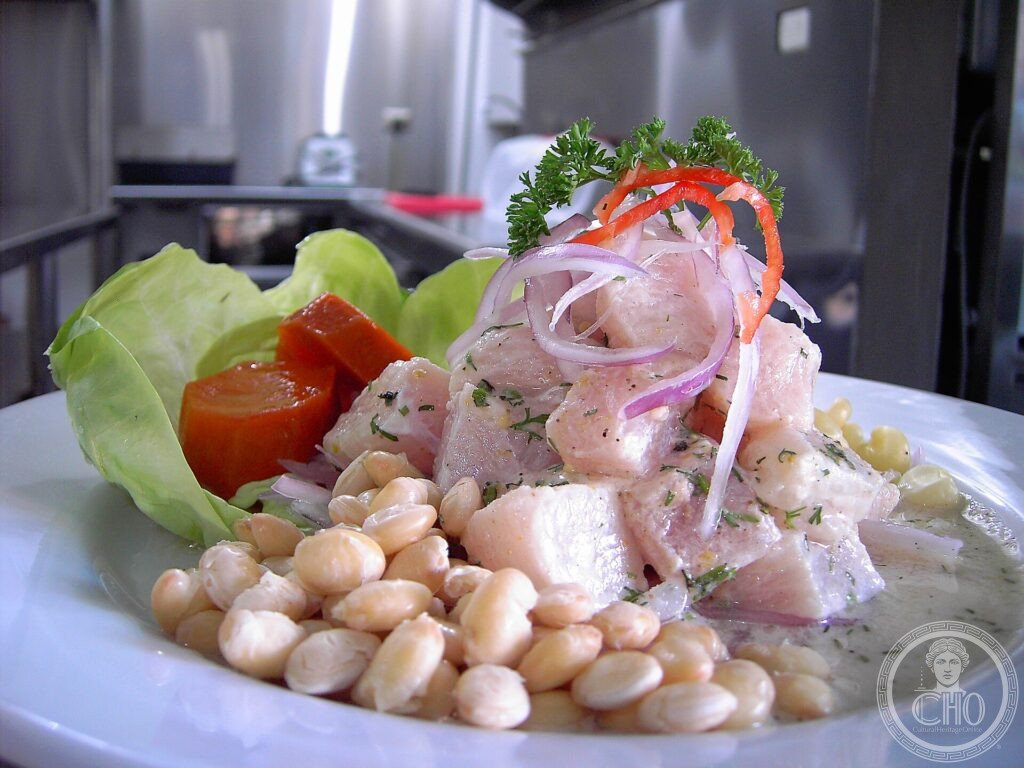
Ceviche
Peru’s national dish, ceviche is a cold preparation of raw fish or shellfish marinated in citrus juice and seasonings, where acid denatures the seafood rather than heat or preservation. The practice embodies centuries of Andean culinary knowledge and the ritual of shared coastal eating.
At a glance
Ceviche consists of raw fish or shellfish marinated in fresh citrus juice—typically lemon or lime—combined with chili peppers, onions, and cilantro. The citric acid chemically transforms the protein structure, turning the flesh opaque and firm while it remains structurally raw. This balance between appearance and technique defines the dish across Peru and other Pacific coastal countries, though Peru claims it as cultural heritage and national identity.
Origins & history
Ancient Andean coastal inhabitants prepared ceviche long before the arrival of European citrus. They marinated seafood in juices from native plants, including the banana passionfruit known locally as tumbo. The introduction of lemon and lime during the 16th century transformed the technique while preserving its foundational principle: acid marination as a form of culinary transformation unique to the Pacific coast.
The practice
The preparation begins with raw fish or shellfish cut into bite-sized pieces and submerged in fresh citrus juice. As the acid works, the seafood gradually becomes opaque and firm—a visible transformation that marks the dish’s readiness. Regional variations reflect local ingredients: Peru favors lemon and lime with local chili peppers; Central American versions may substitute mustard for heat. Onions and cilantro are nearly universal additions.
Ceviche appears as an appetizer or, when served as a main course, alongside starchy accompaniments designed to balance its acidity: sweet potato, avocado, maize, lettuce, or fried plantains. The presentation is simple, the eating communal, and the experience rooted in coastal geography and seasonal seafood availability.
Cultural significance
UNESCO recognizes ceviche as an expression of Peruvian traditional cuisine and an Intangible Cultural Heritage of Humanity. The dish embodies not only technique but also social practice—the rituals of preparation, sharing, and consumption that connect Peruvian communities to their Pacific heritage. It represents knowledge passed through generations about how to transform raw ingredients into nourishment and ceremony.
Key facts
- Countries sharing this element: Peru
- Anchor community: Lima, Peru
- Coordinates: −12.0644, −77.0427
- UNESCO ICH reference: 01952
- UNESCO inscription year: (date not provided in sources)
- Primary ingredients: raw fish or shellfish, citrus juice, chili peppers, onions, cilantro
- Ancient variant used native tumbo juice before 16th-century introduction of citrus
Where to experience it
Lima remains the heartland of ceviche practice and the anchor of its UNESCO recognition. The dish appears in home kitchens, markets, and restaurants throughout the city, where preparation methods and family recipes carry local and familial tradition. To experience ceviche authentically is to eat it where coastal fishing traditions and urban culinary culture intersect.
Sources & resources
- Ceviche — Wikipedia
- Practices and meanings associated with the preparation and consumption of ceviche — UNESCO Intangible Cultural Heritage
- Cultural Heritage Online
Find it on the map
See this place and what’s around it →📷 Diventa un fotografo di Cultural Heritage Online
Condividi le tue foto dei luoghi: restano pubblicate con la tua firma come autore. Più vengono viste, più ti fai conoscere — e presto un concorso premierà le foto più apprezzate.
Accedi o registrati gratis per aggiungere una foto